A French Vocabulary Lesson
Welcome to a little French lesson about travel and the open road!
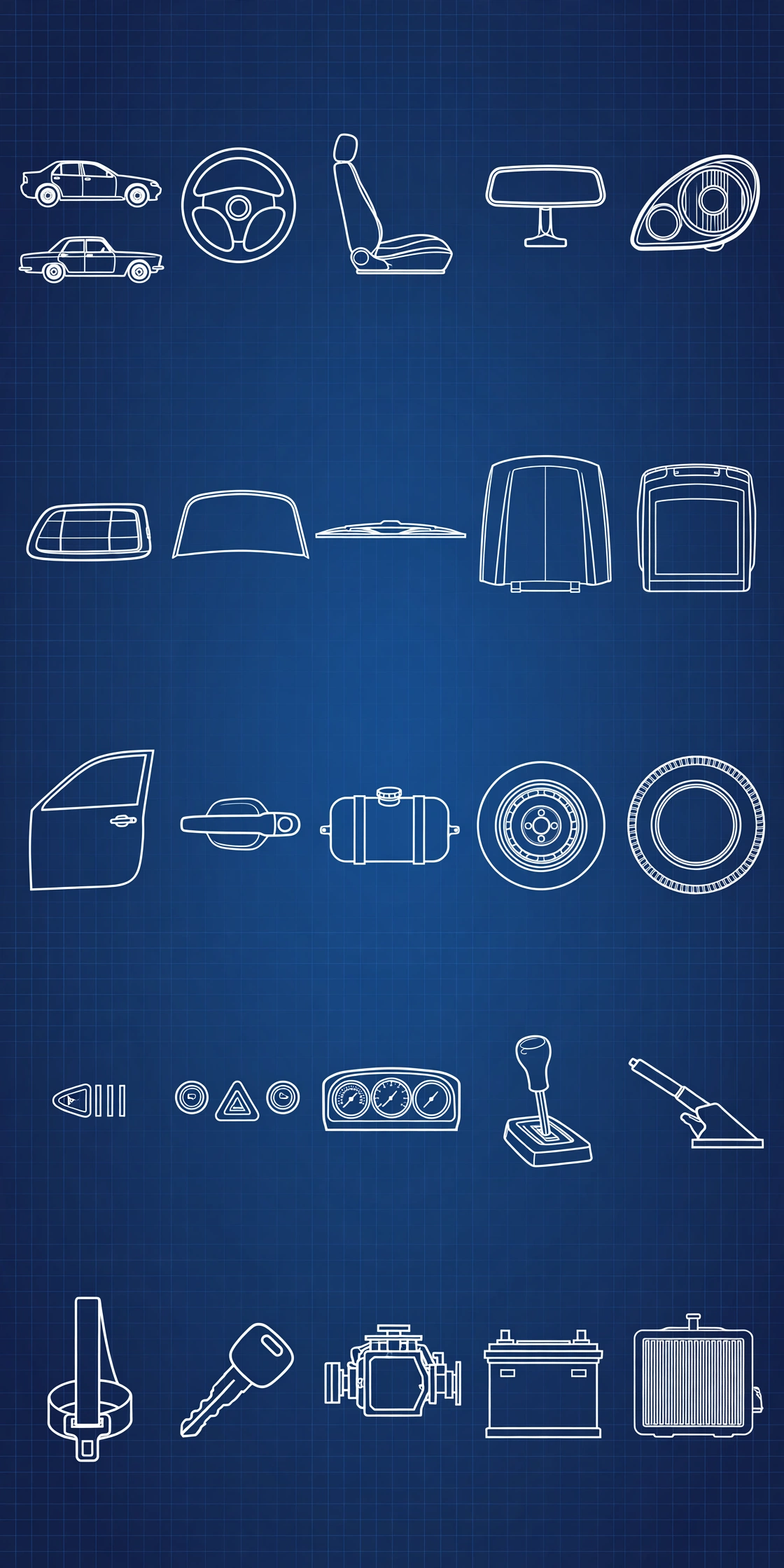
La voiture means the car. In this lesson, you’ll discover twenty-five useful French words for the parts of a car, from the steering wheel to the radiator.
Learning vocabulary is easier when you see words used in real situations. So instead of memorizing a list, let’s join a French family on a road trip and prepare the car together, part by part.
Our Story: En Route pour les Vacances !
Imagine that it is the first morning of the holidays. The Moreau family is leaving for Grandma’s house in the countryside, and the car has to be ready for a long journey.
Read the story in French first. The English translation follows each passage to help you understand.
Le Grand Départ
C’est le grand départ ! Papa ouvre la portière avec la poignée et met les valises dans le coffre de la voiture. Les enfants montent à l’arrière et s’installent sur les sièges.
It’s the big departure! Dad opens the car door by the handle and puts the suitcases in the boot of the car. The children climb in the back and settle onto the seats.
Maman prend le volant. Elle règle le rétroviseur, attache sa ceinture de sécurité et tourne la clé. Le moteur démarre du premier coup !
Mum takes the steering wheel. She adjusts the rear-view mirror, fastens her seat belt and turns the key. The engine starts first time!
Sur la route, Maman change de vitesse avec le levier de vitesses. Soudain, un voyant rouge s’allume sur le tableau de bord : le réservoir est presque vide !
On the road, Mum changes gear with the gear lever. Suddenly, a red warning light comes on on the dashboard: the fuel tank is almost empty!
À la station-service, Papa fait le plein du réservoir. Pendant ce temps, il vérifie les roues : un pneu semble un peu mou, alors il ajoute de l’air.
At the petrol station, Dad fills up the tank. Meanwhile, he checks the wheels: one tyre looks a little soft, so he adds some air.
Un peu plus tard, la pluie commence à tomber. L’essuie-glace balaie le pare-brise, et comme le ciel devient sombre, Maman allume les phares. Papa vérifie aussi le feu arrière : il fonctionne parfaitement.
A little later, the rain starts to fall. The windscreen wiper sweeps across the windscreen, and as the sky grows dark, Mum switches on the headlights. Dad also checks the tail light: it works perfectly.
Tout à coup, de la vapeur sort sous le capot ! Maman met son clignotant, s’arrête sur le côté et allume les feux de détresse. Elle serre le frein à main et coupe le moteur.
All of a sudden, steam comes out from under the bonnet! Mum puts on her indicator, pulls over to the side and switches on the hazard lights. She pulls the handbrake and turns off the engine.
Papa ouvre le capot avec précaution. Le radiateur est très chaud, mais la batterie est en bon état. Il faut attendre : le moteur doit refroidir.
Dad opens the bonnet carefully. The radiator is very hot, but the battery is in good condition. They must wait: the engine needs to cool down.
Après vingt minutes, la famille repart. Le soir, la voiture arrive enfin chez Grand-mère. Tout le monde descend, fatigué mais heureux. Le voyage s’est bien passé !
After twenty minutes, the family sets off again. In the evening, the car finally arrives at Grandma’s house. Everyone gets out, tired but happy. The journey went well!
The Vocabulary: 25 French Words for the Car
Now let’s look at the twenty-five important words from our story. Try saying each French word aloud before looking at its English meaning.
La Voiture — The Car
| French | English |
|---|---|
| 1. La voiture | The car |
| 2. Le volant | The steering wheel |
| 3. Le siège | The seat |
| 4. Le rétroviseur | The rear-view mirror |
| 5. Le phare | The headlight |
| 6. Le feu arrière | The tail light |
| 7. Le pare-brise | The windscreen |
| 8. L’essuie-glace | The windscreen wiper |
| 9. Le capot | The bonnet |
| 10. Le coffre | The boot |
| 11. La portière | The car door |
| 12. La poignée | The door handle |
| 13. Le réservoir | The fuel tank |
Sur la Route — On the Road
| French | English |
|---|---|
| 14. La roue | The wheel |
| 15. Le pneu | The tyre |
| 16. Le clignotant | The indicator |
| 17. Les feux de détresse | The hazard lights |
| 18. Le tableau de bord | The dashboard |
| 19. Le levier de vitesses | The gear lever |
| 20. Le frein à main | The handbrake |
| 21. La ceinture de sécurité | The seat belt |
| 22. La clé | The key |
| 23. Le moteur | The engine |
| 24. La batterie | The battery |
| 25. Le radiateur | The radiator |
A small but useful language tip:
At the petrol station, French drivers rarely talk about the tank itself — they simply say faire le plein, “to fill up”. And among friends, la voiture is often called la bagnole: an informal, affectionate word, a bit like calling your car “the old motor” in English. You’ll hear ma bagnole in everyday conversation all over France.
French in Everyday Life: Useful Expressions
Knowing the names of the parts of a car is a good beginning. But how do you use these words when you travel and drive?
Here are some simple expressions you might hear or use on the road in France.
Example 1 — Before leaving
Attache ta ceinture, on part !
Fasten your seat belt, we’re off!
Example 2 — At the petrol station
Le plein, s’il vous plaît.
Fill it up, please.
Example 3 — Indicating
Mets ton clignotant avant de tourner.
Put your indicator on before you turn.
Example 4 — A problem
Le moteur fait un drôle de bruit.
The engine is making a funny noise.
Example 5 — Parking
N’oublie pas le frein à main !
Don’t forget the handbrake!
Example 6 — Arriving
On est arrivés, tout le monde descend !
We’ve arrived, everyone out!
A Little French Grammar: Il Faut — Saying What Must Be Done
Before a journey, there are always things that must be done. In French, the easiest way to say this is il faut followed by a verb in the infinitive. Il faut means “it is necessary to” or “you must”, and it never changes.
- Il faut attacher sa ceinture de sécurité. — You must fasten your seat belt.
- Il faut vérifier les pneus. — You must check the tyres.
- Il faut faire le plein. — You must fill up the tank.
- Il faut regarder dans le rétroviseur. — You must look in the rear-view mirror.
- Il faut mettre le frein à main. — You must put the handbrake on.
To say what must NOT be done, French puts ne … pas around faut: Il ne faut pas oublier la clé ! — You must not forget the key!
You met this structure in our story: Il faut attendre : le moteur doit refroidir. — They must wait: the engine needs to cool down. Whenever safety or common sense gives the orders, French reaches for il faut.
Test Your Knowledge: The Car in French
Let’s see how much you remember. Try each question before opening the answer.
Quick Quiz 1
Which French word means “the steering wheel”?
Reveal the answer
Le volant
Quick Quiz 2
Complete the sentence:
Papa met les valises dans le ______.
Reveal the answer
coffre
Papa met les valises dans le coffre.
Dad puts the suitcases in the boot.
Quick Quiz 3
How do you say “the key” in French?
Reveal the answer
La clé
Quick Quiz 4
Which word means “the tyre”?
Reveal the answer
Le pneu
Quick Quiz 5
Complete the sentence:
Elle regarde dans le ______ avant de partir.
Reveal the answer
rétroviseur
Elle regarde dans le rétroviseur avant de partir.
She looks in the rear-view mirror before leaving.
Can You Translate These French Sentences?
Now let’s reverse the exercise. Read each French sentence and try to translate it into English.
Question 1
Le réservoir est presque vide.
What does this mean?
Reveal the answer
The fuel tank is almost empty.
Question 2
Papa ouvre le capot.
What does this mean?
Reveal the answer
Dad opens the bonnet.
Question 3
Les enfants attachent leur ceinture de sécurité.
What does this mean?
Reveal the answer
The children fasten their seat belts.
Question 4
Le phare ne marche pas.
What does this mean?
Reveal the answer
The headlight isn’t working.
Question 5
Elle met les feux de détresse.
What does this mean?
Reveal the answer
She puts the hazard lights on.
Discover a Little French Driving Culture
In France, the car is the key to the holidays. Every summer, millions of families take to the autoroutes — the motorways, most of them toll roads with péages — for the famous grands départs, the great holiday departures of July and August.
On the busiest weekends, a friendly traffic service called Bison Futé — “the cunning bison” — advises drivers which days and routes to avoid. Whole families plan their journey around his colour-coded predictions.
And here’s a useful expression:
Bonne route et soyez prudents !
Have a good journey and drive safely!
Bonne route ! is what French people say to anyone setting off by car — a small phrase that wishes you a safe and happy journey.
How to Remember Your New French Words
The easiest way to remember vocabulary is to connect each word to something familiar.
Try this little exercise on your next drive, wherever you are:
- When you open the door, say la portière and la poignée.
- When you sit down, think le siège and la ceinture de sécurité.
- When you start the engine, think la clé and le moteur.
- When you check the mirror, think le rétroviseur.
- When you fill up, think le réservoir — and faire le plein.
- When it rains, think le pare-brise and l’essuie-glace.
A few minutes of practice each day can make these words part of your everyday French vocabulary.
Your Final Challenge
Can You Prepare a Car for a Journey in French?
Imagine that you are setting off on a family road trip in France tomorrow morning.
Can you write a few sentences about preparing the car and starting the journey, using at least eight of today’s words?
Here is a little example to get you started:
Demain, nous partons en vacances. Je mets les valises dans le coffre, je vérifie les pneus et je fais le plein. Il faut attacher sa ceinture de sécurité avant de partir !
Tomorrow, we are going on holiday. I put the suitcases in the boot, I check the tyres and I fill up the tank. You must fasten your seat belt before leaving!
Now it’s your turn!
Try writing a few sentences about your car journey in French. Don’t worry about making mistakes. Every new sentence is another step toward speaking French.
Today’s Lesson: La Voiture — The Car
Twenty-five new words. A little story. A little French culture.
Learn French one lesson at a time!