A French Word to Live By
How to Conjugate Combler in French
/kɔ̃.ble/
Combler means to fill, to fulfil — to fill a hole, a gap or a longing completely, until nothing is missing.
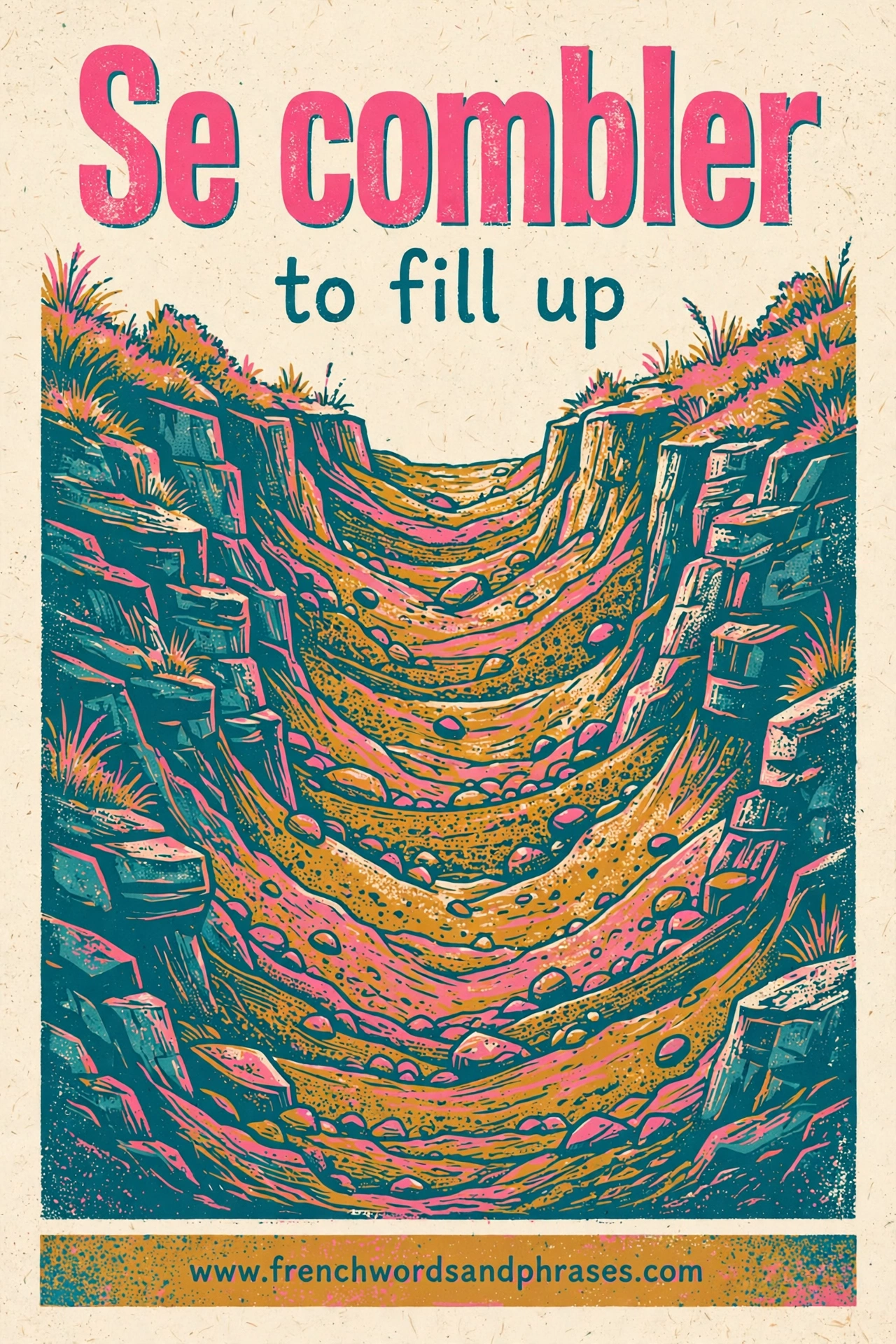
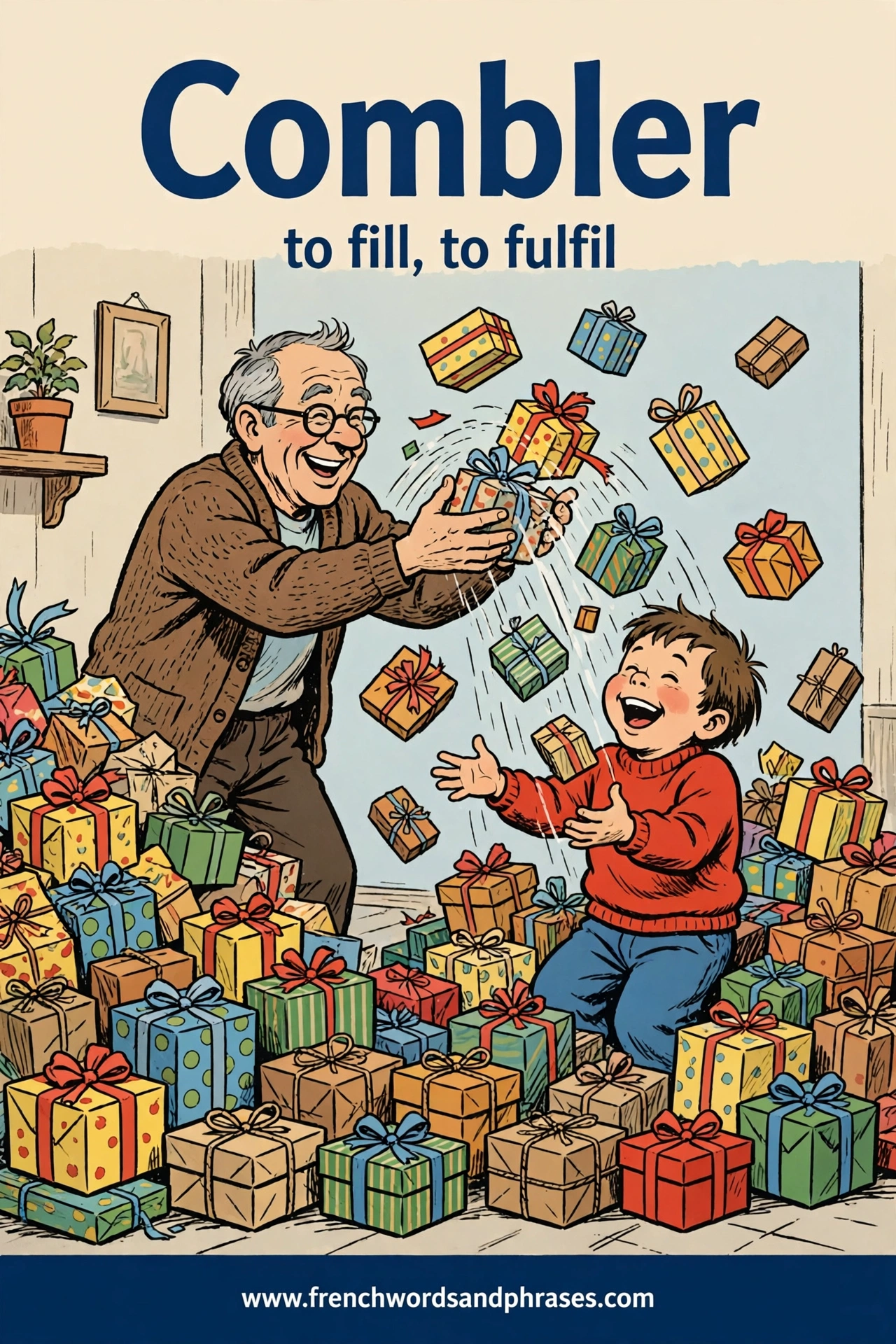
A gardener filling a ditch with earth, a grandmother filling a child’s arms with presents, a book filling a lonely evening — combler is the verb of filling to the brim: holes, gaps, silences and hearts, until the empty space is gone.
In this guide, you’ll learn how to conjugate combler in all the major French tenses and moods. Explore complete conjugation tables, French examples, English translations, and practice quizzes.
Understanding the French Verb Combler
Combler is a regular French verb belonging to the first group of verbs, those ending in-er.
It means to fill, to fulfil. It ranges from the builder’s yard (combler une tranchée) to the balance sheet (combler un déficit) to the heart (combler un vide affectif). Its opposite number is creuser, to dig or deepen: what time creuse, kindness comble.
Verb classification: First group (-er)
Auxiliary verb: Avoir
Past participle: comblé
Present participle: comblant
English equivalents: To fill, to fill in, to fulfil; combler un trou, un fossé — to fill a hole, a ditch; combler un vide, un manque — to fill a void, a gap; combler un retard — to make up lost time; combler qqn de cadeaux, de bonheur — to shower someone with presents, with happiness; être comblé — to want for nothing, to be fulfilled.
One important detail: combler is a regular -er verb — je comble, nous comblons, past participle comblé — and its grammar turns on what follows it. With a hole or a gap, the object is the empty space itself: combler un trou, combler un retard. With a person, the pattern is combler quelqu’un de quelque chose: elle comble ses enfants de cadeaux — she showers her children with presents — and the participle then becomes a state: un homme comblé, a man who has everything.
Experience the Word
Combler is the verb of the brim — of empty places filled until they overflow.
Imagine a grandfather at Christmas, watching his granddaughter open parcel after parcel. Books, a scarf, a wooden horse, chocolates hidden in the toe of her stocking — il la comble de cadeaux, and her laughter fills the room the way earth fills a ditch: completely.
The little girl wants for nothing. She is fulfilled — comblée — and so, watching her, is he.
How to Conjugate Combler: Complete French Conjugation Guide
Let’s explore every major conjugation of combler, beginning with the indicative mood.
How to Conjugate Combler in the Indicative Mood
The indicative mood is used to express facts, observations, actions, and events.
How to Conjugate Combler in the Present Tense (Présent)
Used for actions happening now, habitual actions, and general truths.
| Subject | Conjugation |
|---|---|
| je | comble |
| tu | combles |
| il / elle | comble |
| nous | comblons |
| vous | comblez |
| ils / elles | comblent |
Example
Son arrivée comble un grand vide dans l’équipe.
Her arrival fills a great gap in the team.
Quick Quiz 1
Complete the sentence:
Nous ______ le trou avec du sable.
Reveal the answer
comblons
Nous comblons le trou avec du sable.
We are filling the hole with sand.
How to Conjugate Combler in the Passé Composé
Used for completed actions in the past. Combler takes the auxiliary verb avoir.
| Subject | Conjugation |
|---|---|
| j’ | ai comblé |
| tu | as comblé |
| il / elle | a comblé |
| nous | avons comblé |
| vous | avez comblé |
| ils / elles | ont comblé |
Example
Ils ont comblé le trou avec du gravier.
They filled the hole with gravel.
How to Conjugate Combler in the Imparfait (Imperfect Tense)
Used for habitual past actions, descriptions, and ongoing situations in the past.
| Subject | Conjugation |
|---|---|
| je | comblais |
| tu | comblais |
| il / elle | comblait |
| nous | comblions |
| vous | combliez |
| ils / elles | comblaient |
Example
La lecture comblait ses soirées solitaires.
Reading used to fill his lonely evenings.
Quick Quiz 2
Choose the correct form:
They filled the gap.
Ils ______ le vide. (ont comblé / sont comblés)
Reveal the answer
ont comblé
Ils ont comblé le vide.
Combler takes avoir.
How to Conjugate Combler in the Plus-que-parfait
Used to describe an action that had already been completed before another past event.
| Subject | Conjugation |
|---|---|
| j’ | avais comblé |
| tu | avais comblé |
| il / elle | avait comblé |
| nous | avions comblé |
| vous | aviez comblé |
| ils / elles | avaient comblé |
Example
Elle avait comblé tous ses enfants de cadeaux.
She had showered all her children with presents.
How to Conjugate Combler in the Passé Simple
Primarily used in formal writing, literature, and historical narratives. It is rarely used in everyday conversation.
| Subject | Conjugation |
|---|---|
| je | comblai |
| tu | comblas |
| il / elle | combla |
| nous | comblâmes |
| vous | comblâtes |
| ils / elles | comblèrent |
Example
Le jardinier combla la fosse avant l’hiver.
The gardener filled the pit before winter.
How to Conjugate Combler in the Passé Antérieur
A literary tense used to express an action completed immediately before another past action, generally in the passé simple.
| Subject | Conjugation |
|---|---|
| j’ | eus comblé |
| tu | eus comblé |
| il / elle | eut comblé |
| nous | eûmes comblé |
| vous | eûtes comblé |
| ils / elles | eurent comblé |
Example
Quand il eut comblé le fossé, il planta une haie.
When he had filled the ditch, he planted a hedge.
How to Conjugate Combler in the Future Tense (Futur Simple)
Used to describe actions that will take place in the future.
| Subject | Conjugation |
|---|---|
| je | comblerai |
| tu | combleras |
| il / elle | comblera |
| nous | comblerons |
| vous | comblerez |
| ils / elles | combleront |
Example
Ce don comblera nos besoins pour un an.
This gift will meet our needs for a year.
How to Conjugate Combler in the Futur Antérieur (Future Perfect)
Used for an action that will have been completed before a particular point in the future.
| Subject | Conjugation |
|---|---|
| j’ | aurai comblé |
| tu | auras comblé |
| il / elle | aura comblé |
| nous | aurons comblé |
| vous | aurez comblé |
| ils / elles | auront comblé |
Example
À Noël, elle aura comblé ses petits-enfants de jouets.
By Christmas, she will have showered her grandchildren with toys.
How to Conjugate Combler in the Near Future (Futur Proche)
Used to describe something that is going to happen soon. Formed with aller + infinitive.
| Subject | Conjugation |
|---|---|
| je | vais combler |
| tu | vas combler |
| il / elle | va combler |
| nous | allons combler |
| vous | allez combler |
| ils / elles | vont combler |
Example
Nous allons combler le retard dès demain.
We are going to make up the lost time starting tomorrow.
How to Conjugate Combler in the Conditional Mood
The conditional mood expresses what would happen under certain circumstances. It is also frequently used to make polite requests or express wishes.
How to Conjugate Combler in the Present Conditional
| Subject | Conjugation |
|---|---|
| je | comblerais |
| tu | comblerais |
| il / elle | comblerait |
| nous | comblerions |
| vous | combleriez |
| ils / elles | combleraient |
Example
Un peu plus d’argent comblerait le déficit.
A little more money would cover the deficit.
How to Conjugate Combler in the Past Conditional
| Subject | Conjugation |
|---|---|
| j’ | aurais comblé |
| tu | aurais comblé |
| il / elle | aurait comblé |
| nous | aurions comblé |
| vous | auriez comblé |
| ils / elles | auraient comblé |
Example
Tu aurais comblé ta mère de joie avec cette nouvelle.
You would have filled your mother with joy with that news.
Combler in the Literary Past Conditional Form
This less common literary form uses the imperfect subjunctive of avoir.
| Subject | Conjugation |
|---|---|
| j’ | eusse comblé |
| tu | eusses comblé |
| il / elle | eût comblé |
| nous | eussions comblé |
| vous | eussiez comblé |
| ils / elles | eussent comblé |
Example
Il eût comblé la princesse de présents.
He would have showered the princess with gifts.
How to Conjugate Combler in the Subjunctive Mood
The subjunctive is used to express wishes, emotions, doubts, necessity, and uncertainty. It frequently follows expressions such as il faut que (it is necessary that) or bien que (although).
How to Conjugate Combler in the Present Subjunctive
| Subject | Conjugation |
|---|---|
| que je | comble |
| que tu | combles |
| qu’il / qu’elle | comble |
| que nous | comblions |
| que vous | combliez |
| qu’ils / qu’elles | comblent |
Example
Il faut que ce stage comble vos attentes.
This placement must meet your expectations.
Quick Quiz 3
Complete the sentence using the subjunctive:
Il faut que ce stage ______ tes attentes.
Reveal the answer
comble
Il faut que ce stage comble tes attentes.
This placement must meet your expectations.
How to Conjugate Combler in the Imperfect Subjunctive
A literary tense, rarely encountered in modern spoken French.
| Subject | Conjugation |
|---|---|
| que je | comblasse |
| que tu | comblasses |
| qu’il / qu’elle | comblât |
| que nous | comblassions |
| que vous | comblassiez |
| qu’ils / qu’elles | comblassent |
Example
Je voulais qu’elle comblât le vide laissé par son départ.
I wanted her to fill the void left by her departure.
How to Conjugate Combler in the Pluperfect Subjunctive
A literary construction used to express an action completed before another past action.
| Subject | Conjugation |
|---|---|
| que j’ | eusse comblé |
| que tu | eusses comblé |
| qu’il / qu’elle | eût comblé |
| que nous | eussions comblé |
| que vous | eussiez comblé |
| qu’ils / qu’elles | eussent comblé |
Example
On racontait qu’il eût comblé la reine de diamants.
People said he had showered the queen with diamonds.
How to Conjugate Combler in the Past Subjunctive
| Subject | Conjugation |
|---|---|
| que j’ | aie comblé |
| que tu | aies comblé |
| qu’il / qu’elle | ait comblé |
| que nous | ayons comblé |
| que vous | ayez comblé |
| qu’ils / qu’elles | aient comblé |
Example
Je suis heureux que ce travail ait comblé vos espérances.
I am happy this work has fulfilled your hopes.
How to Conjugate Combler in the Imperative
The imperative is used to give commands, instructions, invitations, or suggestions. Subject pronouns are omitted.
How to Conjugate Combler in the Present Imperative
| Person | Conjugation |
|---|---|
| (tu) | comble |
| (nous) | comblons |
| (vous) | comblez |
Example
Comble ce trou avant qu’il pleuve !
Fill this hole before it rains!
Quick Quiz 4
How would you say Fill this hole (tu form)?
Reveal the answer
Comble ce trou !
French Participles of Combler
Participles are verb forms that can be used in compound tenses and other grammatical constructions.
Present Participle of Combler
comblant
En comblant le retard, l’équipe a retrouvé le sourire.
By making up the lost time, the team found its smile again.
Past Participle of Combler
comblé
Comblé de bonheur, le vieil homme souriait sans cesse.
Filled with happiness, the old man smiled constantly.
Combler in Everyday French: Real-Life Examples
Now that you know the conjugations, let’s see how combler appears in everyday French.
Example 1 — Present
Ce travail comble toutes mes attentes.
This work fulfils all my expectations.
Example 2 — Passé composé
Ils ont comblé le trou.
They filled the hole.
Example 3 — Imparfait
La lecture comblait ses soirées.
Reading used to fill her evenings.
Example 4 — Future
Ce don comblera nos besoins.
This gift will meet our needs.
Example 5 — Conditional
Un peu d’aide comblerait le retard.
A little help would make up the lost time.
Example 6 — Imperative
Comble ce fossé avant l’hiver !
Fill this ditch before winter!
Beyond Translation: The Meaning of Combler
The word hides a measure: Latin cumulus is a heap, and comble is the heaped-up top of a full measure — the extra that makes the basket overflow.
That is why comblé means more than full.
Un homme comblé is not just satisfied; he is heaped up with good things — de bonheur, d’honneurs, d’amour — filled past the brim, the way a good measure should be.
How to Remember the French Verb Combler
Remember it this way: Combler is about the basket filled past the brim — holes, gaps and hearts alike.
- Two patterns: combler un trou (fill the gap) and combler qqn de cadeaux (shower someone with).
- Être comblé = to want for nothing: un homme comblé, une femme comblée.
- Regular -er: je comble, nous comblons, past participle comblé, auxiliary avoir.
The key idea is the basket filled past the brim — holes, gaps and hearts alike.
Test Your Knowledge of Combler
Let’s see how much you’ve learned. Try answering these questions before revealing the answers.
Question 1
What is the difference between combler un trou and combler qqn de cadeaux?
Reveal the answer
The first fills the gap itself; the second showers a person — combler qqn de qqch: elle comble ses enfants de cadeaux.
Question 2
How do you say They filled the ditch in French?
Reveal the answer
Ils ont comblé le fossé.
Question 3
Translate: A little more money would cover the deficit.
Reveal the answer
Un peu plus d’argent comblerait le déficit.
Question 4
What is the past participle of combler?
Reveal the answer
Comblé — un homme comblé wants for nothing.
Question 5
Complete the sentence:
Il faut que ce travail ______ vos attentes.
Reveal the answer
comble
Il faut que ce travail comble vos attentes.
This work must fulfil your expectations.
Your Final Challenge
Can You Use It?
How would you say this in French?
A simple smile can fill the emptiness of a whole day.
Reveal the answer
Un simple sourire peut combler le vide d’une journée entière.
A simple smile can fill the emptiness of a whole day.
A little French. A little curiosity. A richer everyday life.
LEARN FRENCH ONE WORD AT A TIME