A French Word to Live By
How to Conjugate Caser in French
/ka.ze/
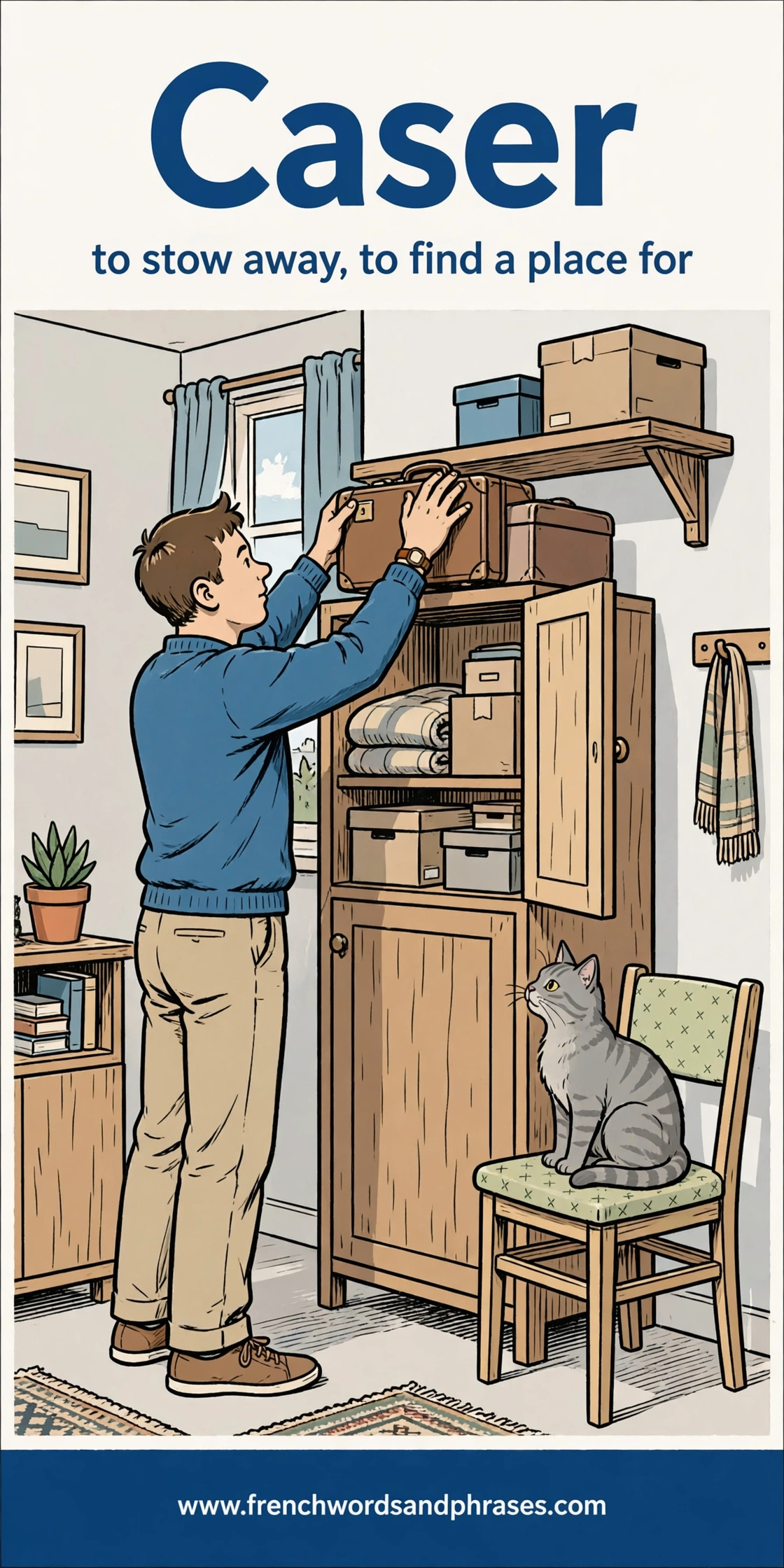
Caser means to stow away, to find a place for — to fit a thing, an appointment or a person into the space available.
A small flat, a big family, suitcases that must somehow vanish into a cupboard before the guests arrive — caser is the everyday verb of fitting things in: every object, every plan and sometimes every person needs a place, and caser finds it.
In this guide, you’ll learn how to conjugate caser in all the major French tenses and moods. Explore complete conjugation tables, French examples, English translations, and practice quizzes.
Understanding the French Verb Caser
Caser is a regular French verb belonging to the first group of verbs, those ending in-er.
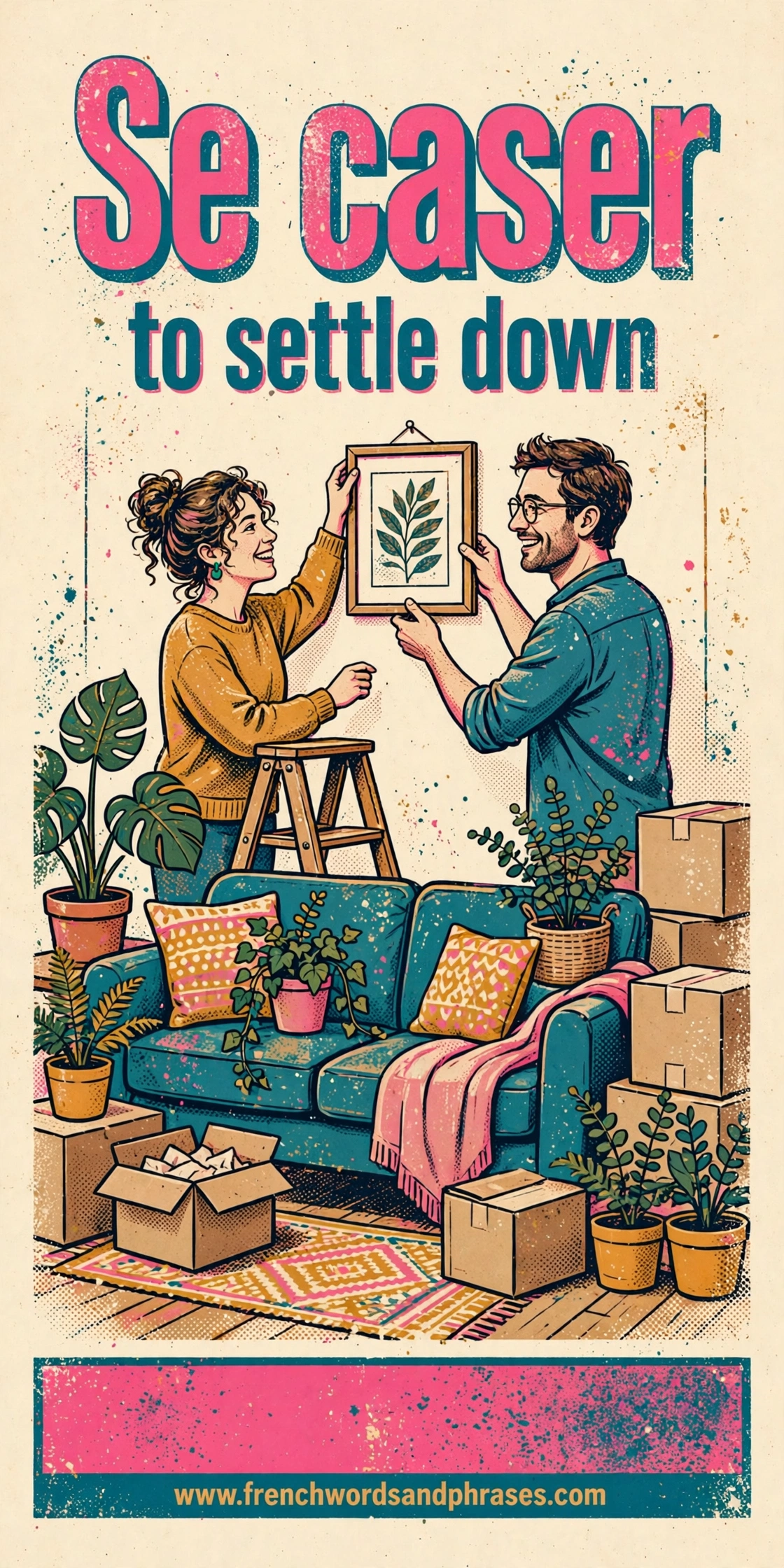
It means to stow away, to find a place for. It is used for objects packed into tight spaces, for appointments squeezed into a full diary, and familiarly for people — caser ses enfants for the holidays, caser un neveu dans une entreprise — finding someone a berth in life; its reflexive, se caser, means to settle down.
Verb classification: First group (-er)
Auxiliary verb: Avoir
Past participle: casé
Present participle: casant
English equivalents: To stow away, to fit in, to find a place for; caser quelque chose dans un tiroir — to stow something in a drawer; caser un rendez-vous — to fit in an appointment; caser les enfants chez leur grand-mère — to place the children at their grandmother’s; caser quelqu’un — to find someone a place, a job (familiar).
One important detail: watch the single s — caser (to stow away) is not casser (to break), and the ear hears the difference: je case /kaz/ against je casse /kas/. Caser comes from the idea of a case, a compartment or pigeonhole: to case something is to give it its compartment. Regular -er: je case, nous casons, past participle casé.
Experience the Word
Caser is the verb of the perfect fit — the suitcase that closes, the meeting that squeezes in, the nephew who finally has a job.
Imagine the night before a departure. The car boot is full, the last bag stands open on the bed, and the whole family debates: the shoes go under the seat, the coats on top — on case tout, centimetre by centimetre, and the boot lid closes with a click of victory.
Nothing was thrown away. Everything was stowed — casé — each thing in the place made for it.
How to Conjugate Caser: Complete French Conjugation Guide
Let’s explore every major conjugation of caser, beginning with the indicative mood.
How to Conjugate Caser in the Indicative Mood
The indicative mood is used to express facts, observations, actions, and events.
How to Conjugate Caser in the Present Tense (Présent)
Used for actions happening now, habitual actions, and general truths.
| Subject | Conjugation |
|---|---|
| je | case |
| tu | cases |
| il / elle | case |
| nous | casons |
| vous | casez |
| ils / elles | casent |
Example
Elle case ses livres dans le dernier tiroir du bureau.
She stows her books in the last drawer of the desk.
Quick Quiz 1
Complete the sentence:
Nous ______ les cartons au grenier.
Reveal the answer
casons
Nous casons les cartons au grenier.
We are stowing the boxes in the attic.
How to Conjugate Caser in the Passé Composé
Used for completed actions in the past. Caser takes the auxiliary verb avoir.
| Subject | Conjugation |
|---|---|
| j’ | ai casé |
| tu | as casé |
| il / elle | a casé |
| nous | avons casé |
| vous | avez casé |
| ils / elles | ont casé |
Example
Nous avons casé toutes les valises dans le coffre de la voiture.
We fitted all the suitcases into the boot of the car.
How to Conjugate Caser in the Imparfait (Imperfect Tense)
Used for habitual past actions, descriptions, and ongoing situations in the past.
| Subject | Conjugation |
|---|---|
| je | casais |
| tu | casais |
| il / elle | casait |
| nous | casions |
| vous | casiez |
| ils / elles | casaient |
Example
Il casait toujours un rendez-vous entre deux réunions.
He always used to fit an appointment in between two meetings.
Quick Quiz 2
Choose the correct form:
We fitted all the suitcases into the boot.
Nous ______ toutes les valises dans le coffre. (avons casé / avons cassé)
Reveal the answer
avons casé
Nous avons casé toutes les valises dans le coffre.
Caser, with one s, is to stow away; casser would mean to break.
How to Conjugate Caser in the Plus-que-parfait
Used to describe an action that had already been completed before another past event.
| Subject | Conjugation |
|---|---|
| j’ | avais casé |
| tu | avais casé |
| il / elle | avait casé |
| nous | avions casé |
| vous | aviez casé |
| ils / elles | avaient casé |
Example
Elle avait casé les enfants chez leur tante pour le week-end.
She had placed the children at their aunt’s for the weekend.
How to Conjugate Caser in the Passé Simple
Primarily used in formal writing, literature, and historical narratives. It is rarely used in everyday conversation.
| Subject | Conjugation |
|---|---|
| je | casai |
| tu | casas |
| il / elle | casa |
| nous | casâmes |
| vous | casâtes |
| ils / elles | casèrent |
Example
Le déménageur casa les meubles dans le camion en une heure.
The removal man fitted the furniture into the lorry in an hour.
How to Conjugate Caser in the Passé Antérieur
A literary tense used to express an action completed immediately before another past action, generally in the passé simple.
| Subject | Conjugation |
|---|---|
| j’ | eus casé |
| tu | eus casé |
| il / elle | eut casé |
| nous | eûmes casé |
| vous | eûtes casé |
| ils / elles | eurent casé |
Example
Quand il eut casé le dernier carton, il ferma la porte du grenier.
When he had stowed the last box, he shut the attic door.
How to Conjugate Caser in the Future Tense (Futur Simple)
Used to describe actions that will take place in the future.
| Subject | Conjugation |
|---|---|
| je | caserai |
| tu | caseras |
| il / elle | casera |
| nous | caserons |
| vous | caserez |
| ils / elles | caseront |
Example
Demain, je caserai les conserves dans le cellier.
Tomorrow, I will stow the preserves in the cellar.
How to Conjugate Caser in the Futur Antérieur (Future Perfect)
Used for an action that will have been completed before a particular point in the future.
| Subject | Conjugation |
|---|---|
| j’ | aurai casé |
| tu | auras casé |
| il / elle | aura casé |
| nous | aurons casé |
| vous | aurez casé |
| ils / elles | auront casé |
Example
À ce soir, nous aurons casé tous les invités dans la maison.
By this evening, we will have found room for all the guests in the house.
How to Conjugate Caser in the Near Future (Futur Proche)
Used to describe something that is going to happen soon. Formed with aller + infinitive.
| Subject | Conjugation |
|---|---|
| je | vais caser |
| tu | vas caser |
| il / elle | va caser |
| nous | allons caser |
| vous | allez caser |
| ils / elles | vont caser |
Example
Je vais caser cette réunion jeudi entre neuf et dix heures.
I am going to fit this meeting in on Thursday between nine and ten.
How to Conjugate Caser in the Conditional Mood
The conditional mood expresses what would happen under certain circumstances. It is also frequently used to make polite requests or express wishes.
How to Conjugate Caser in the Present Conditional
| Subject | Conjugation |
|---|---|
| je | caserais |
| tu | caserais |
| il / elle | caserait |
| nous | caserions |
| vous | caseriez |
| ils / elles | caseraient |
Example
On caserait encore deux cartons si le placard était plus grand.
We could fit two more boxes in if the cupboard were bigger.
How to Conjugate Caser in the Past Conditional
| Subject | Conjugation |
|---|---|
| j’ | aurais casé |
| tu | aurais casé |
| il / elle | aurait casé |
| nous | aurions casé |
| vous | auriez casé |
| ils / elles | auraient casé |
Example
Tu aurais casé la table dans la cuisine avec un peu d’effort.
You could have fitted the table into the kitchen with a little effort.
Caser in the Literary Past Conditional Form
This less common literary form uses the imperfect subjunctive of avoir.
| Subject | Conjugation |
|---|---|
| j’ | eusse casé |
| tu | eusses casé |
| il / elle | eût casé |
| nous | eussions casé |
| vous | eussiez casé |
| ils / elles | eussent casé |
Example
Il eût casé toute sa bibliothèque dans une seule pièce.
He would have stowed his whole library in a single room.
How to Conjugate Caser in the Subjunctive Mood
The subjunctive is used to express wishes, emotions, doubts, necessity, and uncertainty. It frequently follows expressions such as il faut que (it is necessary that) or bien que (although).
How to Conjugate Caser in the Present Subjunctive
| Subject | Conjugation |
|---|---|
| que je | case |
| que tu | cases |
| qu’il / qu’elle | case |
| que nous | casions |
| que vous | casiez |
| qu’ils / qu’elles | casent |
Example
Il faut que je case ce rendez-vous dans ma semaine.
I must fit this appointment into my week.
Quick Quiz 3
Complete the sentence using the subjunctive:
Il faut que tu ______ les verres dans le carton fragile.
Reveal the answer
cases
Il faut que tu cases les verres dans le carton fragile.
You must stow the glasses in the fragile box.
How to Conjugate Caser in the Imperfect Subjunctive
A literary tense, rarely encountered in modern spoken French.
| Subject | Conjugation |
|---|---|
| que je | casasse |
| que tu | casasses |
| qu’il / qu’elle | casât |
| que nous | casassions |
| que vous | casassiez |
| qu’ils / qu’elles | casassent |
Example
Elle cherchait un meuble où l’on casât les jouets des enfants.
She was looking for a piece of furniture where the children’s toys could be stowed.
How to Conjugate Caser in the Pluperfect Subjunctive
A literary construction used to express an action completed before another past action.
| Subject | Conjugation |
|---|---|
| que j’ | eusse casé |
| que tu | eusses casé |
| qu’il / qu’elle | eût casé |
| que nous | eussions casé |
| que vous | eussiez casé |
| qu’ils / qu’elles | eussent casé |
Example
On s’étonnait qu’il eût casé tant de monde dans si peu de place.
People were amazed he had fitted so many people into so little space.
How to Conjugate Caser in the Past Subjunctive
| Subject | Conjugation |
|---|---|
| que j’ | aie casé |
| que tu | aies casé |
| qu’il / qu’elle | ait casé |
| que nous | ayons casé |
| que vous | ayez casé |
| qu’ils / qu’elles | aient casé |
Example
Je suis content que nous ayons casé tous les cartons au grenier.
I am glad we stowed all the boxes in the attic.
How to Conjugate Caser in the Imperative
The imperative is used to give commands, instructions, invitations, or suggestions. Subject pronouns are omitted.
How to Conjugate Caser in the Present Imperative
| Person | Conjugation |
|---|---|
| (tu) | case |
| (nous) | casons |
| (vous) | casez |
Example
Case les verres dans le carton marqué fragile !
Stow the glasses in the box marked fragile!
Quick Quiz 4
How would you say Stow the glasses in the box (tu form)?
Reveal the answer
Case les verres dans le carton !
French Participles of Caser
Participles are verb forms that can be used in compound tenses and other grammatical constructions.
Present Participle of Caser
casant
En casant les affaires des enfants, elle a retrouvé leurs premiers dessins.
While stowing the children’s things away, she found their first drawings.
Past Participle of Caser
casé
Casées au fond du coffre, les valises n’ont pas bougé du voyage.
Stowed at the bottom of the boot, the suitcases did not move during the journey.
Caser in Everyday French: Real-Life Examples
Now that you know the conjugations, let’s see how caser appears in everyday French.
Example 1 — Present
Elle case ses livres dans le dernier tiroir.
She stows her books in the last drawer.
Example 2 — Passé composé
Nous avons casé toutes les valises dans le coffre.
We fitted all the suitcases into the boot.
Example 3 — Imparfait
Il casait toujours un rendez-vous entre deux réunions.
He always used to fit an appointment in between two meetings.
Example 4 — Future
Je caserai les conserves dans le cellier.
I will stow the preserves in the cellar.
Example 5 — Conditional
On caserait deux cartons de plus dans ce placard.
We could fit two more boxes into this cupboard.
Example 6 — Imperative
Case les verres dans le carton fragile !
Stow the glasses in the fragile box!
Beyond Translation: The Meaning of Caser
English case in the sense of a box is a cousin, but French caser comes from une case — one square of a grid, one compartment of a cabinet.
To case is to give each thing its square.
That is why the verb stretches so naturally from suitcases to diaries to nephews: a place in the boot, an hour in the week and a job in a firm are all, in French, the same happy click of something finding its compartment.
How to Remember the French Verb Caser
Remember it this way: Caser is about every thing in its compartment — the boot lid clicks shut.
- Une case is one compartment of a grid; caser is to put something into its compartment — stow it, fit it in.
- One s, not two: caser (to stow) is not casser (to break) — je case /kaz/, je casse /kas/.
- Regular -er: je case, nous casons, past participle casé.
The key idea is every thing in its compartment — the boot lid clicks shut.
Test Your Knowledge of Caser
Let’s see how much you’ve learned. Try answering these questions before revealing the answers.
Question 1
What is the difference between caser and casser?
Reveal the answer
Caser (one s) is to stow away, to find a place for; casser (two s) is to break.
Question 2
How do you say We fitted all the suitcases into the boot in French?
Reveal the answer
Nous avons casé toutes les valises dans le coffre.
Question 3
Translate: I must fit this appointment into my week.
Reveal the answer
Il faut que je case ce rendez-vous dans ma semaine.
Question 4
What is the past participle of caser?
Reveal the answer
Casé.
Question 5
Complete the sentence:
Il faut que je ______ ce rendez-vous jeudi matin.
Reveal the answer
case
Il faut que je case ce rendez-vous jeudi matin.
I must fit this appointment in on Thursday morning.
Your Final Challenge
Can You Use It?
How would you say this in French?
She stows the last suitcase in the boot, and the lid closes like a victory.
Reveal the answer
Elle case la dernière valise dans le coffre, et le couvercle se ferme comme une victoire.
She stows the last suitcase in the boot, and the lid closes like a victory.
A little French. A little curiosity. A richer everyday life.
LEARN FRENCH ONE WORD AT A TIME