A French Word to Live By
How to Conjugate Chancir in French
/ʃɑ̃.siʁ/
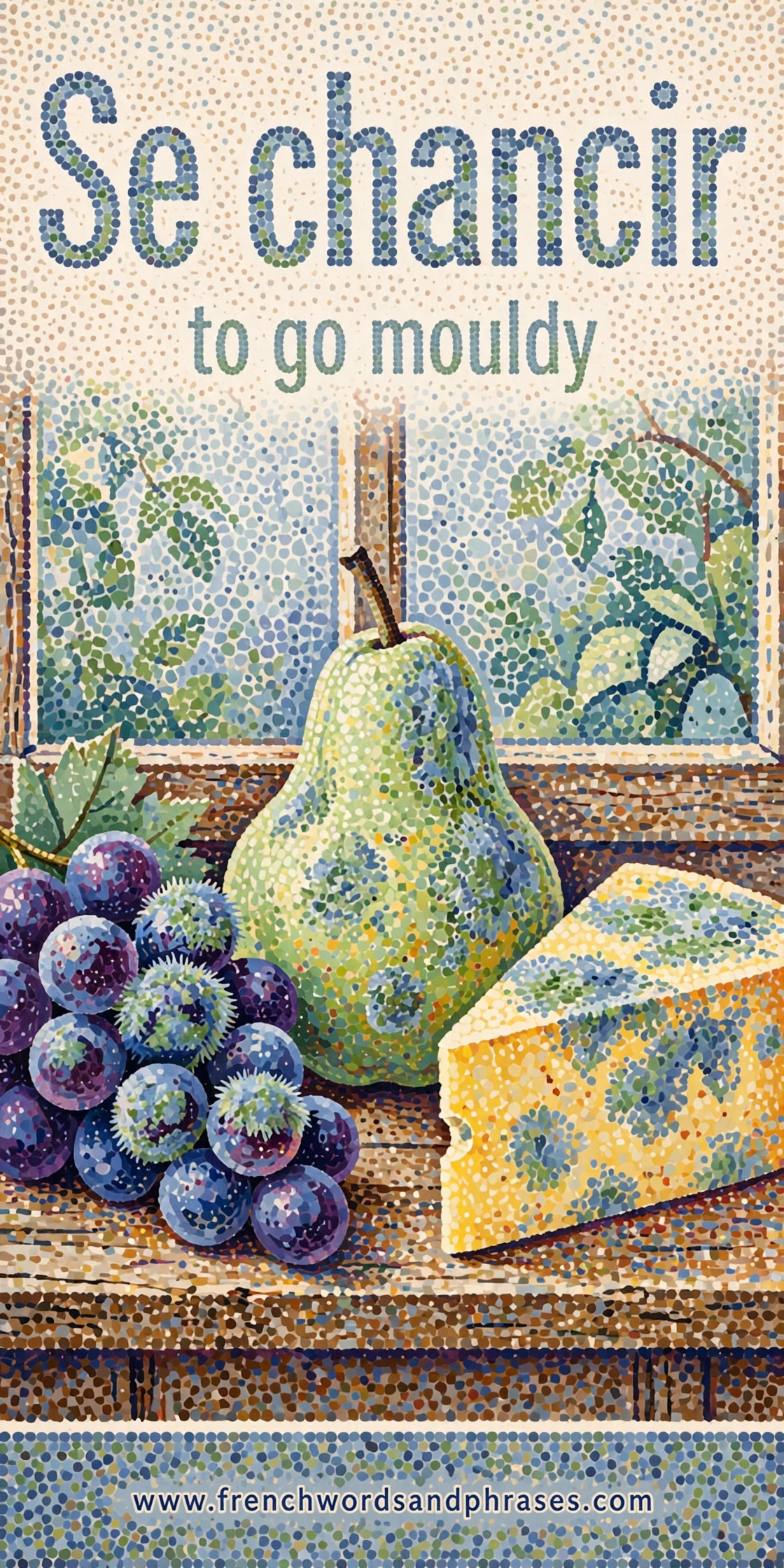
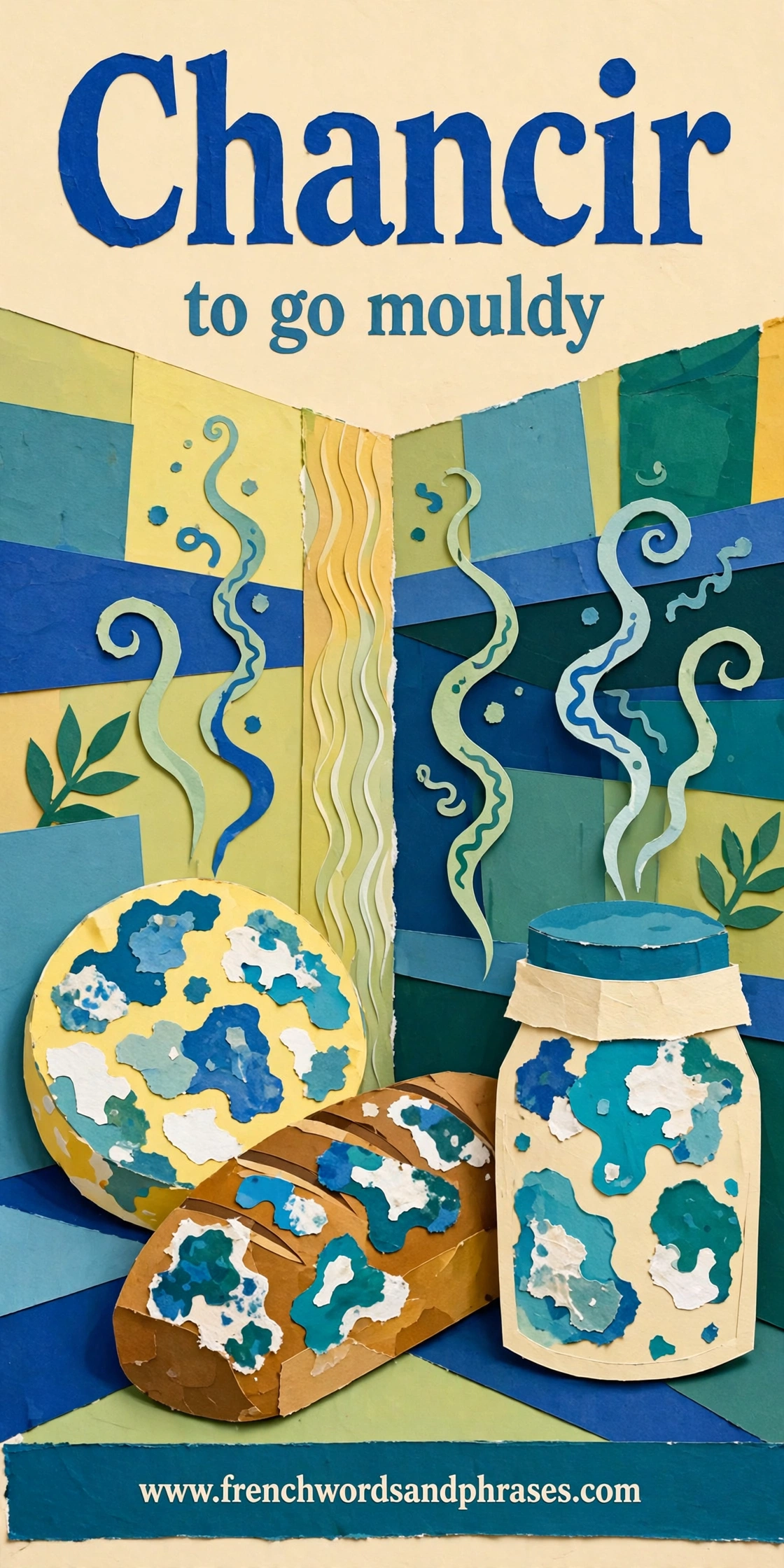
Chancir means to go mouldy — to turn, spoil and bloom with mould, as wine, bread and preserves do in a damp cellar.
A forgotten loaf at the back of the pantry, a bottle of wine left open in a damp cave, jars of jam furred with green — chancir is the quiet verb of spoiling: food and wine slowly going mouldy when nobody is watching.
In this guide, you’ll learn how to conjugate chancir in all the major French tenses and moods. Explore complete conjugation tables, French examples, English translations, and practice quizzes.
Understanding the French Verb Chancir
Chancir is a regular French verb belonging to the second group of verbs, those ending in -ir.
It means to go mouldy. It is commonly used of wine that is turning in a badly sealed bottle, of bread, cheese and preserves going mouldy in damp storage, and of flour and grain spoiling. It belongs to the vocabulary of cellars and pantries rather than the dinner table — a sober, slightly old-fashioned word that farmers and winemakers still use without thinking.
Verb classification: Second group (-ir)
Auxiliary verb: Avoir
Past participle: chanci
Present participle: chancissant
English equivalents: To go mouldy, to turn, to spoil; du pain chanci — mouldy bread; le vin chancit — the wine is turning; faire chancir — to let go mouldy; chanci, chancie — mouldy (the adjective).
One important detail: chancir is a regular second-group -ir verb, conjugated exactly like finir: je chancis, nous chancissons, ils chancissent, past participle chanci. Its natural subjects are things, not people — wine, bread, cheese, jam, flour. In everyday French you will meet it far more often in its pronominal form, se chancir, which has its own page; this plain form survives in cellars, farms and older usage. The matching adjective is chanci: du pain chanci, mouldy bread.
Experience the Word
Chancir is the verb of neglect — nothing dramatic happens; a door stays shut, the air stays damp, and slowly the mould moves in.
Imagine the farmhouse cellar in November. The good bottles were drunk at the harvest; one, badly corked, was forgotten behind the jars. By spring the wine inside a chanci — turned, clouded, undrinkable — a whole year of sunshine lost to a damp corner and a bad cork.
Nobody dropped it or shook it. It simply chancit — went mouldy, quietly, in the dark.
How to Conjugate Chancir: Complete French Conjugation Guide
Let’s explore every major conjugation of chancir, beginning with the indicative mood.
How to Conjugate Chancir in the Indicative Mood
The indicative mood is used to express facts, observations, actions, and events.
How to Conjugate Chancir in the Present Tense (Présent)
Used for actions happening now, habitual actions, and general truths.
| Subject | Conjugation |
|---|---|
| je | chancis |
| tu | chancis |
| il / elle | chancit |
| nous | chancissons |
| vous | chancissez |
| ils / elles | chancissent |
Example
Le pain chancit vite dans cette cuisine humide.
Bread goes mouldy quickly in this damp kitchen.
Quick Quiz 1
Complete the sentence:
Les confitures ______ dans les caves humides.
Reveal the answer
chancissent
Les confitures chancissent dans les caves humides.
Jams go mouldy in damp cellars.
How to Conjugate Chancir in the Passé Composé
Used for completed actions in the past. Chancir takes the auxiliary verb avoir.
| Subject | Conjugation |
|---|---|
| j’ | ai chanci |
| tu | as chanci |
| il / elle | a chanci |
| nous | avons chanci |
| vous | avez chanci |
| ils / elles | ont chanci |
Example
Le vin a chanci dans la bouteille mal bouchée.
The wine went off in the badly corked bottle.
How to Conjugate Chancir in the Imparfait (Imperfect Tense)
Used for habitual past actions, descriptions, and ongoing situations in the past.
| Subject | Conjugation |
|---|---|
| je | chancissais |
| tu | chancissais |
| il / elle | chancissait |
| nous | chancissions |
| vous | chancissiez |
| ils / elles | chancissaient |
Example
Autrefois, les confitures chancissaient dès l’automne dans les caves humides.
In the old days, jams used to go mouldy by autumn in damp cellars.
Quick Quiz 2
Choose the correct form:
The wine went off in the bottle.
Le vin ______ dans la bouteille. (a chanci / est chanci)
Reveal the answer
a chanci
Le vin a chanci dans la bouteille.
Chancir takes avoir.
How to Conjugate Chancir in the Plus-que-parfait
Used to describe an action that had already been completed before another past event.
| Subject | Conjugation |
|---|---|
| j’ | avais chanci |
| tu | avais chanci |
| il / elle | avait chanci |
| nous | avions chanci |
| vous | aviez chanci |
| ils / elles | avaient chanci |
Example
La farine avait chanci avant même l’arrivée de l’hiver.
The flour had gone mouldy even before winter arrived.
How to Conjugate Chancir in the Passé Simple
Primarily used in formal writing, literature, and historical narratives. It is rarely used in everyday conversation.
| Subject | Conjugation |
|---|---|
| je | chancis |
| tu | chancis |
| il / elle | chancit |
| nous | chancîmes |
| vous | chancîtes |
| ils / elles | chancirent |
Example
Le cidre chancit dans le tonneau oublié.
The cider went off in the forgotten barrel.
How to Conjugate Chancir in the Passé Antérieur
A literary tense used to express an action completed immediately before another past action, generally in the passé simple.
| Subject | Conjugation |
|---|---|
| j’ | eus chanci |
| tu | eus chanci |
| il / elle | eut chanci |
| nous | eûmes chanci |
| vous | eûtes chanci |
| ils / elles | eurent chanci |
Example
Quand le fromage eut chanci, on le jeta aux poules.
When the cheese had gone mouldy, it was thrown to the hens.
How to Conjugate Chancir in the Future Tense (Futur Simple)
Used to describe actions that will take place in the future.
| Subject | Conjugation |
|---|---|
| je | chancirai |
| tu | chanciras |
| il / elle | chancira |
| nous | chancirons |
| vous | chancirez |
| ils / elles | chanciront |
Example
Si tu laisses ce pain dehors, il chancira en trois jours.
If you leave this bread out, it will go mouldy in three days.
How to Conjugate Chancir in the Futur Antérieur (Future Perfect)
Used for an action that will have been completed before a particular point in the future.
| Subject | Conjugation |
|---|---|
| j’ | aurai chanci |
| tu | auras chanci |
| il / elle | aura chanci |
| nous | aurons chanci |
| vous | aurez chanci |
| ils / elles | auront chanci |
Example
À la fin de l’été, la moitié des conserves aura chanci.
By the end of summer, half the preserves will have gone mouldy.
How to Conjugate Chancir in the Near Future (Futur Proche)
Used to describe something that is going to happen soon. Formed with aller + infinitive.
| Subject | Conjugation |
|---|---|
| je | vais chancir |
| tu | vas chancir |
| il / elle | va chancir |
| nous | allons chancir |
| vous | allez chancir |
| ils / elles | vont chancir |
Example
Ce vin va chancir si tu ne le bois pas vite.
This wine is going to turn if you do not drink it soon.
How to Conjugate Chancir in the Conditional Mood
The conditional mood expresses what would happen under certain circumstances. It is also frequently used to make polite requests or express wishes.
How to Conjugate Chancir in the Present Conditional
| Subject | Conjugation |
|---|---|
| je | chancirais |
| tu | chancirais |
| il / elle | chancirait |
| nous | chancirions |
| vous | chanciriez |
| ils / elles | chanciraient |
Example
Dans une cave sèche, le pain chancirait moins vite.
In a dry cellar, bread would go mouldy less quickly.
How to Conjugate Chancir in the Past Conditional
| Subject | Conjugation |
|---|---|
| j’ | aurais chanci |
| tu | aurais chanci |
| il / elle | aurait chanci |
| nous | aurions chanci |
| vous | auriez chanci |
| ils / elles | auraient chanci |
Example
Le vin aurait chanci de toute façon dans cette chaleur.
The wine would have gone off anyway in this heat.
Chancir in the Literary Past Conditional Form
This less common literary form uses the imperfect subjunctive of avoir.
| Subject | Conjugation |
|---|---|
| j’ | eusse chanci |
| tu | eusses chanci |
| il / elle | eût chanci |
| nous | eussions chanci |
| vous | eussiez chanci |
| ils / elles | eussent chanci |
Example
Le pain eût chanci dès la première semaine sans le cellier frais.
The bread would have gone mouldy in the first week without the cool pantry.
How to Conjugate Chancir in the Subjunctive Mood
The subjunctive is used to express wishes, emotions, doubts, necessity, and uncertainty. It frequently follows expressions such as il faut que (it is necessary that) or bien que (although).
How to Conjugate Chancir in the Present Subjunctive
| Subject | Conjugation |
|---|---|
| que je | chancisse |
| que tu | chancisses |
| qu’il / qu’elle | chancisse |
| que nous | chancissions |
| que vous | chancissiez |
| qu’ils / qu’elles | chancissent |
Example
Il est possible que ce vin chancisse s’il reste ouvert.
It is possible this wine will turn if it stays open.
Quick Quiz 3
Complete the sentence using the subjunctive:
Il est possible que ce pain ______ en trois jours.
Reveal the answer
chancisse
Il est possible que ce pain chancisse en trois jours.
It is possible this bread will go mouldy in three days.
How to Conjugate Chancir in the Imperfect Subjunctive
A literary tense, rarely encountered in modern spoken French.
| Subject | Conjugation |
|---|---|
| que je | chancisse |
| que tu | chancisses |
| qu’il / qu’elle | chancît |
| que nous | chancissions |
| que vous | chancissiez |
| qu’ils / qu’elles | chancissent |
Example
On craignait que la récolte chancît dans les greniers humides.
People feared the harvest might go mouldy in the damp granaries.
How to Conjugate Chancir in the Pluperfect Subjunctive
A literary construction used to express an action completed before another past action.
| Subject | Conjugation |
|---|---|
| que j’ | eusse chanci |
| que tu | eusses chanci |
| qu’il / qu’elle | eût chanci |
| que nous | eussions chanci |
| que vous | eussiez chanci |
| qu’ils / qu’elles | eussent chanci |
Example
On disait que le cidre eût chanci avant même Noël.
People said the cider had gone off even before Christmas.
How to Conjugate Chancir in the Past Subjunctive
| Subject | Conjugation |
|---|---|
| que j’ | aie chanci |
| que tu | aies chanci |
| qu’il / qu’elle | ait chanci |
| que nous | ayons chanci |
| que vous | ayez chanci |
| qu’ils / qu’elles | aient chanci |
Example
Je regrette que le fromage ait chanci.
I am sorry the cheese went mouldy.
How to Conjugate Chancir in the Imperative
The imperative is used to give commands, instructions, invitations, or suggestions. Subject pronouns are omitted.
How to Conjugate Chancir in the Present Imperative
| Person | Conjugation |
|---|---|
| (tu) | chancis |
| (nous) | chancissons |
| (vous) | chancissez |
Example
Ne chancis pas, mon vin, pas avant le repas de dimanche !
Don’t go off, my wine, not before Sunday’s dinner!
Quick Quiz 4
How would you say Don’t go mouldy, my bread (tu form)?
Reveal the answer
Ne chancis pas, mon pain !
French Participles of Chancir
Participles are verb forms that can be used in compound tenses and other grammatical constructions.
Present Participle of Chancir
chancissant
En chancissant lentement, le vin prit une odeur de moisi.
Slowly going off, the wine took on a smell of mould.
Past Participle of Chancir
chanci
Chanci par l’humidité, le pain devint immangeable.
Gone mouldy from the damp, the bread became inedible.
Chancir in Everyday French: Real-Life Examples
Now that you know the conjugations, let’s see how chancir appears in everyday French.
Example 1 — Present
Le pain chancit vite dans cette cuisine humide.
Bread goes mouldy quickly in this damp kitchen.
Example 2 — Passé composé
Le vin a chanci dans la bouteille mal bouchée.
The wine went off in the badly corked bottle.
Example 3 — Imparfait
Les confitures chancissaient dans les caves humides.
Jams used to go mouldy in damp cellars.
Example 4 — Future
Ce pain chancira en trois jours s’il reste dehors.
This bread will go mouldy in three days if it stays out.
Example 5 — Conditional
Dans une cave sèche, le pain chancirait moins vite.
In a dry cellar, bread would go mouldy less quickly.
Example 6 — Imperative
Ne chancis pas, mon vin, pas avant dimanche !
Don’t go off, my wine, not before Sunday!
Beyond Translation: The Meaning of Chancir
English has no single everyday verb for this — wine turns, bread goes mouldy, milk goes off; French chancir gathers them all into one cellar word.
Its adjective is the part you will actually use.
Chanci, chancie — mouldy — describes the result: du pain chanci, une confiture chancie. Learn the pair together and you can describe any neglected pantry in France.
How to Remember the French Verb Chancir
Remember it this way: Chancir is about the forgotten bottle and the green loaf at the back of the cellar.
- Finir family: je chancis, nous chancissons, past participle chanci — the same chanci serves as the adjective ‘mouldy’.
- Its subjects are things in cellars: le vin, le pain, le fromage, les confitures.
- Everyday French prefers the pronominal se chancir — but the plain form is the cellar original.
The key idea is the forgotten bottle and the green loaf at the back of the cellar.
Test Your Knowledge of Chancir
Let’s see how much you’ve learned. Try answering these questions before revealing the answers.
Question 1
Which family does chancir belong to, and what is its past participle?
Reveal the answer
The finir family — je chancis, nous chancissons; past participle chanci, which is also the adjective ‘mouldy’.
Question 2
How do you say The wine went off in the badly corked bottle in French?
Reveal the answer
Le vin a chanci dans la bouteille mal bouchée.
Question 3
Translate: Bread goes mouldy quickly in this damp kitchen.
Reveal the answer
Le pain chancit vite dans cette cuisine humide.
Question 4
What is the past participle of chancir?
Reveal the answer
Chanci.
Question 5
Complete the sentence:
Il est possible que ce vin ______ s’il reste ouvert.
Reveal the answer
chancisse
Il est possible que ce vin chancisse s’il reste ouvert.
It is possible this wine will turn if it stays open.
Your Final Challenge
Can You Use It?
How would you say this in French?
The bread goes mouldy at the back of the pantry, a silent witness to weeks of neglect.
Reveal the answer
Le pain chancit au fond du garde-manger, témoin silencieux des semaines d’oubli.
The bread goes mouldy at the back of the pantry, a silent witness to weeks of neglect.
A little French. A little curiosity. A richer everyday life.
LEARN FRENCH ONE WORD AT A TIME