A French Word to Live By
Translate Que to English
/kə/
Que means that.
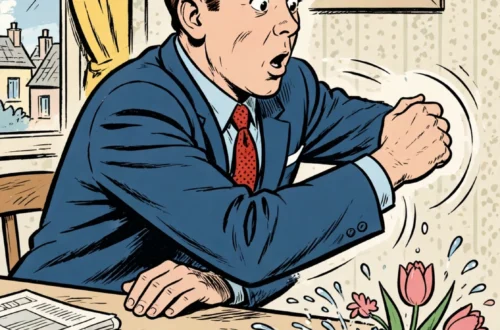
« Qu’est-ce que tu prends ? » — What are you having? The waiter waits, pen in hand. But look closely at the small word doing the asking: by the end of this one meal, que will have linked your thoughts (je sais que…), pointed at your dish (celui que tu as choisi), rationed your wine (je ne bois que de l’eau) and greeted the dessert (que c’est beau !). Five jobs, two letters, one word.
In this guide, you’ll learn what que means in English, how it works as a relative pronoun for ‘that, which, whom’, how it links clauses after verbs of thinking and saying, how it asks ‘what?’, how it says ‘only’ inside ne … que, and how it opens exclamations — plus the subject test that separates que from qui. Explore French examples, English translations, and practice quizzes.
Understanding the French Word Que
Que is the hardest-working small word in French — one shape, five jobs. It is a relative pronoun (that, which, whom), a conjunction (that), an interrogative pronoun (what), the second half of ne … que (only), and the opening cry of French exclamations (how…!).
Que most often means that — but that is only the start of its story. English shares que’s five jobs among six different words — that, which, whom, what, only, how — while French hands them all to one two-letter word. Only que’s seat in the sentence tells you which job it is doing: standing for a thing already named, carrying a whole clause after a verb of thinking, or heading a question to ask ‘what?’.
Type: One word, five jobs — relative pronoun, conjunction, interrogative pronoun, the que of ne … que, and exclamation word
Answers the question: Que ? / Quoi ? — What? — when it asks: que fais-tu ? (what are you doing?)
What follows it: As a relative pronoun, a subject (la pomme que je mange); as a conjunction, a whole clause (je sais que tu viens)
Watch the pair: que vs qui — run the subject test: a verb follows qui (la pomme qui est sur la table), a subject follows que (la pomme que je mange)
One habit never changes, whichever job que is doing: before a vowel or a silent h it shrinks to qu’ — qu’il, qu’elle, qu’est-ce que, qu’Henri. The apostrophe is not decoration; ‘que il’ is simply impossible in French.
Experience the Word
Que is the word French reaches for when one thought has to hold another — the small peg on which half of every sentence hangs.
Imagine a grandmother telling a story at the kitchen table: « le jour que nous sommes partis, je savais que tout changerait » — the day that we left, I knew that everything would change. One que carries the memory, the next carries the knowing — the same small word, working twice in a single breath.
You have not just learned a word for ‘that’. You have found the joint inside the French sentence — the place where one idea takes hold of another.
How to Use Que in French: Complete Guide
Let’s explore how que works in French, beginning with the whole word on one card.
Que at a Glance
Before the details, here is the whole word on one card.
The Whole Word on One Card
Five jobs, one word — que in five lines.
| Job | Que |
|---|---|
| Relative pronoun | that / which / whom — it replaces the direct object: la pomme que je mange (the apple that I am eating) |
| Conjunction | that — it links clauses: je sais que tu parles français (I know that you speak French) |
| Interrogative pronoun | what — it heads a question: que fais-tu ? (what are you doing?) |
| Negative adverb, in ne … que | only — je ne bois que de l’eau (I drink only water) |
| Exclamation word | how … ! — que c’est beau ! (how beautiful it is!) |
Example
La pomme que je mange est verte.
The apple that I am eating is green.
The Pattern in Action: Que Replaces the Object
Que’s first and busiest job: it stands in for a thing already named — the direct object of the verb that follows — so the thing never has to be said twice.
| Pattern | Example |
|---|---|
| que = the direct object of the next verb | le livre que tu lis — the book that you are reading (it is the book being read) |
| a subject always follows it | que je mange, que tu vois, que nous aimons — after que comes je, tu, nous…, never the verb first |
| it can never be omitted | English drops ‘that’ — ‘the book I read’; French keeps que: le livre que je lis |
| it becomes qu’ before a vowel | les fleurs qu’elle a achetées — the flowers that she bought |
Example
J’adore la chanson que tu chantes.
I love the song that you are singing.
Quick Quiz 1
English can drop ‘that’ — ‘the book I read’. Can French drop que?
Reveal the answer
Never — que is compulsory in every one of its jobs.
Le livre que je lis.
The book (that) I am reading.
The Tricky Bit: Que or Qui? Run the Subject Test
The most useful test in French grammar: look at what comes immediately after the little word. A verb means the word is the subject — choose qui. A subject means the word is the object — choose que.
| The test | Example |
|---|---|
| a verb follows → qui (the subject) | la pomme qui est sur la table — the apple that is on the table (the apple IS, so qui does the verb) |
| a subject follows → que (the object) | la pomme que je mange — the apple that I eat (je does the eating; que is the thing eaten) |
| ask: who does the verb? | the doer takes qui, the thing receiving the action takes que |
| the same noun, both words | le chien qui court (the dog that runs) — le chien que je vois (the dog that I see) |
Example
L’étudiant qui parle est mon frère ; le livre qu’il lit est difficile.
The student who is speaking is my brother; the book that he is reading is difficult.
Where Que Goes: Linking Whole Clauses
In its second job, que is a conjunction: it stands after a verb of saying, thinking or feeling and carries a whole clause — subject and verb — behind it.
| Position | Example |
|---|---|
| after verbs of saying | elle dit qu’elle arrive demain — she says that she is arriving tomorrow |
| after verbs of thinking and knowing | je sais que tu parles français — I know that you speak French |
| qu’ before a vowel or silent h | je crois qu’il pleut — I think that it is raining; je pense qu’Henri viendra — I think Henri will come |
| subjunctive after wishes, doubt and emotion | je veux que tu viennes — I want you to come; je doute qu’elle soit là — I doubt that she is there |
Example
Nous espérons que le train sera à l’heure.
We hope that the train will be on time.
Quick Quiz 2
Je veux que tu ______ : viens or viennes?
Reveal the answer
viennes — after a wish, the verb behind que slips into the subjunctive.
Je veux que tu viennes.
I want you to come.
Everyday Expressions with Que
Que hides inside the frames you will hear every day — the great question frame, the ‘only’ frame and the cry of delight.
| Expression | In English |
|---|---|
| qu’est-ce que… ? | what…? — qu’est-ce que tu fais ? (what are you doing?) |
| que fais-tu ? / que veux-tu ? | what are you doing? / what do you want? — que at the head of the question |
| ne … que | only — elle ne boit que du thé (she drinks only tea) |
| que c’est beau ! | how beautiful it is! — the exclamation of delight |
| pas que je sache | not that I know of — a set phrase built on que |
Example
Qu’est-ce que c’est ? — C’est un cadeau pour toi.
What is it? — It is a present for you.
Close Cousins: Qui, Quoi, Dont, Où
Four neighbours share que’s territory inside a clause. The question is always the same: what job is the word doing — subject, object, possession, or place?
| Word | The difference |
|---|---|
| qui | who / that — the SUBJECT of its clause: l’homme qui parle (the man who is speaking) |
| quoi | what — after a preposition, or standing alone: de quoi parles-tu ? (what are you talking about?); quoi ? (what?) |
| dont | whose / of which — le livre dont je parle (the book that I am talking about) |
| où | where / when — la ville où je suis né (the town where I was born) |
Example
Voici le café où nous nous retrouvons, et la serveuse qui nous connaît bien.
Here is the café where we meet, and the waitress who knows us well.
Quick Quiz 3
The woman who sings — la femme ______ chante : qui or que?
Reveal the answer
qui — she does the singing, so she is the subject, and the verb follows.
La femme qui chante.
The woman who sings.
Que and Its Neighbours: The Five Jobs on One Shelf
One shelf, five jobs — a line and an example for each, so you can spot which que you are looking at.
| French | In English |
|---|---|
| relative pronoun — that, which, whom | la lettre qu’il écrit — the letter that he is writing |
| conjunction — that | je sais qu’elle viendra — I know that she will come |
| question word — what | que cherchez-vous ? — what are you looking for? |
| ne … que — only | il ne reste que du pain — only bread is left |
| exclamation — how … ! | que ce jardin est calme ! — how peaceful this garden is! |
Example
Que de monde dans la rue ce matin !
What a lot of people in the street this morning!
Watch Out: The Traps Around Que
The traps: the dropped que, the wrong relative, the missing apostrophe, and a ne … que split in the wrong place.
| Trap | The truth |
|---|---|
| omitting que, as English does | never — the film I saw = le film que j’ai vu; ‘le film j’ai vu’ is impossible |
| qui for a direct object | the doer takes qui, the receiver takes que: l’homme que je vois (the man that I see), never ‘l’homme qui je vois’ |
| forgetting the elision qu’ | before a vowel or silent h, que must shrink: qu’il, qu’elle, qu’Henri — never ‘que il’ |
| ne … que in the wrong place | ne hugs the verb, and que stands just before the thing restricted: je ne bois que de l’eau — the que belongs with the water, not with the verb |
Example
Elle ne connaît que ce quartier de la ville.
She knows only this district of the town.
Quick Quiz 4
In « je ne bois que de l’eau », does que mean ‘that’?
Reveal the answer
No — locked inside ne … que, que means ‘only’.
Je ne bois que de l’eau.
I drink only water.
Que in Everyday French: Real-Life Examples
Now that you know the word, let’s see how que appears in everyday French.
Example 1 — Relative pronoun
Le gâteau que tu as fait est délicieux.
The cake that you made is delicious.
Example 2 — Conjunction
Je pense que le magasin ferme à sept heures.
I think that the shop closes at seven.
Example 3 — A question
Que cherchez-vous, madame ?
What are you looking for, madam?
Example 4 — Only
Nous n’avons que dix minutes avant le train.
We have only ten minutes before the train.
Example 5 — An exclamation
Que cette ville est belle le soir !
How beautiful this town is in the evening!
Example 6 — A wish (subjunctive)
Il faut que tu essaies ce fromage.
You really must try this cheese.
Beyond Translation: The Meaning of Que
English spreads the work of que across a whole toolbox — that, which, whom, what, only, how — and then casually drops ‘that’ whenever it feels like it. French trusts a single word, and never lets it leave its post.
Que is proof that in French, meaning lives in position: the same two letters can carry a thing, a thought, a question, a limit and a cry of joy — and only their seat in the sentence tells them apart.
Learn to hear which job que is doing, and whole pages of French suddenly organise themselves around it.
How to Remember the French Word Que
Remember it this way: Remember it this way: Que is the porter of the French sentence — one small word carrying five loads: a thing, a clause, a question, a limit and a cry of delight.
- You run the subject test — a verb follows, choose qui; a subject follows, choose que.
- You never drop it — English loses ‘that’, French keeps que every single time.
- You shrink it before a vowel — qu’il, qu’elle, qu’est-ce que.
The key idea is que does five jobs — relative pronoun, conjunction, question word, the que of ne … que and exclamation — and it can never be omitted.
Test Your Knowledge of Que
Let’s see how much you’ve learned. Try answering these questions before revealing the answers.
Question 1
In « la pomme que je mange », is que the subject or the direct object?
Reveal the answer
The direct object — je mange LA POMME: que stands for the thing being eaten, and the subject je follows it.
Question 2
« L’homme ______ parle est mon oncle. » — qui or que?
Reveal the answer
qui — the man does the speaking, so he is the subject, and the verb parle follows.
L’homme qui parle est mon oncle.
The man who is speaking is my uncle.
Question 3
Translate: I know that you speak French.
Reveal the answer
Je sais que tu parles français.
Question 4
What does « je ne bois que de l’eau » mean?
Reveal the answer
I drink only water — trapped inside ne … que, que means ‘only’, not ‘that’.
Question 5
Complete the sentence:
______ c’est beau ! (How beautiful it is!)
Reveal the answer
Que
Que c’est beau !
How beautiful it is!
Your Final Challenge
Can You Use It?
How would you say this in French?
“How would you say this in French?”
Reveal the answer
Le livre que tu m’as prêté est sur la table.
The book that you lent me is on the table.
A little French. A little curiosity. A richer everyday life.
LEARN FRENCH ONE WORD AT A TIME