A French Word to Live By
How to Conjugate Se colorer in French
/sə kɔ.lɔ.ʁe/
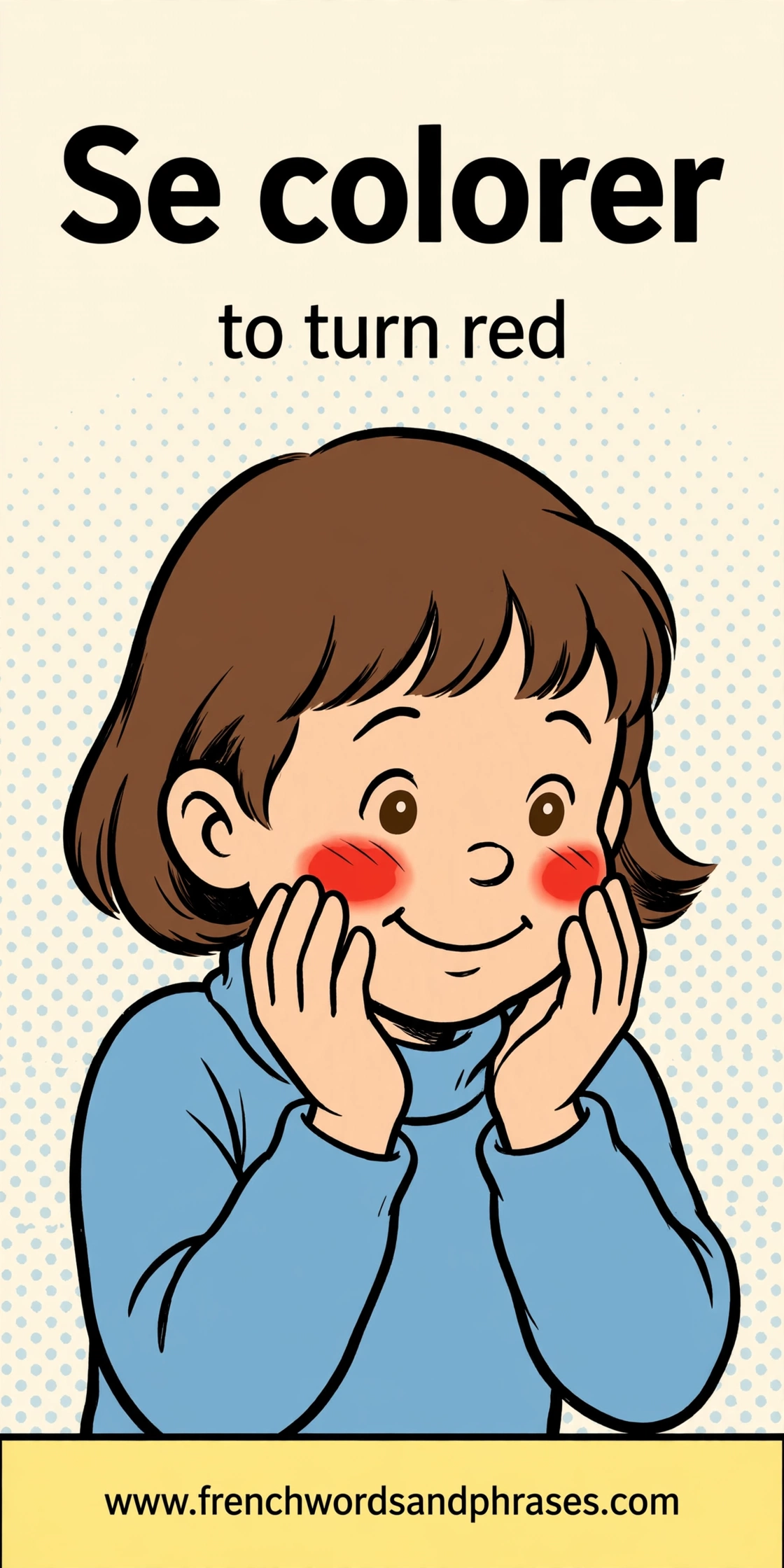
Se colorer means to turn red — to take on colour by itself, as cheeks flush, skies blush and leaves turn.
A shy girl’s cheeks at a compliment, the whole sky at half past eight on a June evening, vineyards in October — se colorer is the verb of colour rising on its own: nothing dyes these things; they blush from inside.
In this guide, you’ll learn how to conjugate se colorer in all the major French tenses and moods. Explore complete conjugation tables, French examples, English translations, and practice quizzes.
Understanding the French Verb Se colorer
Se colorer is a regular French verb belonging to the first group of verbs, those ending in-er.
It means to turn red. It is the verb of weather and emotion at once: skies and sunsets in nature writing, cheeks and faces wherever feelings show, and vineyards and forests every autumn. Where colorer needs a dyer, se colorer needs only time, light or a compliment.
Verb classification: First group (-er), reflexive
Auxiliary verb: Être
Past participle: coloré
Present participle: colorant
English equivalents: To take on colour, to turn red, to blush; ses joues se colorent — her cheeks are turning pink; le ciel se colore — the sky is taking on colour; se colorer de rose — to flush pink; les feuilles se colorent — the leaves are turning.
One important detail: se colorer is colorer turned back on its subject — the colour is not applied, it rises. Its subjects are cheeks, faces, skies, leaves and water, and because it is reflexive it takes être, with the participle agreeing: ses joues se sont colorées, le ciel s’est coloré. The preposition is de: se colorer de rose, de pourpre, d’or. Keep it apart from rougir, its close cousin: rougir is the blush of embarrassment in a moment; se colorer is any gentle taking-on of colour, from a cheek to a whole October hillside.
Experience the Word
Se colorer is the verb of colour that nobody applies — the blush, the sunset and the autumn all colouring themselves.
Imagine a terrace at the end of a June day. The glasses are empty, the conversation has slowed, and nobody is watching the sky — until someone looks up: in ten silent minutes, tout le ciel s’est coloré, rose over the rooftops, and the whole table turns to watch the end of it.
No painter touched it. The sky coloured itself — coloré, blushing over the whole town.
How to Conjugate Se colorer: Complete French Conjugation Guide
Let’s explore every major conjugation of se colorer, beginning with the indicative mood.
How to Conjugate Se colorer in the Indicative Mood
The indicative mood is used to express facts, observations, actions, and events.
How to Conjugate Se colorer in the Present Tense (Présent)
Used for actions happening now, habitual actions, and general truths.
| Subject | Conjugation |
|---|---|
| je | me colore |
| tu | te colores |
| il / elle | se colore |
| nous | nous colorons |
| vous | vous colorez |
| ils / elles | se colorent |
Example
Ses joues se colorent quand on la complimente.
Her cheeks turn pink when she is complimented.
Quick Quiz 1
Complete the sentence:
Les feuilles se ______ en automne.
Reveal the answer
colorent
Les feuilles se colorent en automne.
The leaves turn in autumn.
How to Conjugate Se colorer in the Passé Composé
Used for completed actions in the past. Se colorer takes the auxiliary verb être.
| Subject | Conjugation |
|---|---|
| je | me suis coloré / me suis colorée |
| tu | t’es coloré / t’es colorée |
| il / elle | s’est coloré / s’est colorée |
| nous | nous sommes colorés / nous sommes colorées |
| vous | vous êtes colorés / vous êtes colorées / vous êtes coloré / vous êtes colorée |
| ils / elles | se sont colorés / se sont colorées |
Example
Le ciel s’est coloré de rose à la tombée du jour.
The sky turned pink at nightfall.
How to Conjugate Se colorer in the Imparfait (Imperfect Tense)
Used for habitual past actions, descriptions, and ongoing situations in the past.
| Subject | Conjugation |
|---|---|
| je | me colorais |
| tu | te colorais |
| il / elle | se colorait |
| nous | nous colorions |
| vous | vous coloriez |
| ils / elles | se coloraient |
Example
Chaque soir, les sommets se coloraient au soleil couchant.
Every evening, the peaks used to take on colour in the setting sun.
Quick Quiz 2
Choose the correct form:
The sky turned pink.
Le ciel ______ de rose. (s’est coloré / a coloré)
Reveal the answer
s’est coloré
Le ciel s’est coloré de rose.
Se colorer is reflexive and takes être.
How to Conjugate Se colorer in the Plus-que-parfait
Used to describe an action that had already been completed before another past event.
| Subject | Conjugation |
|---|---|
| je | m’étais coloré / m’étais colorée |
| tu | t’étais coloré / t’étais colorée |
| il / elle | s’était coloré / s’était colorée |
| nous | nous étions colorés / nous étions colorées |
| vous | vous étiez colorés / vous étiez colorées / vous étiez coloré / vous étiez colorée |
| ils / elles | s’étaient colorés / s’étaient colorées |
Example
Son visage s’était coloré d’émotion avant même qu’elle parle.
Her face had coloured with emotion before she even spoke.
How to Conjugate Se colorer in the Passé Simple
Primarily used in formal writing, literature, and historical narratives. It is rarely used in everyday conversation.
| Subject | Conjugation |
|---|---|
| je | me colorai |
| tu | te coloras |
| il / elle | se colora |
| nous | nous colorâmes |
| vous | vous colorâtes |
| ils / elles | se colorèrent |
Example
À l’aube, l’horizon se colora lentement.
At dawn, the horizon slowly took on colour.
How to Conjugate Se colorer in the Passé Antérieur
A literary tense used to express an action completed immediately before another past action, generally in the passé simple.
| Subject | Conjugation |
|---|---|
| je | me fus coloré / me fus colorée |
| tu | te fus coloré / te fus colorée |
| il / elle | se fut coloré / se fut colorée |
| nous | nous fûmes colorés / nous fûmes colorées |
| vous | vous fûtes colorés / vous fûtes colorées / vous fûtes coloré / vous fûtes colorée |
| ils / elles | se furent colorés / se furent colorées |
Example
Dès que ses joues se furent colorées, tout le monde comprit.
As soon as her cheeks had coloured, everyone understood.
How to Conjugate Se colorer in the Future Tense (Futur Simple)
Used to describe actions that will take place in the future.
| Subject | Conjugation |
|---|---|
| je | me colorerai |
| tu | te coloreras |
| il / elle | se colorera |
| nous | nous colorerons |
| vous | vous colorerez |
| ils / elles | se coloreront |
Example
En automne, les feuilles se coloreront de mille teintes.
In autumn, the leaves will turn a thousand shades.
How to Conjugate Se colorer in the Futur Antérieur (Future Perfect)
Used for an action that will have been completed before a particular point in the future.
| Subject | Conjugation |
|---|---|
| je | me serai coloré / me serai colorée |
| tu | te seras coloré / te seras colorée |
| il / elle | se sera coloré / se sera colorée |
| nous | nous serons colorés / nous serons colorées |
| vous | vous serez colorés / vous serez colorées / vous serez coloré / vous serez colorée |
| ils / elles | se seront colorés / se seront colorées |
Example
À sept heures, le ciel se sera coloré de pourpre.
By seven o’clock, the sky will have turned purple.
How to Conjugate Se colorer in the Near Future (Futur Proche)
Used to describe something that is going to happen soon. Formed with aller + infinitive.
| Subject | Conjugation |
|---|---|
| je | vais me colorer |
| tu | vas te colorer |
| il / elle | va se colorer |
| nous | allons nous colorer |
| vous | allez vous colorer |
| ils / elles | vont se colorer |
Example
Regarde, le ciel va se colorer !
Look, the sky is going to take on colour!
How to Conjugate Se colorer in the Conditional Mood
The conditional mood expresses what would happen under certain circumstances. It is also frequently used to make polite requests or express wishes.
How to Conjugate Se colorer in the Present Conditional
| Subject | Conjugation |
|---|---|
| je | me colorerais |
| tu | te colorerais |
| il / elle | se colorerait |
| nous | nous colorerions |
| vous | vous coloreriez |
| ils / elles | se coloreraient |
Example
Sans la honte, ses joues ne se coloreraient pas si vite.
Without the embarrassment, her cheeks would not colour so quickly.
How to Conjugate Se colorer in the Past Conditional
| Subject | Conjugation |
|---|---|
| je | me serais coloré / me serais colorée |
| tu | te serais coloré / te serais colorée |
| il / elle | se serait coloré / se serait colorée |
| nous | nous serions colorés / nous serions colorées |
| vous | vous seriez colorés / vous seriez colorées / vous seriez coloré / vous seriez colorée |
| ils / elles | se seraient colorés / se seraient colorées |
Example
Elle se serait colorée jusqu’aux oreilles si on l’avait félicitée en public.
She would have coloured to her ears if she had been congratulated in public.
Se colorer in the Literary Past Conditional Form
This less common literary form uses the imperfect subjunctive of être.
| Subject | Conjugation |
|---|---|
| je | me fusse coloré / me fusse colorée |
| tu | te fusses coloré / te fusses colorée |
| il / elle | se fût coloré / se fût colorée |
| nous | nous fussions colorés / nous fussions colorées |
| vous | vous fussiez colorés / vous fussiez colorées / vous fussiez coloré / vous fussiez colorée |
| ils / elles | se fussent colorés / se fussent colorées |
Example
Le couchant se fût coloré de pourpre sans les nuages.
The sunset would have turned purple without the clouds.
How to Conjugate Se colorer in the Subjunctive Mood
The subjunctive is used to express wishes, emotions, doubts, necessity, and uncertainty. It frequently follows expressions such as il faut que (it is necessary that) or bien que (although).
How to Conjugate Se colorer in the Present Subjunctive
| Subject | Conjugation |
|---|---|
| que je | me colore |
| que tu | te colores |
| qu’il / qu’elle | se colore |
| que nous | nous colorions |
| que vous | vous coloriez |
| qu’ils / qu’elles | se colorent |
Example
J’aime que le ciel se colore le soir.
I love it when the sky takes on colour in the evening.
Quick Quiz 3
Complete the sentence using the subjunctive:
J’aime que tes joues se ______ quand tu ris.
Reveal the answer
colorent
J’aime que tes joues se colorent quand tu ris.
I love it when your cheeks colour when you laugh.
How to Conjugate Se colorer in the Imperfect Subjunctive
A literary tense, rarely encountered in modern spoken French.
| Subject | Conjugation |
|---|---|
| que je | me colorasse |
| que tu | te colorasses |
| qu’il / qu’elle | se colorât |
| que nous | nous colorassions |
| que vous | vous colorassiez |
| qu’ils / qu’elles | se colorassent |
Example
Il regardait l’horizon, attendant que l’aube se colorât.
He watched the horizon, waiting for the dawn to take on colour.
How to Conjugate Se colorer in the Pluperfect Subjunctive
A literary construction used to express an action completed before another past action.
| Subject | Conjugation |
|---|---|
| que je | me fusse coloré / me fusse colorée |
| que tu | te fusses coloré / te fusses colorée |
| qu’il / qu’elle | se fût coloré / se fût colorée |
| que nous | nous fussions colorés / nous fussions colorées |
| que vous | vous fussiez colorés / vous fussiez colorées / vous fussiez coloré / vous fussiez colorée |
| qu’ils / qu’elles | se fussent colorés / se fussent colorées |
Example
On racontait que ses joues se fussent colorées de plaisir.
People said her cheeks had coloured with pleasure.
How to Conjugate Se colorer in the Past Subjunctive
| Subject | Conjugation |
|---|---|
| que je | me sois coloré / me sois colorée |
| tu | te sois coloré / te sois colorée |
| qu’il / qu’elle | se soit coloré / se soit colorée |
| que nous | nous soyons colorés / nous soyons colorées |
| que vous | vous soyez colorés / vous soyez colorées / vous soyez coloré / vous soyez colorée |
| qu’ils / qu’elles | se soient colorés / se soient colorées |
Example
Je suis charmé que ses joues se soient colorées.
I am charmed that her cheeks coloured.
How to Conjugate Se colorer in the Imperative
The imperative is used to give commands, instructions, invitations, or suggestions. Subject pronouns are omitted.
How to Conjugate Se colorer in the Present Imperative
| Person | Conjugation |
|---|---|
| (tu) | colore-toi |
| (nous) | colorons-nous |
| (vous) | colorez-vous |
Example
Colore-toi de rose, petit matin !
Turn pink, little morning!
Quick Quiz 4
How would you say Turn pink (tu form), said to the morning sky?
Reveal the answer
Colore-toi de rose !
French Participles of Se colorer
Participles are verb forms that can be used in compound tenses and other grammatical constructions.
Present Participle of Se colorer
colorant
En se colorant, le ciel annonçait une belle journée.
By taking on colour, the sky promised a fine day.
Past Participle of Se colorer
coloré
Colorées par l’émotion, ses joues trahissaient son secret.
Coloured by emotion, her cheeks betrayed her secret.
Se colorer in Everyday French: Real-Life Examples
Now that you know the conjugations, let’s see how se colorer appears in everyday French.
Example 1 — Present
Ses joues se colorent vite.
Her cheeks colour quickly.
Example 2 — Passé composé
Le ciel s’est coloré de rose.
The sky turned pink.
Example 3 — Imparfait
Les sommets se coloraient chaque soir.
The peaks used to take on colour every evening.
Example 4 — Future
Les feuilles se coloreront en automne.
The leaves will turn in autumn.
Example 5 — Conditional
Le ciel se colorerait sans ces nuages.
The sky would take on colour without these clouds.
Example 6 — Imperative
Colore-toi de rose, petit matin !
Turn pink, little morning!
Beyond Translation: The Meaning of Se colorer
Se colorer is colorer with the dyer removed — the Latin color doing its work from inside the subject.
French trusts things to blush on their own.
A cheek, a sky, a hillside of vines: where English says they turn or flush, French lets them se colorer, taking their colour the way a face takes an expression — gradually, visibly, and entirely without permission.
How to Remember the French Verb Se colorer
Remember it this way: Se colorer is about cheeks, skies and October hillsides — colour rising by itself.
- Always reflexive, always être: ses joues se sont colorées — and the participle agrees.
- The colour comes with de: se colorer de rose, de pourpre, d’or.
- Regular -er underneath: le ciel se colore, les feuilles se colorent, past participle coloré.
The key idea is cheeks, skies and October hillsides — colour rising by itself.
Test Your Knowledge of Se colorer
Let’s see how much you’ve learned. Try answering these questions before revealing the answers.
Question 1
Which auxiliary does se colorer use, and why?
Reveal the answer
Être — it is a reflexive verb: le ciel s’est coloré de rose.
Question 2
How do you say Her cheeks turn pink when she is complimented in French?
Reveal the answer
Ses joues se colorent quand on la complimente.
Question 3
Translate: The sky turned pink at nightfall.
Reveal the answer
Le ciel s’est coloré de rose à la tombée du jour.
Question 4
What is the past participle of se colorer?
Reveal the answer
Coloré — agreeing: colorée, colorés, colorées.
Question 5
Complete the sentence:
J’aime que le ciel se ______ le soir.
Reveal the answer
colore
J’aime que le ciel se colore le soir.
I love it when the sky takes on colour in the evening.
Your Final Challenge
Can You Use It?
How would you say this in French?
Her cheeks turned pink the moment he walked in, and nobody needed to ask anything.
Reveal the answer
Ses joues se sont colorées dès qu’il est entré, et personne n’a rien eu à demander.
Her cheeks turned pink the moment he walked in, and nobody needed to ask anything.
A little French. A little curiosity. A richer everyday life.
LEARN FRENCH ONE WORD AT A TIME