A French Word to Live By
How to Conjugate Colorer in French
/kɔ.lɔ.ʁe/
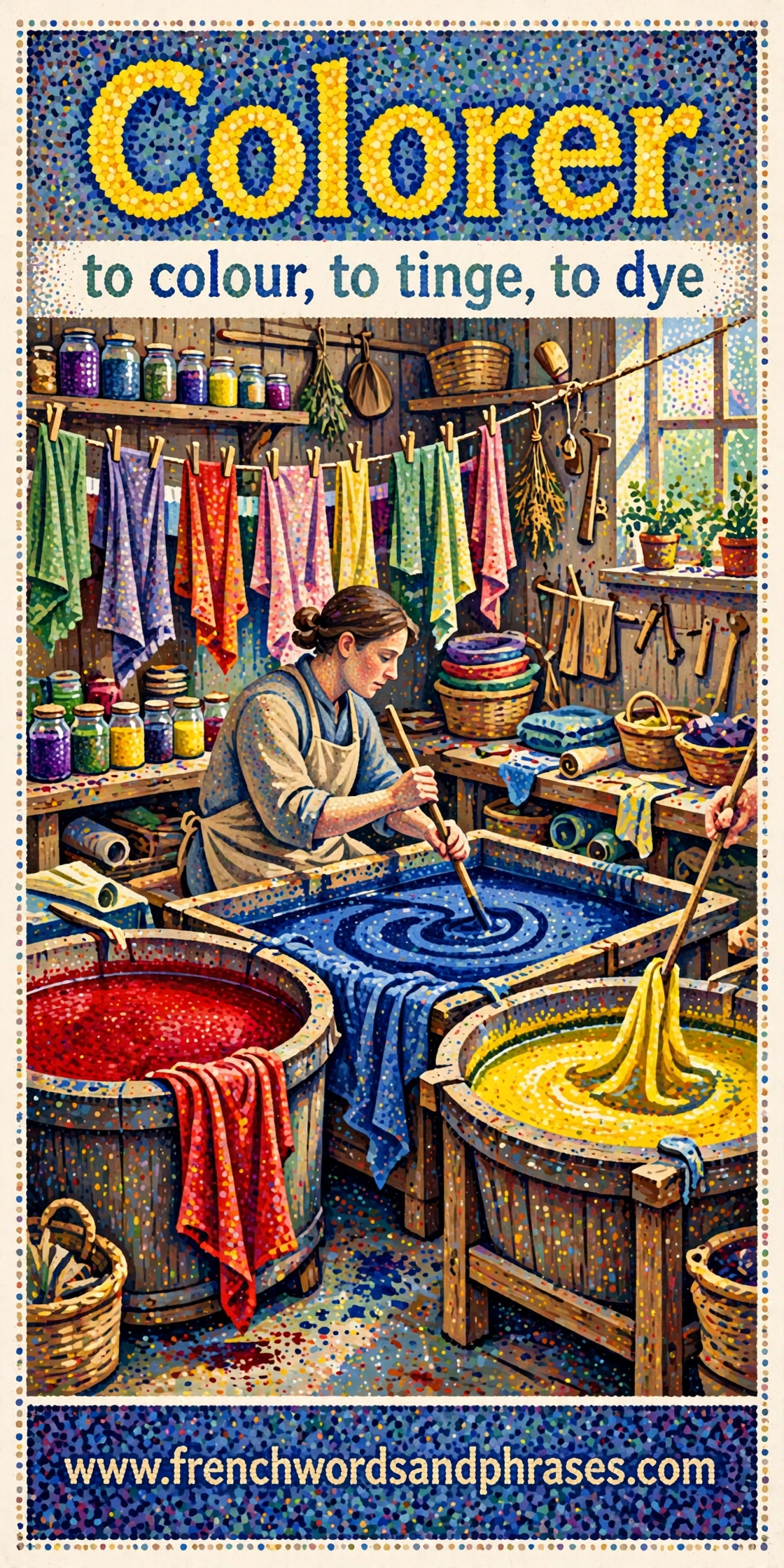
Colorer means to colour, to tinge, to dye — to give colour to something that takes it in, from sunset clouds to bathwater.
The setting sun laying rose over the clouds, a dyer lowering cloth into a vat, a child watching bathwater turn blue — colorer is the verb of colour arriving: something pale receives a tint, and the world warms by a shade.
In this guide, you’ll learn how to conjugate colorer in all the major French tenses and moods. Explore complete conjugation tables, French examples, English translations, and practice quizzes.
Understanding the French Verb Colorer
Colorer is a regular French verb belonging to the first group of verbs, those ending in-er.
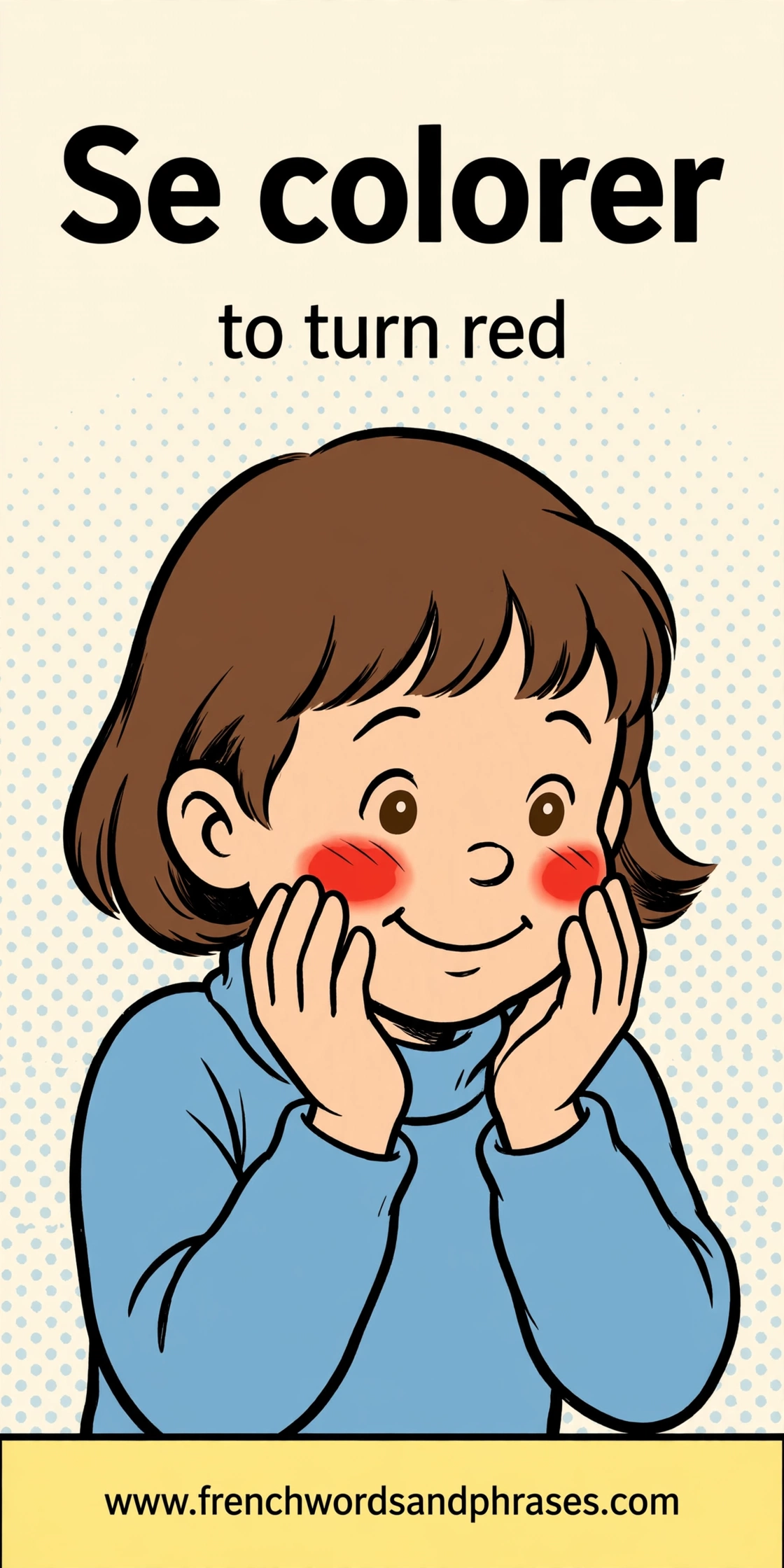
It means to colour, to tinge, to dye. It is used in cooking and cosmetics for dyes and tints (un colorant alimentaire), in nature writing for light laying colour on clouds, water and stone, and figuratively for anything that gives an account or an argument a tint it did not quite have. Its reflexive twin, se colorer, is the cheeks-and-skies page.
Verb classification: First group (-er)
Auxiliary verb: Avoir
Past participle: coloré
Present participle: colorant
English equivalents: To colour, to tinge, to dye; colorer l’eau — to colour the water; le soleil colore les nuages — the sun tinges the clouds; colorer un sirop — to colour a syrup; colorer un récit (figurative) — to colour a story, to embellish it; un colorant — a colouring, a dye.
One important detail: colorer gives colour to a substance, a surface or the sky — and its great trap is its near-twin colorier. You coloriez a drawing, inside the lines, with felt pens; you colorez water, hair, clouds and syrups, where the colour soaks in. A hairdresser colore des cheveux (or you vous colorez les cheveux); a sunset colore les nuages; and figuratively, a witness who colore son récit is embellishing his story. The verb is regular throughout: je colore, nous colorons, ils colorent.
Experience the Word
Colorer is the verb of colour soaking in — the moment something pale quietly becomes something tinted.
Imagine a kitchen in the old dyeing country. The vat steams, the cloth goes in white and comes out the blue of deep water, and the dyer’s arms are stained to the elbow. Il a coloré mille étoffes, and the river below the workshop has run every colour of the rainbow.
The cloth went in colourless. It came out coloured — colorée, dyed to the heart.
How to Conjugate Colorer: Complete French Conjugation Guide
Let’s explore every major conjugation of colorer, beginning with the indicative mood.
How to Conjugate Colorer in the Indicative Mood
The indicative mood is used to express facts, observations, actions, and events.
How to Conjugate Colorer in the Present Tense (Présent)
Used for actions happening now, habitual actions, and general truths.
| Subject | Conjugation |
|---|---|
| je | colore |
| tu | colores |
| il / elle | colore |
| nous | colorons |
| vous | colorez |
| ils / elles | colorent |
Example
Le soleil couchant colore les nuages en rose.
The setting sun is colouring the clouds pink.
Quick Quiz 1
Complete the sentence:
Nous ______ les œufs pour Pâques.
Reveal the answer
colorons
Nous colorons les œufs pour Pâques.
We are dyeing the eggs for Easter.
How to Conjugate Colorer in the Passé Composé
Used for completed actions in the past. Colorer takes the auxiliary verb avoir.
| Subject | Conjugation |
|---|---|
| j’ | ai coloré |
| tu | as coloré |
| il / elle | a coloré |
| nous | avons coloré |
| vous | avez coloré |
| ils / elles | ont coloré |
Example
Elle a coloré l’eau du bain avec des fleurs.
She coloured the bathwater with flowers.
How to Conjugate Colorer in the Imparfait (Imperfect Tense)
Used for habitual past actions, descriptions, and ongoing situations in the past.
| Subject | Conjugation |
|---|---|
| je | colorais |
| tu | colorais |
| il / elle | colorait |
| nous | colorions |
| vous | coloriez |
| ils / elles | coloraient |
Example
Autrefois, les teinturiers coloraient les étoffes avec des plantes.
In the old days, dyers used to colour fabrics with plants.
Quick Quiz 2
Choose the correct form:
Autumn coloured the vines.
L’automne ______ les vignes. (a coloré / a colorié)
Reveal the answer
a coloré
L’automne a coloré les vignes.
Vines take colour that soaks in: colorer. Colorier is for colouring in drawings.
How to Conjugate Colorer in the Plus-que-parfait
Used to describe an action that had already been completed before another past event.
| Subject | Conjugation |
|---|---|
| j’ | avais coloré |
| tu | avais coloré |
| il / elle | avait coloré |
| nous | avions coloré |
| vous | aviez coloré |
| ils / elles | avaient coloré |
Example
Le peintre avait coloré le ciel d’un bleu profond.
The painter had coloured the sky a deep blue.
How to Conjugate Colorer in the Passé Simple
Primarily used in formal writing, literature, and historical narratives. It is rarely used in everyday conversation.
| Subject | Conjugation |
|---|---|
| je | colorai |
| tu | coloras |
| il / elle | colora |
| nous | colorâmes |
| vous | colorâtes |
| ils / elles | colorèrent |
Example
L’automne colora les vignes de rouge et d’or.
Autumn coloured the vines red and gold.
How to Conjugate Colorer in the Passé Antérieur
A literary tense used to express an action completed immediately before another past action, generally in the passé simple.
| Subject | Conjugation |
|---|---|
| j’ | eus coloré |
| tu | eus coloré |
| il / elle | eut coloré |
| nous | eûmes coloré |
| vous | eûtes coloré |
| ils / elles | eurent coloré |
Example
Quand le soleil eut coloré les sommets, les randonneurs se levèrent.
When the sun had tinged the peaks, the hikers got up.
How to Conjugate Colorer in the Future Tense (Futur Simple)
Used to describe actions that will take place in the future.
| Subject | Conjugation |
|---|---|
| je | colorerai |
| tu | coloreras |
| il / elle | colorera |
| nous | colorerons |
| vous | colorerez |
| ils / elles | coloreront |
Example
Demain, nous colorerons les œufs pour Pâques.
Tomorrow, we will dye the eggs for Easter.
How to Conjugate Colorer in the Futur Antérieur (Future Perfect)
Used for an action that will have been completed before a particular point in the future.
| Subject | Conjugation |
|---|---|
| j’ | aurai coloré |
| tu | auras coloré |
| il / elle | aura coloré |
| nous | aurons coloré |
| vous | aurez coloré |
| ils / elles | auront coloré |
Example
À la fin de la journée, le couchant aura coloré toute la vallée.
By the end of the day, the sunset will have coloured the whole valley.
How to Conjugate Colorer in the Near Future (Futur Proche)
Used to describe something that is going to happen soon. Formed with aller + infinitive.
| Subject | Conjugation |
|---|---|
| je | vais colorer |
| tu | vas colorer |
| il / elle | va colorer |
| nous | allons colorer |
| vous | allez colorer |
| ils / elles | vont colorer |
Example
Attention, ce sirop va colorer ta langue en bleu !
Careful, this syrup is going to turn your tongue blue!
How to Conjugate Colorer in the Conditional Mood
The conditional mood expresses what would happen under certain circumstances. It is also frequently used to make polite requests or express wishes.
How to Conjugate Colorer in the Present Conditional
| Subject | Conjugation |
|---|---|
| je | colorerais |
| tu | colorerais |
| il / elle | colorerait |
| nous | colorerions |
| vous | coloreriez |
| ils / elles | coloreraient |
Example
Un peu de safran colorerait ce riz en jaune d’or.
A little saffron would colour this rice golden yellow.
How to Conjugate Colorer in the Past Conditional
| Subject | Conjugation |
|---|---|
| j’ | aurais coloré |
| tu | aurais coloré |
| il / elle | aurait coloré |
| nous | aurions coloré |
| vous | auriez coloré |
| ils / elles | auraient coloré |
Example
Sans colorant, elle n’aurait pas coloré la crème en rose.
Without colouring, she would not have coloured the cream pink.
Colorer in the Literary Past Conditional Form
This less common literary form uses the imperfect subjunctive of avoir.
| Subject | Conjugation |
|---|---|
| j’ | eusse coloré |
| tu | eusses coloré |
| il / elle | eût coloré |
| nous | eussions coloré |
| vous | eussiez coloré |
| ils / elles | eussent coloré |
Example
Le crépuscule eût coloré les tours de la ville sans la brume.
The dusk would have coloured the town’s towers without the mist.
How to Conjugate Colorer in the Subjunctive Mood
The subjunctive is used to express wishes, emotions, doubts, necessity, and uncertainty. It frequently follows expressions such as il faut que (it is necessary that) or bien que (although).
How to Conjugate Colorer in the Present Subjunctive
| Subject | Conjugation |
|---|---|
| que je | colore |
| que tu | colores |
| qu’il / qu’elle | colore |
| que nous | colorions |
| que vous | coloriez |
| qu’ils / qu’elles | colorent |
Example
Je veux que le soleil colore tes joues pendant les vacances.
I want the sun to put colour in your cheeks during the holidays.
Quick Quiz 3
Complete the sentence using the subjunctive:
Je veux que le soleil ______ tes joues.
Reveal the answer
colore
Je veux que le soleil colore tes joues.
I want the sun to put colour in your cheeks.
How to Conjugate Colorer in the Imperfect Subjunctive
A literary tense, rarely encountered in modern spoken French.
| Subject | Conjugation |
|---|---|
| que je | colorasse |
| que tu | colorasses |
| qu’il / qu’elle | colorât |
| que nous | colorassions |
| que vous | colorassiez |
| qu’ils / qu’elles | colorassent |
Example
On attendait que le couchant colorât les nuages.
People waited for the sunset to colour the clouds.
How to Conjugate Colorer in the Pluperfect Subjunctive
A literary construction used to express an action completed before another past action.
| Subject | Conjugation |
|---|---|
| que j’ | eusse coloré |
| que tu | eusses coloré |
| qu’il / qu’elle | eût coloré |
| que nous | eussions coloré |
| que vous | eussiez coloré |
| qu’ils / qu’elles | eussent coloré |
Example
Elle racontait que le soleil eût coloré la mer ce soir-là.
She used to say the sun had coloured the sea that evening.
How to Conjugate Colorer in the Past Subjunctive
| Subject | Conjugation |
|---|---|
| que j’ | aie coloré |
| que tu | aies coloré |
| qu’il / qu’elle | ait coloré |
| que nous | ayons coloré |
| que vous | ayez coloré |
| qu’ils / qu’elles | aient coloré |
Example
Je suis ravi que le printemps ait coloré le jardin.
I am delighted spring has coloured the garden.
How to Conjugate Colorer in the Imperative
The imperative is used to give commands, instructions, invitations, or suggestions. Subject pronouns are omitted.
How to Conjugate Colorer in the Present Imperative
| Person | Conjugation |
|---|---|
| (tu) | colore |
| (nous) | colorons |
| (vous) | colorez |
Example
Colorez les œufs avant de les cacher !
Dye the eggs before hiding them!
Quick Quiz 4
How would you say Dye the eggs (tu form)?
Reveal the answer
Colore les œufs !
French Participles of Colorer
Participles are verb forms that can be used in compound tenses and other grammatical constructions.
Present Participle of Colorer
colorant
En colorant l’eau, les fleurs ont parfumé tout le bain.
By colouring the water, the flowers perfumed the whole bath.
Past Participle of Colorer
coloré
Colorée par le soleil, la pierre devenait dorée le soir.
Coloured by the sun, the stone turned golden in the evening.
Colorer in Everyday French: Real-Life Examples
Now that you know the conjugations, let’s see how colorer appears in everyday French.
Example 1 — Present
Le couchant colore les nuages.
The sunset is colouring the clouds.
Example 2 — Passé composé
Elle a coloré l’eau du bain.
She coloured the bathwater.
Example 3 — Imparfait
Les teinturiers coloraient les étoffes.
The dyers used to colour the fabrics.
Example 4 — Future
Nous colorerons les œufs pour Pâques.
We will dye the eggs for Easter.
Example 5 — Conditional
Le safran colorerait ce riz en jaune.
The saffron would colour this rice yellow.
Example 6 — Imperative
Colore les œufs avant de les cacher !
Dye the eggs before hiding them!
Beyond Translation: The Meaning of Colorer
Colorer carries the Latin color in plain sight, and English colour is its twin — but French splits the work English gives to one verb.
Colour that soaks in, colour that stays in the lines.
Colorer is the soaking kind: dyes, sunsets, syrups and stories taking a tint. Colorier, its twin on the next page, is the felt-pen kind. Learn them as a pair and you will never mix them up — the dyer colores, the schoolchild colorie.
How to Remember the French Verb Colorer
Remember it this way: Colorer is about the dyer’s vat and the sunset — colour soaking into the world.
- Colorer = colour that soaks in: water, hair, clouds, syrup. Colorier = colouring in a drawing.
- Its instrument is un colorant — a dye, a food colouring.
- Regular -er: je colore, nous colorons, past participle coloré.
The key idea is the dyer’s vat and the sunset — colour soaking into the world.
Test Your Knowledge of Colorer
Let’s see how much you’ve learned. Try answering these questions before revealing the answers.
Question 1
Which verb colours in a drawing: colorer or colorier?
Reveal the answer
Colorier — colorer is for colour that soaks in: water, hair, clouds, syrup.
Question 2
How do you say The setting sun is colouring the clouds pink in French?
Reveal the answer
Le soleil couchant colore les nuages en rose.
Question 3
Translate: She coloured the bathwater with flowers.
Reveal the answer
Elle a coloré l’eau du bain avec des fleurs.
Question 4
What is the past participle of colorer?
Reveal the answer
Coloré.
Question 5
Complete the sentence:
Je suis ravi que le printemps ______ le jardin.
Reveal the answer
ait coloré
Je suis ravi que le printemps ait coloré le jardin.
I am delighted spring has coloured the garden.
Your Final Challenge
Can You Use It?
How would you say this in French?
The sunset colours the village rooftops, and even the cats look golden.
Reveal the answer
Le couchant colore les toits du village, et même les chats semblent dorés.
The sunset colours the village rooftops, and even the cats look golden.
A little French. A little curiosity. A richer everyday life.
LEARN FRENCH ONE WORD AT A TIME