A French Word to Live By
How to Conjugate Se chauffer in French
/sə ʃo.fe/
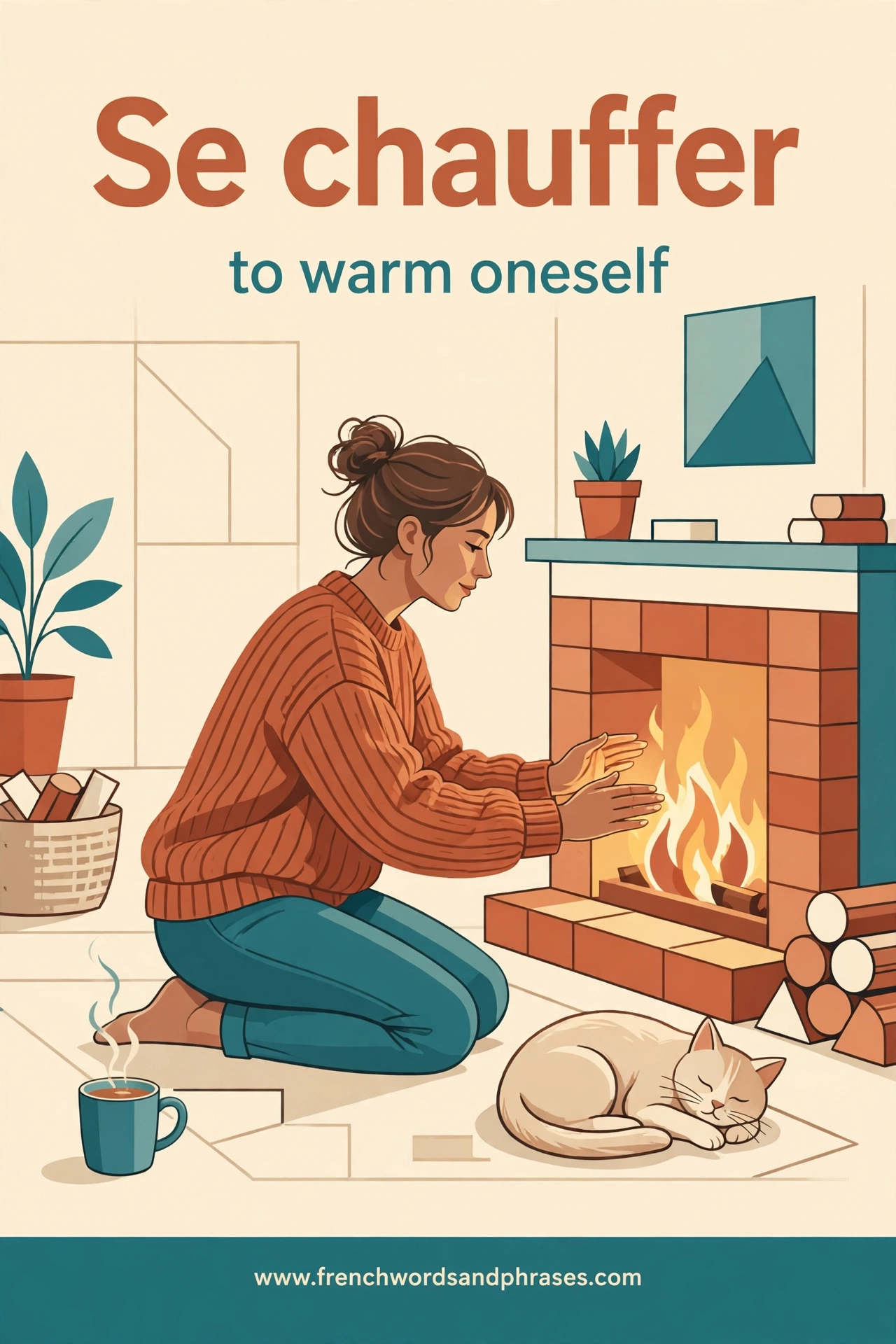
Se chauffer means to warm oneself — to get the cold out of your bones by a fire, a stove or the sun.
Hands held out to the fire, a cat stretched along the radiator, hikers turning their backs to the sun on a cold ridge — se chauffer is the verb of warming yourself: the warmth is for you, and you go and find it.
In this guide, you’ll learn how to conjugate se chauffer in all the major French tenses and moods. Explore complete conjugation tables, French examples, English translations, and practice quizzes.
Understanding the French Verb Se chauffer
Se chauffer is a regular French verb belonging to the first group of verbs, those ending in-er.
It means to warm oneself. It is the standard verb for people and animals getting warm — by fires, stoves, radiators and sunshine — and, with a house or flat as subject, for how a home is heated: se chauffer au bois, au gaz, à l’électricité is the first question of every French winter and every property advertisement.
Verb classification: First group (-er), reflexive
Auxiliary verb: Être
Past participle: chauffé
Present participle: chauffant
English equivalents: To warm oneself, to get warm; se chauffer au coin du feu — to warm oneself by the fire; se chauffer au soleil — to warm oneself in the sun; se chauffer les mains — to warm one’s hands; une maison qui se chauffe au bois — a house heated with wood.
One important detail: se chauffer is the reflexive of chauffer, so it takes être in every compound tense and the past participle agrees with the subject: elle s’est chauffée, ils se sont chauffés. The division of labour is strict: chauffer heats a thing (chauffer la soupe), se chauffer warms a person (se chauffer près du feu). The same reflexive also describes heating systems: cette maison se chauffe au gaz — this house is heated by gas. The tu imperative tucks the pronoun behind the verb: chauffe-toi !
Experience the Word
Se chauffer is the verb of the outstretched hands — warmth is out there, and you move towards it.
Imagine a village café on a market morning in December. The door keeps opening on the cold, and every newcomer does the same dance: coat off, chair pulled close to the stove, hands open to the heat — on se chauffe, and only then does the conversation start.
Nobody has eaten or drunk yet. They have warmed themselves — chauffés, thawed, human again.
How to Conjugate Se chauffer: Complete French Conjugation Guide
Let’s explore every major conjugation of se chauffer, beginning with the indicative mood.
How to Conjugate Se chauffer in the Indicative Mood
The indicative mood is used to express facts, observations, actions, and events.
How to Conjugate Se chauffer in the Present Tense (Présent)
Used for actions happening now, habitual actions, and general truths.
| Subject | Conjugation |
|---|---|
| je | me chauffe |
| tu | te chauffes |
| il / elle | se chauffe |
| nous | nous chauffons |
| vous | vous chauffez |
| ils / elles | se chauffent |
Example
Les enfants se chauffent près du poêle.
The children are warming themselves by the stove.
Quick Quiz 1
Complete the sentence:
Nous nous ______ près de la cheminée.
Reveal the answer
chauffons
Nous nous chauffons près de la cheminée.
We are warming ourselves by the fireplace.
How to Conjugate Se chauffer in the Passé Composé
Used for completed actions in the past. Se chauffer takes the auxiliary verb être.
| Subject | Conjugation |
|---|---|
| je | me suis chauffé / me suis chauffée |
| tu | t’es chauffé / t’es chauffée |
| il / elle | s’est chauffé / s’est chauffée |
| nous | nous sommes chauffés / nous sommes chauffées |
| vous | vous êtes chauffés / vous êtes chauffées / vous êtes chauffé / vous êtes chauffée |
| ils / elles | se sont chauffés / se sont chauffées |
Example
Elle s’est chauffée au coin du feu toute la soirée.
She warmed herself by the fire all evening.
How to Conjugate Se chauffer in the Imparfait (Imperfect Tense)
Used for habitual past actions, descriptions, and ongoing situations in the past.
| Subject | Conjugation |
|---|---|
| je | me chauffais |
| tu | te chauffais |
| il / elle | se chauffait |
| nous | nous chauffions |
| vous | vous chauffiez |
| ils / elles | se chauffaient |
Example
Autrefois, on se chauffait avec un poêle à bois.
In the old days, people warmed themselves with a wood stove.
Quick Quiz 2
Choose the correct form:
She warmed herself by the fire.
Elle ______ près du feu. (s’est chauffée / a chauffé)
Reveal the answer
s’est chauffée
Elle s’est chauffée près du feu.
Se chauffer is reflexive, takes être, and the participle agrees: chauffée.
How to Conjugate Se chauffer in the Plus-que-parfait
Used to describe an action that had already been completed before another past event.
| Subject | Conjugation |
|---|---|
| je | m’étais chauffé / m’étais chauffée |
| tu | t’étais chauffé / t’étais chauffée |
| il / elle | s’était chauffé / s’était chauffée |
| nous | nous étions chauffés / nous étions chauffées |
| vous | vous étiez chauffés / vous étiez chauffées / vous étiez chauffé / vous étiez chauffée |
| ils / elles | s’étaient chauffés / s’étaient chauffées |
Example
Ils s’étaient chauffés au soleil avant de repartir.
They had warmed themselves in the sun before setting off again.
How to Conjugate Se chauffer in the Passé Simple
Primarily used in formal writing, literature, and historical narratives. It is rarely used in everyday conversation.
| Subject | Conjugation |
|---|---|
| je | me chauffai |
| tu | te chauffas |
| il / elle | se chauffa |
| nous | nous chauffâmes |
| vous | vous chauffâtes |
| ils / elles | se chauffèrent |
Example
Le chat se chauffa au soleil sur le rebord de la fenêtre.
The cat warmed itself in the sun on the windowsill.
How to Conjugate Se chauffer in the Passé Antérieur
A literary tense used to express an action completed immediately before another past action, generally in the passé simple.
| Subject | Conjugation |
|---|---|
| je | me fus chauffé / me fus chauffée |
| tu | te fus chauffé / te fus chauffée |
| il / elle | se fut chauffé / se fut chauffée |
| nous | nous fûmes chauffés / nous fûmes chauffées |
| vous | vous fûtes chauffés / vous fûtes chauffées / vous fûtes chauffé / vous fûtes chauffée |
| ils / elles | se furent chauffés / se furent chauffées |
Example
Dès qu’elle se fut chauffée, elle repartit dans le froid.
As soon as she had warmed herself, she went back out into the cold.
How to Conjugate Se chauffer in the Future Tense (Futur Simple)
Used to describe actions that will take place in the future.
| Subject | Conjugation |
|---|---|
| je | me chaufferai |
| tu | te chaufferas |
| il / elle | se chauffera |
| nous | nous chaufferons |
| vous | vous chaufferez |
| ils / elles | se chaufferont |
Example
Ce soir, nous nous chaufferons près de la cheminée.
This evening, we will warm ourselves by the fireplace.
How to Conjugate Se chauffer in the Futur Antérieur (Future Perfect)
Used for an action that will have been completed before a particular point in the future.
| Subject | Conjugation |
|---|---|
| je | me serai chauffé / me serai chauffée |
| tu | te seras chauffé / te seras chauffée |
| il / elle | se sera chauffé / se sera chauffée |
| nous | nous serons chauffés / nous serons chauffées |
| vous | vous serez chauffés / vous serez chauffées / vous serez chauffé / vous serez chauffée |
| ils / elles | se seront chauffés / se seront chauffées |
Example
Quand tu arriveras, les enfants se seront chauffés près du feu.
When you arrive, the children will have warmed themselves by the fire.
How to Conjugate Se chauffer in the Near Future (Futur Proche)
Used to describe something that is going to happen soon. Formed with aller + infinitive.
| Subject | Conjugation |
|---|---|
| je | vais me chauffer |
| tu | vas te chauffer |
| il / elle | va se chauffer |
| nous | allons nous chauffer |
| vous | allez vous chauffer |
| ils / elles | vont se chauffer |
Example
Viens, tu vas te chauffer un peu.
Come, you are going to warm yourself a little.
How to Conjugate Se chauffer in the Conditional Mood
The conditional mood expresses what would happen under certain circumstances. It is also frequently used to make polite requests or express wishes.
How to Conjugate Se chauffer in the Present Conditional
| Subject | Conjugation |
|---|---|
| je | me chaufferais |
| tu | te chaufferais |
| il / elle | se chaufferait |
| nous | nous chaufferions |
| vous | vous chaufferiez |
| ils / elles | se chaufferaient |
Example
Sans cheminée, on se chaufferait moins bien l’hiver.
Without a fireplace, we would not warm ourselves as well in winter.
How to Conjugate Se chauffer in the Past Conditional
| Subject | Conjugation |
|---|---|
| je | me serais chauffé / me serais chauffée |
| tu | te serais chauffé / te serais chauffée |
| il / elle | se serait chauffé / se serait chauffée |
| nous | nous serions chauffés / nous serions chauffées |
| vous | vous seriez chauffés / vous seriez chauffées / vous seriez chauffé / vous seriez chauffée |
| ils / elles | se seraient chauffés / se seraient chauffées |
Example
Elle se serait chauffée au soleil si le ciel n’avait pas été couvert.
She would have warmed herself in the sun if the sky had not been overcast.
Se chauffer in the Literary Past Conditional Form
This less common literary form uses the imperfect subjunctive of être.
| Subject | Conjugation |
|---|---|
| je | me fusse chauffé / me fusse chauffée |
| tu | te fusses chauffé / te fusses chauffée |
| il / elle | se fût chauffé / se fût chauffée |
| nous | nous fussions chauffés / nous fussions chauffées |
| vous | vous fussiez chauffés / vous fussiez chauffées / vous fussiez chauffé / vous fussiez chauffée |
| ils / elles | se fussent chauffés / se fussent chauffées |
Example
Il se fût chauffé près du poêle sans la foule.
He would have warmed himself by the stove if not for the crowd.
How to Conjugate Se chauffer in the Subjunctive Mood
The subjunctive is used to express wishes, emotions, doubts, necessity, and uncertainty. It frequently follows expressions such as il faut que (it is necessary that) or bien que (although).
How to Conjugate Se chauffer in the Present Subjunctive
| Subject | Conjugation |
|---|---|
| que je | me chauffe |
| que tu | te chauffes |
| qu’il / qu’elle | se chauffe |
| que nous | nous chauffions |
| que vous | vous chauffiez |
| qu’ils / qu’elles | se chauffent |
Example
Il faut que tu te chauffes avant de ressortir.
You must warm yourself before going back out.
Quick Quiz 3
Complete the sentence using the subjunctive:
Il faut que vous vous ______ un peu.
Reveal the answer
chauffiez
Il faut que vous vous chauffiez un peu.
You must warm yourselves a little.
How to Conjugate Se chauffer in the Imperfect Subjunctive
A literary tense, rarely encountered in modern spoken French.
| Subject | Conjugation |
|---|---|
| que je | me chauffasse |
| que tu | te chauffasses |
| qu’il / qu’elle | se chauffât |
| que nous | nous chauffassions |
| que vous | vous chauffassiez |
| qu’ils / qu’elles | se chauffassent |
Example
La grand-mère voulait que les enfants se chauffassent près du poêle.
Grandmother wanted the children to warm themselves by the stove.
How to Conjugate Se chauffer in the Pluperfect Subjunctive
A literary construction used to express an action completed before another past action.
| Subject | Conjugation |
|---|---|
| que je | me fusse chauffé / me fusse chauffée |
| que tu | te fusses chauffé / te fusses chauffée |
| qu’il / qu’elle | se fût chauffé / se fût chauffée |
| que nous | nous fussions chauffés / nous fussions chauffées |
| que vous | vous fussiez chauffés / vous fussiez chauffées / vous fussiez chauffé / vous fussiez chauffée |
| qu’ils / qu’elles | se fussent chauffés / se fussent chauffées |
Example
On racontait qu’ils se fussent chauffés toute la nuit autour du feu.
People said they had warmed themselves all night around the fire.
How to Conjugate Se chauffer in the Past Subjunctive
| Subject | Conjugation |
|---|---|
| que je | me sois chauffé / me sois chauffée |
| que tu | te sois chauffé / te sois chauffée |
| qu’il / qu’elle | se soit chauffé / se soit chauffée |
| que nous | nous soyons chauffés / nous soyons chauffées |
| que vous | vous soyez chauffés / vous soyez chauffées / vous soyez chauffé / vous soyez chauffée |
| qu’ils / qu’elles | se soient chauffés / se soient chauffées |
Example
Je suis ravi qu’elle se soit chauffée avant de dormir.
I am delighted she warmed herself before sleeping.
How to Conjugate Se chauffer in the Imperative
The imperative is used to give commands, instructions, invitations, or suggestions. Subject pronouns are omitted.
How to Conjugate Se chauffer in the Present Imperative
| Person | Conjugation |
|---|---|
| (tu) | chauffe-toi |
| (nous) | chauffons-nous |
| (vous) | chauffez-vous |
Example
Chauffe-toi près du feu, tu es gelé !
Warm yourself by the fire, you are frozen!
Quick Quiz 4
How would you say Warm yourself by the fire (tu form)?
Reveal the answer
Chauffe-toi près du feu !
French Participles of Se chauffer
Participles are verb forms that can be used in compound tenses and other grammatical constructions.
Present Participle of Se chauffer
chauffant
En se chauffant au soleil, le lézard reprenait des forces.
Warming itself in the sun, the lizard regained its strength.
Past Participle of Se chauffer
chauffé
Chauffée près du feu, la chatte ronronnait de plaisir.
Warmed by the fire, the cat purred with pleasure.
Se chauffer in Everyday French: Real-Life Examples
Now that you know the conjugations, let’s see how se chauffer appears in everyday French.
Example 1 — Present
Les enfants se chauffent près du poêle.
The children are warming themselves by the stove.
Example 2 — Passé composé
Elle s’est chauffée au coin du feu.
She warmed herself by the fire.
Example 3 — Imparfait
On se chauffait avec un poêle à bois.
People warmed themselves with a wood stove.
Example 4 — Future
Nous nous chaufferons près de la cheminée.
We will warm ourselves by the fireplace.
Example 5 — Conditional
On se chaufferait mieux avec une cheminée.
We would warm ourselves better with a fireplace.
Example 6 — Imperative
Chauffe-toi près du feu !
Warm yourself by the fire!
Beyond Translation: The Meaning of Se chauffer
French asks a question of every house that English forgets: comment se chauffe-t-elle ? — how does it heat itself?
A home, in French, warms itself like a person.
Au bois, au gaz, au soleil — the reflexive turns the heating system into a habit of the house itself, and le chauffage, the heating, is simply the name of its winter routine.
How to Remember the French Verb Se chauffer
Remember it this way: Se chauffer is about hands held out to the fire on a cold morning.
- Always reflexive for people warming up: je me chauffe, elle s’est chauffée — être, and the participle agrees.
- Chauffer heats a thing; se chauffer warms a person — chauffer la soupe, se chauffer près du feu.
- Houses se chauffent too: cette maison se chauffe au bois — it is heated with wood.
The key idea is hands held out to the fire on a cold morning.
Test Your Knowledge of Se chauffer
Let’s see how much you’ve learned. Try answering these questions before revealing the answers.
Question 1
Which auxiliary does se chauffer use, and why?
Reveal the answer
Être — it is a reflexive verb: elle s’est chauffée au coin du feu.
Question 2
How do you say The children are warming themselves by the fire in French?
Reveal the answer
Les enfants se chauffent près du feu.
Question 3
Translate: She warmed herself in the sun.
Reveal the answer
Elle s’est chauffée au soleil.
Question 4
What is the past participle of se chauffer?
Reveal the answer
Chauffé — agreeing: chauffée, chauffés, chauffées.
Question 5
Complete the sentence:
Il faut que tu te ______ avant de ressortir.
Reveal the answer
chauffes
Il faut que tu te chauffes avant de ressortir.
You must warm yourself before going back out.
Your Final Challenge
Can You Use It?
How would you say this in French?
She warms herself by the fire, a book in her hand, and the evening is perfect.
Reveal the answer
Elle se chauffe au coin du feu, un livre à la main, et la soirée est parfaite.
She warms herself by the fire, a book in her hand, and the evening is perfect.
A little French. A little curiosity. A richer everyday life.
LEARN FRENCH ONE WORD AT A TIME