A French Word to Live By
How to Conjugate Chauffer in French
/ʃo.fe/
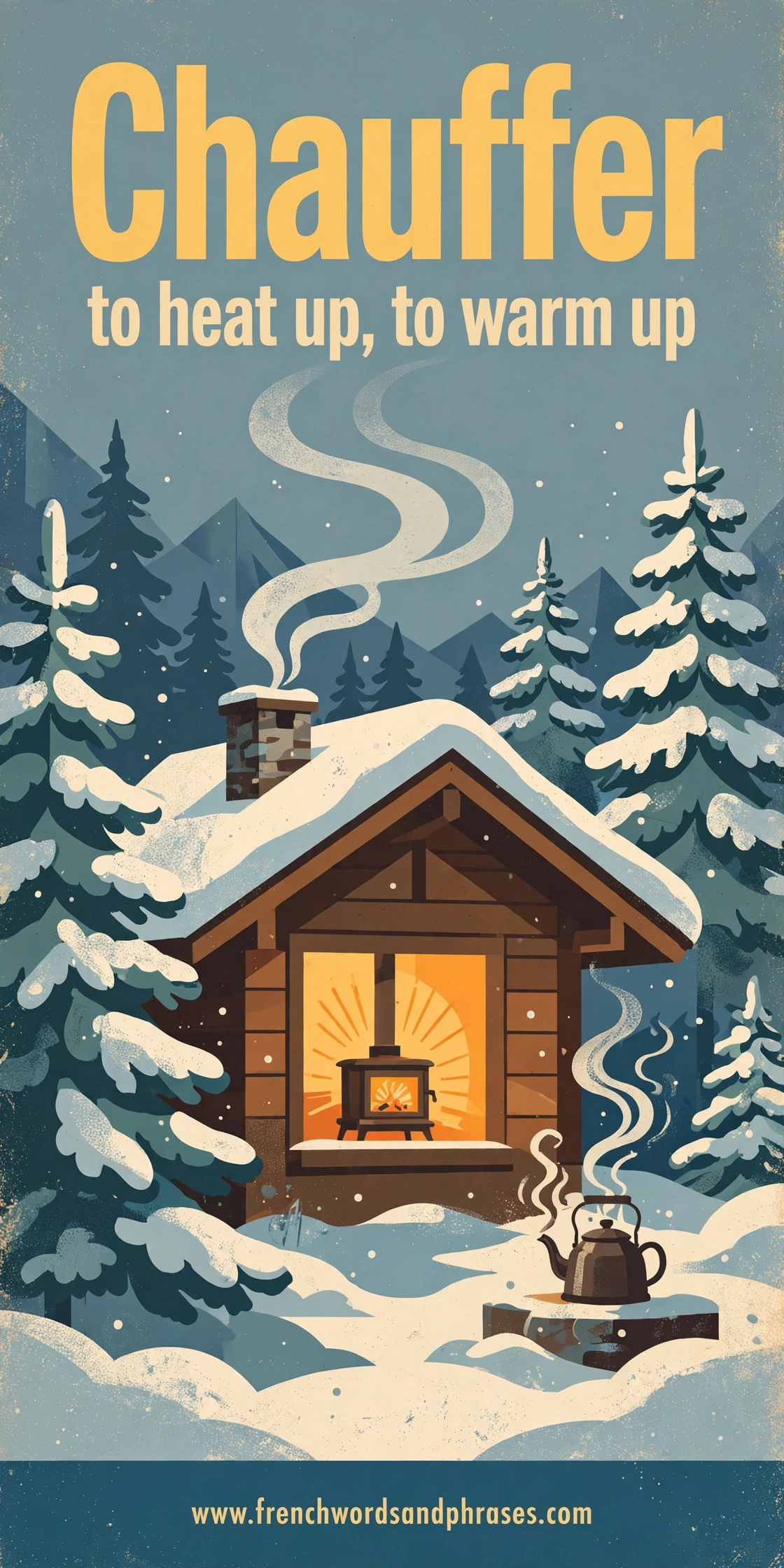
Chauffer means to heat up, to warm up — to make something hot, from a soup and a room to an engine and a crowd.
A cold kitchen at dawn, a hand on the radiator, a pan going back on the flame — chauffer is the verb of making things hot: water for tea, a room for guests, an engine before the road, and sometimes a crowd before the match.
In this guide, you’ll learn how to conjugate chauffer in all the major French tenses and moods. Explore complete conjugation tables, French examples, English translations, and practice quizzes.
Understanding the French Verb Chauffer
Chauffer is a regular French verb belonging to the first group of verbs, those ending in-er.
It means to heat up, to warm up. It is the everyday verb for heating rooms, water and food, for warming up engines, crowds and audiences (l’artiste chauffe la salle), and, in the cry ça chauffe !, for situations turning tense or exciting — a match, an argument, a dance floor.
Verb classification: First group (-er)
Auxiliary verb: Avoir
Past participle: chauffé
Present participle: chauffant
English equivalents: To heat up, to warm up, to heat; chauffer l’eau — to heat the water; chauffer une pièce — to heat a room; faire chauffer — to heat up (food or drink); chauffer le public — to warm up the crowd; ça chauffe ! — things are heating up!
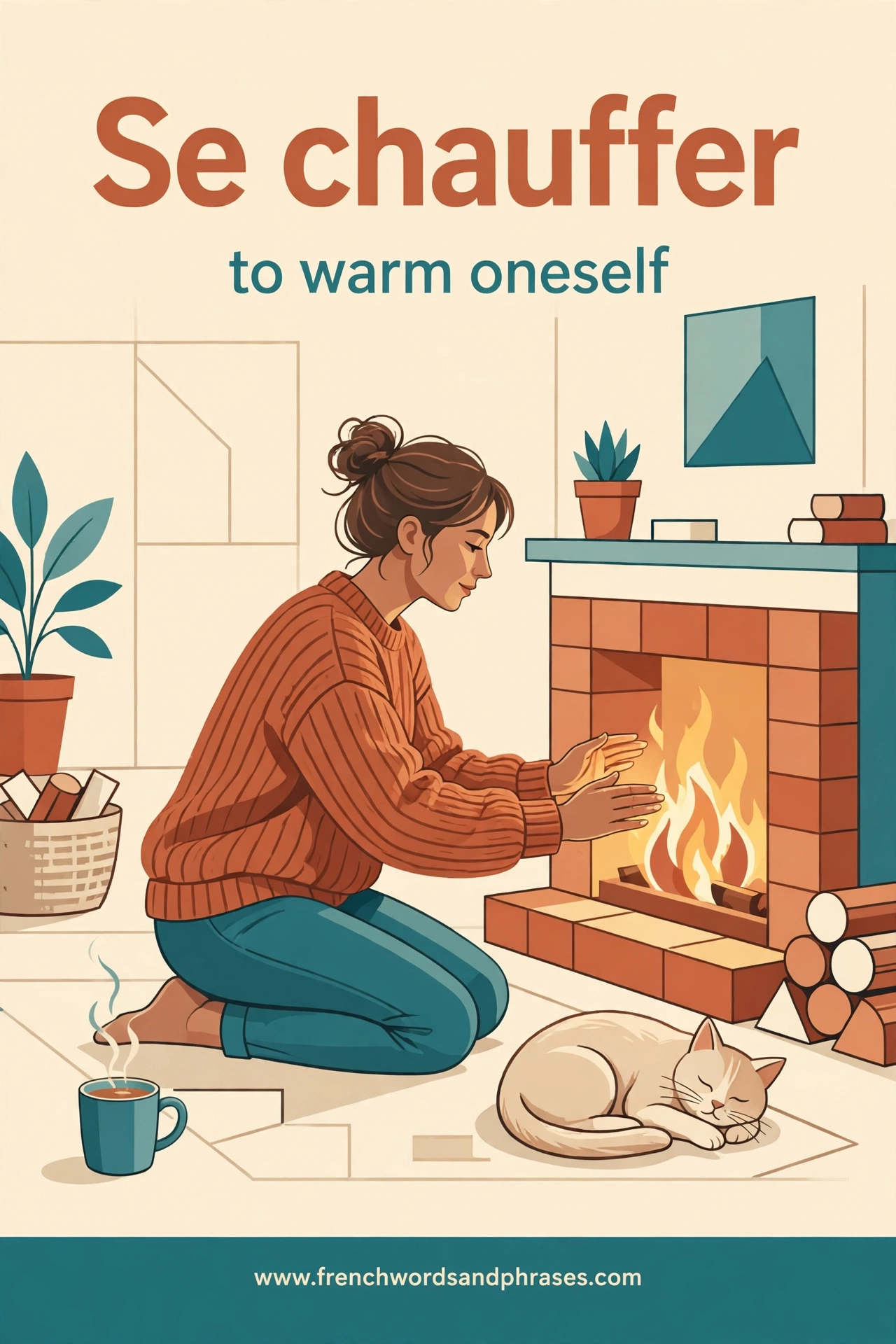
One important detail: chauffer is a perfectly regular -er verb with avoir, but watch its two lives. Transitive, it heats something: je chauffe la soupe. Intransitive, it runs hot or overheats: le moteur chauffe — the engine is getting hot. For food and drink, French very often says faire chauffer: fais chauffer l’eau — put the water on to heat. And do not confuse it with its reflexive twin se chauffer, which is what people do for themselves by the fire.
Experience the Word
Chauffer is the verb of the first warmth of the day — the kettle, the radiator, the stove, everything that pushes the cold back.
Imagine a mountain refuge in January. The guardian arrives before the hikers, lights the stove, chauffe la soupe, chauffe l’eau pour le thé, and by the time the door opens on the snow, the room smells of wood smoke and welcome.
Nothing is cooked yet, nothing is served. He has simply heated — chauffé — the cold out of the room.
How to Conjugate Chauffer: Complete French Conjugation Guide
Let’s explore every major conjugation of chauffer, beginning with the indicative mood.
How to Conjugate Chauffer in the Indicative Mood
The indicative mood is used to express facts, observations, actions, and events.
How to Conjugate Chauffer in the Present Tense (Présent)
Used for actions happening now, habitual actions, and general truths.
| Subject | Conjugation |
|---|---|
| je | chauffe |
| tu | chauffes |
| il / elle | chauffe |
| nous | chauffons |
| vous | chauffez |
| ils / elles | chauffent |
Example
Elle chauffe la soupe sur le feu doux.
She is heating the soup over a low flame.
Quick Quiz 1
Complete the sentence:
Nous ______ l’eau pour le thé.
Reveal the answer
chauffons
Nous chauffons l’eau pour le thé.
We are heating the water for the tea.
How to Conjugate Chauffer in the Passé Composé
Used for completed actions in the past. Chauffer takes the auxiliary verb avoir.
| Subject | Conjugation |
|---|---|
| j’ | ai chauffé |
| tu | as chauffé |
| il / elle | a chauffé |
| nous | avons chauffé |
| vous | avez chauffé |
| ils / elles | ont chauffé |
Example
J’ai chauffé la pièce avant l’arrivée des invités.
I heated the room before the guests arrived.
How to Conjugate Chauffer in the Imparfait (Imperfect Tense)
Used for habitual past actions, descriptions, and ongoing situations in the past.
| Subject | Conjugation |
|---|---|
| je | chauffais |
| tu | chauffais |
| il / elle | chauffait |
| nous | chauffions |
| vous | chauffiez |
| ils / elles | chauffaient |
Example
Le poêle chauffait toute la maison autrefois.
The stove used to heat the whole house in the old days.
Quick Quiz 2
Choose the correct form:
She heated the house.
Elle ______ la maison. (a chauffé / est chauffé)
Reveal the answer
a chauffé
Elle a chauffé la maison.
Chauffer takes avoir.
How to Conjugate Chauffer in the Plus-que-parfait
Used to describe an action that had already been completed before another past event.
| Subject | Conjugation |
|---|---|
| j’ | avais chauffé |
| tu | avais chauffé |
| il / elle | avait chauffé |
| nous | avions chauffé |
| vous | aviez chauffé |
| ils / elles | avaient chauffé |
Example
Il avait chauffé le lait avant de le verser.
He had heated the milk before pouring it.
How to Conjugate Chauffer in the Passé Simple
Primarily used in formal writing, literature, and historical narratives. It is rarely used in everyday conversation.
| Subject | Conjugation |
|---|---|
| je | chauffai |
| tu | chauffas |
| il / elle | chauffa |
| nous | chauffâmes |
| vous | chauffâtes |
| ils / elles | chauffèrent |
Example
Le soleil chauffa la pierre toute la journée.
The sun heated the stone all day long.
How to Conjugate Chauffer in the Passé Antérieur
A literary tense used to express an action completed immediately before another past action, generally in the passé simple.
| Subject | Conjugation |
|---|---|
| j’ | eus chauffé |
| tu | eus chauffé |
| il / elle | eut chauffé |
| nous | eûmes chauffé |
| vous | eûtes chauffé |
| ils / elles | eurent chauffé |
Example
Quand elle eut chauffé l’eau, elle prépara le thé.
When she had heated the water, she made the tea.
How to Conjugate Chauffer in the Future Tense (Futur Simple)
Used to describe actions that will take place in the future.
| Subject | Conjugation |
|---|---|
| je | chaufferai |
| tu | chaufferas |
| il / elle | chauffera |
| nous | chaufferons |
| vous | chaufferez |
| ils / elles | chaufferont |
Example
Demain, le soleil chauffera la terrasse dès le matin.
Tomorrow, the sun will warm the terrace from the morning on.
How to Conjugate Chauffer in the Futur Antérieur (Future Perfect)
Used for an action that will have been completed before a particular point in the future.
| Subject | Conjugation |
|---|---|
| j’ | aurai chauffé |
| tu | auras chauffé |
| il / elle | aura chauffé |
| nous | aurons chauffé |
| vous | aurez chauffé |
| ils / elles | auront chauffé |
Example
Quand tu rentreras, j’aurai chauffé toute la maison.
When you get home, I will have heated the whole house.
How to Conjugate Chauffer in the Near Future (Futur Proche)
Used to describe something that is going to happen soon. Formed with aller + infinitive.
| Subject | Conjugation |
|---|---|
| je | vais chauffer |
| tu | vas chauffer |
| il / elle | va chauffer |
| nous | allons chauffer |
| vous | allez chauffer |
| ils / elles | vont chauffer |
Example
Je vais chauffer l’eau pour le thé.
I am going to heat the water for the tea.
How to Conjugate Chauffer in the Conditional Mood
The conditional mood expresses what would happen under certain circumstances. It is also frequently used to make polite requests or express wishes.
How to Conjugate Chauffer in the Present Conditional
| Subject | Conjugation |
|---|---|
| je | chaufferais |
| tu | chaufferais |
| il / elle | chaufferait |
| nous | chaufferions |
| vous | chaufferiez |
| ils / elles | chaufferaient |
Example
Sans électricité, ce radiateur ne chaufferait pas la chambre.
Without electricity, this radiator would not heat the bedroom.
How to Conjugate Chauffer in the Past Conditional
| Subject | Conjugation |
|---|---|
| j’ | aurais chauffé |
| tu | aurais chauffé |
| il / elle | aurait chauffé |
| nous | aurions chauffé |
| vous | auriez chauffé |
| ils / elles | auraient chauffé |
Example
Tu aurais chauffé le lait si tu avais su.
You would have heated the milk if you had known.
Chauffer in the Literary Past Conditional Form
This less common literary form uses the imperfect subjunctive of avoir.
| Subject | Conjugation |
|---|---|
| j’ | eusse chauffé |
| tu | eusses chauffé |
| il / elle | eût chauffé |
| nous | eussions chauffé |
| vous | eussiez chauffé |
| ils / elles | eussent chauffé |
Example
Il eût chauffé la soupe sans la panne de gaz.
He would have heated the soup if not for the gas failure.
How to Conjugate Chauffer in the Subjunctive Mood
The subjunctive is used to express wishes, emotions, doubts, necessity, and uncertainty. It frequently follows expressions such as il faut que (it is necessary that) or bien que (although).
How to Conjugate Chauffer in the Present Subjunctive
| Subject | Conjugation |
|---|---|
| que je | chauffe |
| que tu | chauffes |
| qu’il / qu’elle | chauffe |
| que nous | chauffions |
| que vous | chauffiez |
| qu’ils / qu’elles | chauffent |
Example
Il faut que tu chauffes l’eau avant de verser le café.
You must heat the water before pouring the coffee.
Quick Quiz 3
Complete the sentence using the subjunctive:
Il faut que tu ______ l’eau.
Reveal the answer
chauffes
Il faut que tu chauffes l’eau.
You must heat the water.
How to Conjugate Chauffer in the Imperfect Subjunctive
A literary tense, rarely encountered in modern spoken French.
| Subject | Conjugation |
|---|---|
| que je | chauffasse |
| que tu | chauffasses |
| qu’il / qu’elle | chauffât |
| que nous | chauffassions |
| que vous | chauffassiez |
| qu’ils / qu’elles | chauffassent |
Example
Je voulais qu’il chauffât la pièce avant notre arrivée.
I wanted him to heat the room before we arrived.
How to Conjugate Chauffer in the Pluperfect Subjunctive
A literary construction used to express an action completed before another past action.
| Subject | Conjugation |
|---|---|
| que j’ | eusse chauffé |
| que tu | eusses chauffé |
| qu’il / qu’elle | eût chauffé |
| que nous | eussions chauffé |
| que vous | eussiez chauffé |
| qu’ils / qu’elles | eussent chauffé |
Example
On craignait que le moteur n’eût trop chauffé pendant le trajet.
People feared the engine had overheated during the journey.
How to Conjugate Chauffer in the Past Subjunctive
| Subject | Conjugation |
|---|---|
| que j’ | aie chauffé |
| que tu | aies chauffé |
| qu’il / qu’elle | ait chauffé |
| que nous | ayons chauffé |
| que vous | ayez chauffé |
| qu’ils / qu’elles | aient chauffé |
Example
Je suis content que tu aies chauffé la maison.
I am glad you heated the house.
How to Conjugate Chauffer in the Imperative
The imperative is used to give commands, instructions, invitations, or suggestions. Subject pronouns are omitted.
How to Conjugate Chauffer in the Present Imperative
| Person | Conjugation |
|---|---|
| (tu) | chauffe |
| (nous) | chauffons |
| (vous) | chauffez |
Example
Chauffe le lait, mais ne le fais pas bouillir !
Heat the milk, but do not let it boil!
Quick Quiz 4
How would you say Heat the water (tu form)?
Reveal the answer
Chauffe l’eau !
French Participles of Chauffer
Participles are verb forms that can be used in compound tenses and other grammatical constructions.
Present Participle of Chauffer
chauffant
En chauffant la soupe, elle remue sans cesse.
While heating the soup, she stirs constantly.
Past Participle of Chauffer
chauffé
Chauffée à feu doux, la soupe garde tout son goût.
Heated over a low flame, the soup keeps all its flavour.
Chauffer in Everyday French: Real-Life Examples
Now that you know the conjugations, let’s see how chauffer appears in everyday French.
Example 1 — Present
Le soleil chauffe la terrasse.
The sun is warming the terrace.
Example 2 — Passé composé
J’ai chauffé la soupe.
I heated the soup.
Example 3 — Imparfait
Le poêle chauffait la cuisine.
The stove used to heat the kitchen.
Example 4 — Future
Le soleil chauffera la pierre demain.
The sun will heat the stone tomorrow.
Example 5 — Conditional
Ce radiateur chaufferait mieux la chambre.
This radiator would heat the bedroom better.
Example 6 — Imperative
Chauffe l’eau pour le thé !
Heat the water for the tea!
Beyond Translation: The Meaning of Chauffer
English borrowed chauffeur from this family without noticing: the first chauffeurs were the men who heated — who stoked — the boilers of steam cars, from chauffer, itself from Latin calefacere, to make warm.
Heat is the whole family business.
La chaleur is heat, le chauffage is the heating, un chauffe-eau is a water heater — and the driver of your car still carries the name of the man who once kept its fire.
How to Remember the French Verb Chauffer
Remember it this way: Chauffer is about the stove, the kettle and the radiator pushing back the cold.
- Faire chauffer is the kitchen formula: fais chauffer l’eau, fais chauffer la soupe.
- Le moteur chauffe — no object, and the engine is running hot, not heating anything.
- Regular -er with avoir: je chauffe, nous chauffons, past participle chauffé.
The key idea is the stove, the kettle and the radiator pushing back the cold.
Test Your Knowledge of Chauffer
Let’s see how much you’ve learned. Try answering these questions before revealing the answers.
Question 1
Which auxiliary does chauffer use?
Reveal the answer
Avoir — j’ai chauffé la pièce.
Question 2
How do you say She is heating the soup in French?
Reveal the answer
Elle chauffe la soupe.
Question 3
Translate: I heated the room before the guests arrived.
Reveal the answer
J’ai chauffé la pièce avant l’arrivée des invités.
Question 4
What is the past participle of chauffer?
Reveal the answer
Chauffé.
Question 5
Complete the sentence:
Il faut que tu ______ l’eau avant de verser le café.
Reveal the answer
chauffes
Il faut que tu chauffes l’eau avant de verser le café.
You must heat the water before pouring the coffee.
Your Final Challenge
Can You Use It?
How would you say this in French?
The stove heats the kitchen, and winter stays outside.
Reveal the answer
Le poêle chauffe la cuisine, et l’hiver reste dehors.
The stove heats the kitchen, and winter stays outside.
A little French. A little curiosity. A richer everyday life.
LEARN FRENCH ONE WORD AT A TIME