
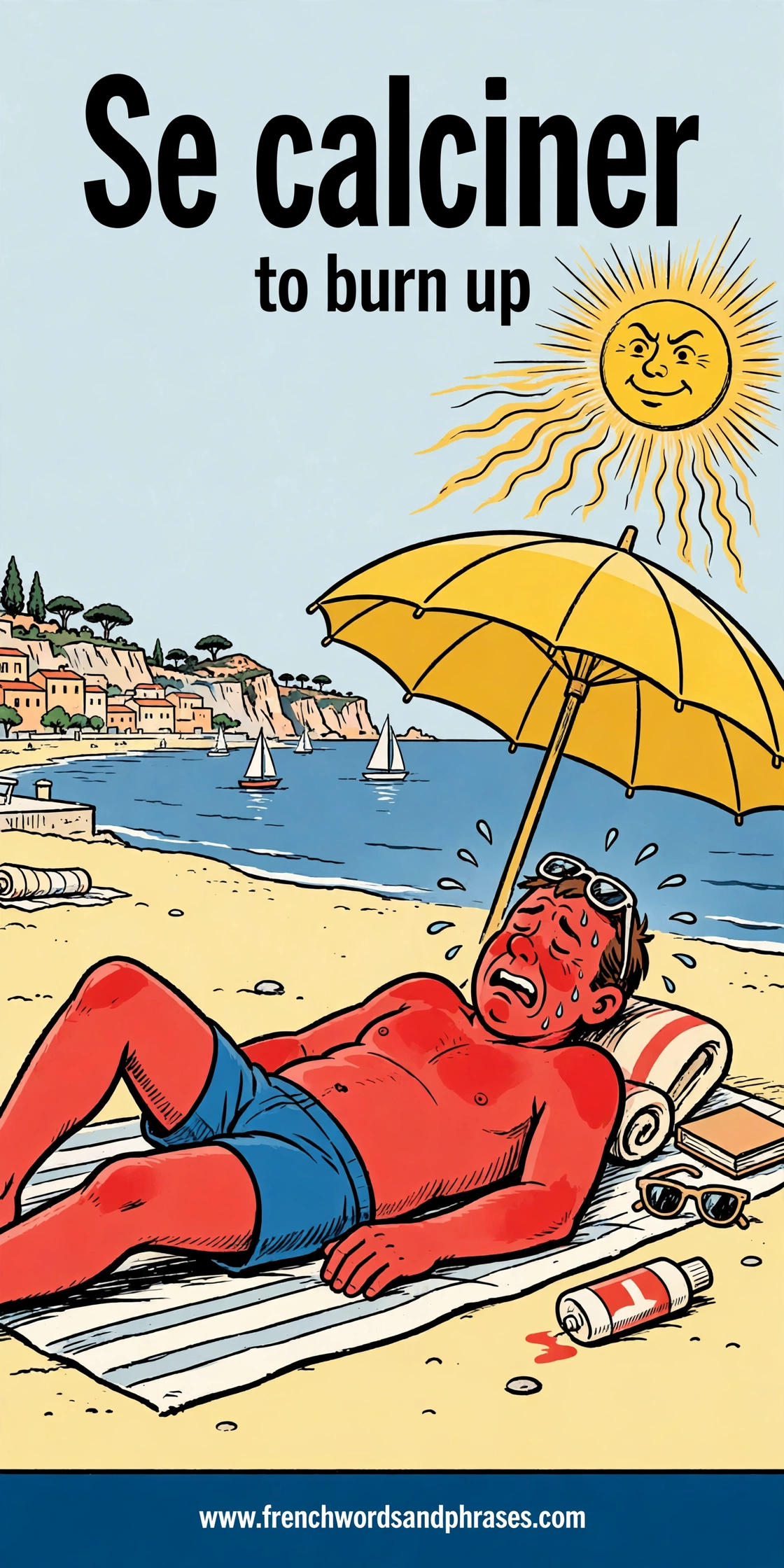
A French Word to Live By
How to Conjugate Se calciner in French
/sə kal.si.ne/
Se calciner means to burn up — to be slowly consumed by heat until nothing is left of a thing but ash and mineral.
Logs whitening in the heart of a fire, an old beam charring through in a blaze — se calciner is the reflexive of calciner: the thing does not burn something else, it burns itself away, completely.
In this guide, you’ll learn how to conjugate se calciner in all the major French tenses and moods. Explore complete conjugation tables, French examples, English translations, and practice quizzes.
Understanding the French Verb Se calciner
Se calciner is a regular French verb belonging to the first group of verbs, those ending in-er.
It means to burn up. It is used of materials that heat consumes entirely — wood, bones, food forgotten in an oven — and, figuratively and familiarly, of people who let themselves roast under a brutal sun. The core idea never changes: the burning goes all the way through.
Verb classification: First group (-er), reflexive
Auxiliary verb: Être
Past participle: calciné
Present participle: calcinant
English equivalents: To burn up, to be calcined, to char through; le bois se calcine — the wood burns to ash; les os se calcinent — the bones calcine; se calciner au soleil — to roast in the sun (familiar, figurative).
One important detail: se calciner is the reflexive form of calciner, and the picture flips — the subject undergoes the total burning itself: le bois se calcine dans le foyer. Being reflexive, it takes être in every compound tense and the past participle agrees with the subject: les poutres se sont calcinées, le rôti s’est calciné. In familiar speech it is also used of a person roasting in fierce sun: on s’est calcinés sur la plage — we baked on the beach. The tu imperative tucks the pronoun behind the verb: ne te calcine pas au soleil !
Experience the Word
Se calciner is total burning seen from inside — the log does not fight the fire; it slowly becomes the ash.
Imagine a forgotten roast in a farmhouse oven. The guests are laughing in the garden, the hours pass — and inside, in the dark heat, le rôti se calcine, quietly, until the cook opens the door on a blackened stone and a cloud of bitter smoke.
Nobody burned it on purpose. It burned itself away — calciné, completely, by simple neglect and heat.
How to Conjugate Se calciner: Complete French Conjugation Guide
Let’s explore every major conjugation of se calciner, beginning with the indicative mood.
How to Conjugate Se calciner in the Indicative Mood
The indicative mood is used to express facts, observations, actions, and events.
How to Conjugate Se calciner in the Present Tense (Présent)
Used for actions happening now, habitual actions, and general truths.
| Subject | Conjugation |
|---|---|
| je | me calcine |
| tu | te calcines |
| il / elle | se calcine |
| nous | nous calcinons |
| vous | vous calcinez |
| ils / elles | se calcinent |
Example
Le bois sec se calcine vite dans un feu vif.
Dry wood burns up quickly in a lively fire.
Quick Quiz 1
Complete the sentence:
Dans ce feu vif, les branches se ______ en quelques minutes.
Reveal the answer
calcinent
Dans ce feu vif, les branches se calcinent en quelques minutes.
In this lively fire, the branches burn to ash in a few minutes.
How to Conjugate Se calciner in the Passé Composé
Used for completed actions in the past. Se calciner takes the auxiliary verb être.
| Subject | Conjugation |
|---|---|
| je | me suis calciné / me suis calcinée |
| tu | t’es calciné / t’es calcinée |
| il / elle | s’est calciné / s’est calcinée |
| nous | nous sommes calcinés / nous sommes calcinées |
| vous | vous êtes calcinés / vous êtes calcinées / vous êtes calciné / vous êtes calcinée |
| ils / elles | se sont calcinés / se sont calcinées |
Example
Le rôti s’est calciné dans le four pendant la sieste.
The roast burned to a cinder in the oven during the nap.
How to Conjugate Se calciner in the Imparfait (Imperfect Tense)
Used for habitual past actions, descriptions, and ongoing situations in the past.
| Subject | Conjugation |
|---|---|
| je | me calcinais |
| tu | te calcinais |
| il / elle | se calcinait |
| nous | nous calcinions |
| vous | vous calciniez |
| ils / elles | se calcinaient |
Example
Les bûches se calcinaient lentement dans la cheminée.
The logs were slowly burning to ash in the fireplace.
Quick Quiz 2
Choose the correct form:
The beams had charred through.
Les poutres ______ . (se sont calcinées / ont calciné)
Reveal the answer
se sont calcinées
Les poutres se sont calcinées.
Se calciner is reflexive, takes être, and the participle agrees: calcinées.
How to Conjugate Se calciner in the Plus-que-parfait
Used to describe an action that had already been completed before another past event.
| Subject | Conjugation |
|---|---|
| je | m’étais calciné / m’étais calcinée |
| tu | t’étais calciné / t’étais calcinée |
| il / elle | s’était calciné / s’était calcinée |
| nous | nous étions calcinés / nous étions calcinées |
| vous | vous étiez calcinés / vous étiez calcinées / vous étiez calciné / vous étiez calcinée |
| ils / elles | s’étaient calcinés / s’étaient calcinées |
Example
Les poutres s’étaient calcinées avant l’arrivée des pompiers.
The beams had charred through before the firefighters arrived.
How to Conjugate Se calciner in the Passé Simple
Primarily used in formal writing, literature, and historical narratives. It is rarely used in everyday conversation.
| Subject | Conjugation |
|---|---|
| je | me calcinai |
| tu | te calcinas |
| il / elle | se calcina |
| nous | nous calcinâmes |
| vous | vous calcinâtes |
| ils / elles | se calcinèrent |
Example
Le vieux navire se calcina entièrement dans l’incendie du port.
The old ship burned up completely in the harbour fire.
How to Conjugate Se calciner in the Passé Antérieur
A literary tense used to express an action completed immediately before another past action, generally in the passé simple.
| Subject | Conjugation |
|---|---|
| je | me fus calciné / me fus calcinée |
| tu | te fus calciné / te fus calcinée |
| il / elle | se fut calciné / se fut calcinée |
| nous | nous fûmes calcinés / nous fûmes calcinées |
| vous | vous fûtes calcinés / vous fûtes calcinées / vous fûtes calciné / vous fûtes calcinée |
| ils / elles | se furent calcinés / se furent calcinées |
Example
Dès que la corde se fut calcinée, la cloche tomba.
As soon as the rope had burned through, the bell fell.
How to Conjugate Se calciner in the Future Tense (Futur Simple)
Used to describe actions that will take place in the future.
| Subject | Conjugation |
|---|---|
| je | me calcinerai |
| tu | te calcineras |
| il / elle | se calcinera |
| nous | nous calcinerons |
| vous | vous calcinerez |
| ils / elles | se calcineront |
Example
Sans eau, les racines se calcineront sous ce soleil.
Without water, the roots will burn up under this sun.
How to Conjugate Se calciner in the Futur Antérieur (Future Perfect)
Used for an action that will have been completed before a particular point in the future.
| Subject | Conjugation |
|---|---|
| je | me serai calciné / me serai calcinée |
| tu | te seras calciné / te seras calcinée |
| il / elle | se sera calciné / se sera calcinée |
| nous | nous serons calcinés / nous serons calcinées |
| vous | vous serez calcinés / vous serez calcinées / vous serez calciné / vous serez calcinée |
| ils / elles | se seront calcinés / se seront calcinées |
Example
À minuit, le feu se sera éteint et tout se sera calciné.
By midnight, the fire will have gone out and everything will have burned to ash.
How to Conjugate Se calciner in the Near Future (Futur Proche)
Used to describe something that is going to happen soon. Formed with aller + infinitive.
| Subject | Conjugation |
|---|---|
| je | vais me calciner |
| tu | vas te calciner |
| il / elle | va se calciner |
| nous | allons nous calciner |
| vous | allez vous calciner |
| ils / elles | vont se calciner |
Example
Remets le plat au four bas, sinon il va se calciner.
Put the dish back in a low oven, otherwise it is going to burn to a cinder.
How to Conjugate Se calciner in the Conditional Mood
The conditional mood expresses what would happen under certain circumstances. It is also frequently used to make polite requests or express wishes.
How to Conjugate Se calciner in the Present Conditional
| Subject | Conjugation |
|---|---|
| je | me calcinerais |
| tu | te calcinerais |
| il / elle | se calcinerait |
| nous | nous calcinerions |
| vous | vous calcineriez |
| ils / elles | se calcineraient |
Example
Le bois humide se calcinerait moins vite.
Damp wood would burn up less quickly.
How to Conjugate Se calciner in the Past Conditional
| Subject | Conjugation |
|---|---|
| je | me serais calciné / me serais calcinée |
| tu | te serais calciné / te serais calcinée |
| il / elle | se serait calciné / se serait calcinée |
| nous | nous serions calcinés / nous serions calcinées |
| vous | vous seriez calcinés / vous seriez calcinées / vous seriez calciné / vous seriez calcinée |
| ils / elles | se seraient calcinés / se seraient calcinées |
Example
Le gâteau se serait calciné sans la minuterie.
The cake would have burned to a cinder without the timer.
Se calciner in the Literary Past Conditional Form
This less common literary form uses the imperfect subjunctive of être.
| Subject | Conjugation |
|---|---|
| je | me fusse calciné / me fusse calcinée |
| tu | te fusses calciné / te fusses calcinée |
| il / elle | se fût calciné / se fût calcinée |
| nous | nous fussions calcinés / nous fussions calcinées |
| vous | vous fussiez calcinés / vous fussiez calcinées / vous fussiez calciné / vous fussiez calcinée |
| ils / elles | se fussent calcinés / se fussent calcinées |
Example
La poutre se fût calcinée sans l’intervention du veilleur.
The beam would have charred through without the watchman’s intervention.
How to Conjugate Se calciner in the Subjunctive Mood
The subjunctive is used to express wishes, emotions, doubts, necessity, and uncertainty. It frequently follows expressions such as il faut que (it is necessary that) or bien que (although).
How to Conjugate Se calciner in the Present Subjunctive
| Subject | Conjugation |
|---|---|
| que je | me calcine |
| que tu | te calcines |
| qu’il / qu’elle | se calcine |
| que nous | nous calcinions |
| que vous | vous calciniez |
| qu’ils / qu’elles | se calcinent |
Example
Il ne faut pas que le pain se calcine dans ce four trop chaud.
The bread must not burn to a cinder in this over-hot oven.
Quick Quiz 3
Complete the sentence using the subjunctive:
On craignait que les archives se ______ dans l’incendie.
Reveal the answer
calcinassent
On craignait que les archives se calcinassent dans l’incendie.
People feared the archives might burn up in the fire.
How to Conjugate Se calciner in the Imperfect Subjunctive
A literary tense, rarely encountered in modern spoken French.
| Subject | Conjugation |
|---|---|
| que je | me calcinasse |
| que tu | te calcinasses |
| qu’il / qu’elle | se calcinât |
| que nous | nous calcinassions |
| que vous | vous calcinassiez |
| qu’ils / qu’elles | se calcinassent |
Example
On craignait que les archives se calcinassent dans l’incendie.
People feared the archives might burn up in the fire.
How to Conjugate Se calciner in the Pluperfect Subjunctive
A literary construction used to express an action completed before another past action.
| Subject | Conjugation |
|---|---|
| que je | me fusse calciné / me fusse calcinée |
| que tu | te fusses calciné / te fusses calcinée |
| qu’il / qu’elle | se fût calciné / se fût calcinée |
| que nous | nous fussions calcinés / nous fussions calcinées |
| que vous | vous fussiez calcinés / vous fussiez calcinées / vous fussiez calciné / vous fussiez calcinée |
| qu’ils / qu’elles | se fussent calcinés / se fussent calcinées |
Example
On racontait que la cargaison se fût calcinée en une heure.
People said the cargo had burned up in an hour.
How to Conjugate Se calciner in the Past Subjunctive
| Subject | Conjugation |
|---|---|
| que je | me sois calciné / me sois calcinée |
| que tu | te sois calciné / te sois calcinée |
| qu’il / qu’elle | se soit calciné / se soit calcinée |
| que nous | nous soyons calcinés / nous soyons calcinées |
| que vous | vous soyez calcinés / vous soyez calcinées / vous soyez calciné / vous soyez calcinée |
| qu’ils / qu’elles | se soient calcinés / se soient calcinées |
Example
Je suis étonné que le rôti se soit calciné si vite.
I am amazed the roast burned to a cinder so quickly.
How to Conjugate Se calciner in the Imperative
The imperative is used to give commands, instructions, invitations, or suggestions. Subject pronouns are omitted.
How to Conjugate Se calciner in the Present Imperative
| Person | Conjugation |
|---|---|
| (tu) | calcine-toi |
| (nous) | calcinons-nous |
| (vous) | calcinez-vous |
Example
Ne te calcine pas au soleil de midi, mets un chapeau !
Do not roast yourself in the midday sun, put a hat on!
Quick Quiz 4
How would you say Do not roast in the midday sun (tu form)?
Reveal the answer
Ne te calcine pas au soleil de midi !
French Participles of Se calciner
Participles are verb forms that can be used in compound tenses and other grammatical constructions.
Present Participle of Se calciner
calcinant
En se calcinant, le bois dégage une chaleur régulière.
As it burns to ash, the wood gives off a steady heat.
Past Participle of Se calciner
calciné
Calcinée au soleil, la terre du jardin demandait de l’eau.
Baked hard by the sun, the garden soil was crying out for water.
Se calciner in Everyday French: Real-Life Examples
Now that you know the conjugations, let’s see how se calciner appears in everyday French.
Example 1 — Present
Le bois sec se calcine vite.
Dry wood burns up quickly.
Example 2 — Passé composé
Le rôti s’est calciné dans le four.
The roast burned to a cinder in the oven.
Example 3 — Imparfait
Les bûches se calcinaient lentement.
The logs were slowly burning to ash.
Example 4 — Future
Les racines se calcineront sans eau.
The roots will burn up without water.
Example 5 — Conditional
Le gâteau se serait calciné sans la minuterie.
The cake would have burned to a cinder without the timer.
Example 6 — Imperative
Ne te calcine pas au soleil de midi !
Do not roast in the midday sun!
Beyond Translation: The Meaning of Se calciner
English needs a whole phrase — to burn up, to burn to a cinder; French se calciner does it in one reflexive verb, the material consuming itself.
The reflexive is the whole picture.
Calciner is what the fire does; se calciner is what happens inside the log, the roast and the beam — and, with a smile, inside the sunbather who stayed out far too long.
How to Remember the French Verb Se calciner
Remember it this way: Se calciner is about the forgotten roast in the oven — burned itself to a cinder.
- Always reflexive here: être in compound tenses, participle agreeing — les poutres se sont calcinées.
- The subject burns itself away completely: bois, os, rôti — down to ash.
- Familiar bonus sense: se calciner au soleil — to roast yourself in the sun.
The key idea is the forgotten roast in the oven — burned itself to a cinder.
Test Your Knowledge of Se calciner
Let’s see how much you’ve learned. Try answering these questions before revealing the answers.
Question 1
Which auxiliary does se calciner use, and why?
Reveal the answer
Être — it is a reflexive verb: le rôti s’est calciné dans le four.
Question 2
How do you say Dry wood burns up quickly in French?
Reveal the answer
Le bois sec se calcine vite.
Question 3
Translate: The roast burned to a cinder in the oven.
Reveal the answer
Le rôti s’est calciné dans le four.
Question 4
What is the past participle of se calciner?
Reveal the answer
Calciné — agreeing: calcinée, calcinés, calcinées.
Question 5
Complete the sentence:
Il ne faut pas que le pain se ______ dans ce four trop chaud.
Reveal the answer
calcine
Il ne faut pas que le pain se calcine dans ce four trop chaud.
The bread must not burn to a cinder in this over-hot oven.
Your Final Challenge
Can You Use It?
How would you say this in French?
The roast burned to a cinder in the oven, so we ordered pizzas, laughing.
Reveal the answer
Le rôti s’est calciné dans le four, alors on a commandé des pizzas en riant.
The roast burned to a cinder in the oven, so we ordered pizzas, laughing.
A little French. A little curiosity. A richer everyday life.
LEARN FRENCH ONE WORD AT A TIME




