A French Word to Live By
How to Conjugate Ébraiser in French
/e.bʁɛ.ze/
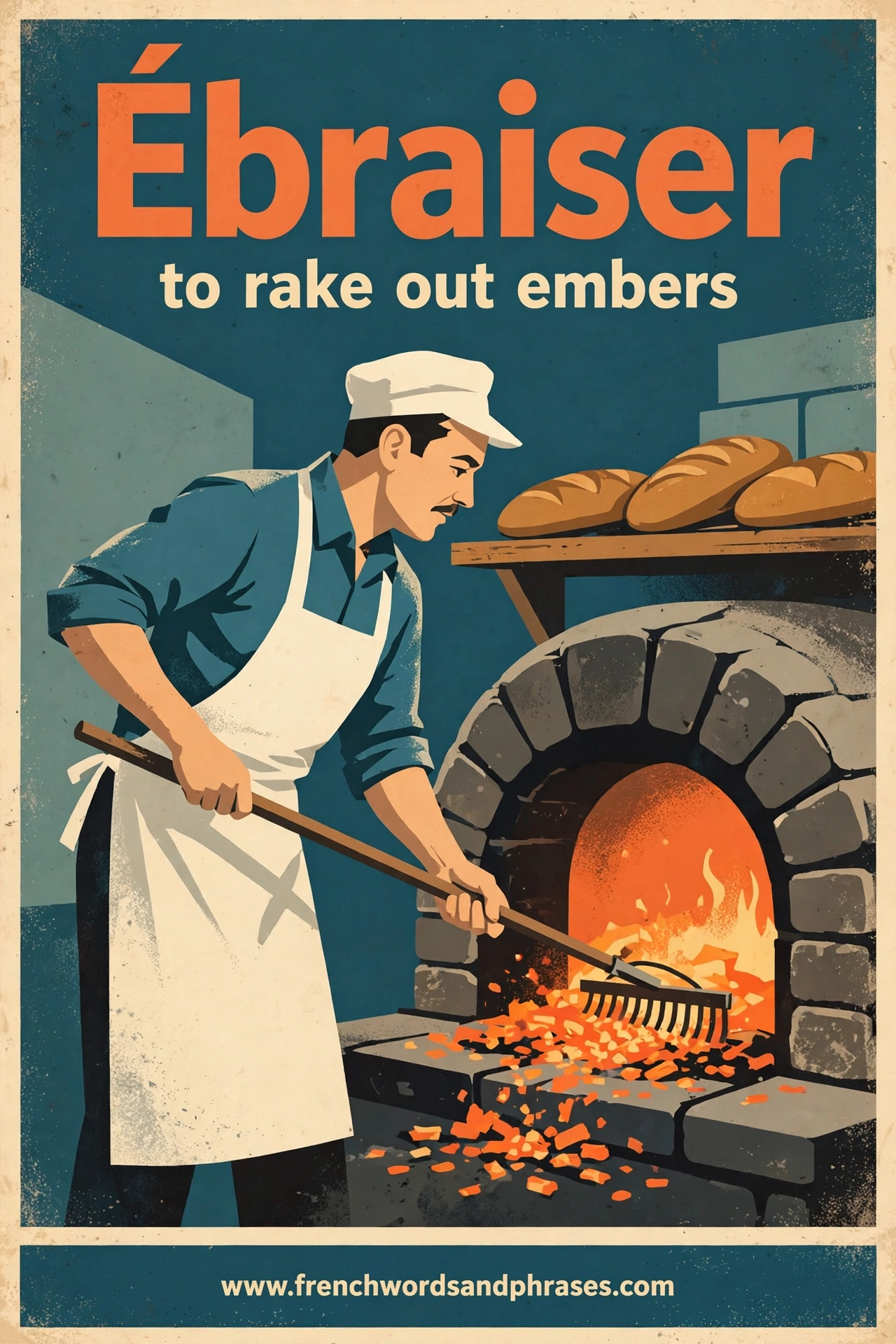
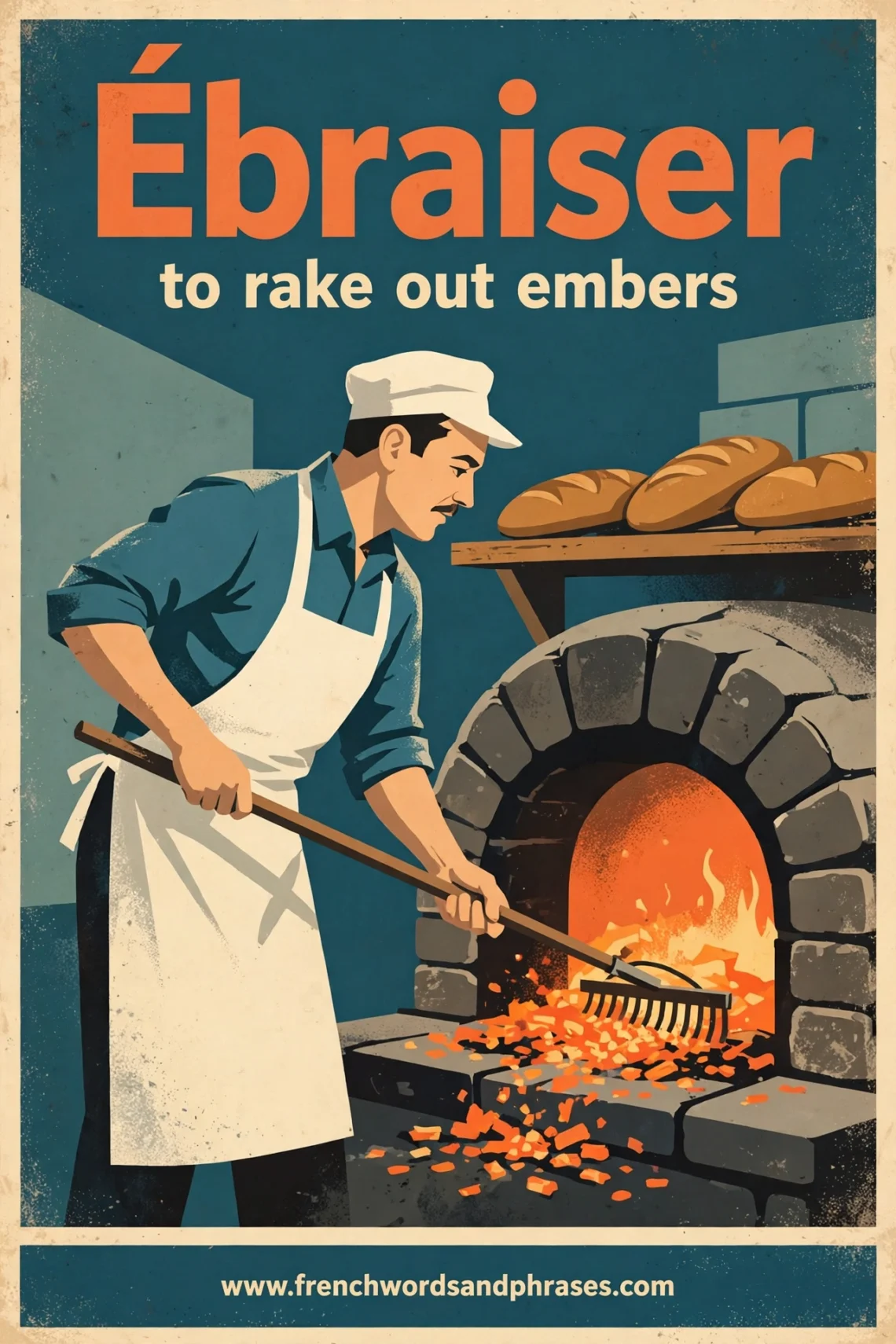
Ébraiser means to rake out embers — to draw the glowing remains and ash out of a stove, an oven or a hearth.
A long iron rake, a shower of sleepy sparks, the grey heart of yesterday’s fire drawn out onto the hearthstone — ébraiser is the verb of the morning after the fire, clearing the embers so a new day, and a new fire, can begin.
In this guide, you’ll learn how to conjugate ébraiser in all the major French tenses and moods. Explore complete conjugation tables, French examples, English translations, and practice quizzes.
Understanding the French Verb Ébraiser
Ébraiser is a regular French verb belonging to the first group of verbs, those ending in -er.
It means to rake out embers. It is commonly used for cleaning out wood stoves and fireplaces in the morning, by bakers raking out their wood-fired ovens and spreading the heat before baking, and at the forge for clearing the hearth — anywhere yesterday’s fire must be drawn out before today’s work.
Verb classification: First group (-er)
Auxiliary verb: Avoir
Past participle: ébraisé
Present participle: ébraisant
English equivalents: To rake out the embers; la braise — embers, glowing coals; ébraiser un four — to rake out a bread oven before baking.
One important detail: ébraiser is built on la braise, the glowing embers of a wood fire — the same word that gives French its beloved grillades sur la braise, food grilled over embers. But where the cook treasures the braise, the stove-keeper removes it: é- takes the embers out so the stove can be cleaned, or so the oven’s heat can be spread and settled before the bread goes in. The conjugation is regular: j’ébraise, nous ébraisons.
Experience the Word
Ébraiser is the verb of the cold end of fire — sparks, ash, and the patience of people who heat and bake with wood.
Imagine a bakery in a mountain village at four in the morning. The baker opens the black mouth of his oven, draws the rake through the glowing bed, and ébraise the embers into a heap at the side — in an hour, where the fire slept, the loaves will rise.
The fire has not been wasted. It has been ébraisé — raked out, cleared away, its heat handed over to the bread.
How to Conjugate Ébraiser: Complete French Conjugation Guide
Let’s explore every major conjugation of ébraiser, beginning with the indicative mood.
How to Conjugate Ébraiser in the Indicative Mood
The indicative mood is used to express facts, observations, actions, and events.
How to Conjugate Ébraiser in the Present Tense (Présent)
Used for actions happening now, habitual actions, and general truths.
| Subject | Conjugation |
|---|---|
| je | ébraise |
| tu | ébraises |
| il / elle | ébraise |
| nous | ébraisons |
| vous | ébraisez |
| ils / elles | ébraisent |
Example
Chaque matin, elle ébraise le poêle avant de le rallumer.
Every morning, she rakes out the embers from the stove before relighting it.
Quick Quiz 1
Complete the sentence:
Nous ______ le poêle chaque matin.
Reveal the answer
ébraisons
Nous ébraisons le poêle chaque matin.
We rake out the stove every morning.
How to Conjugate Ébraiser in the Passé Composé
Used for completed actions in the past. Ébraiser takes the auxiliary verb avoir.
| Subject | Conjugation |
|---|---|
| j’ | ai ébraisé |
| tu | as ébraisé |
| il / elle | a ébraisé |
| nous | avons ébraisé |
| vous | avez ébraisé |
| ils / elles | ont ébraisé |
Example
Le boulanger a ébraisé son four à quatre heures.
The baker raked out the embers from his oven at four o’clock.
How to Conjugate Ébraiser in the Imparfait (Imperfect Tense)
Used for habitual past actions, descriptions, and ongoing situations in the past.
| Subject | Conjugation |
|---|---|
| je | ébraisais |
| tu | ébraisais |
| il / elle | ébraisait |
| nous | ébraisions |
| vous | ébraisiez |
| ils / elles | ébraisaient |
Example
Autrefois, on ébraisait la cheminée à la pelle et au râteau.
In the old days, people used to rake out the fireplace with a shovel and a rake.
Quick Quiz 2
Choose the correct form:
The baker raked out his oven.
Le boulanger ______ son four. (a ébraisé / est ébraisé)
Reveal the answer
a ébraisé
Le boulanger a ébraisé son four.
Ébraiser takes avoir.
How to Conjugate Ébraiser in the Plus-que-parfait
Used to describe an action that had already been completed before another past event.
| Subject | Conjugation |
|---|---|
| j’ | avais ébraisé |
| tu | avais ébraisé |
| il / elle | avait ébraisé |
| nous | avions ébraisé |
| vous | aviez ébraisé |
| ils / elles | avaient ébraisé |
Example
Il avait ébraisé la forge avant l’arrivée des apprentis.
He had raked out the forge before the apprentices arrived.
How to Conjugate Ébraiser in the Passé Simple
Primarily used in formal writing, literature, and historical narratives. It is rarely used in everyday conversation.
| Subject | Conjugation |
|---|---|
| je | ébraisai |
| tu | ébraisas |
| il / elle | ébraisa |
| nous | ébraisâmes |
| vous | ébraisâtes |
| ils / elles | ébraisèrent |
Example
Le ramoneur ébraisa le foyer et gratta les parois.
The sweep raked out the hearth and scraped the walls.
How to Conjugate Ébraiser in the Passé Antérieur
A literary tense used to express an action completed immediately before another past action, generally in the passé simple.
| Subject | Conjugation |
|---|---|
| j’ | eus ébraisé |
| tu | eus ébraisé |
| il / elle | eut ébraisé |
| nous | eûmes ébraisé |
| vous | eûtes ébraisé |
| ils / elles | eurent ébraisé |
Example
Quand ils eurent ébraisé le four, la première fournée entra.
When they had raked out the oven, the first batch went in.
How to Conjugate Ébraiser in the Future Tense (Futur Simple)
Used to describe actions that will take place in the future.
| Subject | Conjugation |
|---|---|
| je | ébraiserai |
| tu | ébraiseras |
| il / elle | ébraisera |
| nous | ébraiserons |
| vous | ébraiserez |
| ils / elles | ébraiseront |
Example
Demain, j’ébraiserai le poêle de bonne heure.
Tomorrow, I will rake out the stove early.
How to Conjugate Ébraiser in the Futur Antérieur (Future Perfect)
Used for an action that will have been completed before a particular point in the future.
| Subject | Conjugation |
|---|---|
| j’ | aurai ébraisé |
| tu | auras ébraisé |
| il / elle | aura ébraisé |
| nous | aurons ébraisé |
| vous | aurez ébraisé |
| ils / elles | auront ébraisé |
Example
À cinq heures, le boulanger aura ébraisé son four depuis longtemps.
By five o’clock, the baker will have raked out his oven long before.
How to Conjugate Ébraiser in the Near Future (Futur Proche)
Used to describe something that is going to happen soon. Formed with aller + infinitive.
| Subject | Conjugation |
|---|---|
| je | vais ébraiser |
| tu | vas ébraiser |
| il / elle | va ébraiser |
| nous | allons ébraiser |
| vous | allez ébraiser |
| ils / elles | vont ébraiser |
Example
Je vais ébraiser la cheminée, elle fume trop.
I am going to rake out the fireplace, it is smoking too much.
How to Conjugate Ébraiser in the Conditional Mood
The conditional mood expresses what would happen under certain circumstances. It is also frequently used to make polite requests or express wishes.
How to Conjugate Ébraiser in the Present Conditional
| Subject | Conjugation |
|---|---|
| je | ébraiserais |
| tu | ébraiserais |
| il / elle | ébraiserait |
| nous | ébraiserions |
| vous | ébraiseriez |
| ils / elles | ébraiseraient |
Example
Avec un râteau plus long, on ébraiserait le four sans se brûler.
With a longer rake, we would rake out the oven without burning ourselves.
How to Conjugate Ébraiser in the Past Conditional
| Subject | Conjugation |
|---|---|
| j’ | aurais ébraisé |
| tu | aurais ébraisé |
| il / elle | aurait ébraisé |
| nous | aurions ébraisé |
| vous | auriez ébraisé |
| ils / elles | auraient ébraisé |
Example
Ils auraient ébraisé la forge si le travail avait continué.
They would have raked out the forge if the work had continued.
Ébraiser in the Literary Past Conditional Form
This less common literary form uses the imperfect subjunctive of avoir.
| Subject | Conjugation |
|---|---|
| j’ | eusse ébraisé |
| tu | eusses ébraisé |
| il / elle | eût ébraisé |
| nous | eussions ébraisé |
| vous | eussiez ébraisé |
| ils / elles | eussent ébraisé |
Example
Le boulanger eût ébraisé son four avant l’aube.
The baker would have raked out his oven before dawn.
How to Conjugate Ébraiser in the Subjunctive Mood
The subjunctive is used to express wishes, emotions, doubts, necessity, and uncertainty. It frequently follows expressions such as il faut que (it is necessary that) or bien que (although).
How to Conjugate Ébraiser in the Present Subjunctive
| Subject | Conjugation |
|---|---|
| que je | ébraise |
| que tu | ébraises |
| qu’il / qu’elle | ébraise |
| que nous | ébraisions |
| que vous | ébraisiez |
| qu’ils / qu’elles | ébraisent |
Example
Il faut que tu ébraises le poêle avant de partir.
You must rake out the stove before leaving.
Quick Quiz 3
Complete the sentence using the subjunctive:
Il faut que vous ______ la forge ce soir.
Reveal the answer
ébraisiez
Il faut que vous ébraisiez la forge ce soir.
You must rake out the forge this evening.
How to Conjugate Ébraiser in the Imperfect Subjunctive
A literary tense, rarely encountered in modern spoken French.
| Subject | Conjugation |
|---|---|
| que je | ébraisasse |
| que tu | ébraisasses |
| qu’il / qu’elle | ébraisât |
| que nous | ébraisassions |
| que vous | ébraisassiez |
| qu’ils / qu’elles | ébraisassent |
Example
La patronne voulait que l’apprenti ébraisât le four chaque soir.
The mistress wanted the apprentice to rake out the oven every evening.
How to Conjugate Ébraiser in the Pluperfect Subjunctive
A literary construction used to express an action completed before another past action.
| Subject | Conjugation |
|---|---|
| que j’ | eusse ébraisé |
| que tu | eusses ébraisé |
| qu’il / qu’elle | eût ébraisé |
| que nous | eussions ébraisé |
| que vous | eussiez ébraisé |
| qu’ils / qu’elles | eussent ébraisé |
Example
On voyait qu’ils eussent ébraisé le foyer à la hâte.
You could see they had raked out the hearth in a hurry.
How to Conjugate Ébraiser in the Past Subjunctive
| Subject | Conjugation |
|---|---|
| que j’ | aie ébraisé |
| que tu | aies ébraisé |
| qu’il / qu’elle | ait ébraisé |
| que nous | ayons ébraisé |
| que vous | ayez ébraisé |
| qu’ils / qu’elles | aient ébraisé |
Example
Je suis content que vous ayez ébraisé la cheminée, elle tire mieux.
I am glad you raked out the fireplace, it draws better.
How to Conjugate Ébraiser in the Imperative
The imperative is used to give commands, instructions, invitations, or suggestions. Subject pronouns are omitted.
How to Conjugate Ébraiser in the Present Imperative
| Person | Conjugation |
|---|---|
| (tu) | ébraise |
| (nous) | ébraisons |
| (vous) | ébraisez |
Example
Ébraise le four, puis enfourne la première fournée !
Rake out the oven, then put in the first batch!
Quick Quiz 4
How would you say Rake out the stove gently (tu form)?
Reveal the answer
Ébraise le poêle doucement !
French Participles of Ébraiser
Participles are verb forms that can be used in compound tenses and other grammatical constructions.
Present Participle of Ébraiser
ébraisant
En ébraisant le poêle, il a fait tomber des étincelles sur le tapis.
While raking out the stove, he dropped sparks on the carpet.
Past Participle of Ébraiser
ébraisé
Ébraisé à l’aube, le four garde une chaleur douce et égale.
Raked out at dawn, the oven keeps a gentle, even heat.
Ébraiser in Everyday French: Real-Life Examples
Now that you know the conjugations, let’s see how ébraiser appears in everyday French.
Example 1 — Present
On ébraise le poêle avant de le rallumer.
We rake out the stove before relighting it.
Example 2 — Passé composé
Le boulanger a ébraisé son four à l’aube.
The baker raked out his oven at dawn.
Example 3 — Imparfait
Mon père ébraisait la cheminée tous les dimanches.
My father used to rake out the fireplace every Sunday.
Example 4 — Future
Nous ébraiserons la forge ce soir.
We will rake out the forge this evening.
Example 5 — Conditional
Tu ébraiserais le four si tu te levais plus tôt.
You would rake out the oven if you got up earlier.
Example 6 — Imperative
Ébraisez le poêle doucement, sans lever la cendre !
Rake out the stove gently, without raising the ash!
Beyond Translation: The Meaning of Ébraiser
English needs the whole picture — rake out the embers; French ébraiser keeps the braise inside the verb and lets the prefix do the raking.
One word, two fires.
The braise that grills your dinner in August is the braise you ébraisez out of the stove in January — French fire-keeping is a single vocabulary, from feast to ashes.
How to Remember the French Verb Ébraiser
Remember it this way: Ébraiser is about the morning after the fire — embers raked out, the hearth made new.
- La braise — the embers; é- takes them out: ébraiser is the morning rake-out.
- Ébraiser un poêle, un four, une forge — stoves, bread ovens and forges all qualify.
- Regular -er: j’ébraise, nous ébraisons, past participle ébraisé.
The key idea is the morning after the fire — embers raked out, the hearth made new.
Test Your Knowledge of Ébraiser
Let’s see how much you’ve learned. Try answering these questions before revealing the answers.
Question 1
What is la braise?
Reveal the answer
Embers, glowing coals — what ébraiser rakes out.
Question 2
How do you say We rake out the stove before relighting it in French?
Reveal the answer
On ébraise le poêle avant de le rallumer.
Question 3
Translate: The baker raked out his oven at dawn.
Reveal the answer
Le boulanger a ébraisé son four à l’aube.
Question 4
What is the past participle of ébraiser?
Reveal the answer
Ébraisé.
Question 5
Complete the sentence:
Il faut que tu ______ le poêle avant de partir.
Reveal the answer
ébraises
Il faut que tu ébraises le poêle avant de partir.
You must rake out the stove before leaving.
Your Final Challenge
Can You Use It?
How would you say this in French?
The baker rakes out his oven in the dark night, and the village will have its bread at seven o’clock.
Reveal the answer
Le boulanger ébraise son four dans la nuit noire, et le village aura son pain à sept heures.
The baker rakes out his oven in the dark night, and the village will have its bread at seven o’clock.
A little French. A little curiosity. A richer everyday life.
LEARN FRENCH ONE WORD AT A TIME