A French Word to Live By
How to Conjugate Ébouter in French
/e.bu.te/
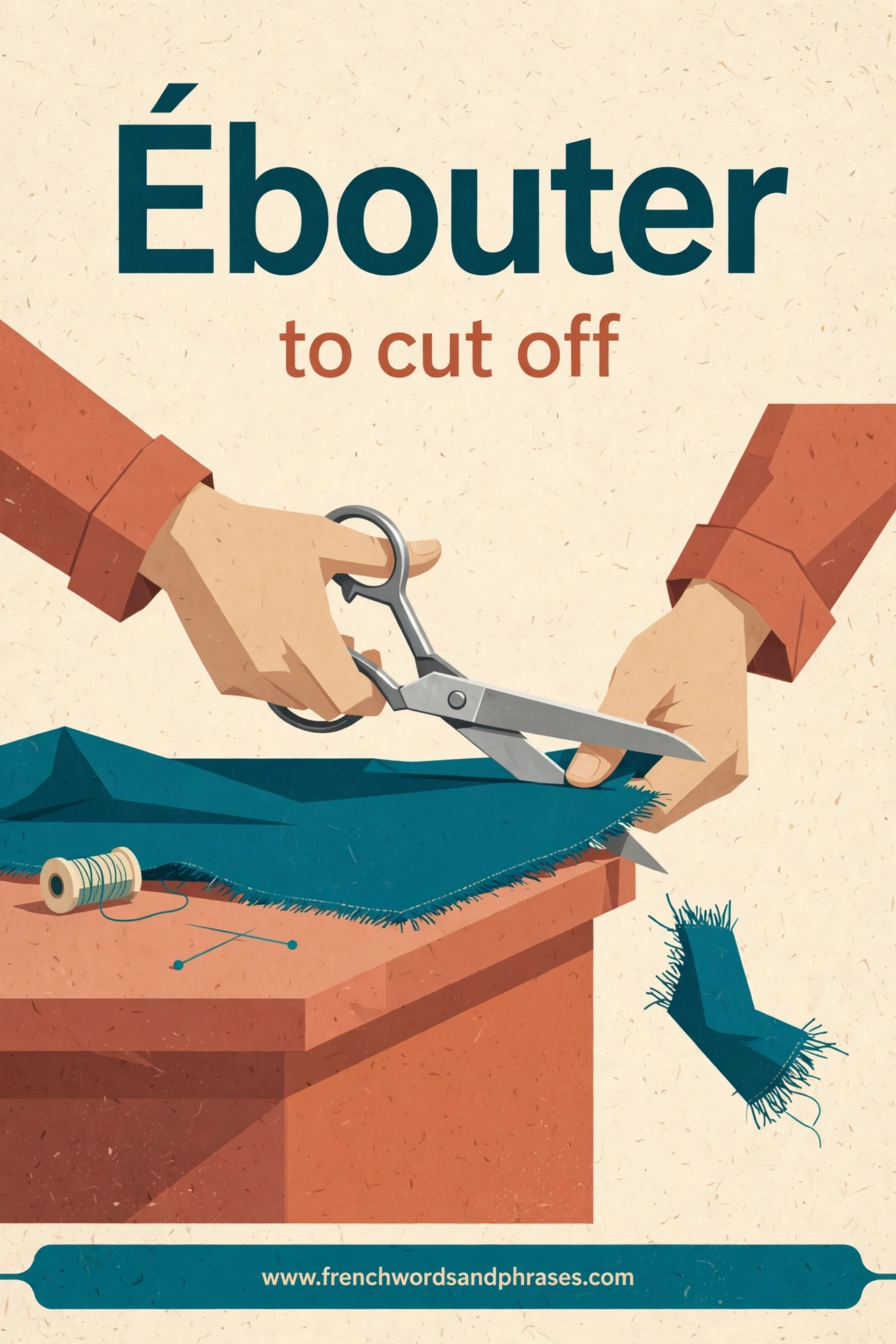
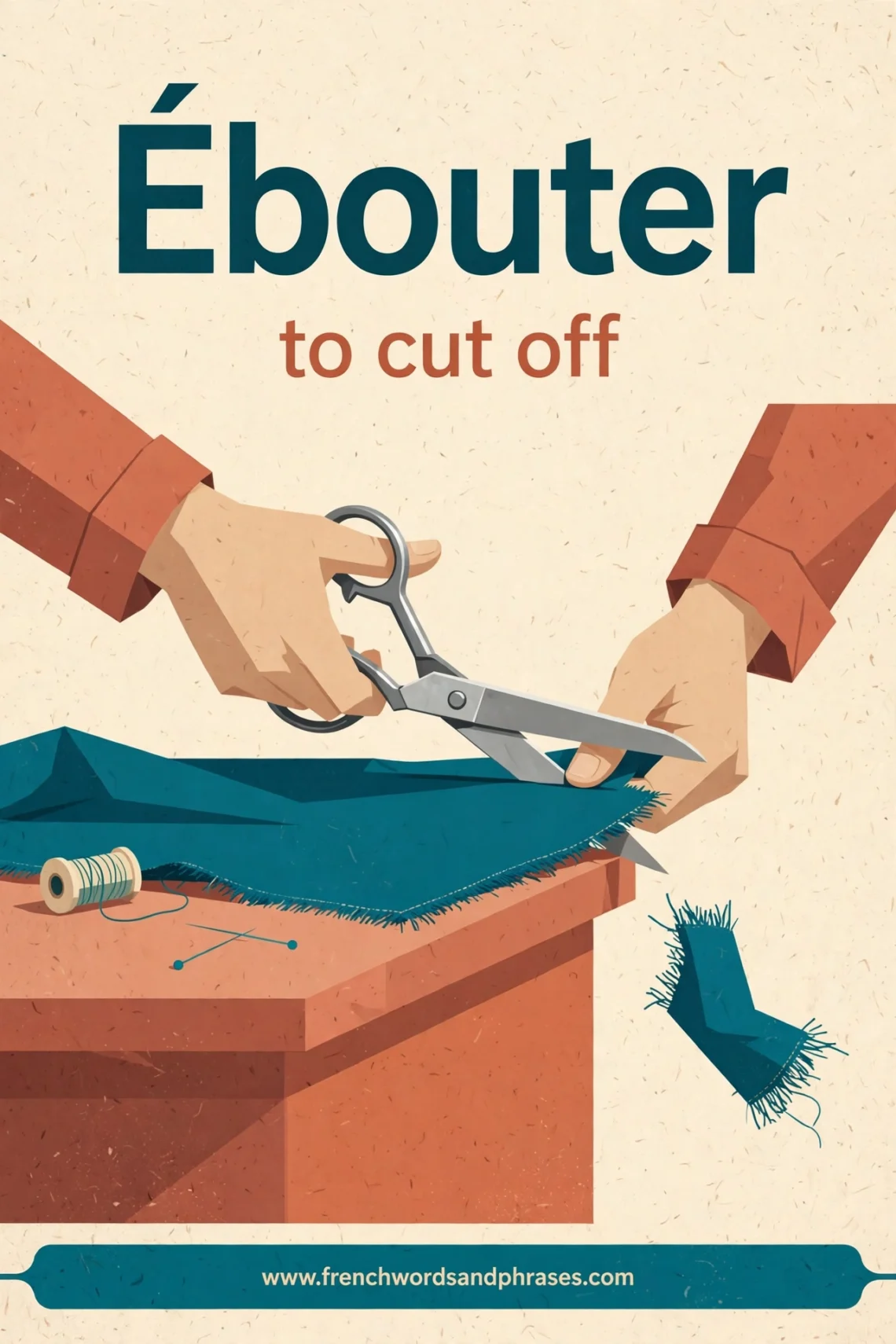
Ébouter means to cut off — to slice away the end or tip of something so it finishes clean and square.
The end of a plank sawn square, the tip of a cigar snipped before lighting, the ragged ends of a hedge trimmed away — ébouter is the verb of the finishing cut, the small slice that removes the end so the thing is right.
In this guide, you’ll learn how to conjugate ébouter in all the major French tenses and moods. Explore complete conjugation tables, French examples, English translations, and practice quizzes.
Understanding the French Verb Ébouter
Ébouter is a regular French verb belonging to the first group of verbs, those ending in -er.
It means to cut off. It is commonly used in carpentry for squaring the ends of boards and beams, in the kitchen and garden for trimming the ends of vegetables and shoots, and at the tobacconist’s for cutting the tip of a cigar — anywhere the end is the part that must go.
Verb classification: First group (-er)
Auxiliary verb: Avoir
Past participle: ébouté
Present participle: éboutant
English equivalents: To cut off the end, to trim the tip; le bout — the end, the tip; ébouter une planche — to square off the end of a plank.
One important detail: ébouter is one of the most transparent verbs in French — le bout is the end or tip of anything, and é- takes it off. Ébouter une planche, to cut the end off a plank; ébouter un cigare, to snip the tip of a cigar; ébouter les asperges, to trim the woody ends of asparagus. The conjugation asks for nothing special: j’éboute, nous éboutons — the difficulty of the verb is all in the wrist, not the spelling.
Experience the Word
Ébouter is the verb of the last centimetre — the cut that is small in size and final in effect.
Imagine a joiner’s bench at the end of the day. Each plank is measured, marked, and éboutée with one clean pass of the saw, so that ten uneven boards leave the bench as ten identical lengths, their ends square as dice.
Almost nothing has been removed. But the ends have been cut off — éboutés — and the work is finished.
How to Conjugate Ébouter: Complete French Conjugation Guide
Let’s explore every major conjugation of ébouter, beginning with the indicative mood.
How to Conjugate Ébouter in the Indicative Mood
The indicative mood is used to express facts, observations, actions, and events.
How to Conjugate Ébouter in the Present Tense (Présent)
Used for actions happening now, habitual actions, and general truths.
| Subject | Conjugation |
|---|---|
| je | éboute |
| tu | éboutes |
| il / elle | éboute |
| nous | éboutons |
| vous | éboutez |
| ils / elles | éboutent |
Example
Le menuisier éboute chaque planche avant de l’assembler.
The joiner cuts off the end of each plank before assembling it.
Quick Quiz 1
Complete the sentence:
Nous ______ les planches avant de les poser.
Reveal the answer
éboutons
Nous éboutons les planches avant de les poser.
We cut off the ends of the planks before laying them.
How to Conjugate Ébouter in the Passé Composé
Used for completed actions in the past. Ébouter takes the auxiliary verb avoir.
| Subject | Conjugation |
|---|---|
| j’ | ai ébouté |
| tu | as ébouté |
| il / elle | a ébouté |
| nous | avons ébouté |
| vous | avez ébouté |
| ils / elles | ont ébouté |
Example
Elle a ébouté les asperges avant de les cuire.
She trimmed the ends of the asparagus before cooking them.
How to Conjugate Ébouter in the Imparfait (Imperfect Tense)
Used for habitual past actions, descriptions, and ongoing situations in the past.
| Subject | Conjugation |
|---|---|
| je | éboutais |
| tu | éboutais |
| il / elle | éboutait |
| nous | éboutions |
| vous | éboutiez |
| ils / elles | éboutaient |
Example
Autrefois, on éboutait les cigares avec un petit couteau.
In the old days, people used to cut the tip off cigars with a small knife.
Quick Quiz 2
Choose the correct form:
He cut the tip off his cigar.
Il ______ son cigare. (a ébouté / est ébouté)
Reveal the answer
a ébouté
Il a ébouté son cigare.
Ébouter takes avoir.
How to Conjugate Ébouter in the Plus-que-parfait
Used to describe an action that had already been completed before another past event.
| Subject | Conjugation |
|---|---|
| j’ | avais ébouté |
| tu | avais ébouté |
| il / elle | avait ébouté |
| nous | avions ébouté |
| vous | aviez ébouté |
| ils / elles | avaient ébouté |
Example
Il avait ébouté les poutres avant de les poser.
He had cut off the ends of the beams before laying them.
How to Conjugate Ébouter in the Passé Simple
Primarily used in formal writing, literature, and historical narratives. It is rarely used in everyday conversation.
| Subject | Conjugation |
|---|---|
| je | éboutai |
| tu | éboutas |
| il / elle | ébouta |
| nous | éboutâmes |
| vous | éboutâtes |
| ils / elles | éboutèrent |
Example
Le charpentier ébouta les chevrons un à un.
The carpenter trimmed the ends of the rafters one by one.
How to Conjugate Ébouter in the Passé Antérieur
A literary tense used to express an action completed immediately before another past action, generally in the passé simple.
| Subject | Conjugation |
|---|---|
| j’ | eus ébouté |
| tu | eus ébouté |
| il / elle | eut ébouté |
| nous | eûmes ébouté |
| vous | eûtes ébouté |
| ils / elles | eurent ébouté |
Example
Quand le jardinier eut ébouté la haie, le jardin parut plus net.
When the gardener had trimmed the ends of the hedge, the garden looked tidier.
How to Conjugate Ébouter in the Future Tense (Futur Simple)
Used to describe actions that will take place in the future.
| Subject | Conjugation |
|---|---|
| je | ébouterai |
| tu | ébouteras |
| il / elle | éboutera |
| nous | ébouterons |
| vous | ébouterez |
| ils / elles | ébouteront |
Example
Demain, nous ébouterons les planches du parquet.
Tomorrow, we will cut off the ends of the floorboards.
How to Conjugate Ébouter in the Futur Antérieur (Future Perfect)
Used for an action that will have been completed before a particular point in the future.
| Subject | Conjugation |
|---|---|
| j’ | aurai ébouté |
| tu | auras ébouté |
| il / elle | aura ébouté |
| nous | aurons ébouté |
| vous | aurez ébouté |
| ils / elles | auront ébouté |
Example
À midi, il aura ébouté toutes les lattes.
By noon, he will have trimmed the ends of all the slats.
How to Conjugate Ébouter in the Near Future (Futur Proche)
Used to describe something that is going to happen soon. Formed with aller + infinitive.
| Subject | Conjugation |
|---|---|
| je | vais ébouter |
| tu | vas ébouter |
| il / elle | va ébouter |
| nous | allons ébouter |
| vous | allez ébouter |
| ils / elles | vont ébouter |
Example
Je vais ébouter ces branches qui dépassent.
I am going to cut off these branches that stick out.
How to Conjugate Ébouter in the Conditional Mood
The conditional mood expresses what would happen under certain circumstances. It is also frequently used to make polite requests or express wishes.
How to Conjugate Ébouter in the Present Conditional
| Subject | Conjugation |
|---|---|
| je | ébouterais |
| tu | ébouterais |
| il / elle | ébouterait |
| nous | ébouterions |
| vous | ébouteriez |
| ils / elles | ébouteraient |
Example
Avec une scie neuve, on ébouterait ces poutres sans effort.
With a new saw, we would trim these beams effortlessly.
How to Conjugate Ébouter in the Past Conditional
| Subject | Conjugation |
|---|---|
| j’ | aurais ébouté |
| tu | aurais ébouté |
| il / elle | aurait ébouté |
| nous | aurions ébouté |
| vous | auriez ébouté |
| ils / elles | auraient ébouté |
Example
Ils auraient ébouté le cigare si le coupe-cigare avait été là.
They would have cut the tip off the cigar if the cutter had been there.
Ébouter in the Literary Past Conditional Form
This less common literary form uses the imperfect subjunctive of avoir.
| Subject | Conjugation |
|---|---|
| j’ | eusse ébouté |
| tu | eusses ébouté |
| il / elle | eût ébouté |
| nous | eussions ébouté |
| vous | eussiez ébouté |
| ils / elles | eussent ébouté |
Example
Le charpentier eût ébouté le chêne du roi.
The carpenter would have trimmed the king’s oak.
How to Conjugate Ébouter in the Subjunctive Mood
The subjunctive is used to express wishes, emotions, doubts, necessity, and uncertainty. It frequently follows expressions such as il faut que (it is necessary that) or bien que (although).
How to Conjugate Ébouter in the Present Subjunctive
| Subject | Conjugation |
|---|---|
| que je | éboute |
| que tu | éboutes |
| qu’il / qu’elle | éboute |
| que nous | éboutions |
| que vous | éboutiez |
| qu’ils / qu’elles | éboutent |
Example
Il faut que tu éboutes ce bâton pour qu’il entre dans le sac.
You must cut the end off this stick so it fits in the bag.
Quick Quiz 3
Complete the sentence using the subjunctive:
Il faut que vous ______ les branches mortes.
Reveal the answer
éboutiez
Il faut que vous éboutiez les branches mortes.
You must cut off the dead branches.
How to Conjugate Ébouter in the Imperfect Subjunctive
A literary tense, rarely encountered in modern spoken French.
| Subject | Conjugation |
|---|---|
| que je | éboutasse |
| que tu | éboutasses |
| qu’il / qu’elle | éboutât |
| que nous | éboutassions |
| que vous | éboutassiez |
| qu’ils / qu’elles | éboutassent |
Example
Le patron voulait que l’ouvrier éboutât les planches au millimètre.
The boss wanted the workman to trim the planks to the millimetre.
How to Conjugate Ébouter in the Pluperfect Subjunctive
A literary construction used to express an action completed before another past action.
| Subject | Conjugation |
|---|---|
| que j’ | eusse ébouté |
| que tu | eusses ébouté |
| qu’il / qu’elle | eût ébouté |
| que nous | eussions ébouté |
| que vous | eussiez ébouté |
| qu’ils / qu’elles | eussent ébouté |
Example
On voyait qu’ils eussent ébouté les poutres avec soin.
You could see they had cut the ends of the beams with care.
How to Conjugate Ébouter in the Past Subjunctive
| Subject | Conjugation |
|---|---|
| que j’ | aie ébouté |
| que tu | aies ébouté |
| qu’il / qu’elle | ait ébouté |
| que nous | ayons ébouté |
| que vous | ayez ébouté |
| qu’ils / qu’elles | aient ébouté |
Example
Je suis content que vous ayez ébouté la haie avant la fête.
I am glad you trimmed the hedge before the party.
How to Conjugate Ébouter in the Imperative
The imperative is used to give commands, instructions, invitations, or suggestions. Subject pronouns are omitted.
How to Conjugate Ébouter in the Present Imperative
| Person | Conjugation |
|---|---|
| (tu) | éboute |
| (nous) | éboutons |
| (vous) | éboutez |
Example
Éboute ce cigare et allume-le-moi, s’il te plaît !
Cut the tip off this cigar and light it for me, please!
Quick Quiz 4
How would you say Cut the end off this stick (tu form)?
Reveal the answer
Éboute ce bâton !
French Participles of Ébouter
Participles are verb forms that can be used in compound tenses and other grammatical constructions.
Present Participle of Ébouter
éboutant
En éboutant les asperges, elle écoutait les nouvelles.
While trimming the asparagus, she listened to the news.
Past Participle of Ébouter
ébouté
Éboutées bien droit, les planches s’emboîtent parfaitement.
Cut off nice and square, the planks fit together perfectly.
Ébouter in Everyday French: Real-Life Examples
Now that you know the conjugations, let’s see how ébouter appears in everyday French.
Example 1 — Present
On éboute les planches avant de les poser.
We cut off the ends of the planks before laying them.
Example 2 — Passé composé
Il a ébouté son cigare avec les dents, à l’ancienne.
He bit the tip off his cigar, old style.
Example 3 — Imparfait
Le jardinier éboutait la haie chaque automne.
The gardener used to trim the ends of the hedge every autumn.
Example 4 — Future
Nous ébouterons les branches mortes demain.
We will cut off the dead branches tomorrow.
Example 5 — Conditional
J’ébouterais ces asperges si elles étaient plus fraîches.
I would trim these asparagus if they were fresher.
Example 6 — Imperative
Éboutez les planches au millimètre près !
Cut the ends of the planks to the nearest millimetre!
Beyond Translation: The Meaning of Ébouter
English reaches for a whole phrase — cut the end off, trim the tip, square the end; French ébouter simply names the bout and removes it.
Le bout is everywhere in French.
Au bout du monde, le bout du tunnel, tenir le bon bout — the little end of things runs through the language, and ébouter is the verb that tidies it.
How to Remember the French Verb Ébouter
Remember it this way: Ébouter is about the last centimetre — the end cut off clean and square.
- Le bout — the end, the tip; é- takes it off: ébouter is the finishing cut.
- Ébouter une planche, un cigare, des asperges — boards, cigars and asparagus all qualify.
- Regular -er: j’éboute, nous éboutons, past participle ébouté.
The key idea is the last centimetre — the end cut off clean and square.
Test Your Knowledge of Ébouter
Let’s see how much you’ve learned. Try answering these questions before revealing the answers.
Question 1
What is le bout?
Reveal the answer
The end, the tip — the part ébouter cuts off.
Question 2
How do you say We cut off the ends of the planks in French?
Reveal the answer
On éboute les planches.
Question 3
Translate: She trimmed the ends of the asparagus before cooking them.
Reveal the answer
Elle a ébouté les asperges avant de les cuire.
Question 4
What is the past participle of ébouter?
Reveal the answer
Ébouté.
Question 5
Complete the sentence:
Il faut que tu ______ ce bâton pour qu’il entre dans le sac.
Reveal the answer
éboutes
Il faut que tu éboutes ce bâton pour qu’il entre dans le sac.
You must cut the end off this stick so it fits in the bag.
Your Final Challenge
Can You Use It?
How would you say this in French?
The joiner cuts off the end of the last plank, and the floor is finally finished.
Reveal the answer
Le menuisier éboute la dernière planche, et le parquet est enfin terminé.
The joiner cuts off the end of the last plank, and the floor is finally finished.
A little French. A little curiosity. A richer everyday life.
LEARN FRENCH ONE WORD AT A TIME