A French Word to Live By
How to Conjugate Croupir in French
/kʁu.piʁ/
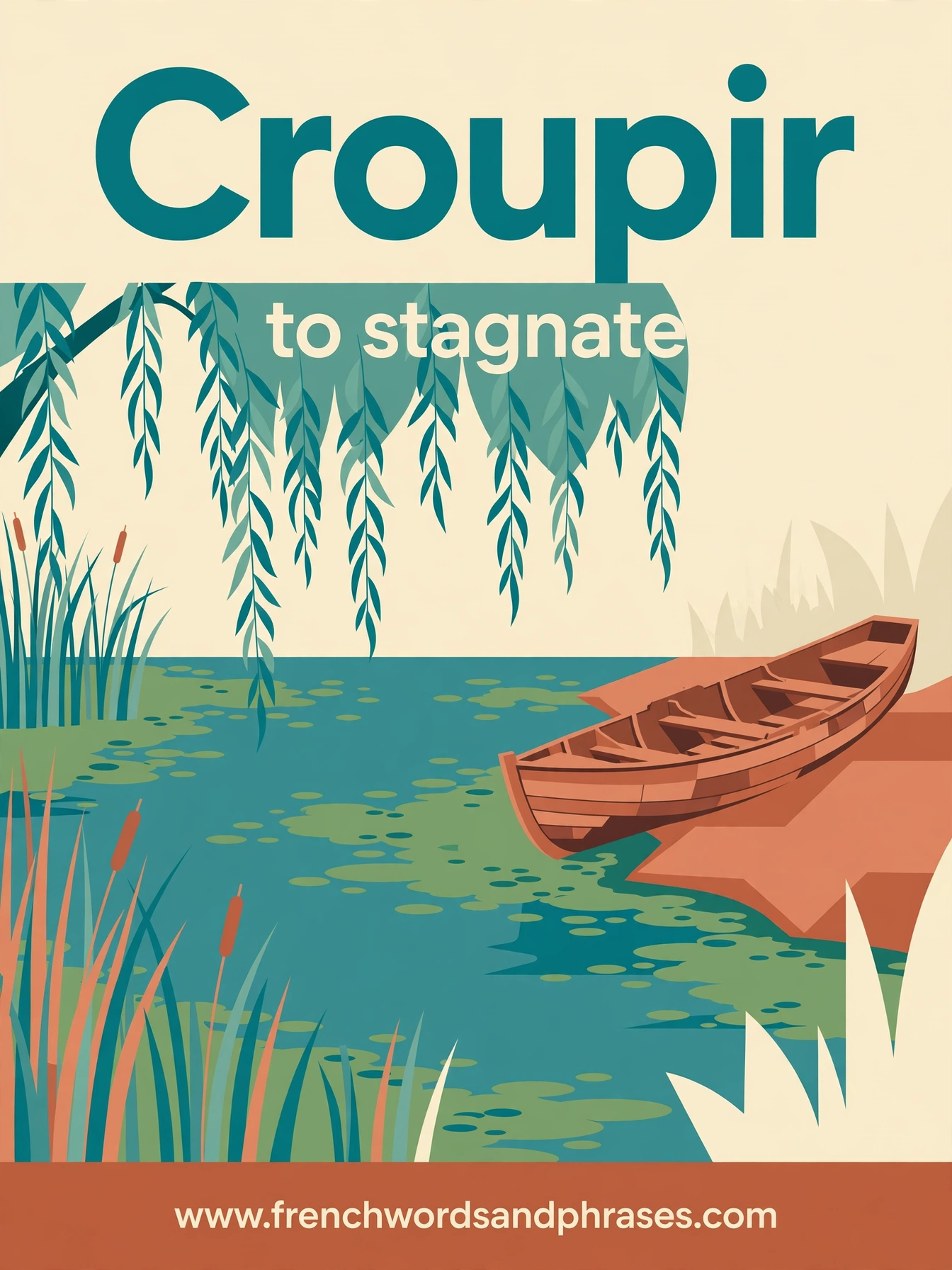
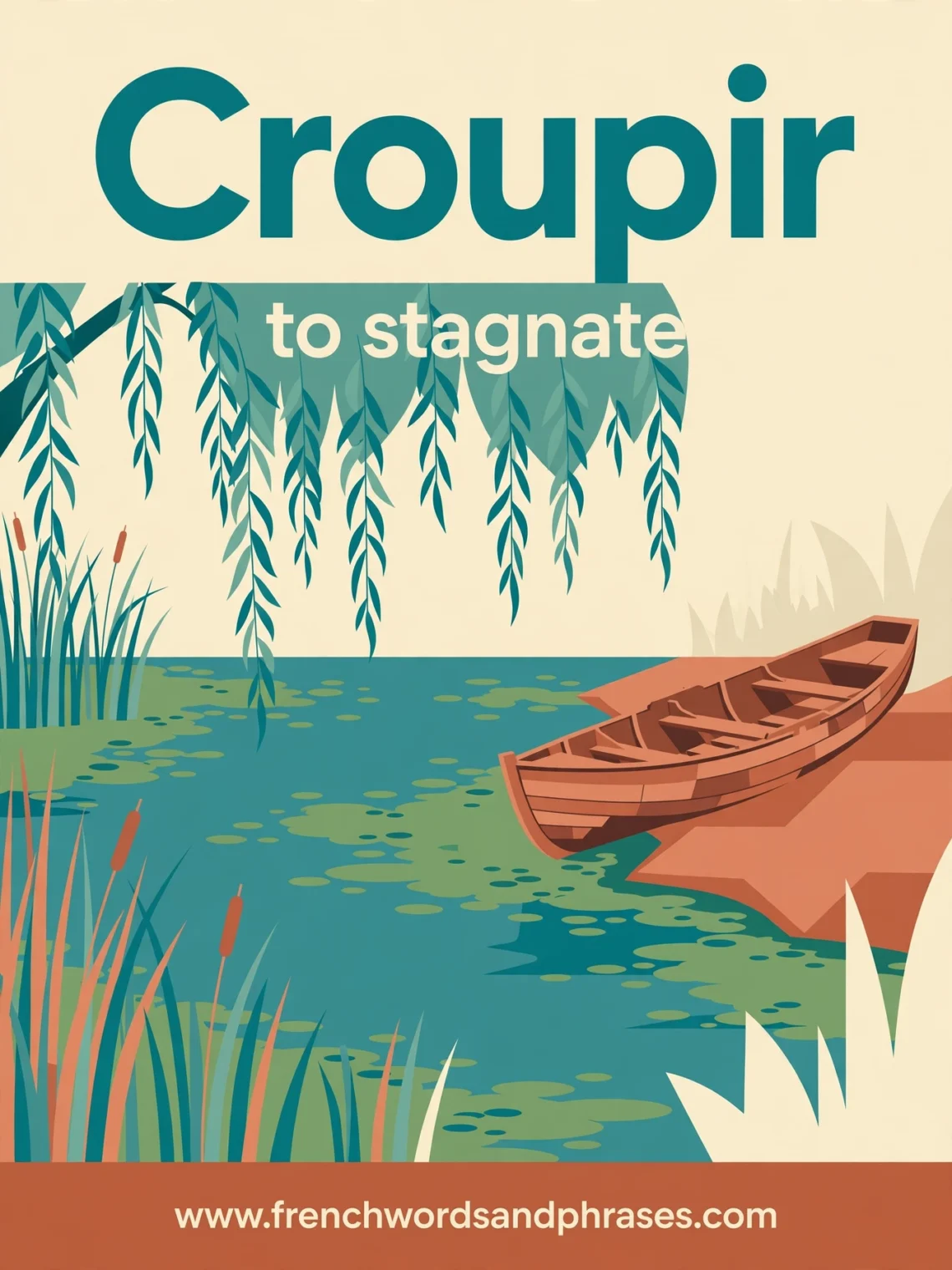
Croupir means to stagnate, to rot, or to languish.
Water in a forgotten bucket, leaves at the bottom of a pond, a man left waiting in a cell for ten years — some things do not move, do not change, and slowly go bad where they sit. In French, that slow going-bad is croupir.
In this guide, you’ll learn how to conjugate croupir in all the major French tenses and moods. Explore complete conjugation tables, French examples, English translations, and practice quizzes.
Understanding the French Verb Croupir
Croupir is a regular French verb belonging to the second group of verbs, those ending in -ir.
It means to stagnate, to rot, or to languish. It is used for stagnant water, rotting leaves and forgotten food, and figuratively for people or ideas left to rot in place: croupir en prison, croupir dans l’ignorance, laisser croupir un dossier.
Verb classification: Second group (-ir)
Auxiliary verb: Avoir or être, depending on the construction
Past participle: croupi
Present participle: croupissant
English equivalents: To stagnate, to fester, to rot, to languish.
One important detail: croupir is conjugated with avoir when it describes the process — cette eau a croupi des semaines (this water stagnated for weeks). The old dictionary rule, from Littré, also allowed être to stress the resulting state — cette eau est croupie — but that construction belongs to older and literary French and is hardly heard today. The tables on this page use avoir.
Experience the Word
Croupir is the verb of stillness gone bad — the green water, the closed room, the idea nobody has touched for years.
Imagine an old stone well in a garden nobody visits. The water at the bottom has not moved all summer; the leaves have sunk, the air smells of damp, and everything sits exactly where it fell.
Nothing has moved. It has simply stayed — and rotted where it stayed.
How to Conjugate Croupir: Complete French Conjugation Guide
Let’s explore every major conjugation of croupir, beginning with the indicative mood.
How to Conjugate Croupir in the Indicative Mood
The indicative mood is used to express facts, observations, actions, and events.
How to Conjugate Croupir in the Present Tense (Présent)
Used for actions happening now, habitual actions, and general truths.
| Subject | Conjugation |
|---|---|
| je | croupis |
| tu | croupis |
| il / elle | croupit |
| nous | croupissons |
| vous | croupissez |
| ils / elles | croupissent |
Example
L’eau croupit au fond du seau.
The water stagnates at the bottom of the bucket.
Quick Quiz 1
Complete the sentence:
Nous ______ dans cette attente depuis des heures.
Reveal the answer
croupissons
Nous croupissons dans cette attente depuis des heures.
We have been languishing in this wait for hours.
How to Conjugate Croupir in the Passé Composé
Used for completed actions in the past. Croupir takes the auxiliary verb avoir or être, depending on the construction.
| Subject | Conjugation |
|---|---|
| j’ | ai croupi |
| tu | as croupi |
| il / elle | a croupi |
| nous | avons croupi |
| vous | avez croupi |
| ils / elles | ont croupi |
Example
Les feuilles ont croupi dans l’eau tout l’hiver.
The leaves rotted in the water all winter.
How to Conjugate Croupir in the Imparfait (Imperfect Tense)
Used for habitual past actions, descriptions, and ongoing situations in the past.
| Subject | Conjugation |
|---|---|
| je | croupissais |
| tu | croupissais |
| il / elle | croupissait |
| nous | croupissions |
| vous | croupissiez |
| ils / elles | croupissaient |
Example
Dans le marais, l’eau croupissait sans jamais se renouveler.
In the marsh, the water used to stagnate without ever renewing itself.
Quick Quiz 2
Choose the correct form:
The prisoner languished in prison for years.
Le prisonnier ______ en prison pendant des années. (a croupi / est croupi)
Reveal the answer
a croupi
Le prisonnier a croupi en prison pendant des années.
Languishing is a process, so croupir takes avoir in modern French; est croupi is the old way of describing the state.
How to Conjugate Croupir in the Plus-que-parfait
Used to describe an action that had already been completed before another past event.
| Subject | Conjugation |
|---|---|
| j’ | avais croupi |
| tu | avais croupi |
| il / elle | avait croupi |
| nous | avions croupi |
| vous | aviez croupi |
| ils / elles | avaient croupi |
Example
Le prisonnier avait croupi dix ans dans cette cellule.
The prisoner had languished ten years in that cell.
How to Conjugate Croupir in the Passé Simple
Primarily used in formal writing, literature, and historical narratives. It is rarely used in everyday conversation.
| Subject | Conjugation |
|---|---|
| je | croupis |
| tu | croupis |
| il / elle | croupit |
| nous | croupîmes |
| vous | croupîtes |
| ils / elles | croupirent |
Example
Il croupit longtemps en prison avant son procès.
He languished a long time in prison before his trial.
How to Conjugate Croupir in the Passé Antérieur
A literary tense used to express an action completed immediately before another past action, generally in the passé simple.
| Subject | Conjugation |
|---|---|
| j’ | eus croupi |
| tu | eus croupi |
| il / elle | eut croupi |
| nous | eûmes croupi |
| vous | eûtes croupi |
| ils / elles | eurent croupi |
Example
Après que l’eau eut croupi des mois, on vida enfin le bassin.
After the water had stagnated for months, the basin was finally emptied.
How to Conjugate Croupir in the Future Tense (Futur Simple)
Used to describe actions that will take place in the future.
| Subject | Conjugation |
|---|---|
| je | croupirai |
| tu | croupiras |
| il / elle | croupira |
| nous | croupirons |
| vous | croupirez |
| ils / elles | croupiront |
Example
Si tu laisses ce seau dehors, l’eau croupira.
If you leave that bucket outside, the water will stagnate.
How to Conjugate Croupir in the Futur Antérieur (Future Perfect)
Used for an action that will have been completed before a particular point in the future.
| Subject | Conjugation |
|---|---|
| j’ | aurai croupi |
| tu | auras croupi |
| il / elle | aura croupi |
| nous | aurons croupi |
| vous | aurez croupi |
| ils / elles | auront croupi |
Example
À la fin de l’été, ces feuilles auront croupi dans la mare.
By the end of summer, these leaves will have rotted in the pond.
How to Conjugate Croupir in the Near Future (Futur Proche)
Used to describe something that is going to happen soon. Formed with aller + infinitive.
| Subject | Conjugation |
|---|---|
| je | vais croupir |
| tu | vas croupir |
| il / elle | va croupir |
| nous | allons croupir |
| vous | allez croupir |
| ils / elles | vont croupir |
Example
Cette eau va croupir si on ne la change pas.
This water is going to stagnate if we do not change it.
How to Conjugate Croupir in the Conditional Mood
The conditional mood expresses what would happen under certain circumstances. It is also frequently used to make polite requests or express wishes.
How to Conjugate Croupir in the Present Conditional
| Subject | Conjugation |
|---|---|
| je | croupirais |
| tu | croupirais |
| il / elle | croupirait |
| nous | croupirions |
| vous | croupiriez |
| ils / elles | croupiraient |
Example
Sans courant, la mare croupirait vite.
Without a current, the pond would soon stagnate.
How to Conjugate Croupir in the Past Conditional
| Subject | Conjugation |
|---|---|
| j’ | aurais croupi |
| tu | aurais croupi |
| il / elle | aurait croupi |
| nous | aurions croupi |
| vous | auriez croupi |
| ils / elles | auraient croupi |
Example
Il aurait croupi en prison sans l’aide de son avocat.
He would have languished in prison without his lawyer’s help.
Croupir in the Literary Past Conditional Form
This less common literary form uses the imperfect subjunctive of avoir or être, depending on the construction.
| Subject | Conjugation |
|---|---|
| j’ | eusse croupi |
| tu | eusses croupi |
| il / elle | eût croupi |
| nous | eussions croupi |
| vous | eussiez croupi |
| ils / elles | eussent croupi |
Example
Il eût croupi des années dans ce cachot sans la révolte.
He would have languished for years in that dungeon without the revolt.
How to Conjugate Croupir in the Subjunctive Mood
The subjunctive is used to express wishes, emotions, doubts, necessity, and uncertainty. It frequently follows expressions such as il faut que (it is necessary that) or bien que (although).
How to Conjugate Croupir in the Present Subjunctive
| Subject | Conjugation |
|---|---|
| que je | croupisse |
| que tu | croupisses |
| qu’il / qu’elle | croupisse |
| que nous | croupissions |
| que vous | croupissiez |
| qu’ils / qu’elles | croupissent |
Example
Il ne faut pas que l’eau croupisse dans les pots.
The water must not stagnate in the pots.
Quick Quiz 3
Complete the sentence using the subjunctive:
Il ne faut pas que l’eau ______ dans les pots.
Reveal the answer
croupisse
Il ne faut pas que l’eau croupisse dans les pots.
The water must not stagnate in the pots.
How to Conjugate Croupir in the Imperfect Subjunctive
A literary tense, rarely encountered in modern spoken French.
| Subject | Conjugation |
|---|---|
| que je | croupisse |
| que tu | croupisses |
| qu’il / qu’elle | croupît |
| que nous | croupissions |
| que vous | croupissiez |
| qu’ils / qu’elles | croupissent |
Example
Le roi ne voulait pas que le prisonnier croupît davantage.
The king did not want the prisoner to languish any longer.
How to Conjugate Croupir in the Pluperfect Subjunctive
A literary construction used to express an action completed before another past action.
| Subject | Conjugation |
|---|---|
| que j’ | eusse croupi |
| que tu | eusses croupi |
| qu’il / qu’elle | eût croupi |
| que nous | eussions croupi |
| que vous | eussiez croupi |
| qu’ils / qu’elles | eussent croupi |
Example
Elle regrettait que son frère eût croupi si longtemps en exil.
She regretted that her brother had languished so long in exile.
How to Conjugate Croupir in the Past Subjunctive
| Subject | Conjugation |
|---|---|
| que j’ | aie croupi |
| que tu | aies croupi |
| qu’il / qu’elle | ait croupi |
| que nous | ayons croupi |
| que vous | ayez croupi |
| qu’ils / qu’elles | aient croupi |
Example
Je suis triste que ces fleurs aient croupi dans leur vase.
I am sad that these flowers rotted in their vase.
How to Conjugate Croupir in the Imperative
The imperative is used to give commands, instructions, invitations, or suggestions. Subject pronouns are omitted.
How to Conjugate Croupir in the Present Imperative
| Person | Conjugation |
|---|---|
| (tu) | croupis |
| (nous) | croupissons |
| (vous) | croupissez |
Example
Ne croupis pas dans ton coin, sors un peu !
Do not mope in your corner, get out a little!
Quick Quiz 4
How would you say Do not mope in your corner, using the tu form?
Reveal the answer
Ne croupis pas dans ton coin !
French Participles of Croupir
Participles are verb forms that can be used in compound tenses and other grammatical constructions.
Present Participle of Croupir
croupissant
En croupissant, l’eau dégageait une odeur affreuse.
As it stagnated, the water gave off an awful smell.
Past Participle of Croupir
croupi
L’eau est croupie au fond du puits.
The water is stagnant at the bottom of the well.
Croupir in Everyday French: Real-Life Examples
Now that you know the conjugations, let’s see how croupir appears in everyday French.
Example 1 — Present
Cette eau croupit depuis des semaines.
This water has been stagnating for weeks.
Example 2 — Passé composé — avoir
Il a croupi trois ans dans un bureau sans fenêtre.
He languished three years in a windowless office.
Example 3 — Passé composé — être (old usage)
Cette eau est croupie depuis des semaines.
This water has lain stagnant for weeks.
Example 4 — Imparfait
Les légumes croupissaient au fond du frigo.
The vegetables were rotting at the back of the fridge.
Example 5 — Future
Ton dossier va croupir sur son bureau.
Your file will languish on his desk.
Example 6 — Conditional
Sans aide, ce projet croupirait des années.
Without help, this project would languish for years.
Beyond Translation: The Meaning of Croupir
English has no single verb for croupir: it borrows stagnate for water, rot for leaves, languish for people. French keeps the whole family in one word, because the idea is the same — something left sitting, going bad in its own stillness.
Croupir is a verb of patience turned sour.
The water a croupi for weeks — the action, with avoir — and the old books add that when the stillness is the whole story, elle est croupie: the state, with être.
How to Remember the French Verb Croupir
Remember it this way: Croupir is about stagnating and languishing — avoir in modern French, être only in old books for the state.
- The process takes avoir — l’eau a croupi (the water stagnated).
- Être with croupi is the old, literary form for the state — cette eau est croupie — and is hardly heard today.
- Think of the -ir pattern of finir: croupis, croupissons, croupissant.
The key idea is stagnating and languishing — avoir in modern French, être only in old books for the state.
Test Your Knowledge of Croupir
Let’s see how much you’ve learned. Try answering these questions before revealing the answers.
Question 1
When does croupir take avoir, and when was être used with it?
Reveal the answer
Avoir for the process of stagnating or languishing — l’eau a croupi. Être belonged to older French for the resulting state — cette eau est croupie — and is now literary.
Question 2
How do you say the water will stagnate in French?
Reveal the answer
L’eau croupira.
Question 3
Translate: The leaves rotted in the water all winter.
Reveal the answer
Les feuilles ont croupi dans l’eau tout l’hiver.
Question 4
What is the present participle of croupir?
Reveal the answer
Croupissant.
Question 5
Complete the sentence:
Sans courant, la mare ______ vite.
Reveal the answer
croupirait
Sans courant, la mare croupirait vite.
Without a current, the pond would soon stagnate.
Your Final Challenge
Can You Use It?
How would you say this in French?
The water stagnated at the bottom of the well.
Reveal the answer
L’eau a croupi au fond du puits.
The water stagnated at the bottom of the well.
A little French. A little curiosity. A richer everyday life.
LEARN FRENCH ONE WORD AT A TIME