A French Word to Live By
How to Conjugate Chantonner in French
/ʃɑ̃.tɔ.ne/
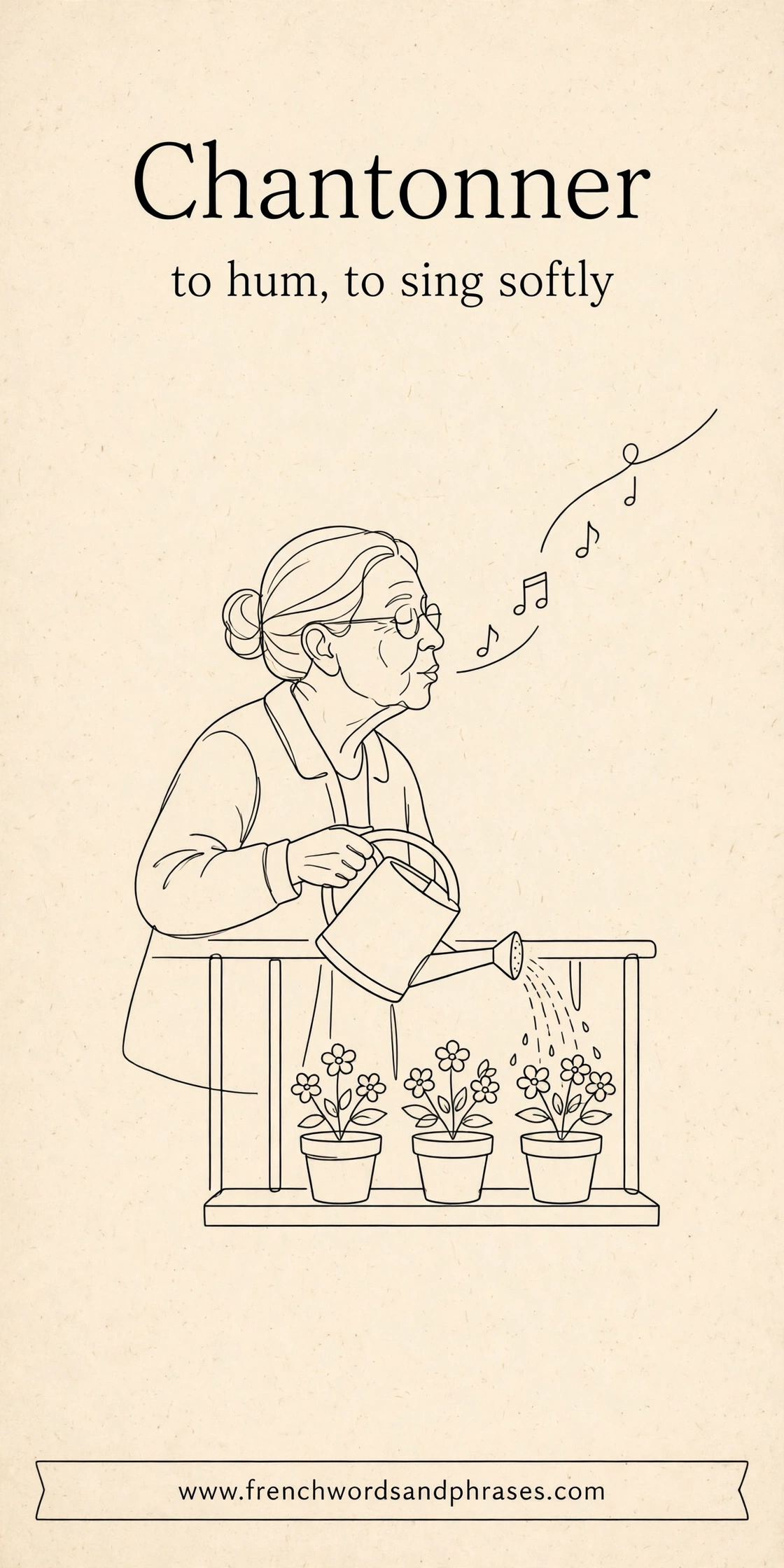
Chantonner means to hum, to sing softly — to sing at half-voice, for yourself, while your hands are busy with something else.
A grandmother shelling peas and singing an old tune under her breath, a painter whistling nothing in particular at his canvas — chantonner is the small private music of everyday life: singing softly, humming along, for no audience at all.
In this guide, you’ll learn how to conjugate chantonner in all the major French tenses and moods. Explore complete conjugation tables, French examples, English translations, and practice quizzes.
Understanding the French Verb Chantonner
Chantonner is a regular French verb belonging to the first group of verbs, those ending in-er.
It means to hum, to sing softly. It is commonly used of people humming or singing quietly while cooking, gardening, driving or working, and of parents humming lullabies. It nearly always signals contentment or absent-mindedness — nobody chantonne in anger — and its object, when it has one, is un air, une chanson, une berceuse: something light, half-remembered and sung at half-voice.
Verb classification: First group (-er)
Auxiliary verb: Avoir
Past participle: chantonné
Present participle: chantonnant
English equivalents: To hum, to sing softly, to croon under one’s breath; chantonner un air — to hum a tune; chantonner en travaillant — to sing softly while working; chantonner une berceuse — to hum a lullaby; chanter à mi-voix — to sing in a half-voice.
One important detail: chantonner is the diminutive of chanter — the suffix -onner shrinks the singing to a murmur, just as fredonner means to hum a tune without words. The words may be there or not; the volume is the point. One chantonne pour soi, en travaillant, en marchant — never on a stage. The verb is perfectly regular: je chantonne, nous chantonnons, past participle chantonné.
Experience the Word
Chantonner is singing with the volume of a thought — music that accompanies a task instead of interrupting it.
Imagine a kitchen at seven in the morning. Grandmother is rolling out pastry, flour on her hands, and from her comes a tune older than the house — she chantonne, not performing, not even listening to herself, and the whole room feels warmer for it.
Nobody asked for a song. She is chantonnant — singing softly, to herself, and that is exactly enough.
How to Conjugate Chantonner: Complete French Conjugation Guide
Let’s explore every major conjugation of chantonner, beginning with the indicative mood.
How to Conjugate Chantonner in the Indicative Mood
The indicative mood is used to express facts, observations, actions, and events.
How to Conjugate Chantonner in the Present Tense (Présent)
Used for actions happening now, habitual actions, and general truths.
| Subject | Conjugation |
|---|---|
| je | chantonne |
| tu | chantonnes |
| il / elle | chantonne |
| nous | chantonnons |
| vous | chantonnez |
| ils / elles | chantonnent |
Example
Elle chantonne en préparant le petit déjeuner.
She hums softly while making breakfast.
Quick Quiz 1
Complete the sentence:
Nous ______ en repeignant la cuisine.
Reveal the answer
chantonnons
Nous chantonnons en repeignant la cuisine.
We are singing softly while repainting the kitchen.
How to Conjugate Chantonner in the Passé Composé
Used for completed actions in the past. Chantonner takes the auxiliary verb avoir.
| Subject | Conjugation |
|---|---|
| j’ | ai chantonné |
| tu | as chantonné |
| il / elle | a chantonné |
| nous | avons chantonné |
| vous | avez chantonné |
| ils / elles | ont chantonné |
Example
Il a chantonné toute la matinée en jardinant.
He sang softly all morning while gardening.
How to Conjugate Chantonner in the Imparfait (Imperfect Tense)
Used for habitual past actions, descriptions, and ongoing situations in the past.
| Subject | Conjugation |
|---|---|
| je | chantonnais |
| tu | chantonnais |
| il / elle | chantonnait |
| nous | chantonnions |
| vous | chantonniez |
| ils / elles | chantonnaient |
Example
Ma grand-mère chantonnait toujours en tricotant.
My grandmother always used to hum while knitting.
Quick Quiz 2
Choose the correct form:
He sang softly all morning.
Il ______ toute la matinée. (a chantonné / est chantonné)
Reveal the answer
a chantonné
Il a chantonné toute la matinée.
Chantonner takes avoir.
How to Conjugate Chantonner in the Plus-que-parfait
Used to describe an action that had already been completed before another past event.
| Subject | Conjugation |
|---|---|
| j’ | avais chantonné |
| tu | avais chantonné |
| il / elle | avait chantonné |
| nous | avions chantonné |
| vous | aviez chantonné |
| ils / elles | avaient chantonné |
Example
Elle avait chantonné cette mélodie toute la journée.
She had been humming that tune all day.
How to Conjugate Chantonner in the Passé Simple
Primarily used in formal writing, literature, and historical narratives. It is rarely used in everyday conversation.
| Subject | Conjugation |
|---|---|
| je | chantonnai |
| tu | chantonnas |
| il / elle | chantonna |
| nous | chantonnâmes |
| vous | chantonnâtes |
| ils / elles | chantonnèrent |
Example
Le berger chantonna un vieil air en gardant ses moutons.
The shepherd hummed an old tune while watching his sheep.
How to Conjugate Chantonner in the Passé Antérieur
A literary tense used to express an action completed immediately before another past action, generally in the passé simple.
| Subject | Conjugation |
|---|---|
| j’ | eus chantonné |
| tu | eus chantonné |
| il / elle | eut chantonné |
| nous | eûmes chantonné |
| vous | eûtes chantonné |
| ils / elles | eurent chantonné |
Example
Quand elle eut chantonné la berceuse, l’enfant s’endormit.
When she had hummed the lullaby, the child fell asleep.
How to Conjugate Chantonner in the Future Tense (Futur Simple)
Used to describe actions that will take place in the future.
| Subject | Conjugation |
|---|---|
| je | chantonnerai |
| tu | chantonneras |
| il / elle | chantonnera |
| nous | chantonnerons |
| vous | chantonnerez |
| ils / elles | chantonneront |
Example
Demain, tu chantonneras en repeignant la cuisine.
Tomorrow, you will sing softly while repainting the kitchen.
How to Conjugate Chantonner in the Futur Antérieur (Future Perfect)
Used for an action that will have been completed before a particular point in the future.
| Subject | Conjugation |
|---|---|
| j’ | aurai chantonné |
| tu | auras chantonné |
| il / elle | aura chantonné |
| nous | aurons chantonné |
| vous | aurez chantonné |
| ils / elles | auront chantonné |
Example
À la fin de la route, il aura chantonné toutes ses chansons préférées.
By the end of the journey, he will have hummed all his favourite songs.
How to Conjugate Chantonner in the Near Future (Futur Proche)
Used to describe something that is going to happen soon. Formed with aller + infinitive.
| Subject | Conjugation |
|---|---|
| je | vais chantonner |
| tu | vas chantonner |
| il / elle | va chantonner |
| nous | allons chantonner |
| vous | allez chantonner |
| ils / elles | vont chantonner |
Example
Écoute : grand-mère va chantonner sa vieille chanson.
Listen: grandmother is going to hum her old song.
How to Conjugate Chantonner in the Conditional Mood
The conditional mood expresses what would happen under certain circumstances. It is also frequently used to make polite requests or express wishes.
How to Conjugate Chantonner in the Present Conditional
| Subject | Conjugation |
|---|---|
| je | chantonnerais |
| tu | chantonnerais |
| il / elle | chantonnerait |
| nous | chantonnerions |
| vous | chantonneriez |
| ils / elles | chantonneraient |
Example
Avec une guitare, je chantonnerais volontiers avec vous.
With a guitar, I would gladly sing softly along with you.
How to Conjugate Chantonner in the Past Conditional
| Subject | Conjugation |
|---|---|
| j’ | aurais chantonné |
| tu | aurais chantonné |
| il / elle | aurait chantonné |
| nous | aurions chantonné |
| vous | auriez chantonné |
| ils / elles | auraient chantonné |
Example
Elle aurait chantonné toute la soirée si on le lui avait demandé.
She would have sung softly all evening if she had been asked.
Chantonner in the Literary Past Conditional Form
This less common literary form uses the imperfect subjunctive of avoir.
| Subject | Conjugation |
|---|---|
| j’ | eusse chantonné |
| tu | eusses chantonné |
| il / elle | eût chantonné |
| nous | eussions chantonné |
| vous | eussiez chantonné |
| ils / elles | eussent chantonné |
Example
Elle eût chantonné doucement pour endormir l’enfant.
She would have hummed softly to send the child to sleep.
How to Conjugate Chantonner in the Subjunctive Mood
The subjunctive is used to express wishes, emotions, doubts, necessity, and uncertainty. It frequently follows expressions such as il faut que (it is necessary that) or bien que (although).
How to Conjugate Chantonner in the Present Subjunctive
| Subject | Conjugation |
|---|---|
| que je | chantonne |
| que tu | chantonnes |
| qu’il / qu’elle | chantonne |
| que nous | chantonnions |
| que vous | chantonniez |
| qu’ils / qu’elles | chantonnent |
Example
Il est doux qu’elle chantonne en travaillant.
It is sweet that she sings softly while she works.
Quick Quiz 3
Complete the sentence using the subjunctive:
Il est doux que tu ______ en travaillant.
Reveal the answer
chantonnes
Il est doux que tu chantonnes en travaillant.
It is sweet that you sing softly while you work.
How to Conjugate Chantonner in the Imperfect Subjunctive
A literary tense, rarely encountered in modern spoken French.
| Subject | Conjugation |
|---|---|
| que je | chantonnasse |
| que tu | chantonnasses |
| qu’il / qu’elle | chantonnât |
| que nous | chantonnassions |
| que vous | chantonnassiez |
| qu’ils / qu’elles | chantonnassent |
Example
J’aimais qu’il chantonnât les airs de son enfance.
I loved it when he hummed the tunes of his childhood.
How to Conjugate Chantonner in the Pluperfect Subjunctive
A literary construction used to express an action completed before another past action.
| Subject | Conjugation |
|---|---|
| que j’ | eusse chantonné |
| que tu | eusses chantonné |
| qu’il / qu’elle | eût chantonné |
| que nous | eussions chantonné |
| que vous | eussiez chantonné |
| qu’ils / qu’elles | eussent chantonné |
Example
On souriait qu’elle eût chantonné pendant toute la route.
People smiled that she had hummed for the whole journey.
How to Conjugate Chantonner in the Past Subjunctive
| Subject | Conjugation |
|---|---|
| que j’ | aie chantonné |
| que tu | aies chantonné |
| qu’il / qu’elle | ait chantonné |
| que nous | ayons chantonné |
| que vous | ayez chantonné |
| qu’ils / qu’elles | aient chantonné |
Example
Je suis charmé qu’il ait chantonné pendant tout le trajet.
I am charmed that he sang softly for the whole trip.
How to Conjugate Chantonner in the Imperative
The imperative is used to give commands, instructions, invitations, or suggestions. Subject pronouns are omitted.
How to Conjugate Chantonner in the Present Imperative
| Person | Conjugation |
|---|---|
| (tu) | chantonne |
| (nous) | chantonnons |
| (vous) | chantonnez |
Example
Chantonne doucement, le bébé dort presque !
Sing softly, the baby is nearly asleep!
Quick Quiz 4
How would you say Sing softly, the baby is sleeping (tu form)?
Reveal the answer
Chantonne doucement, le bébé dort !
French Participles of Chantonner
Participles are verb forms that can be used in compound tenses and other grammatical constructions.
Present Participle of Chantonner
chantonnant
En chantonnant, elle repasse le linge sans y penser.
Humming softly, she irons the laundry without thinking about it.
Past Participle of Chantonner
chantonné
Chantonnée par ma mère, cette berceuse me calme encore.
Hummed by my mother, this lullaby still calms me.
Chantonner in Everyday French: Real-Life Examples
Now that you know the conjugations, let’s see how chantonner appears in everyday French.
Example 1 — Present
Elle chantonne en préparant le petit déjeuner.
She hums softly while making breakfast.
Example 2 — Passé composé
Il a chantonné toute la matinée en jardinant.
He sang softly all morning while gardening.
Example 3 — Imparfait
Ma grand-mère chantonnait toujours en tricotant.
My grandmother always used to hum while knitting.
Example 4 — Future
Tu chantonneras en repeignant la cuisine.
You will sing softly while repainting the kitchen.
Example 5 — Conditional
Je chantonnerais volontiers avec une guitare.
I would gladly sing softly along with a guitar.
Example 6 — Imperative
Chantonne doucement, le bébé dort presque !
Sing softly, the baby is nearly asleep!
Beyond Translation: The Meaning of Chantonner
French loves its diminutive verbs, and chantonner is chanter turned down low — the same family gives fredonner, to hum without words at all.
It is the sound of someone at peace with their task.
Cooks, gardeners, drivers and grandmothers chantonnent; the verb is a tiny character reference — whoever chantonne is, at that moment, content with the world.
How to Remember the French Verb Chantonner
Remember it this way: Chantonner is about grandmother humming over the pastry, at the volume of a thought.
- Chantonner is chanter at half-voice: singing softly or humming, for yourself, while doing something else.
- Its twin fredonner hums the tune without words; chantonner may keep a few words, quietly.
- Regular -er: je chantonne, nous chantonnons, past participle chantonné.
The key idea is grandmother humming over the pastry, at the volume of a thought.
Test Your Knowledge of Chantonner
Let’s see how much you’ve learned. Try answering these questions before revealing the answers.
Question 1
What is the difference between chanter and chantonner?
Reveal the answer
Volume and audience — chanter is to sing properly; chantonner is to sing softly or hum, for yourself, while doing something else.
Question 2
How do you say She hums softly while making breakfast in French?
Reveal the answer
Elle chantonne en préparant le petit déjeuner.
Question 3
Translate: My grandmother always used to hum while knitting.
Reveal the answer
Ma grand-mère chantonnait toujours en tricotant.
Question 4
What is the past participle of chantonner?
Reveal the answer
Chantonné.
Question 5
Complete the sentence:
Il est doux qu’elle ______ en travaillant.
Reveal the answer
chantonne
Il est doux qu’elle chantonne en travaillant.
It is sweet that she sings softly while you work.
Your Final Challenge
Can You Use It?
How would you say this in French?
She hums softly while peeling the vegetables, and the whole kitchen takes on the rhythm of her song.
Reveal the answer
Elle chantonne en épluchant les légumes, et la cuisine entière prend le rythme de sa chanson.
She hums softly while peeling the vegetables, and the whole kitchen takes on the rhythm of her song.
A little French. A little curiosity. A richer everyday life.
LEARN FRENCH ONE WORD AT A TIME