A French Word to Live By
How to Conjugate Causer in French
/ko.ze/
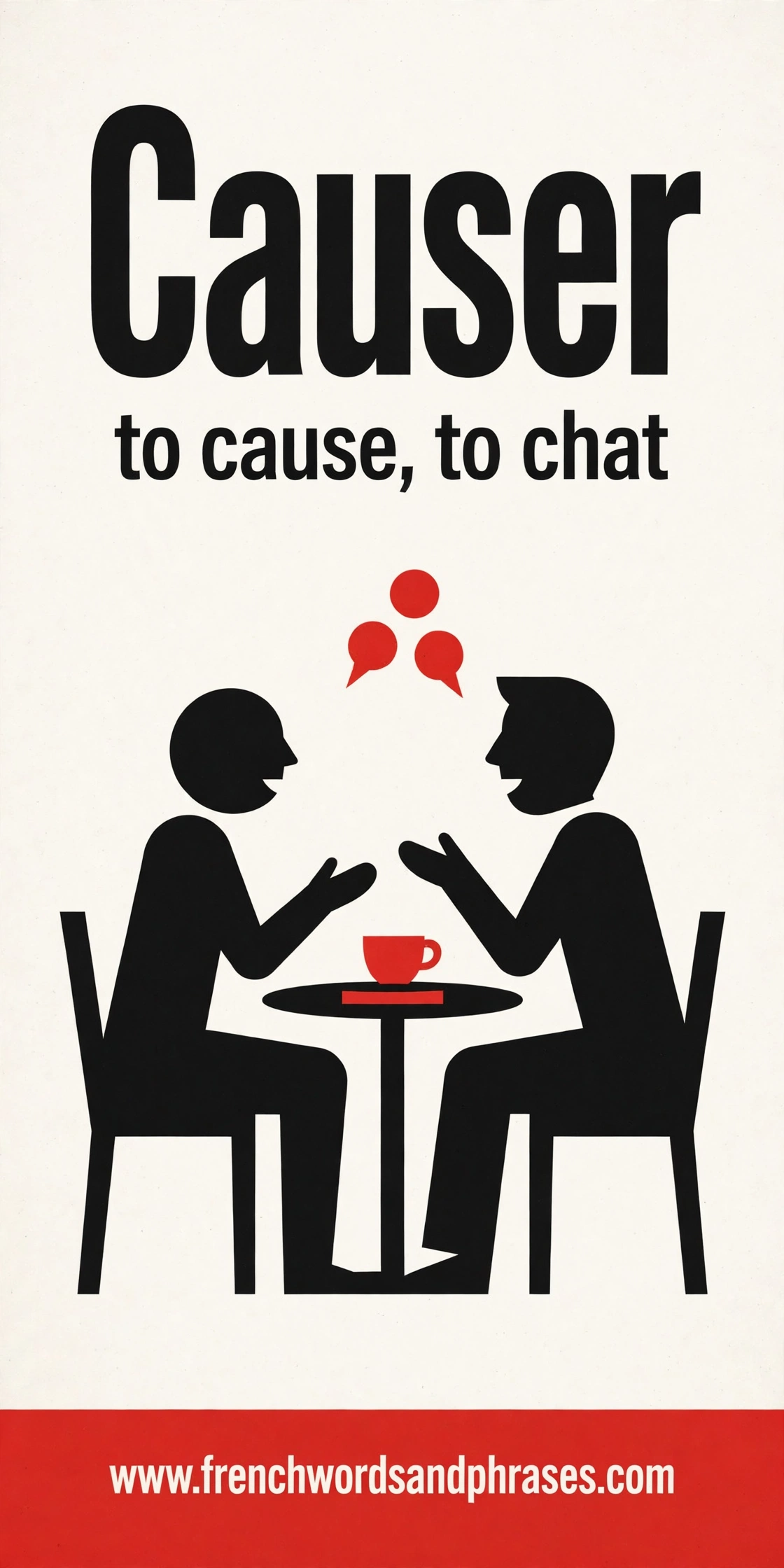
Causer means to cause, to chat — one verb for making things happen and for talking the evening away.
Rain on a mountain road causing a landslide at dawn; the same evening, two old friends on a terrace causing nothing but conversation until midnight — causer leads a double life in French: it makes accidents happen, and it makes evenings pass.
In this guide, you’ll learn how to conjugate causer in all the major French tenses and moods. Explore complete conjugation tables, French examples, English translations, and practice quizzes.
Understanding the French Verb Causer
Causer is a regular French verb belonging to the first group of verbs, those ending in-er.
It means to cause, to chat. The two senses rarely collide, because causes take things as objects and chats take people. In modern everyday French, parler and discuter do most of the chatting, which makes causer de feel pleasantly unhurried — the word of people who have time. Its little noun, une causette, survives in faire la causette, to have a cosy chat.
Verb classification: First group (-er)
Auxiliary verb: Avoir
Past participle: causé
Present participle: causant
English equivalents: To cause; to chat, to talk; causer un accident — to cause an accident; causer des dégâts — to cause damage; causer avec quelqu’un — to chat with someone; causer de quelque chose — to talk of something, to discuss it; une causette — a little chat.
One important detail: causer is two verbs wearing one coat, and the construction tells you which one you are holding. With a plain direct object it means to cause: causer un accident, causer des soucis, causer la mort de quelqu’un. With a person or a preposition it means to chat: causer avec les voisins, and above all causer de — nous avons causé de votre projet, we talked about your project, we discussed it. The chat sense is warm and slightly old-fashioned, the French of long dinners and village squares; the cause sense is neutral and everywhere, from insurance forms to headlines.
Experience the Word
Causer is the verb of consequences and conversations — it starts landslides at dawn and finishes arguments at midnight.
Imagine two retired teachers on a bench in a Provençal village. The mayor passes, the price of olives is discussed, a grandson’s exam, a neighbour’s roof, the war, the weather — ils causent de tout, and the afternoon dissolves so gently that neither notices the church bell until it strikes six.
Nothing was decided and nothing was caused. They simply talked — causé de tout et de rien — and the village turned beneath them.
How to Conjugate Causer: Complete French Conjugation Guide
Let’s explore every major conjugation of causer, beginning with the indicative mood.
How to Conjugate Causer in the Indicative Mood
The indicative mood is used to express facts, observations, actions, and events.
How to Conjugate Causer in the Present Tense (Présent)
Used for actions happening now, habitual actions, and general truths.
| Subject | Conjugation |
|---|---|
| je | cause |
| tu | causes |
| il / elle | cause |
| nous | causons |
| vous | causez |
| ils / elles | causent |
Example
Après le dîner, ils causent longtemps sur la terrasse.
After dinner, they chat for a long time on the terrace.
Quick Quiz 1
Complete the sentence:
Nous ______ de vos projets ce soir.
Reveal the answer
causons
Nous causons de vos projets ce soir.
We are talking about your plans this evening.
How to Conjugate Causer in the Passé Composé
Used for completed actions in the past. Causer takes the auxiliary verb avoir.
| Subject | Conjugation |
|---|---|
| j’ | ai causé |
| tu | as causé |
| il / elle | a causé |
| nous | avons causé |
| vous | avez causé |
| ils / elles | ont causé |
Example
La pluie a causé des inondations dans la vallée.
The rain caused flooding in the valley.
How to Conjugate Causer in the Imparfait (Imperfect Tense)
Used for habitual past actions, descriptions, and ongoing situations in the past.
| Subject | Conjugation |
|---|---|
| je | causais |
| tu | causais |
| il / elle | causait |
| nous | causions |
| vous | causiez |
| ils / elles | causaient |
Example
Nous causions de politique jusqu’à minuit.
We used to talk about politics until midnight.
Quick Quiz 2
Choose the correct form:
The rain caused flooding.
La pluie ______ des inondations. (a causé / a causé de)
Reveal the answer
a causé
La pluie a causé des inondations.
The cause sense takes a direct object — no de. De belongs to the chat sense.
How to Conjugate Causer in the Plus-que-parfait
Used to describe an action that had already been completed before another past event.
| Subject | Conjugation |
|---|---|
| j’ | avais causé |
| tu | avais causé |
| il / elle | avait causé |
| nous | avions causé |
| vous | aviez causé |
| ils / elles | avaient causé |
Example
Son retard avait causé bien des soucis à sa famille.
His lateness had caused his family a great deal of worry.
How to Conjugate Causer in the Passé Simple
Primarily used in formal writing, literature, and historical narratives. It is rarely used in everyday conversation.
| Subject | Conjugation |
|---|---|
| je | causai |
| tu | causas |
| il / elle | causa |
| nous | causâmes |
| vous | causâtes |
| ils / elles | causèrent |
Example
Cette décision causa un scandale dans tout le pays.
This decision caused a scandal throughout the country.
How to Conjugate Causer in the Passé Antérieur
A literary tense used to express an action completed immediately before another past action, generally in the passé simple.
| Subject | Conjugation |
|---|---|
| j’ | eus causé |
| tu | eus causé |
| il / elle | eut causé |
| nous | eûmes causé |
| vous | eûtes causé |
| ils / elles | eurent causé |
Example
Quand la tempête eut causé ces dégâts, les secours s’organisèrent.
When the storm had caused this damage, the rescue services organised themselves.
How to Conjugate Causer in the Future Tense (Futur Simple)
Used to describe actions that will take place in the future.
| Subject | Conjugation |
|---|---|
| je | causerai |
| tu | causeras |
| il / elle | causera |
| nous | causerons |
| vous | causerez |
| ils / elles | causeront |
Example
Ce soir, nous causerons de vos projets.
This evening, we will talk about your plans.
How to Conjugate Causer in the Futur Antérieur (Future Perfect)
Used for an action that will have been completed before a particular point in the future.
| Subject | Conjugation |
|---|---|
| j’ | aurai causé |
| tu | auras causé |
| il / elle | aura causé |
| nous | aurons causé |
| vous | aurez causé |
| ils / elles | auront causé |
Example
À la fin, cette fuite aura causé des millions de dégâts.
In the end, this leak will have caused millions in damage.
How to Conjugate Causer in the Near Future (Futur Proche)
Used to describe something that is going to happen soon. Formed with aller + infinitive.
| Subject | Conjugation |
|---|---|
| je | vais causer |
| tu | vas causer |
| il / elle | va causer |
| nous | allons causer |
| vous | allez causer |
| ils / elles | vont causer |
Example
Viens, on va causer de ton avenir.
Come, we are going to talk about your future.
How to Conjugate Causer in the Conditional Mood
The conditional mood expresses what would happen under certain circumstances. It is also frequently used to make polite requests or express wishes.
How to Conjugate Causer in the Present Conditional
| Subject | Conjugation |
|---|---|
| je | causerais |
| tu | causerais |
| il / elle | causerait |
| nous | causerions |
| vous | causeriez |
| ils / elles | causeraient |
Example
Sans ce bruit, rien ne causerait autant de plaintes.
Without this noise, nothing would cause so many complaints.
How to Conjugate Causer in the Past Conditional
| Subject | Conjugation |
|---|---|
| j’ | aurais causé |
| tu | aurais causé |
| il / elle | aurait causé |
| nous | aurions causé |
| vous | auriez causé |
| ils / elles | auraient causé |
Example
Il aurait causé moins de dégâts avec plus de prudence.
He would have caused less damage with more care.
Causer in the Literary Past Conditional Form
This less common literary form uses the imperfect subjunctive of avoir.
| Subject | Conjugation |
|---|---|
| j’ | eusse causé |
| tu | eusses causé |
| il / elle | eût causé |
| nous | eussions causé |
| vous | eussiez causé |
| ils / elles | eussent causé |
Example
Sa franchise eût causé un beau scandale à la cour.
His frankness would have caused a fine scandal at court.
How to Conjugate Causer in the Subjunctive Mood
The subjunctive is used to express wishes, emotions, doubts, necessity, and uncertainty. It frequently follows expressions such as il faut que (it is necessary that) or bien que (although).
How to Conjugate Causer in the Present Subjunctive
| Subject | Conjugation |
|---|---|
| que je | cause |
| que tu | causes |
| qu’il / qu’elle | cause |
| que nous | causions |
| que vous | causiez |
| qu’ils / qu’elles | causent |
Example
Je veux que nous causions de ce problème calmement.
I want us to talk about this problem calmly.
Quick Quiz 3
Complete the sentence using the subjunctive:
Je veux que vous ______ de ce problème calmement.
Reveal the answer
causiez
Je veux que vous causiez de ce problème calmement.
I want you to talk about this problem calmly.
How to Conjugate Causer in the Imperfect Subjunctive
A literary tense, rarely encountered in modern spoken French.
| Subject | Conjugation |
|---|---|
| que je | causasse |
| que tu | causasses |
| qu’il / qu’elle | causât |
| que nous | causassions |
| que vous | causassiez |
| qu’ils / qu’elles | causassent |
Example
On craignait que la nouvelle ne causât des troubles.
People feared the news might cause unrest.
How to Conjugate Causer in the Pluperfect Subjunctive
A literary construction used to express an action completed before another past action.
| Subject | Conjugation |
|---|---|
| que j’ | eusse causé |
| que tu | eusses causé |
| qu’il / qu’elle | eût causé |
| que nous | eussions causé |
| que vous | eussiez causé |
| qu’ils / qu’elles | eussent causé |
Example
On racontait qu’elle eût causé de grands malheurs.
People said she had caused great misfortunes.
How to Conjugate Causer in the Past Subjunctive
| Subject | Conjugation |
|---|---|
| que j’ | aie causé |
| que tu | aies causé |
| qu’il / qu’elle | ait causé |
| que nous | ayons causé |
| que vous | ayez causé |
| qu’ils / qu’elles | aient causé |
Example
Je suis étonné que ce bruit ait causé tant de peur.
I am amazed this noise caused so much fear.
How to Conjugate Causer in the Imperative
The imperative is used to give commands, instructions, invitations, or suggestions. Subject pronouns are omitted.
How to Conjugate Causer in the Present Imperative
| Person | Conjugation |
|---|---|
| (tu) | cause |
| (nous) | causons |
| (vous) | causez |
Example
Cause-moi de ton voyage !
Tell me about your trip!
Quick Quiz 4
How would you say Tell me about your trip (tu form)?
Reveal the answer
Cause-moi de ton voyage !
French Participles of Causer
Participles are verb forms that can be used in compound tenses and other grammatical constructions.
Present Participle of Causer
causant
En causant avec les voisins, elle a tout appris.
By chatting with the neighbours, she learned everything.
Past Participle of Causer
causé
Causés par la sécheresse, les incendies se multipliaient.
Caused by the drought, the fires multiplied.
Causer in Everyday French: Real-Life Examples
Now that you know the conjugations, let’s see how causer appears in everyday French.
Example 1 — Present
Ils causent longtemps sur la terrasse.
They chat for a long time on the terrace.
Example 2 — Passé composé
La pluie a causé des inondations.
The rain caused flooding.
Example 3 — Imparfait
Nous causions de politique jusqu’à minuit.
We used to talk politics until midnight.
Example 4 — Future
Nous causerons de vos projets ce soir.
We will talk about your plans this evening.
Example 5 — Conditional
Il causerait moins de dégâts avec plus de prudence.
He would cause less damage with more care.
Example 6 — Imperative
Cause-moi de ton voyage !
Tell me about your trip!
Beyond Translation: The Meaning of Causer
Both lives of causer grow from the Latin causa — a reason, a case, a cause. To cause is to be someone’s causa; to chat, in the old French sense, was to plead and discuss cases, and the talking never quite lost its legal ancestor’s love of a good long argument.
A cause is a story about why; a chat is the story told slowly.
English kept only the first half — to cause never learned to sit on a terrace — which makes causer one of those small French verbs that quietly does two jobs for the price of one.
How to Remember the French Verb Causer
Remember it this way: Causer is about the landslide at dawn, the terrace conversation at midnight — one verb.
- Object of a thing = to cause: causer un accident, causer des dégâts.
- Avec a person or de a subject = to chat, to talk of: causer avec les voisins, causer de vos projets.
- Regular -er: je cause, nous causons, past participle causé — and une causette is a little chat.
The key idea is the landslide at dawn, the terrace conversation at midnight — one verb.
Test Your Knowledge of Causer
Let’s see how much you’ve learned. Try answering these questions before revealing the answers.
Question 1
In nous avons causé de votre projet, does causer mean to cause or to chat?
Reveal the answer
To chat — causer de quelque chose means to talk of it, to discuss it. The cause sense takes a plain direct object: causer un accident.
Question 2
How do you say The rain caused flooding in French?
Reveal the answer
La pluie a causé des inondations.
Question 3
Translate: We used to talk about politics until midnight.
Reveal the answer
Nous causions de politique jusqu’à minuit.
Question 4
What is the past participle of causer?
Reveal the answer
Causé.
Question 5
Complete the sentence:
Je veux que nous ______ de ce problème calmement.
Reveal the answer
causions
Je veux que nous causions de ce problème calmement.
I want us to talk about this problem calmly.
Your Final Challenge
Can You Use It?
How would you say this in French?
They talked about everything and nothing until midnight, and the village was already asleep.
Reveal the answer
Ils ont causé de tout et de rien jusqu’à minuit, et le village dormait déjà.
They talked about everything and nothing until midnight, and the village was already asleep.
A little French. A little curiosity. A richer everyday life.
LEARN FRENCH ONE WORD AT A TIME