
A French Word to Live By
How to Conjugate Calorifuger in French
/ka.lɔ.ʁi.fy.ʒe/
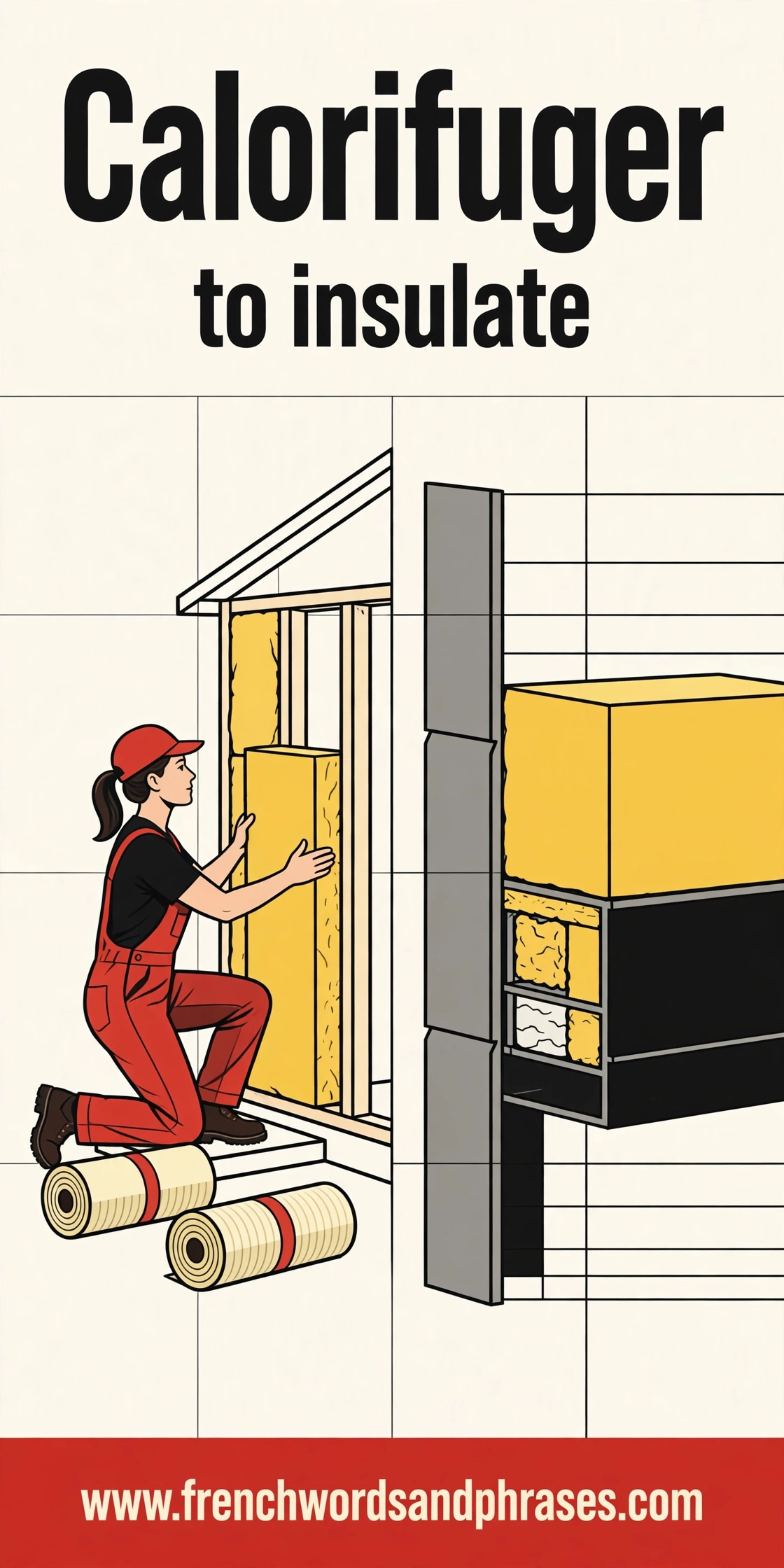
Calorifuger means to insulate — to wrap pipes, tanks and ducts in lagging so that heat stays where it belongs instead of escaping.
A plumber wrapping a hot-water pipe in grey foam sleeves, an engineer lagging the ducts of a whole factory — calorifuger is the tradesman’s verb for insulating against heat loss.
In this guide, you’ll learn how to conjugate calorifuger in all the major French tenses and moods. Explore complete conjugation tables, French examples, English translations, and practice quizzes.
Understanding the French Verb Calorifuger
Calorifuger is a regular French verb belonging to the first group of verbs, those ending in-er.
It means to insulate. This is a technical, professional verb — the word heating engineers and plumbers use, narrower than isoler (to insulate in general). Calorifuger is specifically about heat: lagging hot pipes, boilers and tanks so warmth is not wasted.
Verb classification: First group (-er)
Auxiliary verb: Avoir
Past participle: calorifugé
Present participle: calorifugeant
English equivalents: To insulate, to lag (against heat loss); calorifuger un tuyau — to lag a pipe; calorifuger une chaudière — to insulate a boiler; calorifuger les canalisations — to lag the pipework; un calorifugeage complet — complete thermal lagging.
One important detail: calorifuger is a -ger verb, so a soft e is kept before a and o to protect the soft g sound: nous calorifugeons, je calorifugeais — but vous calorifugez, ils calorifugent need no extra e. The word itself tells its story: Latin calor, heat, plus fugere, to flee — to stop the heat fleeing. Its noun, un calorifuge, is the insulating material itself.
Experience the Word
Calorifuger is the verb of heat kept prisoner — every wrapped pipe is warmth that will not escape.
Imagine the basement of an old apartment block in January. The boiler roars, but half its heat used to vanish into the cellar walls. Then the engineers arrive with rolls of grey lagging: ils calorifugent chaque tuyau, and for the first time the top-floor radiators are properly hot.
The pipes look no prettier than before. They have simply been insulated — calorifugés, so the heat travels to the radiators instead of the cellar.
How to Conjugate Calorifuger: Complete French Conjugation Guide
Let’s explore every major conjugation of calorifuger, beginning with the indicative mood.
How to Conjugate Calorifuger in the Indicative Mood
The indicative mood is used to express facts, observations, actions, and events.
How to Conjugate Calorifuger in the Present Tense (Présent)
Used for actions happening now, habitual actions, and general truths.
| Subject | Conjugation |
|---|---|
| je | calorifuge |
| tu | calorifuges |
| il / elle | calorifuge |
| nous | calorifugeons |
| vous | calorifugez |
| ils / elles | calorifugent |
Example
Les ouvriers calorifugent les tuyaux de la chaufferie.
The workers are lagging the boiler-room pipes.
Quick Quiz 1
Complete the sentence:
Nous ______ les tuyaux de la cave.
Reveal the answer
calorifugeons
Nous calorifugeons les tuyaux de la cave.
We are lagging the cellar pipes.
How to Conjugate Calorifuger in the Passé Composé
Used for completed actions in the past. Calorifuger takes the auxiliary verb avoir.
| Subject | Conjugation |
|---|---|
| j’ | ai calorifugé |
| tu | as calorifugé |
| il / elle | a calorifugé |
| nous | avons calorifugé |
| vous | avez calorifugé |
| ils / elles | ont calorifugé |
Example
Nous avons calorifugé toute la tuyauterie l’hiver dernier.
We insulated all the pipework last winter.
How to Conjugate Calorifuger in the Imparfait (Imperfect Tense)
Used for habitual past actions, descriptions, and ongoing situations in the past.
| Subject | Conjugation |
|---|---|
| je | calorifugeais |
| tu | calorifugeais |
| il / elle | calorifugeait |
| nous | calorifugions |
| vous | calorifugiez |
| ils / elles | calorifugeaient |
Example
Autrefois, on calorifugeait rarement les canalisations.
In the old days, pipework was rarely lagged.
Quick Quiz 2
Choose the correct form:
The pipes no longer lose heat.
Les tuyaux ______ ne perdent plus de chaleur. (calorifugés / calorifugeons)
Reveal the answer
calorifugés
Les tuyaux calorifugés ne perdent plus de chaleur.
Here calorifugés is the past participle used as an adjective.
How to Conjugate Calorifuger in the Plus-que-parfait
Used to describe an action that had already been completed before another past event.
| Subject | Conjugation |
|---|---|
| j’ | avais calorifugé |
| tu | avais calorifugé |
| il / elle | avait calorifugé |
| nous | avions calorifugé |
| vous | aviez calorifugé |
| ils / elles | avaient calorifugé |
Example
L’entreprise avait calorifugé la chaudière avant l’inspection.
The firm had insulated the boiler before the inspection.
How to Conjugate Calorifuger in the Passé Simple
Primarily used in formal writing, literature, and historical narratives. It is rarely used in everyday conversation.
| Subject | Conjugation |
|---|---|
| je | calorifugeai |
| tu | calorifugeas |
| il / elle | calorifugea |
| nous | calorifugeâmes |
| vous | calorifugeâtes |
| ils / elles | calorifugeèrent |
Example
En une semaine, l’équipe calorifugea tous les conduits.
In one week, the team lagged all the ducts.
How to Conjugate Calorifuger in the Passé Antérieur
A literary tense used to express an action completed immediately before another past action, generally in the passé simple.
| Subject | Conjugation |
|---|---|
| j’ | eus calorifugé |
| tu | eus calorifugé |
| il / elle | eut calorifugé |
| nous | eûmes calorifugé |
| vous | eûtes calorifugé |
| ils / elles | eurent calorifugé |
Example
Quand il eut calorifugé le dernier tuyau, il rangea ses outils.
When he had lagged the last pipe, he put away his tools.
How to Conjugate Calorifuger in the Future Tense (Futur Simple)
Used to describe actions that will take place in the future.
| Subject | Conjugation |
|---|---|
| je | calorifugerai |
| tu | calorifugeras |
| il / elle | calorifugera |
| nous | calorifugerons |
| vous | calorifugerez |
| ils / elles | calorifugeront |
Example
Demain, ils calorifugeront les tuyaux du grenier.
Tomorrow, they will insulate the attic pipes.
How to Conjugate Calorifuger in the Futur Antérieur (Future Perfect)
Used for an action that will have been completed before a particular point in the future.
| Subject | Conjugation |
|---|---|
| j’ | aurai calorifugé |
| tu | auras calorifugé |
| il / elle | aura calorifugé |
| nous | aurons calorifugé |
| vous | aurez calorifugé |
| ils / elles | auront calorifugé |
Example
À la fin du chantier, nous aurons calorifugé cent mètres de tuyaux.
By the end of the job, we shall have lagged a hundred metres of pipe.
How to Conjugate Calorifuger in the Near Future (Futur Proche)
Used to describe something that is going to happen soon. Formed with aller + infinitive.
| Subject | Conjugation |
|---|---|
| je | vais calorifuger |
| tu | vas calorifuger |
| il / elle | va calorifuger |
| nous | allons calorifuger |
| vous | allez calorifuger |
| ils / elles | vont calorifuger |
Example
Le plombier va calorifuger la chaudière cet après-midi.
The plumber is going to insulate the boiler this afternoon.
How to Conjugate Calorifuger in the Conditional Mood
The conditional mood expresses what would happen under certain circumstances. It is also frequently used to make polite requests or express wishes.
How to Conjugate Calorifuger in the Present Conditional
| Subject | Conjugation |
|---|---|
| je | calorifugerais |
| tu | calorifugerais |
| il / elle | calorifugerait |
| nous | calorifugerions |
| vous | calorifugeriez |
| ils / elles | calorifugeraient |
Example
On calorifugerait les conduits si le budget le permettait.
We would lag the ducts if the budget allowed it.
How to Conjugate Calorifuger in the Past Conditional
| Subject | Conjugation |
|---|---|
| j’ | aurais calorifugé |
| tu | aurais calorifugé |
| il / elle | aurait calorifugé |
| nous | aurions calorifugé |
| vous | auriez calorifugé |
| ils / elles | auraient calorifugé |
Example
Sans la subvention, ils n’auraient jamais calorifugé l’immeuble.
Without the grant, they would never have insulated the building.
Calorifuger in the Literary Past Conditional Form
This less common literary form uses the imperfect subjunctive of avoir.
| Subject | Conjugation |
|---|---|
| j’ | eusse calorifugé |
| tu | eusses calorifugé |
| il / elle | eût calorifugé |
| nous | eussions calorifugé |
| vous | eussiez calorifugé |
| ils / elles | eussent calorifugé |
Example
Il eût calorifugé les tuyaux avant l’hiver.
He would have lagged the pipes before winter.
How to Conjugate Calorifuger in the Subjunctive Mood
The subjunctive is used to express wishes, emotions, doubts, necessity, and uncertainty. It frequently follows expressions such as il faut que (it is necessary that) or bien que (although).
How to Conjugate Calorifuger in the Present Subjunctive
| Subject | Conjugation |
|---|---|
| que je | calorifuge |
| que tu | calorifuges |
| qu’il / qu’elle | calorifuge |
| que nous | calorifugions |
| que vous | calorifugiez |
| qu’ils / qu’elles | calorifugent |
Example
Il faut que vous calorifugiez les tuyaux extérieurs.
You must insulate the outside pipes.
Quick Quiz 3
Complete the sentence using the subjunctive:
Il faut que tu ______ la chaudière.
Reveal the answer
calorifuges
Il faut que tu calorifuges la chaudière.
You must insulate the boiler.
How to Conjugate Calorifuger in the Imperfect Subjunctive
A literary tense, rarely encountered in modern spoken French.
| Subject | Conjugation |
|---|---|
| que je | calorifugasse |
| que tu | calorifugasses |
| qu’il / qu’elle | calorifugât |
| que nous | calorifugassions |
| que vous | calorifugassiez |
| qu’ils / qu’elles | calorifugassent |
Example
Le règlement exigeait qu’on calorifugeât les conduits.
The regulations required the ducts to be lagged.
How to Conjugate Calorifuger in the Pluperfect Subjunctive
A literary construction used to express an action completed before another past action.
| Subject | Conjugation |
|---|---|
| que j’ | eusse calorifugé |
| que tu | eusses calorifugé |
| qu’il / qu’elle | eût calorifugé |
| que nous | eussions calorifugé |
| que vous | eussiez calorifugé |
| qu’ils / qu’elles | eussent calorifugé |
Example
On vérifia qu’il eût calorifugé la chaudière selon les normes.
They checked that he had insulated the boiler to standard.
How to Conjugate Calorifuger in the Past Subjunctive
| Subject | Conjugation |
|---|---|
| que j’ | aie calorifugé |
| que tu | aies calorifugé |
| qu’il / qu’elle | ait calorifugé |
| que nous | ayons calorifugé |
| que vous | ayez calorifugé |
| qu’ils / qu’elles | aient calorifugé |
Example
Je suis content qu’ils aient calorifugé toute la maison.
I am glad they insulated the whole house.
How to Conjugate Calorifuger in the Imperative
The imperative is used to give commands, instructions, invitations, or suggestions. Subject pronouns are omitted.
How to Conjugate Calorifuger in the Present Imperative
| Person | Conjugation |
|---|---|
| (tu) | calorifuge |
| (nous) | calorifugeons |
| (vous) | calorifugez |
Example
Calorifugeons les tuyaux avant le premier gel !
Let us lag the pipes before the first frost!
Quick Quiz 4
How would you say Lag the outside pipes (tu form)?
Reveal the answer
Calorifuge les tuyaux extérieurs !
French Participles of Calorifuger
Participles are verb forms that can be used in compound tenses and other grammatical constructions.
Present Participle of Calorifuger
calorifugeant
En calorifugeant les conduits, on économise beaucoup d’énergie.
By lagging the ducts, one saves a lot of energy.
Past Participle of Calorifuger
calorifugé
Calorifugés avec soin, les tuyaux ne perdent plus de chaleur.
Carefully lagged, the pipes no longer lose heat.
Calorifuger in Everyday French: Real-Life Examples
Now that you know the conjugations, let’s see how calorifuger appears in everyday French.
Example 1 — Present
Les ouvriers calorifugent les tuyaux.
The workers are lagging the pipes.
Example 2 — Passé composé
Nous avons calorifugé la chaudière.
We insulated the boiler.
Example 3 — Imparfait
On calorifugeait rarement autrefois.
People rarely lagged pipes in the old days.
Example 4 — Future
Ils calorifugeront les conduits demain.
They will lag the ducts tomorrow.
Example 5 — Conditional
On calorifugerait tout avec un budget.
We would insulate everything with a budget.
Example 6 — Imperative
Calorifuge les tuyaux extérieurs !
Lag the outside pipes!
Beyond Translation: The Meaning of Calorifuger
There is no neat English verb twin — English says to lag or to insulate against heat loss. French calorifuger packs the whole idea into one word built from Latin: calor, heat, and fugere, to flee.
It is a word of the boiler room, not the salon.
Meet it on an engineer’s quote or a plumber’s van and you will know exactly what is being sold: heat that stays in the pipes, and bills that go down.
How to Remember the French Verb Calorifuger
Remember it this way: Calorifuger is about grey lagging wrapped round a hot pipe.
- -ger verb: nous calorifugeons keeps the e so the g stays soft before o.
- Calor = heat, fugere = to flee: calorifuger stops the heat from fleeing.
- A professional word — narrower than isoler, and always about heat.
The key idea is grey lagging wrapped round a hot pipe.
Test Your Knowledge of Calorifuger
Let’s see how much you’ve learned. Try answering these questions before revealing the answers.
Question 1
Why does nous calorifugeons have an extra e?
Reveal the answer
Calorifuger is a -ger verb — the e keeps the g soft before o: nous calorifugeons, je calorifugeais.
Question 2
How do you say The workers are lagging the pipes in French?
Reveal the answer
Les ouvriers calorifugent les tuyaux.
Question 3
Translate: We insulated the boiler last winter.
Reveal the answer
Nous avons calorifugé la chaudière l’hiver dernier.
Question 4
What is the past participle of calorifuger?
Reveal the answer
Calorifugé.
Question 5
Complete the sentence:
Il faut que vous ______ les tuyaux extérieurs.
Reveal the answer
calorifugiez
Il faut que vous calorifugiez les tuyaux extérieurs.
You must insulate the outside pipes.
Your Final Challenge
Can You Use It?
How would you say this in French?
Once the pipes were lagged, the old house kept its warmth like a well-wrapped secret.
Reveal the answer
Une fois les tuyaux calorifugés, la vieille maison garda sa chaleur comme un secret bien enveloppé.
Once the pipes were lagged, the old house kept its warmth like a well-wrapped secret.
A little French. A little curiosity. A richer everyday life.
LEARN FRENCH ONE WORD AT A TIME




