A French Word to Live By
How to Conjugate Calandrer in French
/ka.lɑ̃.dʁe/
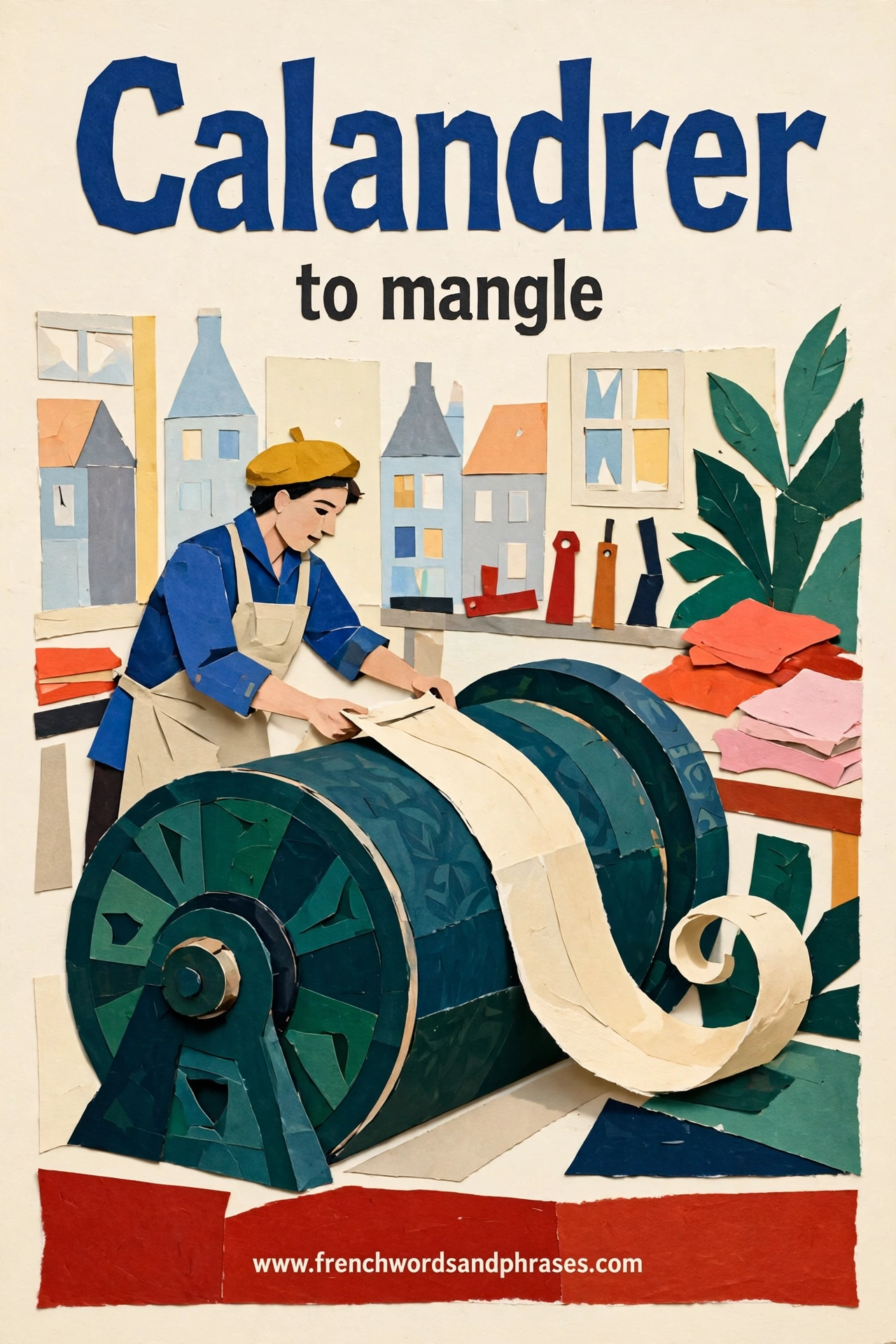
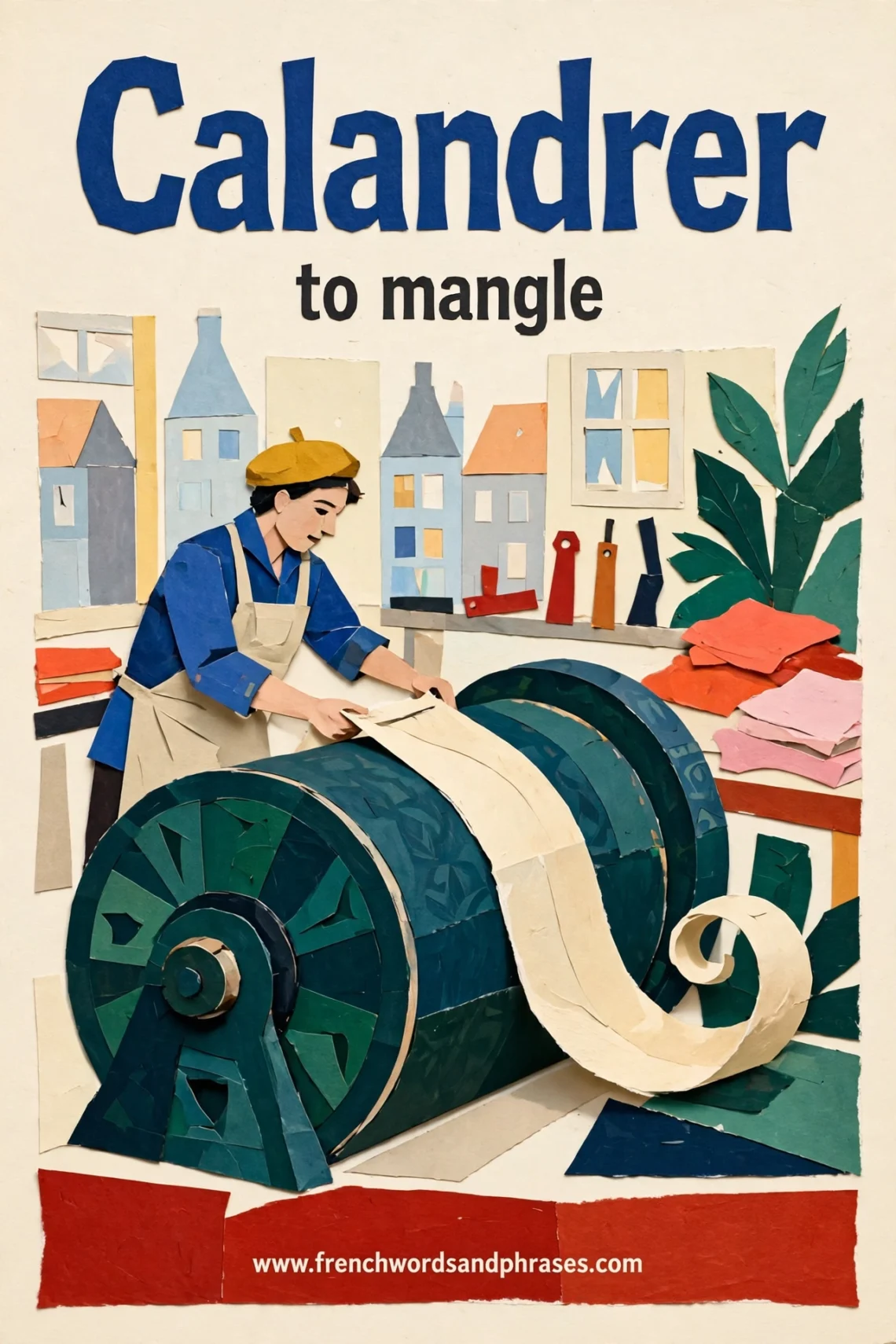
Calandrer means to roll, to press, to mangle — to pass cloth, paper or metal between heavy rollers until it comes out smooth, flat and glossy.
Great heated rollers turning in a laundry, sheets coming out crisp and shining, paper gliding smooth off a press — calandrer is the industrial verb of the perfect finish: whatever passes between the rollers comes out pressed.
In this guide, you’ll learn how to conjugate calandrer in all the major French tenses and moods. Explore complete conjugation tables, French examples, English translations, and practice quizzes.
Understanding the French Verb Calandrer
Calandrer is a regular French verb belonging to the first group of verbs, those ending in-er.
It means to roll, to press, to mangle. It belongs to the textile, paper and plastics industries: cloth, paper and film are calandrés to make them smooth, thin or glossy. In the home laundry the same word survives for the roller press — calandrer les draps, calandrer les nappes — the quickest route to a perfectly flat sheet.
Verb classification: First group (-er)
Auxiliary verb: Avoir
Past participle: calandré
Present participle: calandrant
English equivalents: To calender, to mangle, to press between rollers; calandrer le linge — to mangle the laundry; calandrer le papier — to calender paper; calandrer un tissu — to press a fabric smooth; une feuille calandrée — a calendered sheet.
One important detail: calandrer is built on la calandre, the calender — a machine of stacked, heated rollers. The verb is a perfectly regular -er: je calandre, nous calandrons, ils calandrent, past participle calandré. In the laundry, la calandre is the big roller press that irons sheets flat — so calandrer le linge is what English grandmothers called putting the washing through the mangle.
Experience the Word
Calandrer is the verb of the rollers — everything that enters crumpled between them leaves smooth, flat and finished.
Imagine a hotel laundry at six in the morning. The great calandre rumbles and breathes steam; the washerwoman feeds in a damp, creased sheet, and out it glides — lisse, brillante, impeccable — calandrée in a single pass, ready for the finest bed in the house.
One pass between the rollers. The sheet went in a rag and came out a flag — calandrée.
How to Conjugate Calandrer: Complete French Conjugation Guide
Let’s explore every major conjugation of calandrer, beginning with the indicative mood.
How to Conjugate Calandrer in the Indicative Mood
The indicative mood is used to express facts, observations, actions, and events.
How to Conjugate Calandrer in the Present Tense (Présent)
Used for actions happening now, habitual actions, and general truths.
| Subject | Conjugation |
|---|---|
| je | calandre |
| tu | calandres |
| il / elle | calandre |
| nous | calandrons |
| vous | calandrez |
| ils / elles | calandrent |
Example
L’ouvrière calandre les draps dans la grande machine à rouleaux.
The worker presses the sheets in the big roller machine.
Quick Quiz 1
Complete the sentence:
Nous ______ le papier avant l’impression.
Reveal the answer
calandrons
Nous calandrons le papier avant l’impression.
We calender the paper before printing.
How to Conjugate Calandrer in the Passé Composé
Used for completed actions in the past. Calandrer takes the auxiliary verb avoir.
| Subject | Conjugation |
|---|---|
| j’ | ai calandré |
| tu | as calandré |
| il / elle | a calandré |
| nous | avons calandré |
| vous | avez calandré |
| ils / elles | ont calandré |
Example
La blanchisserie a calandré toutes les nappes ce matin.
The laundry pressed all the tablecloths this morning.
How to Conjugate Calandrer in the Imparfait (Imperfect Tense)
Used for habitual past actions, descriptions, and ongoing situations in the past.
| Subject | Conjugation |
|---|---|
| je | calandrais |
| tu | calandrais |
| il / elle | calandrait |
| nous | calandrions |
| vous | calandriez |
| ils / elles | calandraient |
Example
Autrefois, on calandrait le linge à la main dans chaque hôtel.
In the old days, the laundry was mangled by hand in every hotel.
Quick Quiz 2
Choose the correct form:
The laundry pressed the tablecloths.
La blanchisserie ______ les nappes. (a calandré / est calandré)
Reveal the answer
a calandré
La blanchisserie a calandré les nappes.
Calandrer takes avoir.
How to Conjugate Calandrer in the Plus-que-parfait
Used to describe an action that had already been completed before another past event.
| Subject | Conjugation |
|---|---|
| j’ | avais calandré |
| tu | avais calandré |
| il / elle | avait calandré |
| nous | avions calandré |
| vous | aviez calandré |
| ils / elles | avaient calandré |
Example
Elle avait calandré les chemises avant l’arrivée des clients.
She had pressed the shirts before the customers arrived.
How to Conjugate Calandrer in the Passé Simple
Primarily used in formal writing, literature, and historical narratives. It is rarely used in everyday conversation.
| Subject | Conjugation |
|---|---|
| je | calandrai |
| tu | calandras |
| il / elle | calandra |
| nous | calandrâmes |
| vous | calandrâtes |
| ils / elles | calandrèrent |
Example
L’usine calandra des kilomètres de papier cette année-là.
The factory calendered kilometres of paper that year.
How to Conjugate Calandrer in the Passé Antérieur
A literary tense used to express an action completed immediately before another past action, generally in the passé simple.
| Subject | Conjugation |
|---|---|
| j’ | eus calandré |
| tu | eus calandré |
| il / elle | eut calandré |
| nous | eûmes calandré |
| vous | eûtes calandré |
| ils / elles | eurent calandré |
Example
Quand il eut calandré la dernière feuille, l’ouvrier arrêta la machine.
When he had calendered the last sheet, the worker stopped the machine.
How to Conjugate Calandrer in the Future Tense (Futur Simple)
Used to describe actions that will take place in the future.
| Subject | Conjugation |
|---|---|
| je | calandrerai |
| tu | calandreras |
| il / elle | calandrera |
| nous | calandrerons |
| vous | calandrerez |
| ils / elles | calandreront |
Example
Demain, nous calandrerons le tissu avant de le couper.
Tomorrow, we will press the fabric before cutting it.
How to Conjugate Calandrer in the Futur Antérieur (Future Perfect)
Used for an action that will have been completed before a particular point in the future.
| Subject | Conjugation |
|---|---|
| j’ | aurai calandré |
| tu | auras calandré |
| il / elle | aura calandré |
| nous | aurons calandré |
| vous | aurez calandré |
| ils / elles | auront calandré |
Example
À midi, elle aura calandré tout le linge de l’hôtel.
By midday, she will have pressed all the hotel linen.
How to Conjugate Calandrer in the Near Future (Futur Proche)
Used to describe something that is going to happen soon. Formed with aller + infinitive.
| Subject | Conjugation |
|---|---|
| je | vais calandrer |
| tu | vas calandrer |
| il / elle | va calandrer |
| nous | allons calandrer |
| vous | allez calandrer |
| ils / elles | vont calandrer |
Example
La machine va calandrer ce film plastique en quelques secondes.
The machine is going to calender this plastic film in a few seconds.
How to Conjugate Calandrer in the Conditional Mood
The conditional mood expresses what would happen under certain circumstances. It is also frequently used to make polite requests or express wishes.
How to Conjugate Calandrer in the Present Conditional
| Subject | Conjugation |
|---|---|
| je | calandrerais |
| tu | calandrerais |
| il / elle | calandrerait |
| nous | calandrerions |
| vous | calandreriez |
| ils / elles | calandreraient |
Example
Avec une calandre moderne, on calandrerait deux fois plus vite.
With a modern calender, we would press twice as fast.
How to Conjugate Calandrer in the Past Conditional
| Subject | Conjugation |
|---|---|
| j’ | aurais calandré |
| tu | aurais calandré |
| il / elle | aurait calandré |
| nous | aurions calandré |
| vous | auriez calandré |
| ils / elles | auraient calandré |
Example
Il aurait calandré les draps si la machine n’était pas tombée en panne.
He would have pressed the sheets if the machine had not broken down.
Calandrer in the Literary Past Conditional Form
This less common literary form uses the imperfect subjunctive of avoir.
| Subject | Conjugation |
|---|---|
| j’ | eusse calandré |
| tu | eusses calandré |
| il / elle | eût calandré |
| nous | eussions calandré |
| vous | eussiez calandré |
| ils / elles | eussent calandré |
Example
Elle eût calandré les nappes elle-même plutôt que de les laisser froissées.
She would have pressed the tablecloths herself rather than leave them creased.
How to Conjugate Calandrer in the Subjunctive Mood
The subjunctive is used to express wishes, emotions, doubts, necessity, and uncertainty. It frequently follows expressions such as il faut que (it is necessary that) or bien que (although).
How to Conjugate Calandrer in the Present Subjunctive
| Subject | Conjugation |
|---|---|
| que je | calandre |
| que tu | calandres |
| qu’il / qu’elle | calandre |
| que nous | calandrions |
| que vous | calandriez |
| qu’ils / qu’elles | calandrent |
Example
Il faut que l’atelier calandre le papier avant l’impression.
The workshop must calender the paper before printing.
Quick Quiz 3
Complete the sentence using the subjunctive:
Il faut que vous ______ les chemises pour la fête.
Reveal the answer
calandriez
Il faut que vous calandriez les chemises pour la fête.
You must press the shirts for the party.
How to Conjugate Calandrer in the Imperfect Subjunctive
A literary tense, rarely encountered in modern spoken French.
| Subject | Conjugation |
|---|---|
| que je | calandrasse |
| que tu | calandrasses |
| qu’il / qu’elle | calandrât |
| que nous | calandrassions |
| que vous | calandrassiez |
| qu’ils / qu’elles | calandrassent |
Example
Je voulais qu’elle calandrât les chemises pour la fête.
I wanted her to press the shirts for the party.
How to Conjugate Calandrer in the Pluperfect Subjunctive
A literary construction used to express an action completed before another past action.
| Subject | Conjugation |
|---|---|
| que j’ | eusse calandré |
| que tu | eusses calandré |
| qu’il / qu’elle | eût calandré |
| que nous | eussions calandré |
| que vous | eussiez calandré |
| qu’ils / qu’elles | eussent calandré |
Example
On admirait qu’il eût calandré tant de feuilles sans un pli.
People admired that he had calendered so many sheets without a crease.
How to Conjugate Calandrer in the Past Subjunctive
| Subject | Conjugation |
|---|---|
| que j’ | aie calandré |
| que tu | aies calandré |
| qu’il / qu’elle | ait calandré |
| que nous | ayons calandré |
| que vous | ayez calandré |
| qu’ils / qu’elles | aient calandré |
Example
Je suis content que la blanchisserie ait calandré les nappes à temps.
I am glad the laundry pressed the tablecloths in time.
How to Conjugate Calandrer in the Imperative
The imperative is used to give commands, instructions, invitations, or suggestions. Subject pronouns are omitted.
How to Conjugate Calandrer in the Present Imperative
| Person | Conjugation |
|---|---|
| (tu) | calandre |
| (nous) | calandrons |
| (vous) | calandrez |
Example
Calandre bien les draps, les clients arrivent ce soir !
Press the sheets well, the guests arrive this evening!
Quick Quiz 4
How would you say Press the sheets well (tu form)?
Reveal the answer
Calandre bien les draps !
French Participles of Calandrer
Participles are verb forms that can be used in compound tenses and other grammatical constructions.
Present Participle of Calandrer
calandrant
En calandrant le tissu, elle surveillait la température des rouleaux.
While pressing the fabric, she kept an eye on the temperature of the rollers.
Past Participle of Calandrer
calandré
Calandré entre les rouleaux chauffés, le papier devenait brillant.
Calendered between the heated rollers, the paper became glossy.
Calandrer in Everyday French: Real-Life Examples
Now that you know the conjugations, let’s see how calandrer appears in everyday French.
Example 1 — Present
L’ouvrière calandre les draps à la machine.
The worker presses the sheets in the machine.
Example 2 — Passé composé
La blanchisserie a calandré les nappes.
The laundry pressed the tablecloths.
Example 3 — Imparfait
On calandrait le linge à la main autrefois.
The laundry used to be mangled by hand in the old days.
Example 4 — Future
Nous calandrerons le tissu demain.
We will press the fabric tomorrow.
Example 5 — Conditional
On calandrerait plus vite avec une machine moderne.
We would press faster with a modern machine.
Example 6 — Imperative
Calandre bien les draps !
Press the sheets well!
Beyond Translation: The Meaning of Calandrer
English calender exists but hides in technical manuals; French calandrer keeps one foot in the laundry room, where la calandre was once as familiar as the iron.
It is the verb of the flawless finish.
Paper, cloth and plastic are all calandrés for the same reason: pressure plus heat plus patience — a small industrial ritual that turns the crumpled into the impeccable.
How to Remember the French Verb Calandrer
Remember it this way: Calandrer is about the hotel sheet gliding out of the steam rollers, perfectly flat.
- La calandre is the roller press — calandrer is to put something through it: linge, papier, tissu.
- One picture covers every use: in crumpled, out smooth, flat and glossy.
- Regular -er: je calandre, nous calandrons, past participle calandré.
The key idea is the hotel sheet gliding out of the steam rollers, perfectly flat.
Test Your Knowledge of Calandrer
Let’s see how much you’ve learned. Try answering these questions before revealing the answers.
Question 1
What machine gives calandrer its name?
Reveal the answer
La calandre — the calender, a press of stacked heated rollers.
Question 2
How do you say The laundry pressed all the tablecloths in French?
Reveal the answer
La blanchisserie a calandré toutes les nappes.
Question 3
Translate: The workshop must calender the paper before printing.
Reveal the answer
Il faut que l’atelier calandre le papier avant l’impression.
Question 4
What is the past participle of calandrer?
Reveal the answer
Calandré.
Question 5
Complete the sentence:
Demain, nous ______ le tissu avant de le couper.
Reveal the answer
calandrerons
Demain, nous calandrerons le tissu avant de le couper.
Tomorrow, we will press the fabric before cutting it.
Your Final Challenge
Can You Use It?
How would you say this in French?
The laundress presses the sheets one by one, and each comes out smooth as a fresh page.
Reveal the answer
La blanchisseuse calandre les draps un à un, et chacun ressort lisse comme une page neuve.
The laundress presses the sheets one by one, and each comes out smooth as a fresh page.
A little French. A little curiosity. A richer everyday life.
LEARN FRENCH ONE WORD AT A TIME