A French Word to Live By
How to Conjugate Blesser in French
/blɛ.se/
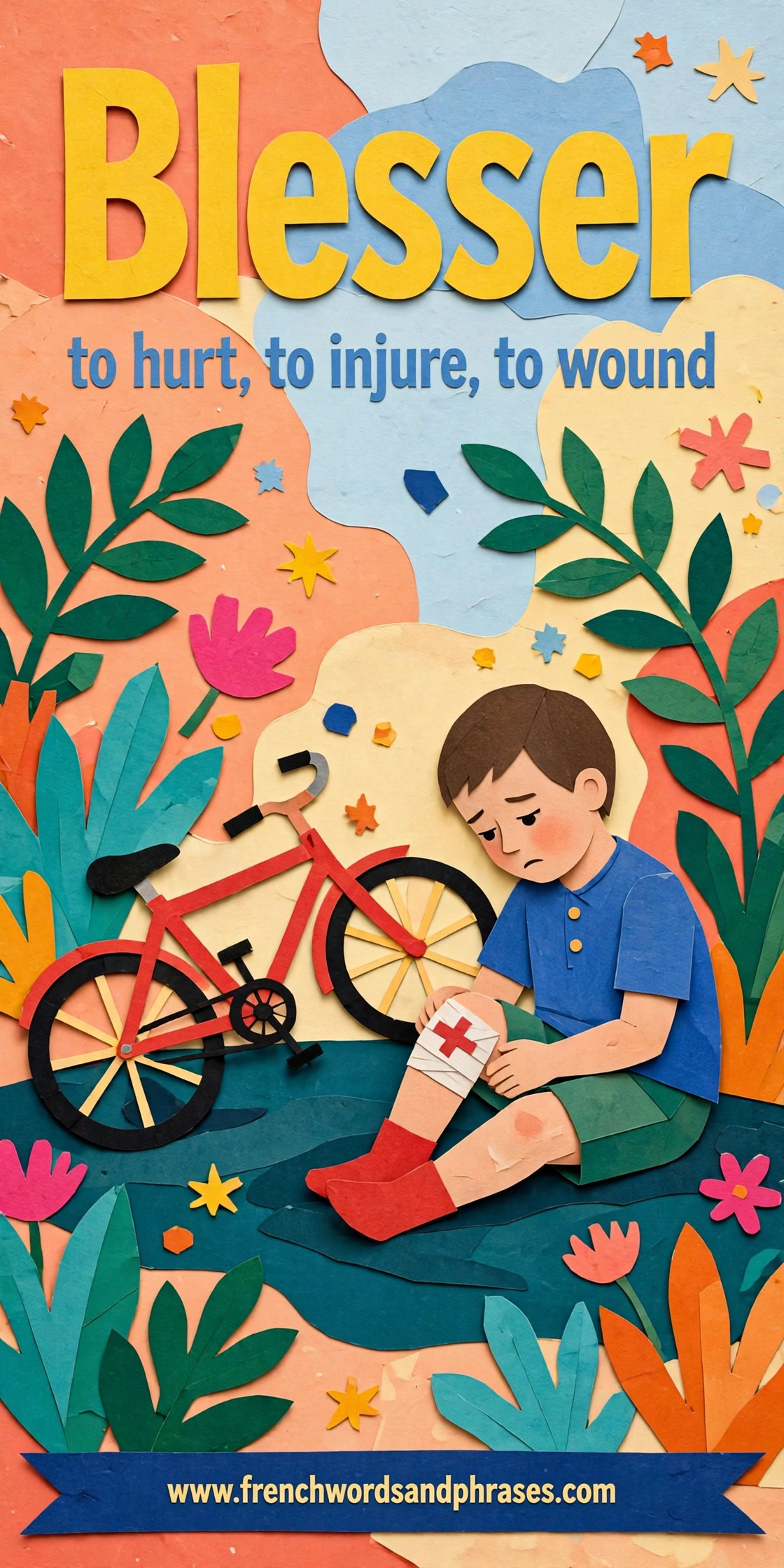
Blesser means to hurt, to injure, to wound — to damage a body with a blow or a weapon, or a heart with a word.
A soldier wounded in battle, a cyclist hurt in a fall, a sister wounded by a careless remark at the dinner table — blesser is the general verb of hurting: it covers the body’s wounds and the soul’s, and French uses it for both without changing a letter.
In this guide, you’ll learn how to conjugate blesser in all the major French tenses and moods. Explore complete conjugation tables, French examples, English translations, and practice quizzes.
Understanding the French Verb Blesser
Blesser is a regular French verb belonging to the first group of verbs, those ending in-er.
It means to hurt, to injure, to wound. It ranges from the battlefield to the breakfast table: armies report des blessés, sports pages report players blessés au genou, and in everyday speech the commonest wounds are verbal — a remark, a silence, a forgotten birthday can blesser as surely as a fall.
Verb classification: First group (-er)
Auxiliary verb: Avoir
Past participle: blessé
Present participle: blessant
English equivalents: To wound, to injure, to hurt; blesser quelqu’un à la jambe — to wound someone in the leg; blesser par des paroles — to hurt with words; blesser l’amour-propre — to wound someone’s pride; être blessé — to be wounded, to be hurt.
One important detail: blesser is a perfectly regular -er verb — je blesse, nous blessons, participle blessé — but its family does the talking. The noun is une blessure, a wound or injury, and the adjective blessé doubles as a noun: un blessé is a wounded person, a casualty. Watch the construction: you wound someone à a part of the body — blesser un soldat à l’épaule — and words wound par or simply directly: ses remarques l’ont blessée.
Experience the Word
Blesser is the verb of damage done to a person — by steel, by accident, or by a sentence that lands in exactly the wrong place.
Imagine a fencing hall on a Saturday morning. A blade slips past a guard and catches a wrist — a real wound, small but bleeding. Across town, at the same hour, a woman reads a message from her brother and feels the same verb at work, without a drop of blood: his words l’ont blessée, and the mark will last longer than the fencer’s cut.
One wound will be bandaged by lunch. The other was inflicted — blessée — by a sentence, and it will heal much more slowly.
How to Conjugate Blesser: Complete French Conjugation Guide
Let’s explore every major conjugation of blesser, beginning with the indicative mood.
How to Conjugate Blesser in the Indicative Mood
The indicative mood is used to express facts, observations, actions, and events.
How to Conjugate Blesser in the Present Tense (Présent)
Used for actions happening now, habitual actions, and general truths.
| Subject | Conjugation |
|---|---|
| je | blesse |
| tu | blesses |
| il / elle | blesse |
| nous | blessons |
| vous | blessez |
| ils / elles | blessent |
Example
Un mot de trop blesse parfois plus qu’un coup.
One word too many sometimes hurts more than a blow.
Quick Quiz 1
Complete the sentence:
Nous savons que ces remarques ______ les gens.
Reveal the answer
blessent
Nous savons que ces remarques blessent les gens.
We know these remarks hurt people.
How to Conjugate Blesser in the Passé Composé
Used for completed actions in the past. Blesser takes the auxiliary verb avoir.
| Subject | Conjugation |
|---|---|
| j’ | ai blessé |
| tu | as blessé |
| il / elle | a blessé |
| nous | avons blessé |
| vous | avez blessé |
| ils / elles | ont blessé |
Example
Ses remarques ont blessé sa sœur plus d’une fois.
His remarks have hurt his sister more than once.
How to Conjugate Blesser in the Imparfait (Imperfect Tense)
Used for habitual past actions, descriptions, and ongoing situations in the past.
| Subject | Conjugation |
|---|---|
| je | blessais |
| tu | blessais |
| il / elle | blessait |
| nous | blessions |
| vous | blessiez |
| ils / elles | blessaient |
Example
Ses paroles blessaient sans qu’il s’en rende compte.
His words used to hurt without him realising it.
Quick Quiz 2
Choose the correct form:
The fall injured the cyclist.
La chute ______ le cycliste. (a blessé / est blessé)
Reveal the answer
a blessé
La chute a blessé le cycliste.
Blesser takes avoir.
How to Conjugate Blesser in the Plus-que-parfait
Used to describe an action that had already been completed before another past event.
| Subject | Conjugation |
|---|---|
| j’ | avais blessé |
| tu | avais blessé |
| il / elle | avait blessé |
| nous | avions blessé |
| vous | aviez blessé |
| ils / elles | avaient blessé |
Example
La chute avait blessé le cycliste à la jambe.
The fall had injured the cyclist in the leg.
How to Conjugate Blesser in the Passé Simple
Primarily used in formal writing, literature, and historical narratives. It is rarely used in everyday conversation.
| Subject | Conjugation |
|---|---|
| je | blessai |
| tu | blessas |
| il / elle | blessa |
| nous | blessâmes |
| vous | blessâtes |
| ils / elles | blessèrent |
Example
La flèche blessa le soldat à l’épaule.
The arrow wounded the soldier in the shoulder.
How to Conjugate Blesser in the Passé Antérieur
A literary tense used to express an action completed immediately before another past action, generally in the passé simple.
| Subject | Conjugation |
|---|---|
| j’ | eus blessé |
| tu | eus blessé |
| il / elle | eut blessé |
| nous | eûmes blessé |
| vous | eûtes blessé |
| ils / elles | eurent blessé |
Example
Quand la pierre eut blessé l’enfant, on appela les secours.
When the stone had injured the child, they called for help.
How to Conjugate Blesser in the Future Tense (Futur Simple)
Used to describe actions that will take place in the future.
| Subject | Conjugation |
|---|---|
| je | blesserai |
| tu | blesseras |
| il / elle | blessera |
| nous | blesserons |
| vous | blesserez |
| ils / elles | blesseront |
Example
Ce commentaire blessera quelqu’un, j’en suis sûr.
That comment will hurt someone, I am sure of it.
How to Conjugate Blesser in the Futur Antérieur (Future Perfect)
Used for an action that will have been completed before a particular point in the future.
| Subject | Conjugation |
|---|---|
| j’ | aurai blessé |
| tu | auras blessé |
| il / elle | aura blessé |
| nous | aurons blessé |
| vous | aurez blessé |
| ils / elles | auront blessé |
Example
Par ses critiques, elle aura blessé bien des collègues.
With her criticism, she will have hurt many colleagues.
How to Conjugate Blesser in the Near Future (Futur Proche)
Used to describe something that is going to happen soon. Formed with aller + infinitive.
| Subject | Conjugation |
|---|---|
| je | vais blesser |
| tu | vas blesser |
| il / elle | va blesser |
| nous | allons blesser |
| vous | allez blesser |
| ils / elles | vont blesser |
Example
Attention, ce couteau va blesser quelqu’un !
Careful, that knife is going to hurt someone!
How to Conjugate Blesser in the Conditional Mood
The conditional mood expresses what would happen under certain circumstances. It is also frequently used to make polite requests or express wishes.
How to Conjugate Blesser in the Present Conditional
| Subject | Conjugation |
|---|---|
| je | blesserais |
| tu | blesserais |
| il / elle | blesserait |
| nous | blesserions |
| vous | blesseriez |
| ils / elles | blesseraient |
Example
Une telle remarque blesserait n’importe qui.
Such a remark would hurt anyone.
How to Conjugate Blesser in the Past Conditional
| Subject | Conjugation |
|---|---|
| j’ | aurais blessé |
| tu | aurais blessé |
| il / elle | aurait blessé |
| nous | aurions blessé |
| vous | auriez blessé |
| ils / elles | auraient blessé |
Example
Tu l’aurais blessée si tu avais dit toute la vérité.
You would have hurt her if you had told the whole truth.
Blesser in the Literary Past Conditional Form
This less common literary form uses the imperfect subjunctive of avoir.
| Subject | Conjugation |
|---|---|
| j’ | eusse blessé |
| tu | eusses blessé |
| il / elle | eût blessé |
| nous | eussions blessé |
| vous | eussiez blessé |
| ils / elles | eussent blessé |
Example
Ses paroles eussent blessé même un cœur de pierre.
His words would have wounded even a heart of stone.
How to Conjugate Blesser in the Subjunctive Mood
The subjunctive is used to express wishes, emotions, doubts, necessity, and uncertainty. It frequently follows expressions such as il faut que (it is necessary that) or bien que (although).
How to Conjugate Blesser in the Present Subjunctive
| Subject | Conjugation |
|---|---|
| que je | blesse |
| que tu | blesses |
| qu’il / qu’elle | blesse |
| que nous | blessions |
| que vous | blessiez |
| qu’ils / qu’elles | blessent |
Example
Je ne veux pas que mes mots blessent qui que ce soit.
I do not want my words to hurt anyone at all.
Quick Quiz 3
Complete the sentence using the subjunctive:
Je regrette que cette lettre ______ ton ami.
Reveal the answer
ait blessé
Je regrette que cette lettre ait blessé ton ami.
I regret that this letter hurt your friend.
How to Conjugate Blesser in the Imperfect Subjunctive
A literary tense, rarely encountered in modern spoken French.
| Subject | Conjugation |
|---|---|
| que je | blessasse |
| que tu | blessasses |
| qu’il / qu’elle | blessât |
| que nous | blessassions |
| que vous | blessassiez |
| qu’ils / qu’elles | blessassent |
Example
Il craignait que la chute blessât l’enfant.
He feared the fall might injure the child.
How to Conjugate Blesser in the Pluperfect Subjunctive
A literary construction used to express an action completed before another past action.
| Subject | Conjugation |
|---|---|
| que j’ | eusse blessé |
| que tu | eusses blessé |
| qu’il / qu’elle | eût blessé |
| que nous | eussions blessé |
| que vous | eussiez blessé |
| qu’ils / qu’elles | eussent blessé |
Example
On racontait qu’il eût blessé son rival en duel.
People said he had wounded his rival in a duel.
How to Conjugate Blesser in the Past Subjunctive
| Subject | Conjugation |
|---|---|
| que j’ | aie blessé |
| que tu | aies blessé |
| qu’il / qu’elle | ait blessé |
| que nous | ayons blessé |
| que vous | ayez blessé |
| qu’ils / qu’elles | aient blessé |
Example
Je regrette que cette lettre ait blessé ton ami.
I regret that this letter hurt your friend.
How to Conjugate Blesser in the Imperative
The imperative is used to give commands, instructions, invitations, or suggestions. Subject pronouns are omitted.
How to Conjugate Blesser in the Present Imperative
| Person | Conjugation |
|---|---|
| (tu) | blesse |
| (nous) | blessons |
| (vous) | blessez |
Example
Ne blesse personne avec tes mots !
Do not hurt anyone with your words!
Quick Quiz 4
How would you say Do not hurt anyone (tu form)?
Reveal the answer
Ne blesse personne !
French Participles of Blesser
Participles are verb forms that can be used in compound tenses and other grammatical constructions.
Present Participle of Blesser
blessant
En blessant son frère par ses moqueries, il a perdu sa confiance.
By hurting his brother with his mockery, he lost his trust.
Past Participle of Blesser
blessé
Blessée à la main, la violoniste a dû s’arrêter de jouer.
Injured in the hand, the violinist had to stop playing.
Blesser in Everyday French: Real-Life Examples
Now that you know the conjugations, let’s see how blesser appears in everyday French.
Example 1 — Present
Ses mots blessent sans le vouloir.
His words hurt without meaning to.
Example 2 — Passé composé
La chute a blessé le cycliste.
The fall injured the cyclist.
Example 3 — Imparfait
Ses remarques blessaient tout le monde.
Her remarks used to hurt everyone.
Example 4 — Future
Ce silence la blessera plus que des reproches.
This silence will hurt her more than reproaches.
Example 5 — Conditional
Une telle phrase blesserait n’importe qui.
Such a sentence would hurt anyone.
Example 6 — Imperative
Ne blesse pas ton frère avec tes moqueries !
Do not hurt your brother with your mockery!
Beyond Translation: The Meaning of Blesser
English splits the work between wound, injure and hurt; French blesser does all three jobs, and its noun une blessure is the word on every hospital form and every sports page.
The same verb serves the surgeon and the poet.
A general counts les blessés after a battle; a lover complains that a word l’a blessé. Between the two, blesser measures every kind of damage a person can carry away from an encounter.
How to Remember the French Verb Blesser
Remember it this way: Blesser is about the fencer’s cut — and the remark that cuts deeper.
- One verb for wound, injure and hurt — body and feelings alike.
- The family: une blessure (a wound), un blessé (a wounded person, a casualty).
- Regular -er: je blesse, nous blessons, past participle blessé; wound someone à la jambe, à l’épaule.
The key idea is the fencer’s cut — and the remark that cuts deeper.
Test Your Knowledge of Blesser
Let’s see how much you’ve learned. Try answering these questions before revealing the answers.
Question 1
What are the three English verbs that blesser covers on its own?
Reveal the answer
Wound, injure and hurt — for bodies and for feelings.
Question 2
How do you say His words hurt his sister in French?
Reveal the answer
Ses paroles ont blessé sa sœur.
Question 3
Translate: The arrow wounded the soldier in the shoulder.
Reveal the answer
La flèche a blessé le soldat à l’épaule.
Question 4
What is the past participle of blesser, and what noun does it also give?
Reveal the answer
Blessé — and as a noun, un blessé is a wounded person, a casualty.
Question 5
Complete the sentence:
Je ne veux pas que mes mots ______ qui que ce soit.
Reveal the answer
blessent
Je ne veux pas que mes mots blessent qui que ce soit.
I do not want my words to hurt anyone at all.
Your Final Challenge
Can You Use It?
How would you say this in French?
We sometimes hurt the people we love with the words we do not weigh.
Reveal the answer
On blesse parfois ceux qu’on aime avec les mots qu’on ne pèse pas.
We sometimes hurt the people we love with the words we do not weigh.
A little French. A little curiosity. A richer everyday life.
LEARN FRENCH ONE WORD AT A TIME