A French Word to Live By
How to Conjugate Bléser in French
/ble.ze/
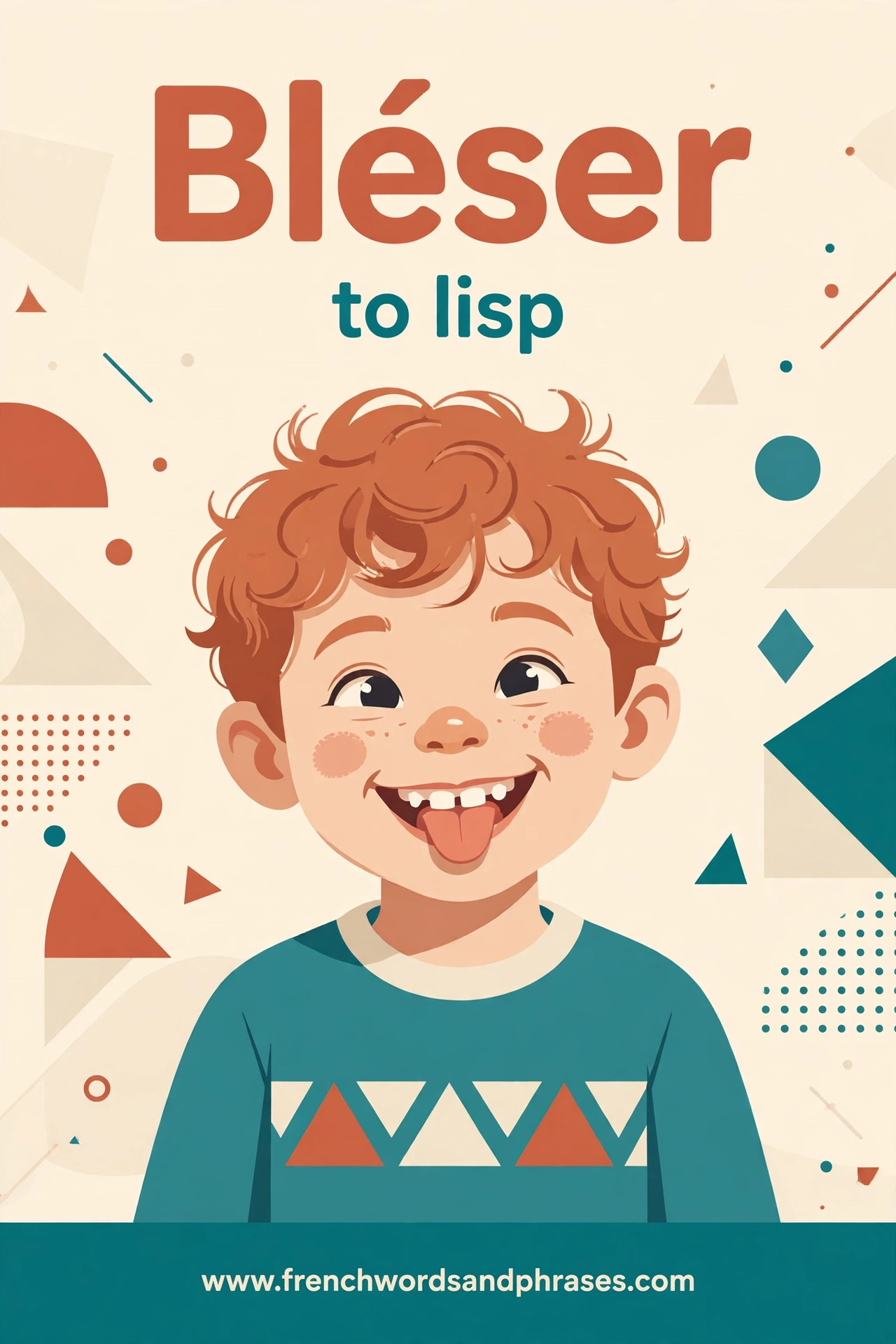
Bléser means to lisp — to pronounce s sounds as ch, so that the words come out soft and blurred at the edges.
A child saying « ze » for « je » and « chuper » for « super », an actor softening every s into a ch for a comic role — bléser is the verb of the lisp: the speech defect, or the performance, that turns the sharp s into a gentle ch.
In this guide, you’ll learn how to conjugate bléser in all the major French tenses and moods. Explore complete conjugation tables, French examples, English translations, and practice quizzes.
Understanding the French Verb Bléser
Bléser is a regular French verb belonging to the first group of verbs, those ending in -er.
It means to lisp. In French, bléser names one precise lisp: replacing the sound s (and z) by ch (and j), so that « merci » comes out as « merchí ». It is a word of doctors, speech therapists and language teachers — and of comedians, because a deliberate lisp is one of the oldest tricks in French comic theatre.
Verb classification: First group (-er)
Auxiliary verb: Avoir
Past participle: blésé
Present participle: blésant
English equivalents: To lisp, to speak with a lisp; bléser sur les s — to lisp on one’s s sounds; le blèsement — the lisp itself; un enfant qui blèse — a child who lisps; bléser légèrement — to lisp slightly.
One important detail: bléser is a céder-type verb — the é of the stem opens to è wherever the next syllable is mute: je blèse, tu blèses, il blèse, ils blèsent, and all through the future and conditional: je blèserai, je blèserais. The é survives wherever the ending is sounded: nous blésons, vous blésez, je blésais, en blésant, and in the infinitive and participle, bléser, blésé. The subjunctive splits along the same line: que je blèse, but que nous blésions. The noun for the lisp keeps the grave accent everywhere: le blèsement.
Experience the Word
Bléser is the verb of the softened s — every sharp sound in the sentence comes out round and blurred, like print seen through water.
Imagine a little boy reading aloud in class. He is brave and careful, but every s turns to ch in his mouth: « le choleil brille chur la mer » — the sun shines on the sea in a lisping geography that makes the teacher hide a smile behind her hand. He blèse, and the whole class hears the sunshine differently.
The words are all correct. He has lisped them — il a blésé — and the sentence arrived wrapped in cotton wool.
How to Conjugate Bléser: Complete French Conjugation Guide
Let’s explore every major conjugation of bléser, beginning with the indicative mood.
How to Conjugate Bléser in the Indicative Mood
The indicative mood is used to express facts, observations, actions, and events.
How to Conjugate Bléser in the Present Tense (Présent)
Used for actions happening now, habitual actions, and general truths.
| Subject | Conjugation |
|---|---|
| je | blèse |
| tu | blèses |
| il / elle | blèse |
| nous | blésons |
| vous | blésez |
| ils / elles | blèsent |
Example
Depuis son enfance, il blèse légèrement sur les s.
Since childhood, he lisps slightly on his s sounds.
Quick Quiz 1
Complete the sentence:
Nous entendons bien qu’il ______ sur les s.
Reveal the answer
blèse
Nous entendons bien qu’il blèse sur les s.
We can clearly hear that he lisps on his s sounds.
How to Conjugate Bléser in the Passé Composé
Used for completed actions in the past. Bléser takes the auxiliary verb avoir.
| Subject | Conjugation |
|---|---|
| j’ | ai blésé |
| tu | as blésé |
| il / elle | a blésé |
| nous | avons blésé |
| vous | avez blésé |
| ils / elles | ont blésé |
Example
Fatigué, il a blésé plus que d’habitude pendant son discours.
Tired, he lisped more than usual during his speech.
How to Conjugate Bléser in the Imparfait (Imperfect Tense)
Used for habitual past actions, descriptions, and ongoing situations in the past.
| Subject | Conjugation |
|---|---|
| je | blésais |
| tu | blésais |
| il / elle | blésait |
| nous | blésions |
| vous | blésiez |
| ils / elles | blésaient |
Example
Enfant, elle blésait et ses camarades se moquaient d’elle.
As a child, she lisped and her classmates made fun of her.
Quick Quiz 2
Choose the correct form:
She lisped during her speech.
Elle ______ pendant son discours. (a blésé / est blésée)
Reveal the answer
a blésé
Elle a blésé pendant son discours.
Bléser takes avoir.
How to Conjugate Bléser in the Plus-que-parfait
Used to describe an action that had already been completed before another past event.
| Subject | Conjugation |
|---|---|
| j’ | avais blésé |
| tu | avais blésé |
| il / elle | avait blésé |
| nous | avions blésé |
| vous | aviez blésé |
| ils / elles | avaient blésé |
Example
Il avait toujours blésé, même devenu adulte.
He had always lisped, even as an adult.
How to Conjugate Bléser in the Passé Simple
Primarily used in formal writing, literature, and historical narratives. It is rarely used in everyday conversation.
| Subject | Conjugation |
|---|---|
| je | blésai |
| tu | blésas |
| il / elle | blésa |
| nous | blésâmes |
| vous | blésâtes |
| ils / elles | blésèrent |
Example
Devant le micro, elle blésa sur le premier mot.
In front of the microphone, she lisped on the first word.
How to Conjugate Bléser in the Passé Antérieur
A literary tense used to express an action completed immediately before another past action, generally in the passé simple.
| Subject | Conjugation |
|---|---|
| j’ | eus blésé |
| tu | eus blésé |
| il / elle | eut blésé |
| nous | eûmes blésé |
| vous | eûtes blésé |
| ils / elles | eurent blésé |
Example
Quand il eut blésé sa première phrase, le public sourit.
When he had lisped his first sentence, the audience smiled.
How to Conjugate Bléser in the Future Tense (Futur Simple)
Used to describe actions that will take place in the future.
| Subject | Conjugation |
|---|---|
| je | blèserai |
| tu | blèseras |
| il / elle | blèsera |
| nous | blèserons |
| vous | blèserez |
| ils / elles | blèseront |
Example
Avec l’orthophoniste, il blèsera de moins en moins.
With the speech therapist, he will lisp less and less.
How to Conjugate Bléser in the Futur Antérieur (Future Perfect)
Used for an action that will have been completed before a particular point in the future.
| Subject | Conjugation |
|---|---|
| j’ | aurai blésé |
| tu | auras blésé |
| il / elle | aura blésé |
| nous | aurons blésé |
| vous | aurez blésé |
| ils / elles | auront blésé |
Example
Bientôt, tu auras blésé pour la dernière fois.
Soon, you will have lisped for the last time.
How to Conjugate Bléser in the Near Future (Futur Proche)
Used to describe something that is going to happen soon. Formed with aller + infinitive.
| Subject | Conjugation |
|---|---|
| je | vais bléser |
| tu | vas bléser |
| il / elle | va bléser |
| nous | allons bléser |
| vous | allez bléser |
| ils / elles | vont bléser |
Example
Attention, tu vas bléser sur ce mot difficile.
Careful, you are going to lisp on this difficult word.
How to Conjugate Bléser in the Conditional Mood
The conditional mood expresses what would happen under certain circumstances. It is also frequently used to make polite requests or express wishes.
How to Conjugate Bléser in the Present Conditional
| Subject | Conjugation |
|---|---|
| je | blèserais |
| tu | blèserais |
| il / elle | blèserait |
| nous | blèserions |
| vous | blèseriez |
| ils / elles | blèseraient |
Example
Sans ses exercices quotidiens, il blèserait encore beaucoup.
Without his daily exercises, he would still lisp a lot.
How to Conjugate Bléser in the Past Conditional
| Subject | Conjugation |
|---|---|
| j’ | aurais blésé |
| tu | aurais blésé |
| il / elle | aurait blésé |
| nous | aurions blésé |
| vous | auriez blésé |
| ils / elles | auraient blésé |
Example
Elle aurait blésé davantage sans l’aide de l’orthophoniste.
She would have lisped more without the speech therapist’s help.
Bléser in the Literary Past Conditional Form
This less common literary form uses the imperfect subjunctive of avoir.
| Subject | Conjugation |
|---|---|
| j’ | eusse blésé |
| tu | eusses blésé |
| il / elle | eût blésé |
| nous | eussions blésé |
| vous | eussiez blésé |
| ils / elles | eussent blésé |
Example
Il eût blésé toute sa vie sans rééducation.
He would have lisped all his life without speech therapy.
How to Conjugate Bléser in the Subjunctive Mood
The subjunctive is used to express wishes, emotions, doubts, necessity, and uncertainty. It frequently follows expressions such as il faut que (it is necessary that) or bien que (although).
How to Conjugate Bléser in the Present Subjunctive
| Subject | Conjugation |
|---|---|
| que je | blèse |
| que tu | blèses |
| qu’il / qu’elle | blèse |
| que nous | blésions |
| que vous | blésiez |
| qu’ils / qu’elles | blèsent |
Example
Il est possible qu’il blèse encore un peu sur les s.
It is possible he still lisps a little on his s sounds.
Quick Quiz 3
Complete the sentence using the subjunctive:
Il est possible que tu ______ encore un peu.
Reveal the answer
blèses
Il est possible que tu blèses encore un peu.
It is possible you still lisp a little.
How to Conjugate Bléser in the Imperfect Subjunctive
A literary tense, rarely encountered in modern spoken French.
| Subject | Conjugation |
|---|---|
| que je | blésasse |
| que tu | blésasses |
| qu’il / qu’elle | blésât |
| que nous | blésassions |
| que vous | blésassiez |
| qu’ils / qu’elles | blésassent |
Example
La maîtresse ne voulait pas que l’enfant blésât devant la classe.
The teacher did not want the child to lisp in front of the class.
How to Conjugate Bléser in the Pluperfect Subjunctive
A literary construction used to express an action completed before another past action.
| Subject | Conjugation |
|---|---|
| que j’ | eusse blésé |
| que tu | eusses blésé |
| qu’il / qu’elle | eût blésé |
| que nous | eussions blésé |
| que vous | eussiez blésé |
| qu’ils / qu’elles | eussent blésé |
Example
On pensait qu’il eût blésé dès son plus jeune âge.
People thought he had lisped from his earliest childhood.
How to Conjugate Bléser in the Past Subjunctive
| Subject | Conjugation |
|---|---|
| que j’ | aie blésé |
| que tu | aies blésé |
| qu’il / qu’elle | ait blésé |
| que nous | ayons blésé |
| que vous | ayez blésé |
| qu’ils / qu’elles | aient blésé |
Example
Je doute qu’elle ait jamais blésé.
I doubt she ever lisped.
How to Conjugate Bléser in the Imperative
The imperative is used to give commands, instructions, invitations, or suggestions. Subject pronouns are omitted.
How to Conjugate Bléser in the Present Imperative
| Person | Conjugation |
|---|---|
| (tu) | blèse |
| (nous) | blésons |
| (vous) | blésez |
Example
Pour ce rôle, blèse comme un enfant de cinq ans !
For this role, lisp like a five-year-old!
Quick Quiz 4
How would you say Lisp like a child (tu form)?
Reveal the answer
Blèse comme un enfant !
French Participles of Bléser
Participles are verb forms that can be used in compound tenses and other grammatical constructions.
Present Participle of Bléser
blésant
En blésant, il transformait tous ses s en ch.
By lisping, he turned all his s sounds into ch.
Past Participle of Bléser
blésé
Blésés avec charme, ses mots faisaient sourire l’auditoire.
Lisped with charm, his words made the audience smile.
Bléser in Everyday French: Real-Life Examples
Now that you know the conjugations, let’s see how bléser appears in everyday French.
Example 1 — Present
Il blèse légèrement sur les s.
He lisps slightly on his s sounds.
Example 2 — Passé composé
Elle a blésé pendant tout son discours.
She lisped throughout her speech.
Example 3 — Imparfait
Enfant, il blésait beaucoup.
As a child, he lisped a lot.
Example 4 — Future
Avec le temps, tu blèseras de moins en moins.
With time, you will lisp less and less.
Example 5 — Conditional
Sans exercices, elle blèserait encore.
Without exercises, she would still lisp.
Example 6 — Imperative
Pour la pièce, blèse comme un enfant !
For the play, lisp like a child!
Beyond Translation: The Meaning of Bléser
English lisp is a blunt little word; French bléser is a technical one — it does not mean any speech defect, but the specific swap of s for ch, and its noun le blèsement sits in the speech therapist’s vocabulary beside le zézaiement.
A lisp, in French, is a spelling you can hear.
Say « je suis » with a lisp and the whole sentence changes its letters: the verb bléser teaches you that in French, the way a word sounds is not decoration — move one sound and the words themselves seem to melt.
How to Remember the French Verb Bléser
Remember it this way: Bléser is about the child reading aloud, turning every s into ch.
- Céder-type spelling: je blèse with è, but nous blésons with é.
- One swap defines it: s becomes ch — « super » comes out « chuper ».
- Regular endings otherwise: je blèse, nous blésons, past participle blésé, noun le blèsement.
The key idea is the child reading aloud, turning every s into ch.
Test Your Knowledge of Bléser
Let’s see how much you’ve learned. Try answering these questions before revealing the answers.
Question 1
Why does je blèse have a grave accent but nous blésons an acute one?
Reveal the answer
The céder-type rule — é becomes è before a mute syllable (je blèse), and stays é where the ending is sounded (nous blésons).
Question 2
How do you say He lisps slightly in French?
Reveal the answer
Il blèse légèrement.
Question 3
Translate: As a child, she lisped.
Reveal the answer
Enfant, elle blésait.
Question 4
What is the past participle of bléser?
Reveal the answer
Blésé.
Question 5
Complete the sentence:
Il est possible qu’il ______ encore un peu sur les s.
Reveal the answer
blèse
Il est possible qu’il blèse encore un peu sur les s.
It is possible he still lisps a little on his s sounds.
Your Final Challenge
Can You Use It?
How would you say this in French?
He lisps a little, but when he sings, his voice is the clearest in the choir.
Reveal the answer
Il blèse un peu, mais quand il chante, sa voix est la plus claire de la chorale.
He lisps a little, but when he sings, his voice is the clearest in the choir.
A little French. A little curiosity. A richer everyday life.
LEARN FRENCH ONE WORD AT A TIME