A French Word to Live By
Translate À supposer que to English
/a sypoze kə/
À supposer que means assuming that.
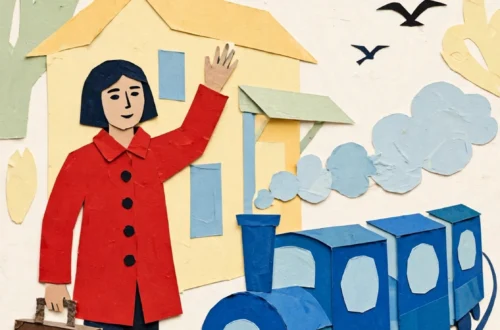
Two friends are planning a journey over a map, and one says the magic words: « à supposer que le train soit en retard… » The plan wobbles — politely. À supposer que is how French builds a hypothesis with its gloves on: let us just suppose, for a moment, that…
In this guide, you’ll learn what à supposer que means in English, how it opens a hypothesis, why the verb after it must be in the subjunctive, and how it compares with si, en supposant que and au cas où. Explore French examples, English translations, and practice quizzes.
Understanding the French Conjunction À supposer que
À supposer que is a French subordinating conjunction of hypothesis. Built from the infinitive supposer (to suppose) with à, it asks the listener to imagine a situation that may not be real — and because the situation is only supposed, the verb after it goes into the subjunctive.
It means assuming that — supposing that. The clause it introduces is a guess, not a fact: à supposer qu’il vienne, nous mangerons à sept heures — assuming that he comes, we’ll eat at seven. The main clause then says what follows from the guess.
Type: Subordinating conjunction — hypothesis
Job: Opens a supposed situation: ‘let’s say that…’
What follows it: A full clause: subject + verb
Mood after it: Subjunctive — always
One important usage detail: à supposer que lives in careful speech and writing. Its everyday twin is en supposant que — same meaning, same subjunctive, lighter shoes. Both elide before a vowel: à supposer qu’il pleuve.
Experience the Word
À supposer que is the conjunction of the thought experiment — the phrase that lets a conversation try on a future without buying it.
Imagine a young couple before a house with a crooked roof: « à supposer que nous l’achetions… » For one sentence, the house is theirs, the garden is planted, the summers are long.
You have not claimed anything about the world. You have built a small theatre where a possibility can act.
How to Use À supposer que in French: Complete Guide
Let’s explore how à supposer que works in French, beginning with the whole phrase on one card.
À supposer que at a Glance
Before the details, here is the whole word on one card.
The Whole Phrase on One Card
Meaning, job, pattern and mood — à supposer que in four lines.
| Point | À supposer que |
|---|---|
| Meaning | assuming that — supposing that |
| Job | opens a hypothesis for the main clause to build on |
| What follows | a full clause — subject + verb |
| Mood | subjunctive, always |
Example
À supposer qu’il fasse beau, nous pique-niquerons.
Assuming the weather is fine, we’ll have a picnic.
How À supposer que Links: Guess First, Consequence After
À supposer que links a supposed clause to its consequence. The supposed clause usually comes first, like a stage being set; the main clause then plays out what would follow.
| Pattern | Example |
|---|---|
| hypothesis + consequence | à supposer qu’elle accepte, tout change — assuming she accepts, everything changes |
| with a question as consequence | à supposer que nous partions, qui gardera le chat ? — assuming we leave, who will look after the cat? |
| negative hypothesis | à supposer qu’il ne vienne pas, nous commencerons sans lui — assuming he doesn’t come, we’ll start without him |
| hypothesis after the main clause | nous pouvons essayer, à supposer que tu sois d’accord — we can try, assuming you agree |
Example
À supposer que le magasin soit fermé, nous irons ailleurs.
Assuming the shop is closed, we’ll go elsewhere.
Quick Quiz 1
In ‘à supposer que + clause’, is the clause a fact or a guess?
Reveal the answer
A guess — a situation supposed for the sake of argument.
À supposer que tu aies raison…
Assuming you are right…
The Mood Question: The Subjunctive, Because Nothing Is Real Yet
A supposed situation is not a fact, so French reaches for the subjunctive. Here are the forms you will actually need after à supposer que — note être and avoir, the two great irregulars.
| Verb | Subjunctive after à supposer que |
|---|---|
| être | à supposer qu’il soit là — assuming he is there (soit) |
| avoir | à supposer que nous ayons le temps — assuming we have time (ayons) |
| faire | à supposer qu’elle fasse une erreur — assuming she makes a mistake (fasse) |
| venir | à supposer qu’ils viennent — assuming they come (viennent) |
| pouvoir | à supposer que tu puisses aider — assuming you can help (puisses) |
Example
À supposer que vous soyez libres, venez dîner.
Assuming you are free, come to dinner.
Where À supposer que Goes: Front of the Sentence, Comma After
The phrase normally opens the sentence, and a comma separates the hypothesis from its consequence. Que elides to qu’ before a vowel — à supposer qu’il, à supposer qu’elle.
| Position | Example |
|---|---|
| Start of the sentence (usual) | à supposer que…, + main clause — the hypothesis sets the stage |
| Comma after the clause | à supposer qu’il pleuve, nous resterons — assuming it rains, we’ll stay |
| Elision | à supposer qu’il / qu’elle / qu’on — que becomes qu’ before a vowel |
| After the main clause | possible, with a pause: nous verrons, à supposer que… — we’ll see, assuming that… |
Example
À supposer qu’on gagne, que fera-t-on de l’argent ?
Assuming we win, what will we do with the money?
Quick Quiz 2
Which mood follows à supposer que — and why?
Reveal the answer
The subjunctive — because the situation is supposed, not established as fact.
À supposer qu’il soit vrai…
Assuming it is true…
Everyday Expressions with À supposer que
The supposer family has several members; à supposer que is the deliberate, careful one. Here is the set.
| Expression | In English |
|---|---|
| à supposer que… | assuming that… / supposing that… |
| en supposant que… | assuming that… (the everyday twin) |
| supposé que… | supposing that… (same family, slightly formal) |
| à supposer même que… | even assuming that… (the hypothesis stretched further) |
Example
À supposer même qu’il accepte, il faudra de l’argent.
Even assuming he accepts, money will be needed.
Close Cousins: À supposer que, Si, En supposant que, Au cas où
French supposes in several registers. Si is the everyday workhorse; the supposer family is more deliberate; au cas où plans for a possibility.
| Word | The difference |
|---|---|
| à supposer que + subjunctive | deliberate hypothesis — ‘let us assume that’ |
| en supposant que + subjunctive | the same idea in lighter, everyday dress |
| si + indicative | the plain condition: si tu viens, je pars — no subjunctive, ever |
| au cas où + conditional | ‘in case’: au cas où il pleuvrait — preparing for a possibility |
Example
Si tu viens, je serai content ; mais à supposer que tu ne viennes pas, je comprendrai.
If you come, I’ll be glad; but assuming you don’t come, I’ll understand.
Quick Quiz 3
Which cousin NEVER takes the subjunctive: si, or à supposer que?
Reveal the answer
si — si + indicative, always. À supposer que demands the subjunctive.
S’il vient… / À supposer qu’il vienne…
If he comes… / Assuming he comes…
À supposer que and Its Neighbours
Hypothesis has a neighbourhood in French, from the courtroom to the café.
| French | In English |
|---|---|
| en supposant que | assuming that (everyday twin) |
| supposé que | supposing that |
| dans l’hypothèse où | in the event that (formal) |
| si | if |
| imaginons que | let’s imagine that (+ subjunctive) |
Example
Imaginons que tout soit possible.
Let’s imagine that everything is possible.
Watch Out: The Traps Around À supposer que
The classic trap is the indicative slipping in after que — English ‘assuming that he is’ tempts you, but French wants the subjunctive.
| Trap | The truth |
|---|---|
| indicative after que | never: ‘à supposer qu’il est là’ is wrong — à supposer qu’il soit là |
| si-confusion | don’t mix the systems: si + indicative, à supposer que + subjunctive — pick one pattern and keep it |
| forgetting the elision | before a vowel, que becomes qu’: à supposer qu’elle vienne |
| double hypothesis | one supposition per sentence is plenty; two make fog |
Example
À supposer qu’elle ait le temps, elle nous aidera.
Assuming she has the time, she’ll help us.
Quick Quiz 4
Correct the sentence: ‘À supposer qu’il a raison, nous changerons le plan.’
Reveal the answer
The verb must be subjunctive: ait, not a.
À supposer qu’il ait raison, nous changerons le plan.
Assuming he is right, we’ll change the plan.
À supposer que in Everyday French: Real-Life Examples
Now that you know the word, let’s see how à supposer que appears in everyday French.
Example 1 — Planning
À supposer que le vol soit à l’heure, nous arriverons à midi.
Assuming the flight is on time, we’ll arrive at noon.
Example 2 — A debate
À supposer que tu aies raison, que proposes-tu ?
Assuming you are right, what do you propose?
Example 3 — Buying a house
À supposer que la banque dise oui, nous signerons en juin.
Assuming the bank says yes, we’ll sign in June.
Example 4 — Weather plans
À supposer qu’il neige, l’école fermera peut-être.
Assuming it snows, the school may close.
Example 5 — A negotiation
Nous acceptons, à supposer que le prix baisse un peu.
We accept, assuming the price drops a little.
Example 6 — A dream
À supposer que je gagne au loto, j’achèterai une maison près de la mer.
Assuming I win the lottery, I’ll buy a house by the sea.
Beyond Translation: The Meaning of À supposer que
English says assuming that for à supposer que — but French keeps the scaffolding visible: à + supposer, ‘toward supposing’, as if the mind were walking toward an idea it has not yet moved into.
À supposer que is the subjunctive’s natural home: a whole clause held in the hand, not yet set down as fact.
Lawyers, planners and daydreamers share this phrase. It is how French thinks out loud — carefully, conditionally, and with the verb forms to prove it.
How to Remember the French Conjunction À supposer que
Remember it this way: À supposer que builds a stage, not a fact — and the subjunctive is the costume every verb wears on it.
- You hear ‘let’s suppose’ — and you reach for the subjunctive automatically.
- You set the hypothesis first, comma, then the consequence.
- You elide before a vowel — à supposer qu’il, à supposer qu’elle.
The key idea is à supposer que supposes — so the verb goes subjunctive.
Test Your Knowledge of À supposer que
Let’s see how much you’ve learned. Try answering these questions before revealing the answers.
Question 1
What does à supposer que mean?
Reveal the answer
Assuming that — supposing that.
Question 2
Which mood follows à supposer que?
Reveal the answer
The subjunctive — the situation is supposed, not factual.
Question 3
Translate: Assuming she is ready, we’ll leave.
Reveal the answer
À supposer qu’elle soit prête, nous partirons.
Question 4
How does que change before a vowel?
Reveal the answer
It elides to qu’ — à supposer qu’il vienne.
Question 5
Complete with the right form:
À supposer que vous ______ (avoir) une voiture, nous partirons à huit heures.
Reveal the answer
ayez — the subjunctive of avoir.
À supposer que vous ayez une voiture, nous partirons à huit heures.
Assuming you have a car, we’ll leave at eight.
Your Final Challenge
Can You Use It?
How would you say this in French?
“Assuming the train is late, we’ll take a taxi.”
Reveal the answer
À supposer que le train soit en retard, nous prendrons un taxi.
Assuming the train is late, we’ll take a taxi.
A little French. A little curiosity. A richer everyday life.
LEARN FRENCH ONE WORD AT A TIME