A French Word to Live By
How to Conjugate Ceindre in French
/sɛ̃dʁ/
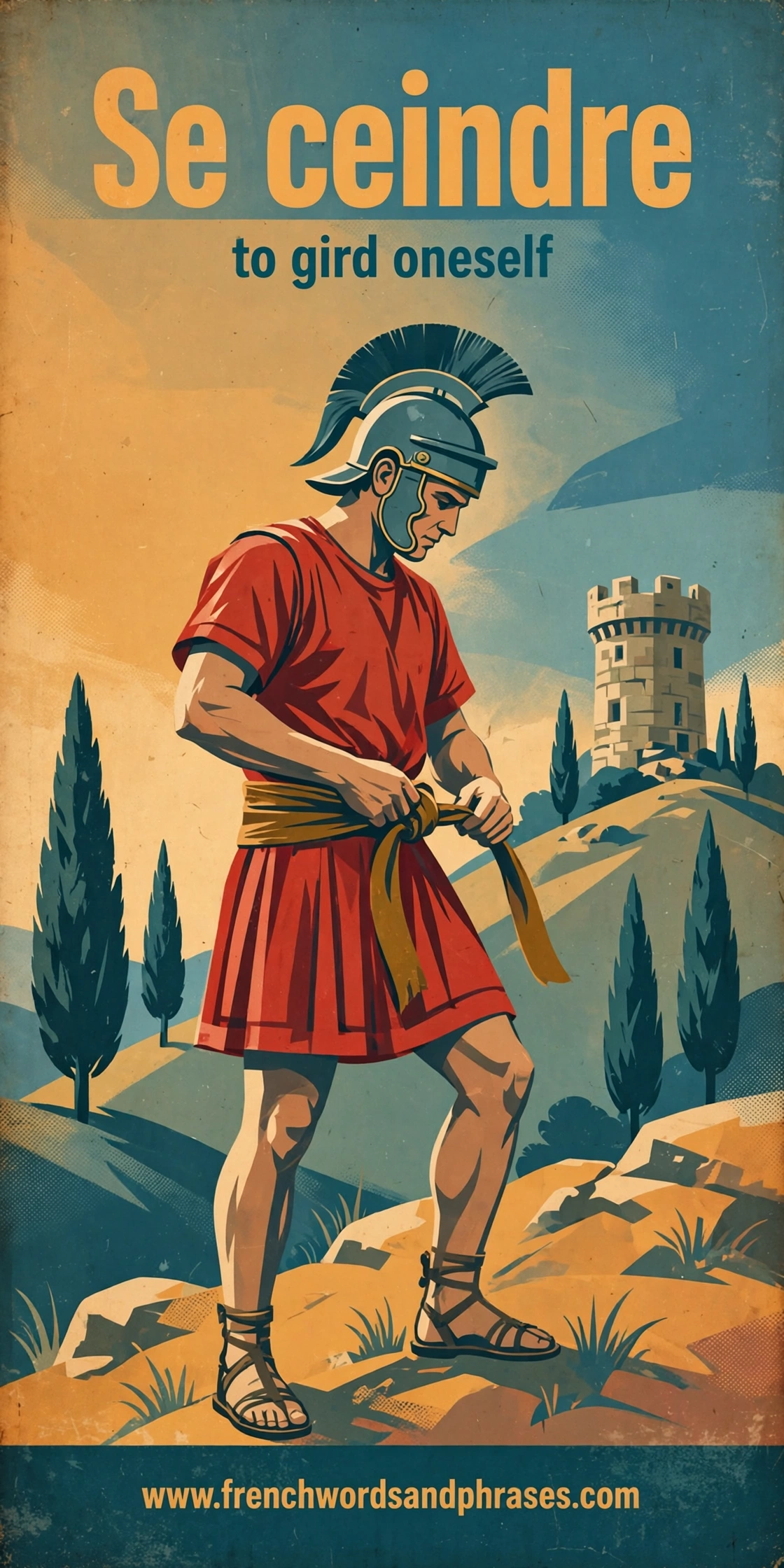
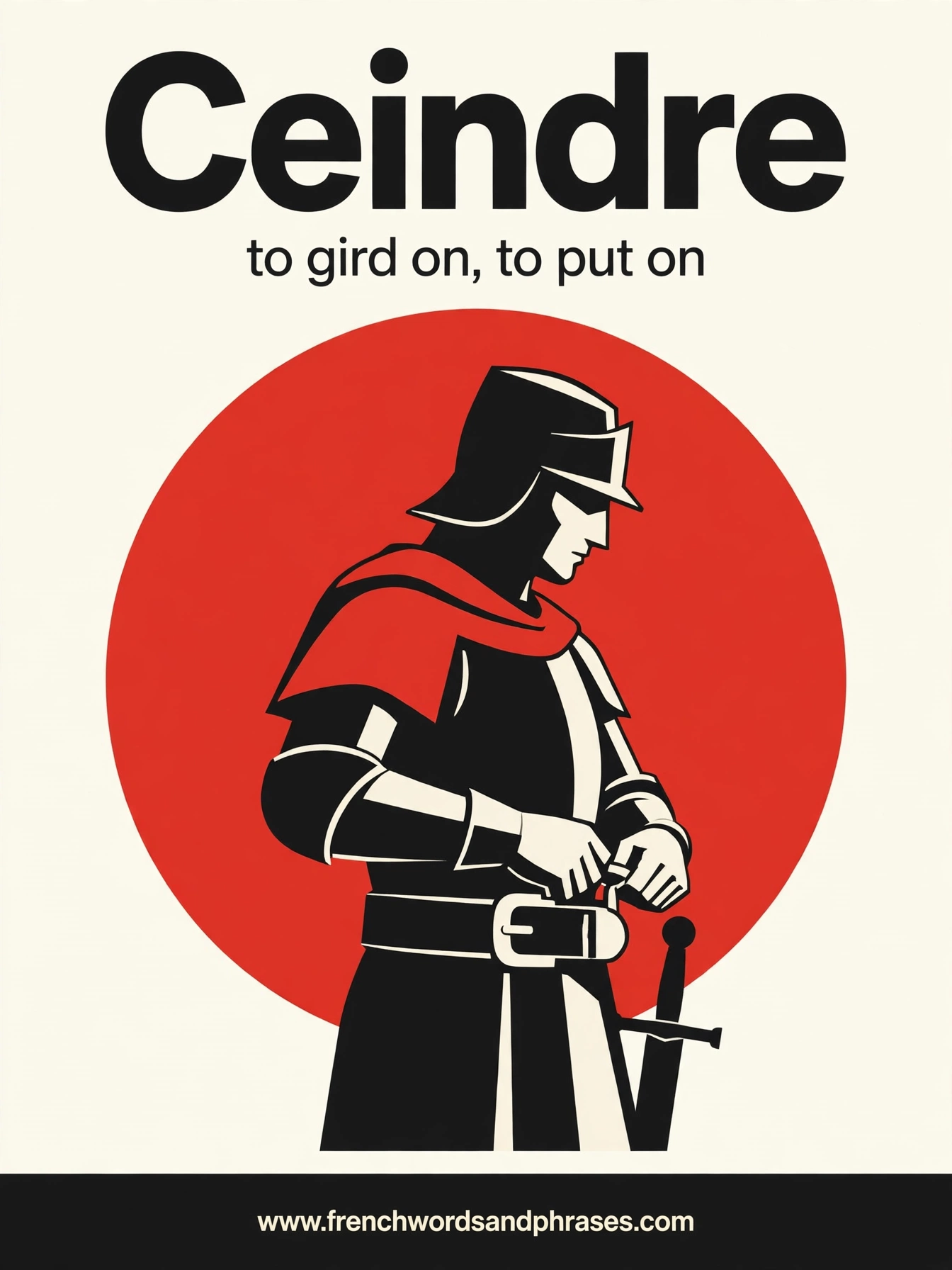
Ceindre means to gird on, to put on — to fasten a sword, a crown or a sash around the body, in the solemn language of kings, knights and mayors.
A knight kneeling while his lord buckles the sword at his waist, a mayor receiving the tricolour sash in the town hall — ceindre is the ceremonial verb of putting on the emblem of an office: nothing you wear every day, everything you wear when it counts.
In this guide, you’ll learn how to conjugate ceindre in all the major French tenses and moods. Explore complete conjugation tables, French examples, English translations, and practice quizzes.
Understanding the French Verb Ceindre
Ceindre is an irregular French verb ending in -eindre, conjugated exactly like peindre.
It means to gird on, to put on. Its living uses are ceremonial and descriptive: the mayor ceint l’écharpe, the victor is ceint de laurier, and in written French walls, wreaths and rivers ceignent what they surround — the encircling sense is as common as the girding one.
Verb classification: Irregular (-eindre)
Auxiliary verb: Avoir
Past participle: ceint
Present participle: ceignant
English equivalents: To gird on, to put on, to encircle; ceindre l’épée — to gird on one’s sword; ceindre la couronne — to assume the crown; ceindre l’écharpe tricolore — to put on the mayor’s sash; ceindre un front de laurier — to crown a brow with laurel; les remparts ceignent la ville — the ramparts encircle the town.
One important detail: ceindre belongs to the -eindre family, conjugated exactly like peindre — the stem alternates between ceind- and ceign-. In the present singular the d falls away: je ceins, tu ceins, il ceint; the plural breathes through the gn: nous ceignons, vous ceignez, ils ceignent. The past participle is ceint, feminine ceinte: une ville ceinte de murailles. It is a literary, ceremonial verb — everyday French says mettre or porter, and ceindre survives in set phrases and fine prose.
Experience the Word
Ceindre is the verb of the emblem assumed — the sword, the crown, the sash that turn a person into an office.
Imagine the new mayor of a small French town on her first morning. The outgoing mayor lifts the tricolour sash from its box, and she ceint l’écharpe — blue, white, red across her shoulder — while the whole council stands. The cloth weighs nothing; the gesture weighs a Republic.
She has not simply dressed. She has girded on — ceint — the office itself, in front of witnesses.
How to Conjugate Ceindre: Complete French Conjugation Guide
Let’s explore every major conjugation of ceindre, beginning with the indicative mood.
How to Conjugate Ceindre in the Indicative Mood
The indicative mood is used to express facts, observations, actions, and events.
How to Conjugate Ceindre in the Present Tense (Présent)
Used for actions happening now, habitual actions, and general truths.
| Subject | Conjugation |
|---|---|
| je | ceins |
| tu | ceins |
| il / elle | ceint |
| nous | ceignons |
| vous | ceignez |
| ils / elles | ceignent |
Example
Le maire ceint l’écharpe tricolore avant la cérémonie.
The mayor puts on the tricolour sash before the ceremony.
Quick Quiz 1
Complete the sentence:
Nous ______ l’écharpe avant la cérémonie.
Reveal the answer
ceignons
Nous ceignons l’écharpe avant la cérémonie.
We put on the sash before the ceremony.
How to Conjugate Ceindre in the Passé Composé
Used for completed actions in the past. Ceindre takes the auxiliary verb avoir.
| Subject | Conjugation |
|---|---|
| j’ | ai ceint |
| tu | as ceint |
| il / elle | a ceint |
| nous | avons ceint |
| vous | avez ceint |
| ils / elles | ont ceint |
Example
Le chevalier a ceint son épée avant de partir en croisade.
The knight girded on his sword before leaving on crusade.
How to Conjugate Ceindre in the Imparfait (Imperfect Tense)
Used for habitual past actions, descriptions, and ongoing situations in the past.
| Subject | Conjugation |
|---|---|
| je | ceignais |
| tu | ceignais |
| il / elle | ceignait |
| nous | ceignions |
| vous | ceigniez |
| ils / elles | ceignaient |
Example
Les remparts ceignaient la vieille ville de toutes parts.
The ramparts encircled the old town on every side.
Quick Quiz 2
Choose the correct form:
The king puts on the crown.
Le roi ______ la couronne. (ceint / ceignez)
Reveal the answer
ceint
Le roi ceint la couronne.
Third person singular: il ceint, with a t and no d.
How to Conjugate Ceindre in the Plus-que-parfait
Used to describe an action that had already been completed before another past event.
| Subject | Conjugation |
|---|---|
| j’ | avais ceint |
| tu | avais ceint |
| il / elle | avait ceint |
| nous | avions ceint |
| vous | aviez ceint |
| ils / elles | avaient ceint |
Example
Elle avait ceint son front d’une couronne de fleurs.
She had girded her brow with a crown of flowers.
How to Conjugate Ceindre in the Passé Simple
Primarily used in formal writing, literature, and historical narratives. It is rarely used in everyday conversation.
| Subject | Conjugation |
|---|---|
| je | ceignis |
| tu | ceignis |
| il / elle | ceignit |
| nous | ceignîmes |
| vous | ceignîtes |
| ils / elles | ceignirent |
Example
Le roi ceignit la couronne devant toute la cour assemblée.
The king put on the crown before the assembled court.
How to Conjugate Ceindre in the Passé Antérieur
A literary tense used to express an action completed immediately before another past action, generally in the passé simple.
| Subject | Conjugation |
|---|---|
| j’ | eus ceint |
| tu | eus ceint |
| il / elle | eut ceint |
| nous | eûmes ceint |
| vous | eûtes ceint |
| ils / elles | eurent ceint |
Example
Quand le chevalier eut ceint son épée, il salua son seigneur.
When the knight had girded on his sword, he saluted his lord.
How to Conjugate Ceindre in the Future Tense (Futur Simple)
Used to describe actions that will take place in the future.
| Subject | Conjugation |
|---|---|
| je | ceindrai |
| tu | ceindras |
| il / elle | ceindra |
| nous | ceindrons |
| vous | ceindrez |
| ils / elles | ceindront |
Example
Demain, le nouveau maire ceindra l’écharpe pour la première fois.
Tomorrow, the new mayor will put on the sash for the first time.
How to Conjugate Ceindre in the Futur Antérieur (Future Perfect)
Used for an action that will have been completed before a particular point in the future.
| Subject | Conjugation |
|---|---|
| j’ | aurai ceint |
| tu | auras ceint |
| il / elle | aura ceint |
| nous | aurons ceint |
| vous | aurez ceint |
| ils / elles | auront ceint |
Example
À la fin de la cérémonie, le roi aura ceint la couronne et prêté serment.
By the end of the ceremony, the king will have put on the crown and taken the oath.
How to Conjugate Ceindre in the Near Future (Futur Proche)
Used to describe something that is going to happen soon. Formed with aller + infinitive.
| Subject | Conjugation |
|---|---|
| je | vais ceindre |
| tu | vas ceindre |
| il / elle | va ceindre |
| nous | allons ceindre |
| vous | allez ceindre |
| ils / elles | vont ceindre |
Example
Le chevalier va ceindre son épée.
The knight is going to gird on his sword.
How to Conjugate Ceindre in the Conditional Mood
The conditional mood expresses what would happen under certain circumstances. It is also frequently used to make polite requests or express wishes.
How to Conjugate Ceindre in the Present Conditional
| Subject | Conjugation |
|---|---|
| je | ceindrais |
| tu | ceindrais |
| il / elle | ceindrait |
| nous | ceindrions |
| vous | ceindriez |
| ils / elles | ceindraient |
Example
Sans la cérémonie, il ne ceindrait jamais cette écharpe.
Without the ceremony, he would never put on this sash.
How to Conjugate Ceindre in the Past Conditional
| Subject | Conjugation |
|---|---|
| j’ | aurais ceint |
| tu | aurais ceint |
| il / elle | aurait ceint |
| nous | aurions ceint |
| vous | auriez ceint |
| ils / elles | auraient ceint |
Example
Elle aurait ceint la couronne si le sort l’avait choisie.
She would have assumed the crown if fate had chosen her.
Ceindre in the Literary Past Conditional Form
This less common literary form uses the imperfect subjunctive of avoir.
| Subject | Conjugation |
|---|---|
| j’ | eusse ceint |
| tu | eusses ceint |
| il / elle | eût ceint |
| nous | eussions ceint |
| vous | eussiez ceint |
| ils / elles | eussent ceint |
Example
Le prince eût ceint l’épée de son père sans l’ordre du roi.
The prince would have girded on his father’s sword without the king’s order.
How to Conjugate Ceindre in the Subjunctive Mood
The subjunctive is used to express wishes, emotions, doubts, necessity, and uncertainty. It frequently follows expressions such as il faut que (it is necessary that) or bien que (although).
How to Conjugate Ceindre in the Present Subjunctive
| Subject | Conjugation |
|---|---|
| que je | ceigne |
| que tu | ceignes |
| qu’il / qu’elle | ceigne |
| que nous | ceignions |
| que vous | ceigniez |
| qu’ils / qu’elles | ceignent |
Example
Il faut que le maire ceigne l’écharpe avant le discours.
The mayor must put on the sash before the speech.
Quick Quiz 3
Complete the sentence using the subjunctive:
Il faut que tu ______ ton épée, chevalier.
Reveal the answer
ceignes
Il faut que tu ceignes ton épée, chevalier.
You must gird on your sword, knight.
How to Conjugate Ceindre in the Imperfect Subjunctive
A literary tense, rarely encountered in modern spoken French.
| Subject | Conjugation |
|---|---|
| que je | ceignisse |
| que tu | ceignisses |
| qu’il / qu’elle | ceignît |
| que nous | ceignissions |
| que vous | ceignissiez |
| qu’ils / qu’elles | ceignissent |
Example
Le protocole exigeait que le roi ceignît la couronne à midi précis.
Protocol required the king to put on the crown at exactly noon.
How to Conjugate Ceindre in the Pluperfect Subjunctive
A literary construction used to express an action completed before another past action.
| Subject | Conjugation |
|---|---|
| que j’ | eusse ceint |
| que tu | eusses ceint |
| qu’il / qu’elle | eût ceint |
| que nous | eussions ceint |
| que vous | eussiez ceint |
| qu’ils / qu’elles | eussent ceint |
Example
Les chroniques racontent qu’il eût ceint l’épée à quinze ans.
The chronicles relate that he had girded on the sword at fifteen.
How to Conjugate Ceindre in the Past Subjunctive
| Subject | Conjugation |
|---|---|
| que j’ | aie ceint |
| que tu | aies ceint |
| qu’il / qu’elle | ait ceint |
| que nous | ayons ceint |
| que vous | ayez ceint |
| qu’ils / qu’elles | aient ceint |
Example
Je suis ému qu’elle ait ceint l’écharpe de son grand-père.
I am moved that she put on her grandfather’s sash.
How to Conjugate Ceindre in the Imperative
The imperative is used to give commands, instructions, invitations, or suggestions. Subject pronouns are omitted.
How to Conjugate Ceindre in the Present Imperative
| Person | Conjugation |
|---|---|
| (tu) | ceins |
| (nous) | ceignons |
| (vous) | ceignez |
Example
Ceins ton épée, chevalier, l’heure est venue !
Gird on your sword, knight, the hour has come!
Quick Quiz 4
How would you say Gird on your sword (tu form)?
Reveal the answer
Ceins ton épée !
French Participles of Ceindre
Participles are verb forms that can be used in compound tenses and other grammatical constructions.
Present Participle of Ceindre
ceignant
En ceignant l’écharpe, le maire pense à son père, maire avant lui.
As he puts on the sash, the mayor thinks of his father, mayor before him.
Past Participle of Ceindre
ceint
Ceinte d’une muraille de pierre, la ville dormait en paix.
Girded by a stone wall, the town slept in peace.
Ceindre in Everyday French: Real-Life Examples
Now that you know the conjugations, let’s see how ceindre appears in everyday French.
Example 1 — Present
Le maire ceint l’écharpe tricolore.
The mayor puts on the tricolour sash.
Example 2 — Passé composé
Le chevalier a ceint son épée.
The knight girded on his sword.
Example 3 — Imparfait
Les remparts ceignaient la ville.
The ramparts encircled the town.
Example 4 — Future
Le roi ceindra la couronne.
The king will put on the crown.
Example 5 — Conditional
Il ceindrait l’écharpe avec fierté.
He would put on the sash with pride.
Example 6 — Imperative
Ceins ton épée, chevalier !
Gird on your sword, knight!
Beyond Translation: The Meaning of Ceindre
English cincture and precinct are relatives — a precinct was originally the ground girded round by a boundary; all from Latin cingere, to gird.
The everyday heir of ceindre is la ceinture, the belt.
Nobody ceint their trousers in the morning — they put on a ceinture. The verb kept the ceremony and left the wardrobe to its noun: swords, crowns and sashes are ceints; belts are simply worn.
How to Remember the French Verb Ceindre
Remember it this way: Ceindre is about the knight girding on his sword, the mayor her tricolour sash.
- The -eindre family, like peindre: ceins, ceint in the singular, ceignons in the plural — the d appears only before a vowel ending.
- Past participle ceint, feminine ceinte: une ville ceinte de murailles.
- Think of la ceinture, the belt: ceindre is to belt something on — but only solemn things: l’épée, la couronne, l’écharpe.
The key idea is the knight girding on his sword, the mayor her tricolour sash.
Test Your Knowledge of Ceindre
Let’s see how much you’ve learned. Try answering these questions before revealing the answers.
Question 1
How is ceindre conjugated — which verb is its model?
Reveal the answer
Exactly like peindre — the -eindre family: je ceins, il ceint, nous ceignons.
Question 2
How do you say The mayor puts on the tricolour sash in French?
Reveal the answer
Le maire ceint l’écharpe tricolore.
Question 3
Translate: The knight girded on his sword.
Reveal the answer
Le chevalier a ceint son épée.
Question 4
What is the past participle of ceindre?
Reveal the answer
Ceint — feminine ceinte: une ville ceinte de murailles.
Question 5
Complete the sentence:
Il faut que le maire ______ l’écharpe avant le discours.
Reveal the answer
ceigne
Il faut que le maire ceigne l’écharpe avant le discours.
The mayor must put on the sash before the speech.
Your Final Challenge
Can You Use It?
How would you say this in French?
He girds on his father’s sword, and three generations of knights march with him.
Reveal the answer
Il ceint l’épée de son père, et trois générations de chevaliers marchent avec lui.
He girds on his father’s sword, and three generations of knights march with him.
A little French. A little curiosity. A richer everyday life.
LEARN FRENCH ONE WORD AT A TIME