A French Word to Live By
How to Conjugate Cascader in French
/kas.ka.de/
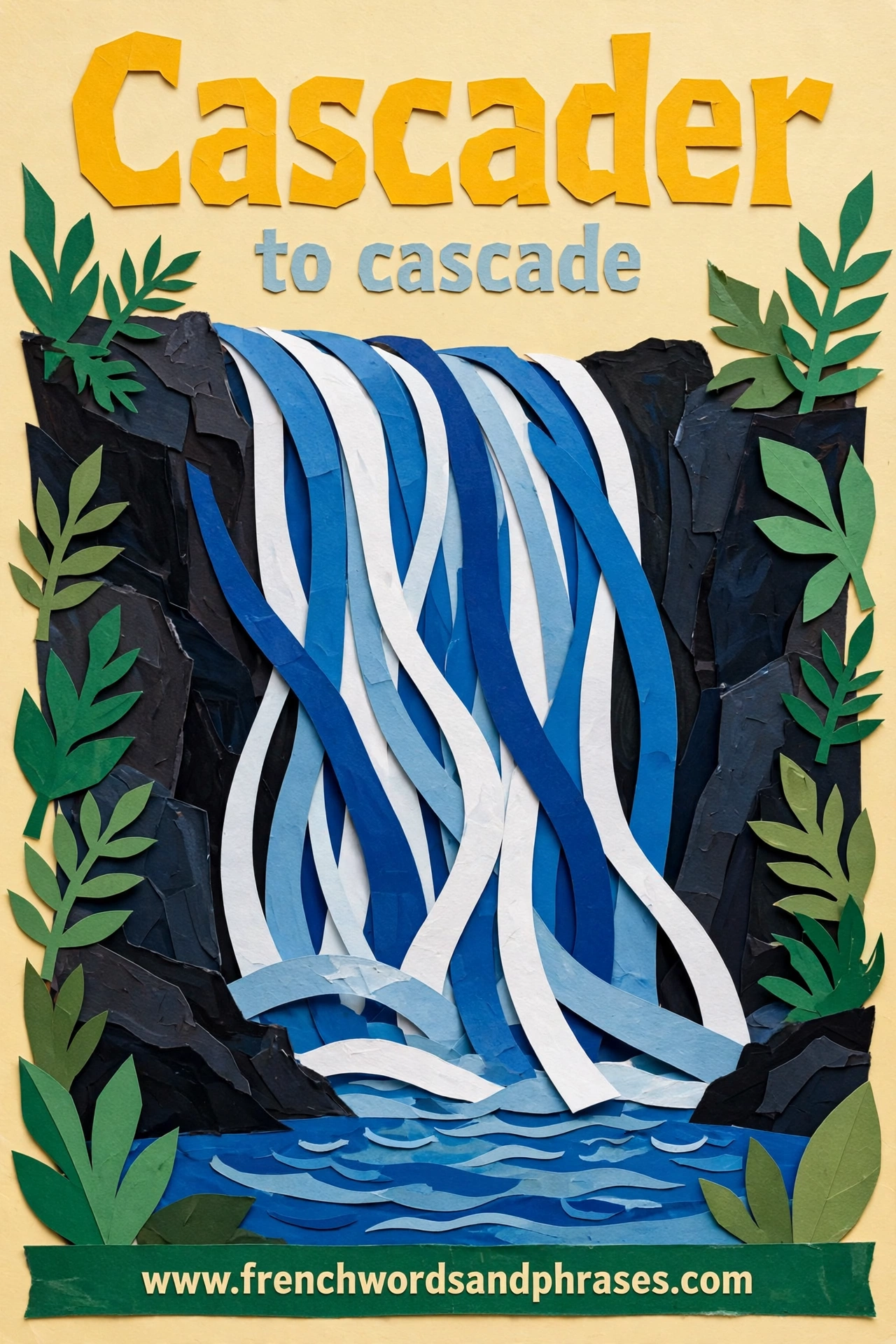
Cascader means to cascade — to fall in a series of stages, like water tumbling from rock to rock.
A mountain stream that never falls once but a dozen times, dropping from ledge to ledge in white steps — cascader is the verb of that staged descent: water, hair or anything that comes down in successive waves.
In this guide, you’ll learn how to conjugate cascader in all the major French tenses and moods. Explore complete conjugation tables, French examples, English translations, and practice quizzes.
Understanding the French Verb Cascader
Cascader is a regular French verb belonging to the first group of verbs, those ending in-er.
It means to cascade. It is used of streams and waterfalls that descend by steps rather than in one drop, of hair falling over shoulders, and figuratively of anything arriving in successive waves — applause, laughter, light through leaves.
Verb classification: First group (-er)
Auxiliary verb: Avoir
Past participle: cascadé
Present participle: cascadant
English equivalents: To cascade, to tumble down in stages; l’eau cascade de rocher en rocher — the water cascades from rock to rock; une cascade — a waterfall, a cascade; les cheveux cascadent sur les épaules — the hair cascades over the shoulders; un cascadeur — a stuntman.
One important detail: cascader is almost always intransitive — things cascade, nobody cascades them: l’eau cascade, les cheveux cascadent. It is a regular -er verb: je cascade, nous cascadons, past participle cascadé. Its famous relative is un cascadeur, the film stuntman — the man whose job is to fall, spectacularly and in stages, and walk away.
Experience the Word
Cascader is the verb of the fall in stages — nothing drops all at once; everything arrives step by glittering step.
Imagine a Pyrenean torrent in May. The snowmelt cannot fall in one leap, so it cascade — over a black ledge, into a green pool, over another ledge — a staircase of water that the path follows all the way down to the valley.
The water is in no hurry at all. It cascades — cascade de rocher en rocher — and makes a music of its descent.
How to Conjugate Cascader: Complete French Conjugation Guide
Let’s explore every major conjugation of cascader, beginning with the indicative mood.
How to Conjugate Cascader in the Indicative Mood
The indicative mood is used to express facts, observations, actions, and events.
How to Conjugate Cascader in the Present Tense (Présent)
Used for actions happening now, habitual actions, and general truths.
| Subject | Conjugation |
|---|---|
| je | cascade |
| tu | cascades |
| il / elle | cascade |
| nous | cascadons |
| vous | cascadez |
| ils / elles | cascadent |
Example
L’eau cascade de rocher en rocher dans la vallée.
The water cascades from rock to rock in the valley.
Quick Quiz 1
Complete the sentence:
Les cheveux de la mariée ______ sur ses épaules.
Reveal the answer
cascadent
Les cheveux de la mariée cascadent sur ses épaules.
The bride’s hair cascades over her shoulders.
How to Conjugate Cascader in the Passé Composé
Used for completed actions in the past. Cascader takes the auxiliary verb avoir.
| Subject | Conjugation |
|---|---|
| j’ | ai cascadé |
| tu | as cascadé |
| il / elle | a cascadé |
| nous | avons cascadé |
| vous | avez cascadé |
| ils / elles | ont cascadé |
Example
Le ruisseau a cascadé toute la nuit après l’orage.
The stream cascaded all night after the storm.
How to Conjugate Cascader in the Imparfait (Imperfect Tense)
Used for habitual past actions, descriptions, and ongoing situations in the past.
| Subject | Conjugation |
|---|---|
| je | cascadais |
| tu | cascadais |
| il / elle | cascadait |
| nous | cascadions |
| vous | cascadiez |
| ils / elles | cascadaient |
Example
Ses cheveux cascadaient sur ses épaules en boucles noires.
Her hair used to cascade over her shoulders in black curls.
Quick Quiz 2
Choose the correct form:
The stream cascaded all night.
Le ruisseau ______ toute la nuit. (a cascadé / est cascadé)
Reveal the answer
a cascadé
Le ruisseau a cascadé toute la nuit.
Cascader takes avoir.
How to Conjugate Cascader in the Plus-que-parfait
Used to describe an action that had already been completed before another past event.
| Subject | Conjugation |
|---|---|
| j’ | avais cascadé |
| tu | avais cascadé |
| il / elle | avait cascadé |
| nous | avions cascadé |
| vous | aviez cascadé |
| ils / elles | avaient cascadé |
Example
La source avait cascadé sur les marches de pierre avant de tarir.
The spring had cascaded over the stone steps before drying up.
How to Conjugate Cascader in the Passé Simple
Primarily used in formal writing, literature, and historical narratives. It is rarely used in everyday conversation.
| Subject | Conjugation |
|---|---|
| je | cascadai |
| tu | cascadas |
| il / elle | cascada |
| nous | cascadâmes |
| vous | cascadâtes |
| ils / elles | cascadèrent |
Example
Le torrent cascada entre les rochers avec un bruit de tonnerre.
The torrent cascaded between the rocks with a noise like thunder.
How to Conjugate Cascader in the Passé Antérieur
A literary tense used to express an action completed immediately before another past action, generally in the passé simple.
| Subject | Conjugation |
|---|---|
| j’ | eus cascadé |
| tu | eus cascadé |
| il / elle | eut cascadé |
| nous | eûmes cascadé |
| vous | eûtes cascadé |
| ils / elles | eurent cascadé |
Example
Quand la neige eut cascadé des toits, le village respira.
When the snow had cascaded off the roofs, the village breathed again.
How to Conjugate Cascader in the Future Tense (Futur Simple)
Used to describe actions that will take place in the future.
| Subject | Conjugation |
|---|---|
| je | cascaderai |
| tu | cascaderas |
| il / elle | cascadera |
| nous | cascaderons |
| vous | cascaderez |
| ils / elles | cascaderont |
Example
Au printemps, l’eau cascadéra de nouveau dans le ravin.
In spring, the water will cascade in the ravine again.
How to Conjugate Cascader in the Futur Antérieur (Future Perfect)
Used for an action that will have been completed before a particular point in the future.
| Subject | Conjugation |
|---|---|
| j’ | aurai cascadé |
| tu | auras cascadé |
| il / elle | aura cascadé |
| nous | aurons cascadé |
| vous | aurez cascadé |
| ils / elles | auront cascadé |
Example
À la fonte des neiges, le torrent aura cascadé pendant des semaines.
By the snowmelt, the torrent will have been cascading for weeks.
How to Conjugate Cascader in the Near Future (Futur Proche)
Used to describe something that is going to happen soon. Formed with aller + infinitive.
| Subject | Conjugation |
|---|---|
| je | vais cascader |
| tu | vas cascader |
| il / elle | va cascader |
| nous | allons cascader |
| vous | allez cascader |
| ils / elles | vont cascader |
Example
Regarde, l’eau va cascader par-dessus les rochers !
Look, the water is going to cascade over the rocks!
How to Conjugate Cascader in the Conditional Mood
The conditional mood expresses what would happen under certain circumstances. It is also frequently used to make polite requests or express wishes.
How to Conjugate Cascader in the Present Conditional
| Subject | Conjugation |
|---|---|
| je | cascaderais |
| tu | cascaderais |
| il / elle | cascaderait |
| nous | cascaderions |
| vous | cascaderiez |
| ils / elles | cascaderaient |
Example
Avec plus de pluie, la source cascaderait jusqu’en été.
With more rain, the spring would cascade until summer.
How to Conjugate Cascader in the Past Conditional
| Subject | Conjugation |
|---|---|
| j’ | aurais cascadé |
| tu | aurais cascadé |
| il / elle | aurait cascadé |
| nous | aurions cascadé |
| vous | auriez cascadé |
| ils / elles | auraient cascadé |
Example
Sans la sécheresse, le ruisseau aurait cascadé tout l’été.
Without the drought, the stream would have cascaded all summer.
Cascader in the Literary Past Conditional Form
This less common literary form uses the imperfect subjunctive of avoir.
| Subject | Conjugation |
|---|---|
| j’ | eusse cascadé |
| tu | eusses cascadé |
| il / elle | eût cascadé |
| nous | eussions cascadé |
| vous | eussiez cascadé |
| ils / elles | eussent cascadé |
Example
La rivière eût cascadé joyeusement sans le barrage.
The river would have cascaded joyfully without the dam.
How to Conjugate Cascader in the Subjunctive Mood
The subjunctive is used to express wishes, emotions, doubts, necessity, and uncertainty. It frequently follows expressions such as il faut que (it is necessary that) or bien que (although).
How to Conjugate Cascader in the Present Subjunctive
| Subject | Conjugation |
|---|---|
| que je | cascade |
| que tu | cascades |
| qu’il / qu’elle | cascade |
| que nous | cascadions |
| que vous | cascadiez |
| qu’ils / qu’elles | cascadent |
Example
J’aime que l’eau cascade devant la terrasse du moulin.
I love that the water cascades in front of the mill terrace.
Quick Quiz 3
Complete the sentence using the subjunctive:
J’aime que l’eau ______ entre les pierres du jardin.
Reveal the answer
cascade
J’aime que l’eau cascade entre les pierres du jardin.
I love that the water cascades between the stones of the garden.
How to Conjugate Cascader in the Imperfect Subjunctive
A literary tense, rarely encountered in modern spoken French.
| Subject | Conjugation |
|---|---|
| que je | cascadasse |
| que tu | cascadasses |
| qu’il / qu’elle | cascadât |
| que nous | cascadassions |
| que vous | cascadassiez |
| qu’ils / qu’elles | cascadassent |
Example
On aurait dit que la lumière cascadât entre les feuilles.
You would have said the light was cascading between the leaves.
How to Conjugate Cascader in the Pluperfect Subjunctive
A literary construction used to express an action completed before another past action.
| Subject | Conjugation |
|---|---|
| que j’ | eusse cascadé |
| que tu | eusses cascadé |
| qu’il / qu’elle | eût cascadé |
| que nous | eussions cascadé |
| que vous | eussiez cascadé |
| qu’ils / qu’elles | eussent cascadé |
Example
Les voyageurs racontaient que le torrent eût cascadé toute la nuit.
The travellers said the torrent had cascaded all night.
How to Conjugate Cascader in the Past Subjunctive
| Subject | Conjugation |
|---|---|
| que j’ | aie cascadé |
| que tu | aies cascadé |
| qu’il / qu’elle | ait cascadé |
| que nous | ayons cascadé |
| que vous | ayez cascadé |
| qu’ils / qu’elles | aient cascadé |
Example
Je suis heureux que le ruisseau ait cascadé de nouveau ce printemps.
I am happy the stream has cascaded again this spring.
How to Conjugate Cascader in the Imperative
The imperative is used to give commands, instructions, invitations, or suggestions. Subject pronouns are omitted.
How to Conjugate Cascader in the Present Imperative
| Person | Conjugation |
|---|---|
| (tu) | cascade |
| (nous) | cascadons |
| (vous) | cascadez |
Example
Cascade, belle eau, cascade entre les pierres !
Cascade, beautiful water, cascade between the stones!
Quick Quiz 4
How would you say Cascade between the stones (tu form)?
Reveal the answer
Cascade entre les pierres !
French Participles of Cascader
Participles are verb forms that can be used in compound tenses and other grammatical constructions.
Present Participle of Cascader
cascadant
En cascadant de terrasse en terrasse, l’eau arrose tout le jardin.
By cascading from terrace to terrace, the water waters the whole garden.
Past Participle of Cascader
cascadé
Cascadée en trois chutes, la rivière devient un escalier d’écume.
Cascaded in three falls, the river becomes a staircase of foam.
Cascader in Everyday French: Real-Life Examples
Now that you know the conjugations, let’s see how cascader appears in everyday French.
Example 1 — Present
L’eau cascade de rocher en rocher.
The water cascades from rock to rock.
Example 2 — Passé composé
Le ruisseau a cascadé toute la nuit.
The stream cascaded all night.
Example 3 — Imparfait
Ses cheveux cascadaient sur ses épaules.
Her hair used to cascade over her shoulders.
Example 4 — Future
Au printemps, l’eau cascadéra de nouveau.
In spring, the water will cascade again.
Example 5 — Conditional
La source cascaderait jusqu’en été avec plus de pluie.
The spring would cascade until summer with more rain.
Example 6 — Imperative
Cascade, belle eau, entre les pierres !
Cascade, beautiful water, between the stones!
Beyond Translation: The Meaning of Cascader
English cascade is the same word, borrowed from the same Italian fountain — but French cascader also gave the cinema its favourite daredevil.
Un cascadeur falls for a living.
The stuntman took his name from the staged fall, the cascade: down the stairs, off the roof, through the window — always in beautiful, controlled stages, exactly like the water.
How to Remember the French Verb Cascader
Remember it this way: Cascader is about a staircase of water in the mountains.
- Think of a staircase of water: cascader is to fall step by step, never in one drop.
- Things cascade — the verb is intransitive: l’eau cascade, les cheveux cascadent.
- Regular -er: je cascade, nous cascadons, past participle cascadé; un cascadeur is a stuntman.
The key idea is a staircase of water in the mountains.
Test Your Knowledge of Cascader
Let’s see how much you’ve learned. Try answering these questions before revealing the answers.
Question 1
Is cascader transitive or intransitive in everyday French?
Reveal the answer
Intransitive — things cascade by themselves: l’eau cascade de rocher en rocher.
Question 2
How do you say The water cascades from rock to rock in French?
Reveal the answer
L’eau cascade de rocher en rocher.
Question 3
Translate: Her hair used to cascade over her shoulders.
Reveal the answer
Ses cheveux cascadaient sur ses épaules.
Question 4
What is the past participle of cascader?
Reveal the answer
Cascadé.
Question 5
Complete the sentence:
J’aime que l’eau ______ devant la terrasse.
Reveal the answer
cascade
J’aime que l’eau cascade devant la terrasse.
I love that the water cascades in front of the terrace.
Your Final Challenge
Can You Use It?
How would you say this in French?
The torrent cascades from rock to rock, and the whole valley listens.
Reveal the answer
Le torrent cascade de rocher en rocher, et toute la vallée écoute.
The torrent cascades from rock to rock, and the whole valley listens.
A little French. A little curiosity. A richer everyday life.
LEARN FRENCH ONE WORD AT A TIME