A French Vocabulary Lesson
Welcome to a little French lesson about the flavours of the kitchen!
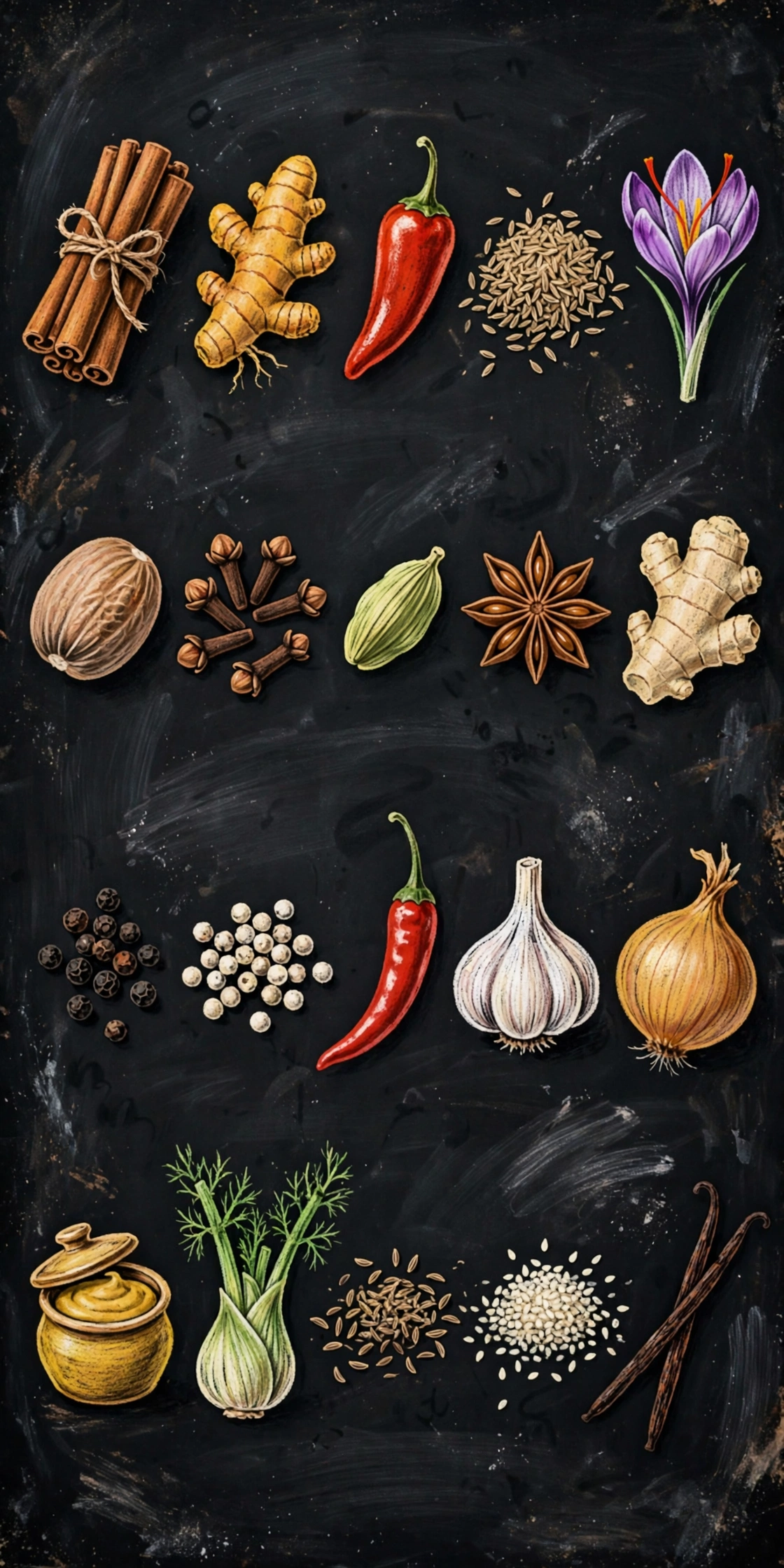
Les épices means spices. In this lesson, you’ll discover twenty useful French words for the spices that fill a French kitchen drawer, from golden turmeric to precious saffron.
Learning vocabulary is easier when you see words used in real situations. So instead of memorizing a list, let’s follow a cook as she restocks her spice drawer, visits a spice shop and an épicerie, and prepares a family meal.
Our Story: Le Tiroir aux Épices
Imagine that it is Sunday morning. Your French friend Sophie is preparing a big family lunch, but first she needs to check her kitchen.
Read the story in French first. The English translation follows each passage to help you understand.
Le Dimanche de Sophie
Le dimanche matin, Sophie ouvre le tiroir aux épices de sa cuisine. Catastrophe : les petits pots sont presque vides ! Aujourd’hui, elle prépare un grand déjeuner de famille, et il lui faut des épices fraîches.
On Sunday morning, Sophie opens the spice drawer in her kitchen. Disaster: the little jars are almost empty! Today, she is preparing a big family lunch, and she needs fresh spices.
D’abord, la boutique d’épices. Sophie achète de la cannelle pour le dessert, du curcuma pour colorer le riz, du paprika doux et un sachet de cumin pour le plat principal.
First, the spice shop. Sophie buys cinnamon for the dessert, turmeric to colour the rice, sweet paprika, and a packet of cumin for the main dish.
Le marchand lui montre un trésor : un minuscule pot de safran, l’épice la plus chère du monde. Sophie choisit aussi une noix de muscade à râper et un clou de girofle pour parfumer la sauce.
The shopkeeper shows her a treasure: a tiny jar of saffron, the most expensive spice in the world. Sophie also chooses a nutmeg to grate and a clove to flavour the sauce.
Pour le thé de l’après-midi, elle prend de la cardamome et un bel anis étoilé. Elle ajoute du gingembre frais pour le plat de légumes.
For the afternoon tea, she takes some cardamom and a beautiful star anise. She adds fresh ginger for the vegetable dish.
Côté poivres, Sophie hésite : du poivre noir pour la viande, du poivre blanc pour la sauce blanche. Et une toute petite pincée de piment de Cayenne, parce qu’il est très, très fort !
As for peppers, Sophie hesitates: black pepper for the meat, white pepper for the white sauce. And one very small pinch of cayenne pepper, because it is very, very hot!
À l’épicerie du coin, Sophie complète sa liste : de l’ail en poudre et de l’oignon en poudre pour les jours pressés, un pot de moutarde de Dijon, des graines de fenouil et des graines de carvi pour le pain maison.
At the corner grocery shop, Sophie completes her list: garlic powder and onion powder for busy days, a jar of Dijon mustard, fennel seeds, and caraway seeds for the homemade bread.
Pour finir, des graines de sésame pour la salade et une belle gousse de vanille pour la crème dessert. La liste est complète !
To finish, sesame seeds for the salad and a beautiful vanilla pod for the dessert cream. The list is complete!
De retour à la maison, Sophie cuisine avec sa fille : le riz devient doré avec le curcuma et le safran, la sauce parfume toute la cuisine, et le dessert à la vanille et à la cannelle attend au frais.
Back home, Sophie cooks with her daughter: the rice turns golden with the turmeric and the saffron, the sauce fills the whole kitchen with its aroma, and the vanilla and cinnamon dessert waits in the fridge.
Le tiroir aux épices est plein à nouveau, et la maison sent merveilleusement bon. Toute la famille arrive. Ce déjeuner va être délicieux !
The spice drawer is full again, and the house smells wonderful. The whole family is arriving. This lunch is going to be delicious!
The Vocabulary: 20 French Words for Spices
Now let’s look at the twenty important words from our story. Try saying each French word aloud before looking at its English meaning.
| French | English |
|---|---|
| 1. La cannelle | The cinnamon |
| 2. Le curcuma | The turmeric |
| 3. Le paprika | The paprika |
| 4. Le cumin | The cumin |
| 5. Le safran | The saffron |
| 6. La muscade | The nutmeg |
| 7. Le clou de girofle | The clove |
| 8. La cardamome | The cardamom |
| 9. L’anis étoilé | The star anise |
| 10. Le gingembre | The ginger |
| 11. Le poivre noir | The black pepper |
| 12. Le poivre blanc | The white pepper |
| 13. Le piment de Cayenne | The cayenne pepper |
| 14. L’ail en poudre | The garlic powder |
| 15. L’oignon en poudre | The onion powder |
| 16. La moutarde | The mustard |
| 17. Le fenouil | The fennel |
| 18. Le carvi | The caraway |
| 19. Le sésame | The sesame |
| 20. La vanille | The vanilla |
A small but useful language tip:
In French shops, nutmeg is usually sold whole, as une noix de muscade — a small, hard brown nut that you grate fresh over your dish with a tiny grater. Freshly grated nutmeg smells far stronger than the ready-ground powder in a jar, and a single nut lasts for months in the spice drawer.
French in Everyday Life: Useful Expressions
Knowing the names of spices is a good beginning. But how do you use these words when you shop and cook?
Here are some simple expressions you might hear or use in a French kitchen.
Example 1 — At the spice shop
Je voudrais un petit pot de safran, s’il vous plaît.
I would like a small jar of saffron, please.
Example 2 — Seasoning a dish
Ajoute une cuillère de cumin dans la soupe.
Add a spoonful of cumin to the soup.
Example 3 — A warning
Attention, le piment de Cayenne est très fort !
Careful, the cayenne pepper is very hot!
Example 4 — At the table
Tu peux me passer la moutarde ?
Can you pass me the mustard?
Example 5 — Tasting
Ce plat manque de poivre noir.
This dish needs more black pepper.
Example 6 — Dessert time
Une pincée de cannelle dans le café, c’est délicieux.
A pinch of cinnamon in coffee is delicious.
A Little French Grammar: Du, De La, Des — Talking About Spices
When you talk about ingredients in French, you rarely use le or la alone. Instead, French uses the partitive articles du, de la and des to mean “some”.
- Du is used with masculine nouns: du cumin, du paprika, du curcuma.
- De la is used with feminine nouns: de la cannelle, de la moutarde, de la vanille.
- De l’ is used before a vowel sound: de l’anis étoilé, de l’ail en poudre, de l’oignon en poudre.
- Des is used with plurals: des graines de sésame, des clous de girofle.
After a quantity, French uses de on its own: une cuillère de cumin (a spoonful of cumin), une pincée de piment de Cayenne (a pinch of cayenne pepper), une gousse de vanille (a vanilla pod), un pot de moutarde (a jar of mustard).
So in the kitchen, listen for du, de la and de — they are the little words that hold French recipes together.
Test Your Knowledge: French Spices
Let’s see how much you remember. Try each question before opening the answer.
Quick Quiz 1
Which French word means “the saffron”?
Reveal the answer
Le safran
Quick Quiz 2
Complete the sentence:
Elle met une pincée de ______ dans le café.
Reveal the answer
cannelle
Elle met une pincée de cannelle dans le café.
She puts a pinch of cinnamon in the coffee.
Quick Quiz 3
How do you say “the ginger” in French?
Reveal the answer
Le gingembre
Quick Quiz 4
Which word means “the mustard”?
Reveal the answer
La moutarde
Quick Quiz 5
Complete the sentence:
Il ajoute du ______ dans le riz pour le colorer.
Reveal the answer
curcuma
Il ajoute du curcuma dans le riz pour le colorer.
He adds turmeric to the rice to colour it.
Can You Translate These French Sentences?
Now let’s reverse the exercise. Read each French sentence and try to translate it into English.
Question 1
Le safran est très cher.
What does this mean?
Reveal the answer
Saffron is very expensive.
Question 2
La cannelle sent délicieusement bon.
What does this mean?
Reveal the answer
Cinnamon smells delicious.
Question 3
Je mets du cumin dans le plat.
What does this mean?
Reveal the answer
I put cumin in the dish.
Question 4
La vanille est douce et parfumée.
What does this mean?
Reveal the answer
Vanilla is sweet and fragrant.
Question 5
Le gingembre est frais.
What does this mean?
Reveal the answer
The ginger is fresh.
Discover a Little French Spice Culture
In France, spices have a long and proud history. French ports once traded saffron, vanilla and pepper from across the world, and the traditional épicerie fine — the fine grocery shop — still sells spices by weight from big glass jars, just as it did a century ago.
French cooks also love their classic blends. The famous quatre-épices mixes pepper, nutmeg, cloves and cinnamon or ginger, and it perfumes pâtés, stews and winter dishes all over the country.
And here’s a useful expression:
En décembre, nous préparons un pain d’épices pour Noël.
In December, we make a spice bread for Christmas.
The pain d’épices — a honeyed spice bread with cinnamon, star anise and ginger — is one of France’s oldest festive treats, and a delicious reason to keep your spice drawer well stocked.
How to Remember Your New French Words
The easiest way to remember vocabulary is to connect each word to something familiar.
Try this little exercise in your own kitchen:
- When you open the spice drawer, say la cannelle and le cumin.
- When you make tea, think le gingembre and l’anis étoilé.
- When you cook rice, think le curcuma and le safran.
- When you season a sauce, think le poivre noir and le poivre blanc.
- When you bake bread, think le fenouil and le carvi.
- When you prepare dessert, think la vanille and la muscade.
A few minutes of practice each day can make these words part of your everyday French vocabulary.
Your Final Challenge
Can You Season a Family Meal in French?
Imagine that it is Sunday and you are cooking lunch for your whole family.
Can you describe the meal you will prepare, and name at least eight spices you will use?
Here is a little example to get you started:
Dimanche, je prépare un riz doré avec du curcuma et une pincée de safran. Je mets du cumin et du paprika dans le plat principal, et pour le dessert, une crème à la vanille avec un peu de cannelle.
On Sunday, I am preparing golden rice with turmeric and a pinch of saffron. I put cumin and paprika in the main dish, and for dessert, a vanilla cream with a little cinnamon.
Now it’s your turn!
Try writing a few sentences about your family meal in French. Don’t worry about making mistakes. Every new sentence is another step toward speaking French.
Today’s Lesson: Les Épices — Spices
20 new words. A little story. A little French culture.
Learn French one lesson at a time!