A French Word to Live By
How to Conjugate Calfater in French
/kal.fa.te/
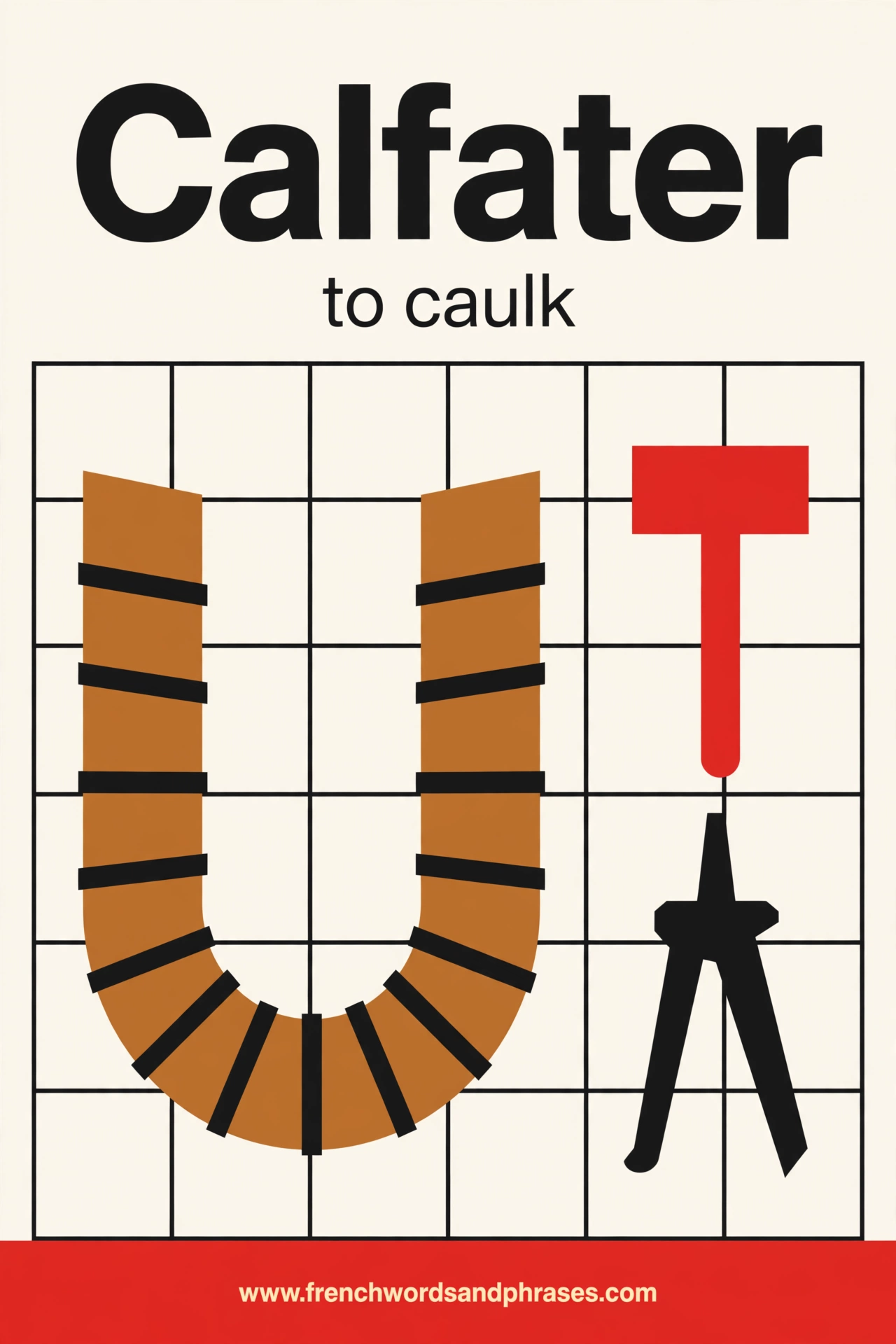
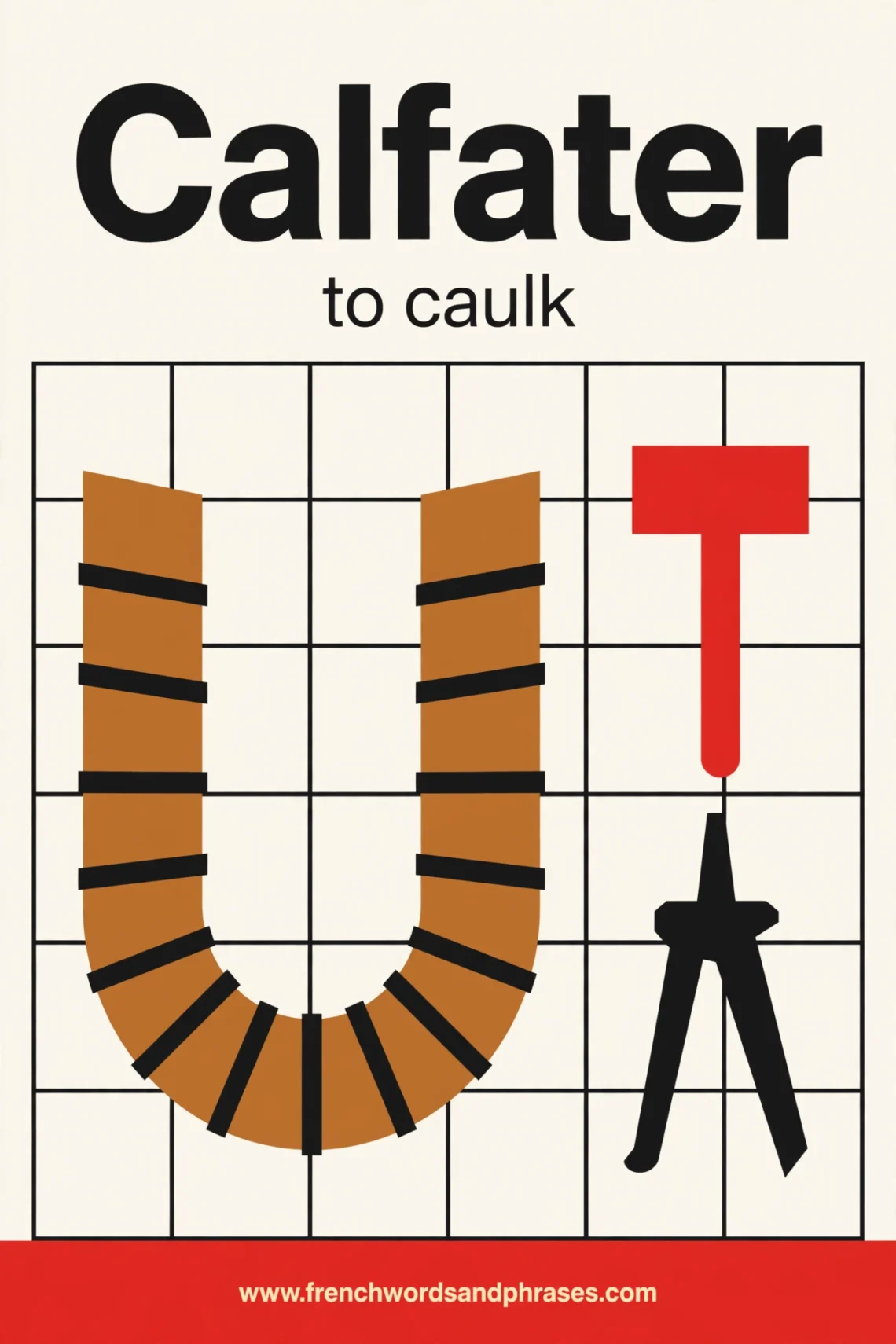
Calfater means to caulk — to fill the seams of a wooden boat, or the gaps around a window, so that neither water nor wind can get through.
Tarred oakum hammered into the seams of a hull, a bead of sealant smoothed around a window frame before winter — calfater is the verb of the watertight joint: patient, tarry work that keeps the sea and the cold outside.
In this guide, you’ll learn how to conjugate calfater in all the major French tenses and moods. Explore complete conjugation tables, French examples, English translations, and practice quizzes.
Understanding the French Verb Calfater
Calfater is a regular French verb belonging to the first group of verbs, those ending in-er.
It means to caulk. It is used first of boats: calfater la coque, calfater le pont, calfater les joints. By extension it covers any thorough sealing of gaps — window frames, doors, barrels — with the same idea of a joint made permanently tight.
Verb classification: First group (-er)
Auxiliary verb: Avoir
Past participle: calfaté
Present participle: calfatant
English equivalents: To caulk; calfater un bateau — to caulk a boat; calfater les joints — to caulk the seams; calfater une fenêtre — to seal a window against draughts; une coque bien calfatée — a well-caulked hull.
One important detail: calfater is the shipwright’s verb — le calfat is the caulker, and his trade, le calfatage, kept every wooden navy afloat: oakum (étoupe) driven into the seams and paid with hot tar. The verb is a perfectly regular -er: je calfate, nous calfatons, ils calfatent, past participle calfaté. Ashore, the same word serves for sealing windows and doors against the winter wind — anywhere a gap must be filled for good.
Experience the Word
Calfater is the verb of the tight seam — slow hammer taps today are what keep the water out all winter.
Imagine a Breton shipyard in October. The old calfat works his way along the hull, seam by seam, driving tarred oakum home with his mallet — il calfate la coque — while the gulls complain overhead. By spring, that boat will ride dry through any sea the Atlantic sends her.
A thousand small gaps, each filled by hand. The hull is calfatée — and the sea can knock as hard as it likes.
How to Conjugate Calfater: Complete French Conjugation Guide
Let’s explore every major conjugation of calfater, beginning with the indicative mood.
How to Conjugate Calfater in the Indicative Mood
The indicative mood is used to express facts, observations, actions, and events.
How to Conjugate Calfater in the Present Tense (Présent)
Used for actions happening now, habitual actions, and general truths.
| Subject | Conjugation |
|---|---|
| je | calfate |
| tu | calfates |
| il / elle | calfate |
| nous | calfatons |
| vous | calfatez |
| ils / elles | calfatent |
Example
Le charpentier calfate les joints de la coque avec de l’étoupe goudronnée.
The shipwright caulks the seams of the hull with tarred oakum.
Quick Quiz 1
Complete the sentence:
Nous ______ la coque avant la mise à l’eau.
Reveal the answer
calfatons
Nous calfatons la coque avant la mise à l’eau.
We are caulking the hull before the launch.
How to Conjugate Calfater in the Passé Composé
Used for completed actions in the past. Calfater takes the auxiliary verb avoir.
| Subject | Conjugation |
|---|---|
| j’ | ai calfaté |
| tu | as calfaté |
| il / elle | a calfaté |
| nous | avons calfaté |
| vous | avez calfaté |
| ils / elles | ont calfaté |
Example
Ils ont calfaté tout le pont avant la mise à l’eau.
They caulked the whole deck before the launch.
How to Conjugate Calfater in the Imparfait (Imperfect Tense)
Used for habitual past actions, descriptions, and ongoing situations in the past.
| Subject | Conjugation |
|---|---|
| je | calfatais |
| tu | calfatais |
| il / elle | calfatait |
| nous | calfations |
| vous | calfatiez |
| ils / elles | calfataient |
Example
Autrefois, les calfats calfataient les navires dans tous les ports.
In the old days, caulkers used to caulk ships in every port.
Quick Quiz 2
Choose the correct form:
They caulked the whole deck.
Ils ______ tout le pont. (ont calfaté / sont calfaté)
Reveal the answer
ont calfaté
Ils ont calfaté tout le pont.
Calfater takes avoir.
How to Conjugate Calfater in the Plus-que-parfait
Used to describe an action that had already been completed before another past event.
| Subject | Conjugation |
|---|---|
| j’ | avais calfaté |
| tu | avais calfaté |
| il / elle | avait calfaté |
| nous | avions calfaté |
| vous | aviez calfaté |
| ils / elles | avaient calfaté |
Example
Le calfat avait calfaté la coque avant l’arrivée de l’hiver.
The caulker had caulked the hull before winter came.
How to Conjugate Calfater in the Passé Simple
Primarily used in formal writing, literature, and historical narratives. It is rarely used in everyday conversation.
| Subject | Conjugation |
|---|---|
| je | calfatai |
| tu | calfatas |
| il / elle | calfata |
| nous | calfatâmes |
| vous | calfatâtes |
| ils / elles | calfatèrent |
Example
L’équipage calfata les voies d’eau pendant la tempête.
The crew caulked the leaks during the storm.
How to Conjugate Calfater in the Passé Antérieur
A literary tense used to express an action completed immediately before another past action, generally in the passé simple.
| Subject | Conjugation |
|---|---|
| j’ | eus calfaté |
| tu | eus calfaté |
| il / elle | eut calfaté |
| nous | eûmes calfaté |
| vous | eûtes calfaté |
| ils / elles | eurent calfaté |
Example
Quand il eut calfaté la dernière jointure, le bateau fut lancé.
When he had caulked the last seam, the boat was launched.
How to Conjugate Calfater in the Future Tense (Futur Simple)
Used to describe actions that will take place in the future.
| Subject | Conjugation |
|---|---|
| je | calfaterai |
| tu | calfateras |
| il / elle | calfatera |
| nous | calfaterons |
| vous | calfaterez |
| ils / elles | calfateront |
Example
Demain, nous calfaterons les fenêtres de la maison.
Tomorrow, we will seal the house windows.
How to Conjugate Calfater in the Futur Antérieur (Future Perfect)
Used for an action that will have been completed before a particular point in the future.
| Subject | Conjugation |
|---|---|
| j’ | aurai calfaté |
| tu | auras calfaté |
| il / elle | aura calfaté |
| nous | aurons calfaté |
| vous | aurez calfaté |
| ils / elles | auront calfaté |
Example
À la fin de la semaine, il aura calfaté toute la coque.
By the end of the week, he will have caulked the whole hull.
How to Conjugate Calfater in the Near Future (Futur Proche)
Used to describe something that is going to happen soon. Formed with aller + infinitive.
| Subject | Conjugation |
|---|---|
| je | vais calfater |
| tu | vas calfater |
| il / elle | va calfater |
| nous | allons calfater |
| vous | allez calfater |
| ils / elles | vont calfater |
Example
Le calfat va calfater le pont cet après-midi.
The caulker is going to caulk the deck this afternoon.
How to Conjugate Calfater in the Conditional Mood
The conditional mood expresses what would happen under certain circumstances. It is also frequently used to make polite requests or express wishes.
How to Conjugate Calfater in the Present Conditional
| Subject | Conjugation |
|---|---|
| je | calfaterais |
| tu | calfaterais |
| il / elle | calfaterait |
| nous | calfaterions |
| vous | calfateriez |
| ils / elles | calfateraient |
Example
Avec de meilleure étoupe, on calfaterait plus vite.
With better oakum, we would caulk faster.
How to Conjugate Calfater in the Past Conditional
| Subject | Conjugation |
|---|---|
| j’ | aurais calfaté |
| tu | aurais calfaté |
| il / elle | aurait calfaté |
| nous | aurions calfaté |
| vous | auriez calfaté |
| ils / elles | auraient calfaté |
Example
Il aurait calfaté la fenêtre si le vent n’avait pas tourné.
He would have sealed the window if the wind had not turned.
Calfater in the Literary Past Conditional Form
This less common literary form uses the imperfect subjunctive of avoir.
| Subject | Conjugation |
|---|---|
| j’ | eusse calfaté |
| tu | eusses calfaté |
| il / elle | eût calfaté |
| nous | eussions calfaté |
| vous | eussiez calfaté |
| ils / elles | eussent calfaté |
Example
Le calfat eût calfaté la coque avant la marée.
The caulker would have caulked the hull before the tide.
How to Conjugate Calfater in the Subjunctive Mood
The subjunctive is used to express wishes, emotions, doubts, necessity, and uncertainty. It frequently follows expressions such as il faut que (it is necessary that) or bien que (although).
How to Conjugate Calfater in the Present Subjunctive
| Subject | Conjugation |
|---|---|
| que je | calfate |
| que tu | calfates |
| qu’il / qu’elle | calfate |
| que nous | calfations |
| que vous | calfatiez |
| qu’ils / qu’elles | calfatent |
Example
Il faut que le calfat calfate chaque joint avant le départ.
The caulker must caulk every seam before departure.
Quick Quiz 3
Complete the sentence using the subjunctive:
Je voulais qu’il ______ les fenêtres avant l’hiver.
Reveal the answer
calfatât
Je voulais qu’il calfatât les fenêtres avant l’hiver.
I wanted him to seal the windows before winter.
How to Conjugate Calfater in the Imperfect Subjunctive
A literary tense, rarely encountered in modern spoken French.
| Subject | Conjugation |
|---|---|
| que je | calfatasse |
| que tu | calfatasses |
| qu’il / qu’elle | calfatât |
| que nous | calfatassions |
| que vous | calfatassiez |
| qu’ils / qu’elles | calfatassent |
Example
Je voulais qu’il calfatât les fenêtres avant l’hiver.
I wanted him to seal the windows before winter.
How to Conjugate Calfater in the Pluperfect Subjunctive
A literary construction used to express an action completed before another past action.
| Subject | Conjugation |
|---|---|
| que j’ | eusse calfaté |
| que tu | eusses calfaté |
| qu’il / qu’elle | eût calfaté |
| que nous | eussions calfaté |
| que vous | eussiez calfaté |
| qu’ils / qu’elles | eussent calfaté |
Example
On admirait qu’il eût calfaté la coque en trois jours.
People admired that he had caulked the hull in three days.
How to Conjugate Calfater in the Past Subjunctive
| Subject | Conjugation |
|---|---|
| que j’ | aie calfaté |
| que tu | aies calfaté |
| qu’il / qu’elle | ait calfaté |
| que nous | ayons calfaté |
| que vous | ayez calfaté |
| qu’ils / qu’elles | aient calfaté |
Example
Je suis content que vous ayez calfaté le pont à temps.
I am glad you caulked the deck in time.
How to Conjugate Calfater in the Imperative
The imperative is used to give commands, instructions, invitations, or suggestions. Subject pronouns are omitted.
How to Conjugate Calfater in the Present Imperative
| Person | Conjugation |
|---|---|
| (tu) | calfate |
| (nous) | calfatons |
| (vous) | calfatez |
Example
Calfate bien les joints, la mer sera dure cette nuit !
Caulk the seams well, the sea will be rough tonight!
Quick Quiz 4
How would you say Caulk the seams well (tu form)?
Reveal the answer
Calfate bien les joints !
French Participles of Calfater
Participles are verb forms that can be used in compound tenses and other grammatical constructions.
Present Participle of Calfater
calfatant
En calfatant la coque, il chantait de vieilles chansons de marins.
While caulking the hull, he sang old sailors’ songs.
Past Participle of Calfater
calfaté
Calfatée avec soin, la coque ne laissait plus passer une goutte.
Carefully caulked, the hull no longer let a single drop through.
Calfater in Everyday French: Real-Life Examples
Now that you know the conjugations, let’s see how calfater appears in everyday French.
Example 1 — Present
Le charpentier calfate les joints de la coque.
The shipwright caulks the seams of the hull.
Example 2 — Passé composé
Ils ont calfaté tout le pont.
They caulked the whole deck.
Example 3 — Imparfait
Les calfats calfataient les navires autrefois.
Caulkers used to caulk ships in the old days.
Example 4 — Future
Nous calfaterons les fenêtres demain.
We will seal the windows tomorrow.
Example 5 — Conditional
On calfaterait plus vite avec de meilleure étoupe.
We would caulk faster with better oakum.
Example 6 — Imperative
Calfate bien les joints !
Caulk the seams well!
Beyond Translation: The Meaning of Calfater
English caulk and French calfater do the same job, but French keeps the tradesman in the word: le calfat, the caulker, was once a port’s most essential craftsman.
A wooden ship is only as good as its calfatage.
Hammer, oakum and tar — calfater is the patient craft that turns a bundle of planks into a vessel, and the same patience, moved ashore, keeps the winter wind out of your windows.
How to Remember the French Verb Calfater
Remember it this way: Calfater is about the Breton shipwright hammering tarred oakum into the hull, seam by seam.
- Le calfat is the caulker: calfater is his work — étoupe and tar in every seam of the hull.
- One idea on sea and land: fill the gap so nothing gets through — calfater un bateau, calfater une fenêtre.
- Regular -er: je calfate, nous calfatons, past participle calfaté.
The key idea is the Breton shipwright hammering tarred oakum into the hull, seam by seam.
Test Your Knowledge of Calfater
Let’s see how much you’ve learned. Try answering these questions before revealing the answers.
Question 1
What materials does the traditional calfat use?
Reveal the answer
Étoupe (oakum) and tar — driven into the seams of the hull with a mallet.
Question 2
How do you say They caulked the whole deck before the launch in French?
Reveal the answer
Ils ont calfaté tout le pont avant la mise à l’eau.
Question 3
Translate: The caulker must caulk every seam before departure.
Reveal the answer
Il faut que le calfat calfate chaque joint avant le départ.
Question 4
What is the past participle of calfater?
Reveal the answer
Calfaté.
Question 5
Complete the sentence:
Demain, nous ______ les fenêtres de la maison.
Reveal the answer
calfaterons
Demain, nous calfaterons les fenêtres de la maison.
Tomorrow, we will seal the house windows.
Your Final Challenge
Can You Use It?
How would you say this in French?
The caulker caulks the hull seam by seam, and the boat will sleep dry all winter.
Reveal the answer
Le calfat calfate la coque joint par joint, et le bateau dormira au sec tout l’hiver.
The caulker caulks the hull seam by seam, and the boat will sleep dry all winter.
A little French. A little curiosity. A richer everyday life.
LEARN FRENCH ONE WORD AT A TIME