A French Word to Live By
How to Conjugate Se enivrer in French
/sə ɑ̃.ni.vʁe/
Se enivrer means to get drunk on — to drink until the head spins, or, with de, to intoxicate yourself on something heady: wine, perfume, music, success.
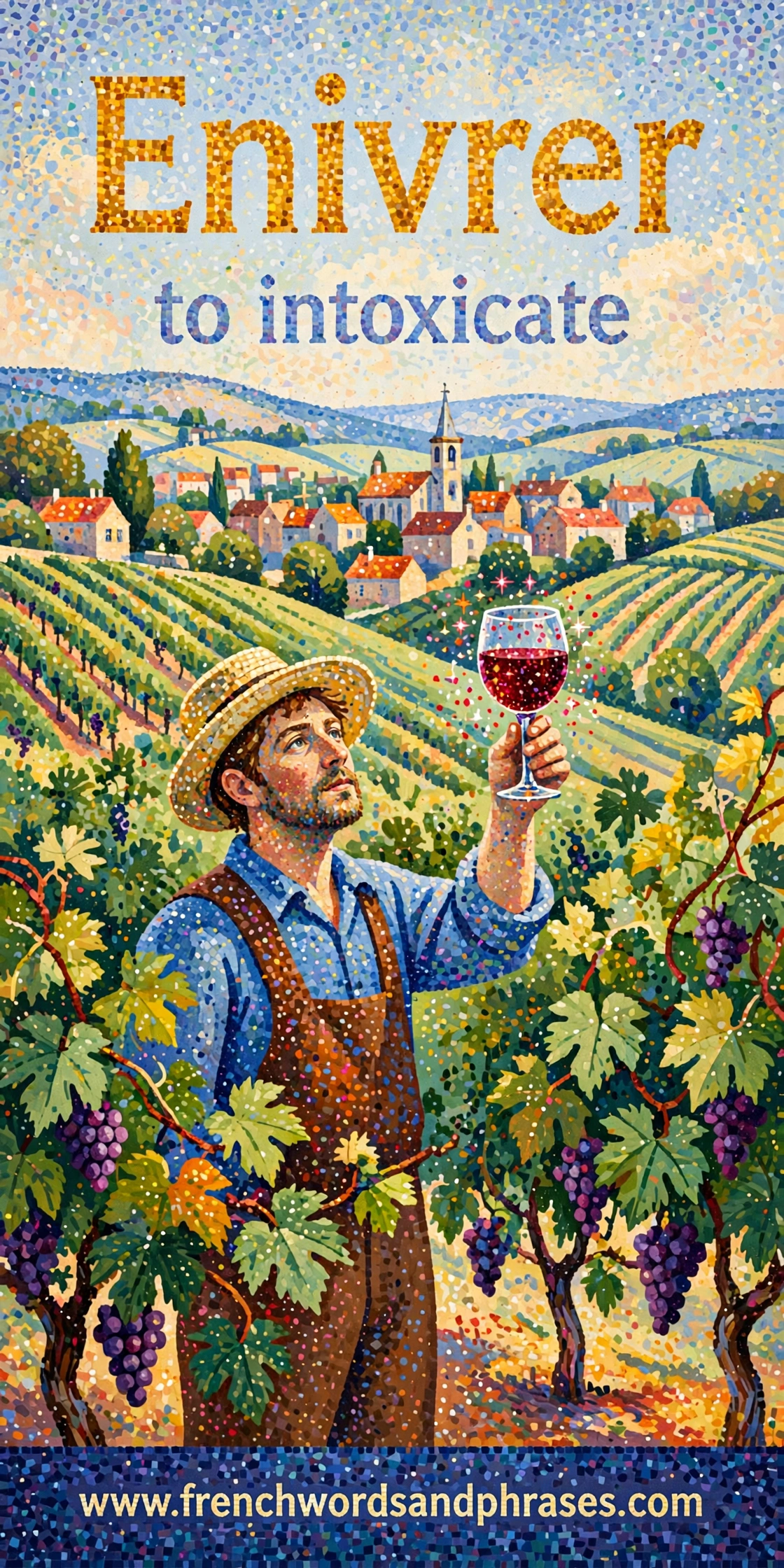
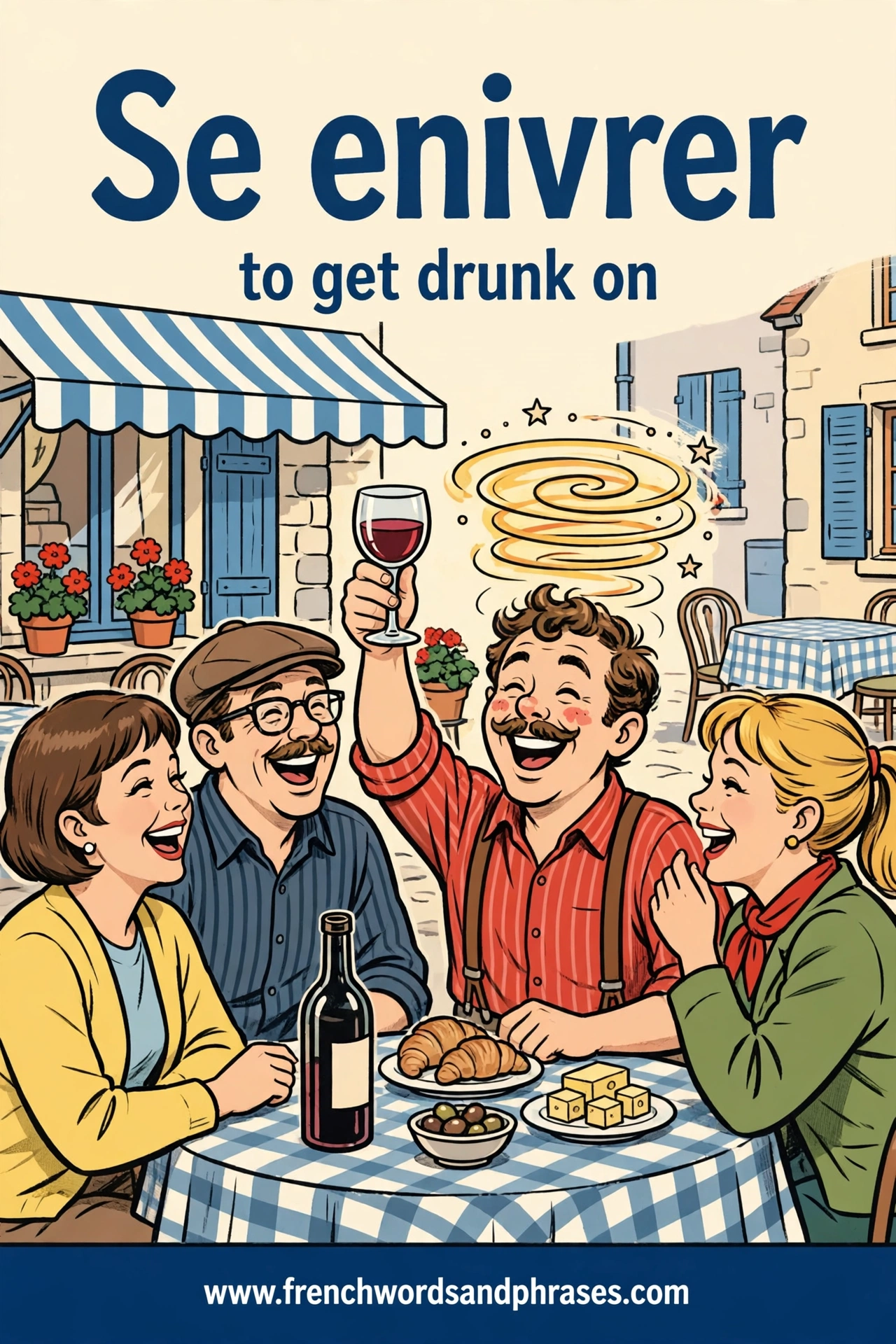
Harvesters at the end of the vendanges, glasses rising as the last cart comes in — and, in a concert hall, a crowd swaying, drunk on nothing but music. Se enivrer covers both: getting drunk, bottle in hand, and letting anything heady — always with de — take you over.
In this guide, you’ll learn how to conjugate se enivrer in all the major French tenses and moods. Explore complete conjugation tables, French examples, English translations, and practice quizzes.
Understanding the French Verb Se enivrer
Se enivrer is a regular French verb belonging to the first group of verbs, those ending in-er.
It means to get drunk on. With alcohol, s’enivrer is the honest, slightly literary way to say to get drunk — stronger than boire un verre de trop, less blunt than se saouler (fam.). With de + an abstract noun it becomes pure poetry: poets s’enivrent de lumière, lovers de regards, crowds de musique. The construction s’enivrer de is the heart of the verb — never drop the de.
Verb classification: First group (-er), reflexive
Auxiliary verb: Être
Past participle: enivré
Present participle: enivrant
English equivalents: To get drunk, to get drunk on, to become intoxicated with; s’enivrer de vin — to get drunk on wine; s’enivrer de parfum — to intoxicate oneself with perfume; s’enivrer de musique — to get drunk on music; s’enivrer de succès — to get drunk on success; s’enivrer de paroles — to get drunk on words.
One important detail: se enivrer is governed by the preposition de — you always get drunk de something: s’enivrer de vin, s’enivrer de musique, s’enivrer de succès. Being reflexive, it takes être in every compound tense and the past participle agrees with the subject: elle s’est enivrée de parfum, ils se sont enivrés de vin. The conjugation is the plain regular -er of enivrer: je m’enivre, nous nous enivrons, ils s’enivrent. The tu imperative tucks the pronoun behind the verb: enivre-toi !
Experience the Word
Se enivrer is drunkenness you choose — and with de, almost anything can be the bottle.
Imagine the last night of a village music festival. Nobody in the square is holding more than lemonade, yet the whole crowd sways, sings and laughs too loudly: ils s’enivrent de musique. The accordions play faster, the stars seem closer, and the mayor, watching from the steps, smiles — this is the kind of drunkenness he approves of.
No wine was needed. They got drunk on music — ils se sont enivrés de musique.
How to Conjugate Se enivrer: Complete French Conjugation Guide
Let’s explore every major conjugation of se enivrer, beginning with the indicative mood.
How to Conjugate Se enivrer in the Indicative Mood
The indicative mood is used to express facts, observations, actions, and events.
How to Conjugate Se enivrer in the Present Tense (Présent)
Used for actions happening now, habitual actions, and general truths.
| Subject | Conjugation |
|---|---|
| je | m’enivre |
| tu | t’enivres |
| il / elle | s’enivre |
| nous | nous enivrons |
| vous | vous enivrez |
| ils / elles | s’enivrent |
Example
Les vendangeurs s’enivrent de vin nouveau après la récolte.
The grape-pickers get drunk on new wine after the harvest.
Quick Quiz 1
Complete the sentence:
Nous nous ______ de parfum dans ce jardin.
Reveal the answer
enivrons
Nous nous enivrons de parfum dans ce jardin.
We intoxicate ourselves with perfume in this garden.
How to Conjugate Se enivrer in the Passé Composé
Used for completed actions in the past. Se enivrer takes the auxiliary verb être.
| Subject | Conjugation |
|---|---|
| je | me suis enivré / me suis enivrée |
| tu | t’es enivré / t’es enivrée |
| il / elle | s’est enivré / s’est enivrée |
| nous | nous sommes enivrés / nous sommes enivrées |
| vous | vous êtes enivrés / vous êtes enivrées / vous êtes enivré / vous êtes enivrée |
| ils / elles | se sont enivrés / se sont enivrées |
Example
Elle s’est enivrée de parfum et de musique toute la soirée.
She intoxicated herself with perfume and music all evening.
How to Conjugate Se enivrer in the Imparfait (Imperfect Tense)
Used for habitual past actions, descriptions, and ongoing situations in the past.
| Subject | Conjugation |
|---|---|
| je | m’enivrais |
| tu | t’enivrais |
| il / elle | s’enivrait |
| nous | nous enivrions |
| vous | vous enivriez |
| ils / elles | s’enivraient |
Example
Il s’enivrait de poésie au lieu de travailler.
He used to get drunk on poetry instead of working.
Quick Quiz 2
Choose the correct form:
She got drunk on success.
Elle ______ de succès. (s’est enivrée / a enivré)
Reveal the answer
s’est enivrée
Elle s’est enivrée de succès.
Se enivrer is reflexive, takes être, and the participle agrees: enivrée.
How to Conjugate Se enivrer in the Plus-que-parfait
Used to describe an action that had already been completed before another past event.
| Subject | Conjugation |
|---|---|
| je | m’étais enivré / m’étais enivrée |
| tu | t’étais enivré / t’étais enivrée |
| il / elle | s’était enivré / s’était enivrée |
| nous | nous étions enivrés / nous étions enivrées |
| vous | vous étiez enivrés / vous étiez enivrées / vous étiez enivré / vous étiez enivrée |
| ils / elles | s’étaient enivrés / s’étaient enivrées |
Example
Ils s’étaient enivrés de succès après leur première tournée.
They had got drunk on success after their first tour.
How to Conjugate Se enivrer in the Passé Simple
Primarily used in formal writing, literature, and historical narratives. It is rarely used in everyday conversation.
| Subject | Conjugation |
|---|---|
| je | m’enivrai |
| tu | t’enivras |
| il / elle | s’enivra |
| nous | nous enivrâmes |
| vous | vous enivrâtes |
| ils / elles | s’enivrèrent |
Example
La foule s’enivra de chants et de vin sous les étoiles.
The crowd got drunk on songs and wine under the stars.
How to Conjugate Se enivrer in the Passé Antérieur
A literary tense used to express an action completed immediately before another past action, generally in the passé simple.
| Subject | Conjugation |
|---|---|
| je | me fus enivré / me fus enivrée |
| tu | te fus enivré / te fus enivrée |
| il / elle | se fut enivré / se fut enivrée |
| nous | nous fûmes enivrés / nous fûmes enivrées |
| vous | vous fûtes enivrés / vous fûtes enivrées / vous fûtes enivré / vous fûtes enivrée |
| ils / elles | se furent enivrés / se furent enivrées |
Example
Dès qu’il se fut enivré de louanges, il cessa d’écouter les conseils.
As soon as he had got drunk on praise, he stopped listening to advice.
How to Conjugate Se enivrer in the Future Tense (Futur Simple)
Used to describe actions that will take place in the future.
| Subject | Conjugation |
|---|---|
| je | m’enivrerai |
| tu | t’enivreras |
| il / elle | s’enivrera |
| nous | nous enivrerons |
| vous | vous enivrerez |
| ils / elles | s’enivreront |
Example
Ce soir, les marins s’enivreront de vin et de chansons.
Tonight, the sailors will get drunk on wine and songs.
How to Conjugate Se enivrer in the Futur Antérieur (Future Perfect)
Used for an action that will have been completed before a particular point in the future.
| Subject | Conjugation |
|---|---|
| je | me serai enivré / me serai enivrée |
| tu | te seras enivré / te seras enivrée |
| il / elle | se sera enivré / se sera enivrée |
| nous | nous serons enivrés / nous serons enivrées |
| vous | vous serez enivrés / vous serez enivrées / vous serez enivré / vous serez enivrée |
| ils / elles | se seront enivrés / se seront enivrées |
Example
À minuit, ils se seront enivrés de musique et de danse.
By midnight, they will have got drunk on music and dancing.
How to Conjugate Se enivrer in the Near Future (Futur Proche)
Used to describe something that is going to happen soon. Formed with aller + infinitive.
| Subject | Conjugation |
|---|---|
| je | vais m’enivrer |
| tu | vas t’enivrer |
| il / elle | va s’enivrer |
| nous | allons nous enivrer |
| vous | allez vous enivrer |
| ils / elles | vont s’enivrer |
Example
Regarde-les, ils vont s’enivrer de joie ce soir.
Look at them, they are going to get drunk on joy tonight.
How to Conjugate Se enivrer in the Conditional Mood
The conditional mood expresses what would happen under certain circumstances. It is also frequently used to make polite requests or express wishes.
How to Conjugate Se enivrer in the Present Conditional
| Subject | Conjugation |
|---|---|
| je | m’enivrerais |
| tu | t’enivrerais |
| il / elle | s’enivrerait |
| nous | nous enivrerions |
| vous | vous enivreriez |
| ils / elles | s’enivreraient |
Example
Sans musique, ils ne s’enivreraient pas de joie.
Without music, they would not get drunk on joy.
How to Conjugate Se enivrer in the Past Conditional
| Subject | Conjugation |
|---|---|
| je | me serais enivré / me serais enivrée |
| tu | te serais enivré / te serais enivrée |
| il / elle | se serait enivré / se serait enivrée |
| nous | nous serions enivrés / nous serions enivrées |
| vous | vous seriez enivrés / vous seriez enivrées / vous seriez enivré / vous seriez enivrée |
| ils / elles | se seraient enivrés / se seraient enivrées |
Example
Elle se serait enivrée de parfum sans la migraine.
She would have intoxicated herself with perfume, were it not for the migraine.
Se enivrer in the Literary Past Conditional Form
This less common literary form uses the imperfect subjunctive of être.
| Subject | Conjugation |
|---|---|
| je | me fusse enivré / me fusse enivrée |
| tu | te fusses enivré / te fusses enivrée |
| il / elle | se fût enivré / se fût enivrée |
| nous | nous fussions enivrés / nous fussions enivrées |
| vous | vous fussiez enivrés / vous fussiez enivrées / vous fussiez enivré / vous fussiez enivrée |
| ils / elles | se fussent enivrés / se fussent enivrées |
Example
Ils se fussent enivrés de gloire sans la défaite du lendemain.
They would have got drunk on glory without the next day’s defeat.
How to Conjugate Se enivrer in the Subjunctive Mood
The subjunctive is used to express wishes, emotions, doubts, necessity, and uncertainty. It frequently follows expressions such as il faut que (it is necessary that) or bien que (although).
How to Conjugate Se enivrer in the Present Subjunctive
| Subject | Conjugation |
|---|---|
| que je | m’enivre |
| que tu | t’enivres |
| qu’il / qu’elle | s’enivre |
| que nous | nous enivrions |
| que vous | vous enivriez |
| qu’ils / qu’elles | s’enivrent |
Example
Je veux que vous vous enivriez de musique ce soir.
I want you to get drunk on music tonight.
Quick Quiz 3
Complete the sentence using the subjunctive:
Je veux que vous vous ______ de musique.
Reveal the answer
enivriez
Je veux que vous vous enivriez de musique.
I want you to get drunk on music.
How to Conjugate Se enivrer in the Imperfect Subjunctive
A literary tense, rarely encountered in modern spoken French.
| Subject | Conjugation |
|---|---|
| que je | m’enivrasse |
| que tu | t’enivrasses |
| qu’il / qu’elle | s’enivrât |
| que nous | nous enivrassions |
| que vous | vous enivrassiez |
| qu’ils / qu’elles | s’enivrassent |
Example
Sa mère craignait qu’il ne s’enivrât de succès trop jeune.
His mother feared he might get drunk on success too young.
How to Conjugate Se enivrer in the Pluperfect Subjunctive
A literary construction used to express an action completed before another past action.
| Subject | Conjugation |
|---|---|
| que je | me fusse enivré / me fusse enivrée |
| que tu | te fusses enivré / te fusses enivrée |
| qu’il / qu’elle | se fût enivré / se fût enivrée |
| que nous | nous fussions enivrés / nous fussions enivrées |
| que vous | vous fussiez enivrés / vous fussiez enivrées / vous fussiez enivré / vous fussiez enivrée |
| qu’ils / qu’elles | se fussent enivrés / se fussent enivrées |
Example
On racontait qu’ils se fussent enivrés de vin la veille.
People said they had got drunk on wine the night before.
How to Conjugate Se enivrer in the Past Subjunctive
| Subject | Conjugation |
|---|---|
| que je | me sois enivré / me sois enivrée |
| que tu | te sois enivré / te sois enivrée |
| qu’il / qu’elle | se soit enivré / se soit enivrée |
| que nous | nous soyons enivrés / nous soyons enivrées |
| que vous | vous soyez enivrés / vous soyez enivrées / vous soyez enivré / vous soyez enivrée |
| qu’ils / qu’elles | se soient enivrés / se soient enivrées |
Example
Je suis heureux qu’elle se soit enivrée de parfum plutôt que de vin.
I am glad she got drunk on perfume rather than wine.
How to Conjugate Se enivrer in the Imperative
The imperative is used to give commands, instructions, invitations, or suggestions. Subject pronouns are omitted.
How to Conjugate Se enivrer in the Present Imperative
| Person | Conjugation |
|---|---|
| (tu) | enivre-toi |
| (nous) | enivrons-nous |
| (vous) | enivrez-vous |
Example
Enivre-toi de musique, pas de vin !
Get drunk on music, not on wine!
Quick Quiz 4
How would you say Get drunk on music (tu form)?
Reveal the answer
Enivre-toi de musique !
French Participles of Se enivrer
Participles are verb forms that can be used in compound tenses and other grammatical constructions.
Present Participle of Se enivrer
enivrant
En s’enivrant de lumière, le poète oublie l’heure.
By getting drunk on light, the poet forgets the time.
Past Participle of Se enivrer
enivré
Enivrée de joie, elle dansait sans voir personne.
Drunk with joy, she danced without seeing anyone.
Se enivrer in Everyday French: Real-Life Examples
Now that you know the conjugations, let’s see how se enivrer appears in everyday French.
Example 1 — Present
Les vendangeurs s’enivrent de vin nouveau.
The grape-pickers get drunk on new wine.
Example 2 — Passé composé
Elle s’est enivrée de parfum et de musique.
She got drunk on perfume and music.
Example 3 — Imparfait
Il s’enivrait de poésie.
He used to get drunk on poetry.
Example 4 — Future
Les marins s’enivreront de vin et de chansons.
The sailors will get drunk on wine and songs.
Example 5 — Conditional
Ils s’enivreraient de joie sans la fatigue.
They would get drunk on joy, were it not for tiredness.
Example 6 — Imperative
Enivre-toi de musique !
Get drunk on music!
Beyond Translation: The Meaning of Se enivrer
The family is old and honourable: ivre from Latin ebrius, with enivrer for causing the state and s’enivrer for choosing it.
The de is the poet’s licence.
Because the construction is s’enivrer de, anything can fill the bottle — wine for the harvesters, yes, but also lumière, parfum, musique, succès, paroles: French poetry has been getting drunk on all of them for centuries.
How to Remember the French Verb Se enivrer
Remember it this way: Se enivrer is about the crowd drunk on music under the stars.
- Always with de: s’enivrer de vin, de musique, de succès — the de names the bottle.
- Reflexive, être in compound tenses: elle s’est enivrée de parfum, participle agrees.
- Regular -er underneath: je m’enivre, nous nous enivrons.
The key idea is the crowd drunk on music under the stars.
Test Your Knowledge of Se enivrer
Let’s see how much you’ve learned. Try answering these questions before revealing the answers.
Question 1
Which preposition always follows s’enivrer, and why does it matter?
Reveal the answer
De — s’enivrer de vin, de musique, de succès: the de names what you get drunk on.
Question 2
How do you say The grape-pickers get drunk on new wine in French?
Reveal the answer
Les vendangeurs s’enivrent de vin nouveau.
Question 3
Translate: She got drunk on perfume and music.
Reveal the answer
Elle s’est enivrée de parfum et de musique.
Question 4
What is the past participle of se enivrer?
Reveal the answer
Enivré — agreeing: enivrée, enivrés, enivrées.
Question 5
Complete the sentence:
Je veux que vous vous ______ de musique.
Reveal the answer
enivriez
Je veux que vous vous enivriez de musique.
I want you to get drunk on music.
Your Final Challenge
Can You Use It?
How would you say this in French?
They got drunk on music under the stars, and nobody in the village will ever forget that night.
Reveal the answer
Ils se sont enivrés de musique sous les étoiles, et personne au village n’oubliera jamais cette nuit.
They got drunk on music under the stars, and nobody in the village will ever forget that night.
A little French. A little curiosity. A richer everyday life.
LEARN FRENCH ONE WORD AT A TIME