A French Word to Live By
How to Conjugate Se compter in French
/sə kɔ̃.te/
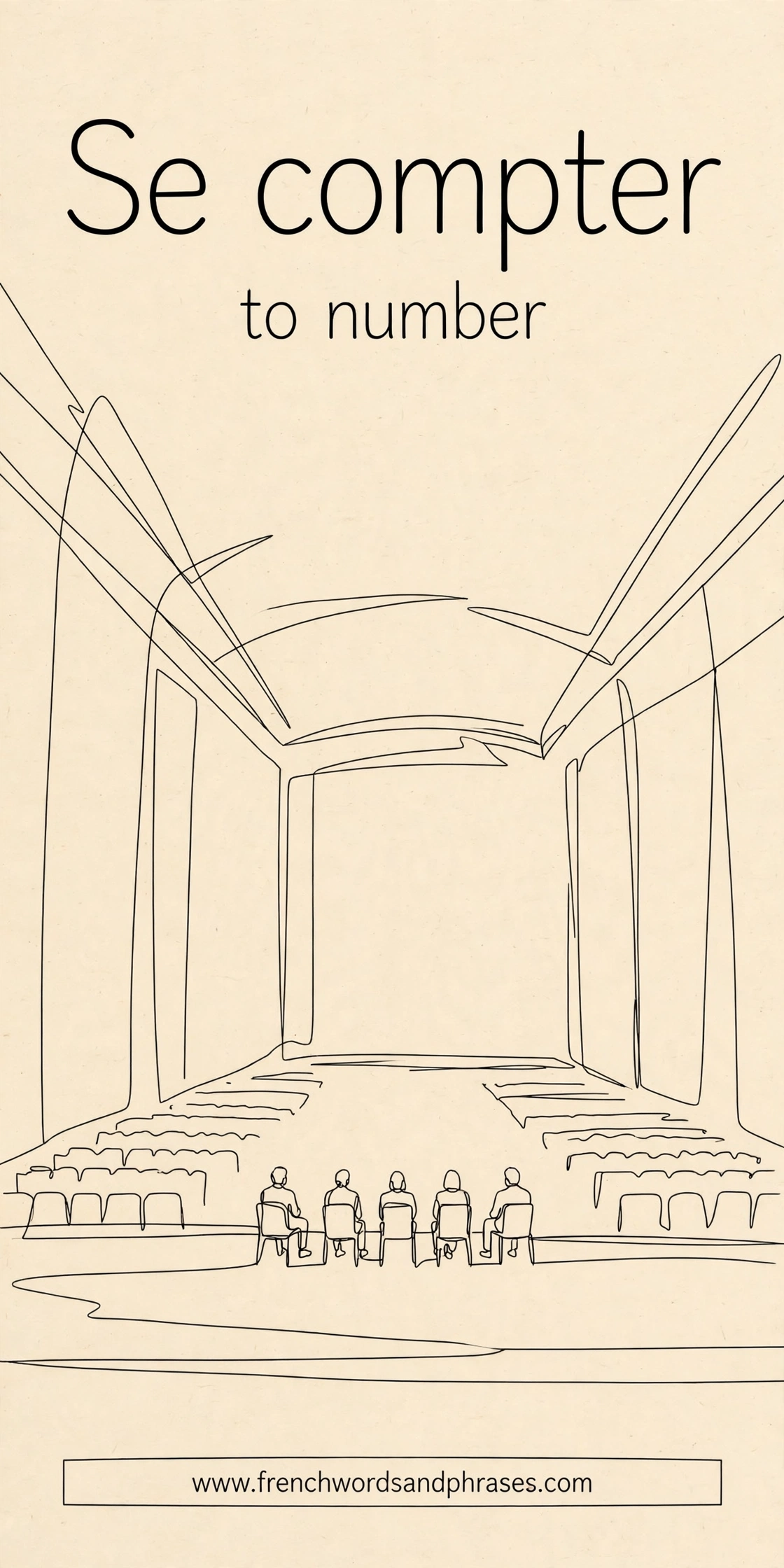
Se compter means to number, to be counted — to add up to a total, almost always with par and a large round number.
A stadium filling before a final, a square black with demonstrators, a handful of true friends — se compter is the verb of crowds and rarities alike: it says how many of something there are, counted in thousands or on the fingers of one hand.
In this guide, you’ll learn how to conjugate se compter in all the major French tenses and moods. Explore complete conjugation tables, French examples, English translations, and practice quizzes.
Understanding the French Verb Se compter
Se compter is a regular French verb belonging to the first group of verbs, those ending in-er.
It means to number. It is the natural French way to give the size of a crowd, a following or a collection without an exact figure — se compter par milliers suggests a multitude, while se compter sur les doigts d’une main suggests precious rarity. Journalists reach for it whenever a number is impressive but approximate.
Verb classification: First group (-er), reflexive
Auxiliary verb: Être
Past participle: compté
Present participle: comptant
English equivalents: To number, to be counted, to run to; les spectateurs se comptent par milliers — the spectators number in their thousands; les erreurs se comptent par dizaines — the mistakes run into dozens; se compter parmi les meilleurs — to count oneself among the best; ils se comptent sur les doigts d’une main — they can be counted on the fingers of one hand.
One important detail: se compter lives almost entirely in the third person and with a number after it — par dizaines, par centaines, par milliers: les manifestants se comptent par milliers. Being reflexive, it takes être in every compound tense and the participle agrees with the subject: les erreurs se sont comptées par dizaines. Its second home is the phrase se compter parmi — to count oneself among a group: elle se compte parmi les finalistes. The plain compter (to count) has its own page; this one is only the reflexive use.
Experience the Word
Se compter is the verb of the estimated crowd — too many to count one by one, or so few that one hand is enough.
Imagine the night of a World Cup final in a French city. The cafés overflow, the square fills, flags rise like a tide — les supporters se comptent par centaines de milliers across the country, and nobody will ever know the exact figure, because that is precisely what se compter par means.
No one has counted them one by one. They simply number — se comptent — in their hundreds of thousands.
How to Conjugate Se compter: Complete French Conjugation Guide
Let’s explore every major conjugation of se compter, beginning with the indicative mood.
How to Conjugate Se compter in the Indicative Mood
The indicative mood is used to express facts, observations, actions, and events.
How to Conjugate Se compter in the Present Tense (Présent)
Used for actions happening now, habitual actions, and general truths.
| Subject | Conjugation |
|---|---|
| je | me compte |
| tu | te comptes |
| il / elle | se compte |
| nous | nous comptons |
| vous | vous comptez |
| ils / elles | se comptent |
Example
Les spectateurs se comptent par milliers dans le stade.
The spectators number in their thousands in the stadium.
Quick Quiz 1
Complete the sentence:
Les manifestants se ______ par milliers.
Reveal the answer
comptent
Les manifestants se comptent par milliers.
The demonstrators number in their thousands.
How to Conjugate Se compter in the Passé Composé
Used for completed actions in the past. Se compter takes the auxiliary verb être.
| Subject | Conjugation |
|---|---|
| je | me suis compté / me suis comptée |
| tu | t’es compté / t’es comptée |
| il / elle | s’est compté / s’est comptée |
| nous | nous sommes comptés / nous sommes comptées |
| vous | vous êtes comptés / vous êtes comptées / vous êtes compté / vous êtes comptée |
| ils / elles | se sont comptés / se sont comptées |
Example
Les manifestants se sont comptés par dizaines de milliers.
The demonstrators numbered in their tens of thousands.
How to Conjugate Se compter in the Imparfait (Imperfect Tense)
Used for habitual past actions, descriptions, and ongoing situations in the past.
| Subject | Conjugation |
|---|---|
| je | me comptais |
| tu | te comptais |
| il / elle | se comptait |
| nous | nous comptions |
| vous | vous comptiez |
| ils / elles | se comptaient |
Example
Les habitants du village se comptaient par centaines autrefois.
The inhabitants of the village used to number in their hundreds.
Quick Quiz 2
Choose the correct form:
The spectators numbered in their thousands.
Les spectateurs ______ par milliers. (se sont comptés / ont compté)
Reveal the answer
se sont comptés
Les spectateurs se sont comptés par milliers.
Se compter is reflexive and takes être.
How to Conjugate Se compter in the Plus-que-parfait
Used to describe an action that had already been completed before another past event.
| Subject | Conjugation |
|---|---|
| je | m’étais compté / m’étais comptée |
| tu | t’étais compté / t’étais comptée |
| il / elle | s’était compté / s’était comptée |
| nous | nous étions comptés / nous étions comptées |
| vous | vous étiez comptés / vous étiez comptées / vous étiez compté / vous étiez comptée |
| ils / elles | s’étaient comptés / s’étaient comptées |
Example
Les erreurs s’étaient comptées par dizaines dans ce rapport bâclé.
The mistakes had run into dozens in that sloppy report.
How to Conjugate Se compter in the Passé Simple
Primarily used in formal writing, literature, and historical narratives. It is rarely used in everyday conversation.
| Subject | Conjugation |
|---|---|
| je | me comptai |
| tu | te comptas |
| il / elle | se compta |
| nous | nous comptâmes |
| vous | vous comptâtes |
| ils / elles | se comptèrent |
Example
Les étoiles se comptèrent par milliers cette nuit-là.
The stars numbered in their thousands that night.
How to Conjugate Se compter in the Passé Antérieur
A literary tense used to express an action completed immediately before another past action, generally in the passé simple.
| Subject | Conjugation |
|---|---|
| je | me fus compté / me fus comptée |
| tu | te fus compté / te fus comptée |
| il / elle | se fut compté / se fut comptée |
| nous | nous fûmes comptés / nous fûmes comptées |
| vous | vous fûtes comptés / vous fûtes comptées / vous fûtes compté / vous fûtes comptée |
| ils / elles | se furent comptés / se furent comptées |
Example
Quand les voix se furent comptées, le résultat tomba enfin.
When the votes had been counted up, the result finally came in.
How to Conjugate Se compter in the Future Tense (Futur Simple)
Used to describe actions that will take place in the future.
| Subject | Conjugation |
|---|---|
| je | me compterai |
| tu | te compteras |
| il / elle | se comptera |
| nous | nous compterons |
| vous | vous compterez |
| ils / elles | se compteront |
Example
Demain, les visiteurs se compteront par milliers à l’exposition.
Tomorrow, the visitors will number in their thousands at the exhibition.
How to Conjugate Se compter in the Futur Antérieur (Future Perfect)
Used for an action that will have been completed before a particular point in the future.
| Subject | Conjugation |
|---|---|
| je | me serai compté / me serai comptée |
| tu | te seras compté / te seras comptée |
| il / elle | se sera compté / se sera comptée |
| nous | nous serons comptés / nous serons comptées |
| vous | vous serez comptés / vous serez comptées / vous serez compté / vous serez comptée |
| ils / elles | se seront comptés / se seront comptées |
Example
À la fin de la saison, ses buts se seront comptés par dizaines.
By the end of the season, his goals will have numbered in the dozens.
How to Conjugate Se compter in the Near Future (Futur Proche)
Used to describe something that is going to happen soon. Formed with aller + infinitive.
| Subject | Conjugation |
|---|---|
| je | vais me compter |
| tu | vas te compter |
| il / elle | va se compter |
| nous | allons nous compter |
| vous | allez vous compter |
| ils / elles | vont se compter |
Example
Les fans vont se compter par millions devant leurs écrans ce soir.
The fans are going to number in their millions in front of their screens tonight.
How to Conjugate Se compter in the Conditional Mood
The conditional mood expresses what would happen under certain circumstances. It is also frequently used to make polite requests or express wishes.
How to Conjugate Se compter in the Present Conditional
| Subject | Conjugation |
|---|---|
| je | me compterais |
| tu | te compterais |
| il / elle | se compterait |
| nous | nous compterions |
| vous | vous compteriez |
| ils / elles | se compteraient |
Example
Sans la pluie, les spectateurs se compteraient par milliers.
Without the rain, the spectators would number in their thousands.
How to Conjugate Se compter in the Past Conditional
| Subject | Conjugation |
|---|---|
| je | me serais compté / me serais comptée |
| tu | te serais compté / te serais comptée |
| il / elle | se serait compté / se serait comptée |
| nous | nous serions comptés / nous serions comptées |
| vous | vous seriez comptés / vous seriez comptées / vous seriez compté / vous seriez comptée |
| ils / elles | se seraient comptés / se seraient comptées |
Example
Les participants se seraient comptés par centaines sans la grève des trains.
The participants would have numbered in their hundreds without the train strike.
Se compter in the Literary Past Conditional Form
This less common literary form uses the imperfect subjunctive of être.
| Subject | Conjugation |
|---|---|
| je | me fusse compté / me fusse comptée |
| tu | te fusses compté / te fusses comptée |
| il / elle | se fût compté / se fût comptée |
| nous | nous fussions comptés / nous fussions comptées |
| vous | vous fussiez comptés / vous fussiez comptées / vous fussiez compté / vous fussiez comptée |
| ils / elles | se fussent comptés / se fussent comptées |
Example
Ils se fussent comptés par milliers sur la grande place.
They would have numbered in their thousands on the main square.
How to Conjugate Se compter in the Subjunctive Mood
The subjunctive is used to express wishes, emotions, doubts, necessity, and uncertainty. It frequently follows expressions such as il faut que (it is necessary that) or bien que (although).
How to Conjugate Se compter in the Present Subjunctive
| Subject | Conjugation |
|---|---|
| que je | me compte |
| que tu | te comptes |
| qu’il / qu’elle | se compte |
| que nous | nous comptions |
| que vous | vous comptiez |
| qu’ils / qu’elles | se comptent |
Example
Il est rare que les bénévoles se comptent par centaines dans un si petit village.
It is rare for the volunteers to number in their hundreds in such a small village.
Quick Quiz 3
Complete the sentence using the subjunctive:
Il est rare que les étoiles se ______ par milliers en ville.
Reveal the answer
comptent
Il est rare que les étoiles se comptent par milliers en ville.
It is rare for the stars to number in their thousands in town.
How to Conjugate Se compter in the Imperfect Subjunctive
A literary tense, rarely encountered in modern spoken French.
| Subject | Conjugation |
|---|---|
| que je | me comptasse |
| que tu | te comptasses |
| qu’il / qu’elle | se comptât |
| que nous | nous comptassions |
| que vous | vous comptassiez |
| qu’ils / qu’elles | se comptassent |
Example
On ne s’attendait pas que les manifestants se comptassent par milliers.
Nobody expected the demonstrators to number in their thousands.
How to Conjugate Se compter in the Pluperfect Subjunctive
A literary construction used to express an action completed before another past action.
| Subject | Conjugation |
|---|---|
| que je | me fusse compté / me fusse comptée |
| que tu | te fusses compté / te fusses comptée |
| qu’il / qu’elle | se fût compté / se fût comptée |
| que nous | nous fussions comptés / nous fussions comptées |
| que vous | vous fussiez comptés / vous fussiez comptées / vous fussiez compté / vous fussiez comptée |
| qu’ils / qu’elles | se fussent comptés / se fussent comptées |
Example
On racontait qu’ils se fussent comptés par milliers dès le premier jour.
People said they had numbered in their thousands from the very first day.
How to Conjugate Se compter in the Past Subjunctive
| Subject | Conjugation |
|---|---|
| que je | me sois compté / me sois comptée |
| que tu | te sois compté / te sois comptée |
| qu’il / qu’elle | se soit compté / se soit comptée |
| que nous | nous soyons comptés / nous soyons comptées |
| que vous | vous soyez comptés / vous soyez comptées / vous soyez compté / vous soyez comptée |
| qu’ils / qu’elles | se soient comptés / se soient comptées |
Example
Je suis étonné que les erreurs se soient comptées par dizaines.
I am amazed the mistakes ran into dozens.
How to Conjugate Se compter in the Imperative
The imperative is used to give commands, instructions, invitations, or suggestions. Subject pronouns are omitted.
How to Conjugate Se compter in the Present Imperative
| Person | Conjugation |
|---|---|
| (tu) | compte-toi |
| (nous) | comptons-nous |
| (vous) | comptez-vous |
Example
Compte-toi parmi les invités et viens nous aider !
Count yourself among the guests and come and help us!
Quick Quiz 4
How would you say Count yourself among the guests (tu form)?
Reveal the answer
Compte-toi parmi les invités !
French Participles of Se compter
Participles are verb forms that can be used in compound tenses and other grammatical constructions.
Present Participle of Se compter
comptant
En se comptant parmi les meilleurs, il s’est attiré bien des jalousies.
By counting himself among the best, he attracted a good deal of jealousy.
Past Participle of Se compter
compté
Comptés par milliers, les manifestants remplissaient toute l’avenue.
Numbering in their thousands, the demonstrators filled the whole avenue.
Se compter in Everyday French: Real-Life Examples
Now that you know the conjugations, let’s see how se compter appears in everyday French.
Example 1 — Present
Les amis sincères se comptent sur les doigts d’une main.
True friends can be counted on the fingers of one hand.
Example 2 — Passé composé
Les spectateurs se sont comptés par milliers.
The spectators numbered in their thousands.
Example 3 — Imparfait
Les maisons du village se comptaient par dizaines.
The houses in the village numbered in the dozens.
Example 4 — Future
Les visiteurs se compteront par millions.
The visitors will number in the millions.
Example 5 — Conditional
Sans la neige, les skieurs se compteraient par milliers.
Without the snow, the skiers would number in the thousands.
Example 6 — Imperative
Compte-toi parmi les présents !
Count yourself among those present!
Beyond Translation: The Meaning of Se compter
English to number in the sense of they numbered in the thousands is the exact twin of se compter par milliers — both languages reach for a reflexive-flavoured construction when a crowd is too big for arithmetic.
One verb, two extremes.
Se compter par millions measures a multitude; se compter sur les doigts d’une main measures a rarity — and French uses the same verb for the crowd in the stadium and the friends you can trust, because both are about a total that tells a story.
How to Remember the French Verb Se compter
Remember it this way: Se compter is about true friends counted on the fingers of one hand.
- Almost always with par + a round number: se compter par dizaines, par centaines, par milliers.
- Être in compound tenses, participle agreeing: les erreurs se sont comptées par dizaines.
- Se compter parmi = to count oneself among: elle se compte parmi les finalistes.
The key idea is true friends counted on the fingers of one hand.
Test Your Knowledge of Se compter
Let’s see how much you’ve learned. Try answering these questions before revealing the answers.
Question 1
What little word almost always follows se compter when it gives the size of a crowd?
Reveal the answer
Par — se compter par dizaines, par centaines, par milliers.
Question 2
How do you say The spectators number in their thousands in French?
Reveal the answer
Les spectateurs se comptent par milliers.
Question 3
Translate: The mistakes ran into dozens.
Reveal the answer
Les erreurs se sont comptées par dizaines.
Question 4
What is the past participle of se compter, and how does it agree in les erreurs se sont comptées?
Reveal the answer
Compté — feminine plural comptées, agreeing with les erreurs.
Question 5
Complete the sentence:
Il est rare que les bénévoles se ______ par centaines.
Reveal the answer
comptent
Il est rare que les bénévoles se comptent par centaines.
It is rare for the volunteers to number in their hundreds.
Your Final Challenge
Can You Use It?
How would you say this in French?
In this square, memories number in their thousands and regrets on the fingers of one hand.
Reveal the answer
Sur cette place, les souvenirs se comptent par milliers et les regrets sur les doigts d’une main.
In this square, memories number in their thousands and regrets on the fingers of one hand.
A little French. A little curiosity. A richer everyday life.
LEARN FRENCH ONE WORD AT A TIME