A French Word to Live By
How to Conjugate Se aérer in French
/sə a.e.ʁe/
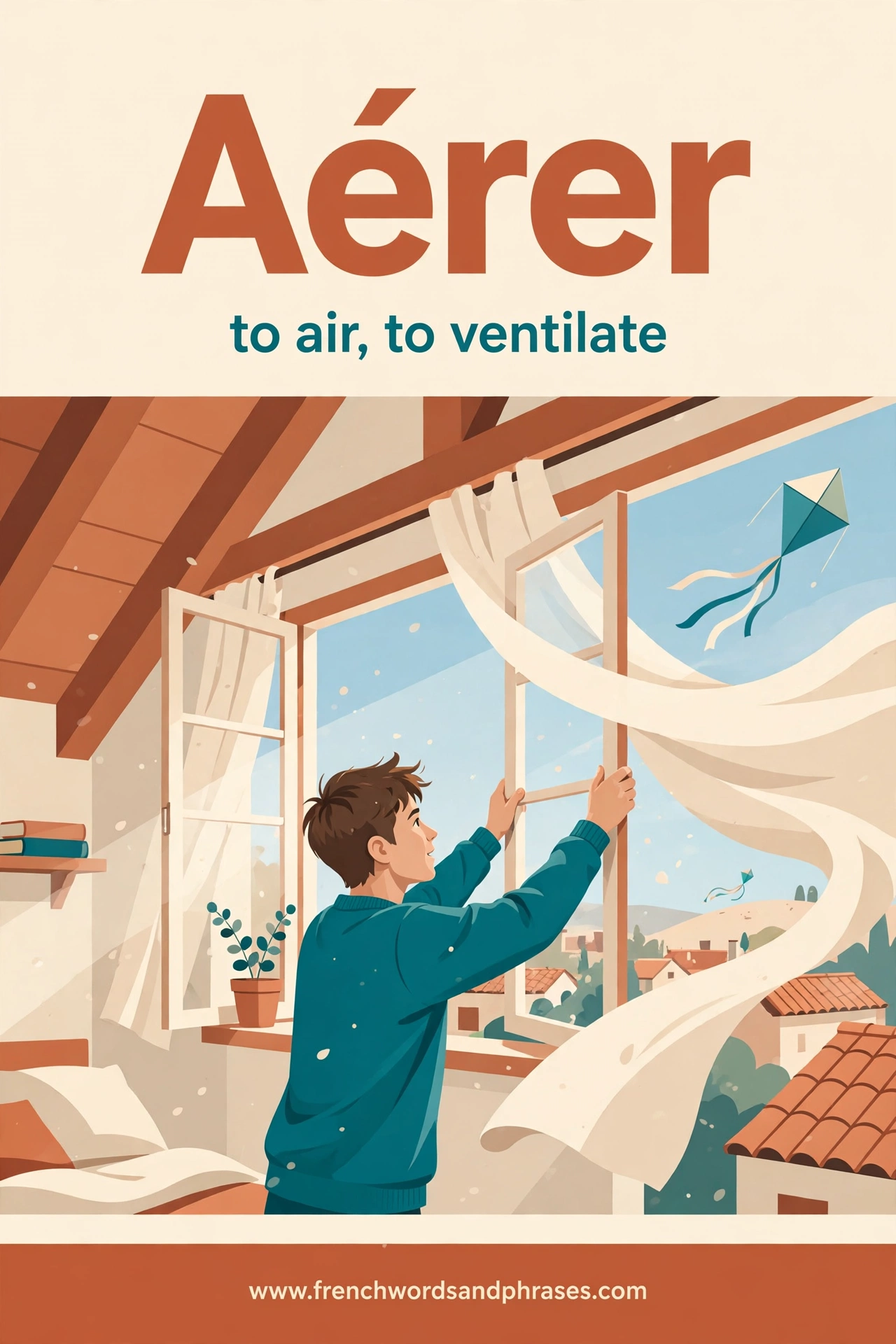
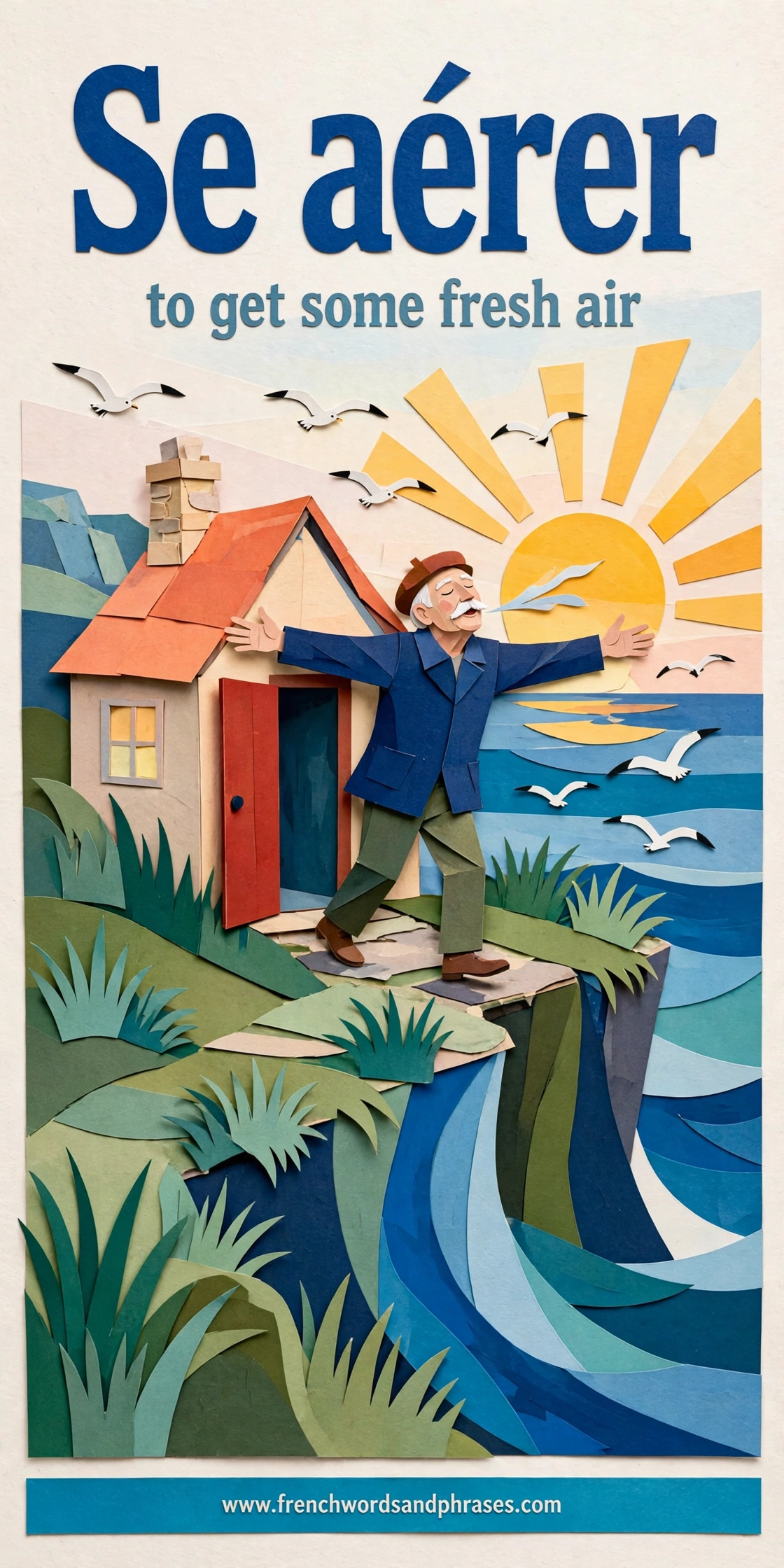
Se aérer means to get some fresh air — to step outside, walk a little, and let the wind clear your head.
A worker leaving the office at lunch with no destination but outside, a student closing the books and circling the square, a grandmother taking her evening turn around the garden — se aérer is the verb of stepping out to breathe.
In this guide, you’ll learn how to conjugate se aérer in all the major French tenses and moods. Explore complete conjugation tables, French examples, English translations, and practice quizzes.
Understanding the French Verb Se aérer
Se aérer is a regular French verb belonging to the first group of verbs, those ending in-er.
It means to get some fresh air. Where plain aérer airs rooms and laundry, the reflexive airs people: it is the standard verb for a walk taken for air rather than for exercise, and in the phrase se aérer l’esprit it means to clear one’s head — the remedy French prescribes for every stalled afternoon.
Verb classification: First group (-er), reflexive
Auxiliary verb: Être
Past participle: aéré
Present participle: aérant
English equivalents: To get some fresh air, to take a walk; se aérer l’esprit — to clear one’s head; aller se aérer — to go out for some air; se aérer au bord de la mer — to take the air by the sea; une petite promenade pour s’aérer — a short walk to get some air.
Two details at once. First, se aérer is reflexive, so it takes être in every compound tense and the past participle agrees with the subject: elle s’est aérée, ils se sont aérés. Second, the verb underneath is the céder-type aérer: the stem é opens to è before a mute syllable — je m’aère, tu t’aères, ils s’aèrent, future je m’aèrerai — but stays é in nous nous aérons, vous vous aérez. The tu imperative tucks the pronoun behind: aère-toi !
Experience the Word
Se aérer is the verb of the deliberate breath — ten minutes outside that change the whole texture of a day.
Imagine a translator at four o’clock, stuck on the same sentence since lunch. She puts on her coat, walks once around the square under the plane trees, buys nothing, speaks to no one — elle s’est aérée — and the sentence unlocks itself on the way back.
She went nowhere in particular. She got some fresh air — aérée — and came back a slightly different person.
How to Conjugate Se aérer: Complete French Conjugation Guide
Let’s explore every major conjugation of se aérer, beginning with the indicative mood.
How to Conjugate Se aérer in the Indicative Mood
The indicative mood is used to express facts, observations, actions, and events.
How to Conjugate Se aérer in the Present Tense (Présent)
Used for actions happening now, habitual actions, and general truths.
| Subject | Conjugation |
|---|---|
| je | m’aère |
| tu | t’aères |
| il / elle | s’aère |
| nous | nous aérons |
| vous | vous aérez |
| ils / elles | s’aèrent |
Example
Après le déjeuner, nous nous aérons au bord du canal.
After lunch, we get some fresh air along the canal.
Quick Quiz 1
Complete the sentence:
Après le déjeuner, nous nous ______ au bord du canal.
Reveal the answer
aérons
Après le déjeuner, nous nous aérons au bord du canal.
After lunch, we get some fresh air along the canal.
How to Conjugate Se aérer in the Passé Composé
Used for completed actions in the past. Se aérer takes the auxiliary verb être.
| Subject | Conjugation |
|---|---|
| je | me suis aéré / me suis aérée |
| tu | t’es aéré / t’es aérée |
| il / elle | s’est aéré / s’est aérée |
| nous | nous sommes aérés / nous sommes aérées |
| vous | vous êtes aérés / vous êtes aérées / vous êtes aéré / vous êtes aérée |
| ils / elles | se sont aérés / se sont aérées |
Example
Elle s’est aérée une heure au parc.
She got some fresh air for an hour in the park.
How to Conjugate Se aérer in the Imparfait (Imperfect Tense)
Used for habitual past actions, descriptions, and ongoing situations in the past.
| Subject | Conjugation |
|---|---|
| je | m’aérais |
| tu | t’aérais |
| il / elle | s’aérait |
| nous | nous aérions |
| vous | vous aériez |
| ils / elles | s’aéraient |
Example
Le soir, il s’aérait sur les quais avant de rentrer.
In the evening, he used to take the air on the quays before going home.
Quick Quiz 2
Choose the correct form:
She got some fresh air in the park.
Elle ______ au parc. (s’est aérée / a aéré)
Reveal the answer
s’est aérée
Elle s’est aérée au parc.
Se aérer is reflexive, takes être, and the participle agrees: aérée.
How to Conjugate Se aérer in the Plus-que-parfait
Used to describe an action that had already been completed before another past event.
| Subject | Conjugation |
|---|---|
| je | m’étais aéré / m’étais aérée |
| tu | t’étais aéré / t’étais aérée |
| il / elle | s’était aéré / s’était aérée |
| nous | nous étions aérés / nous étions aérées |
| vous | vous étiez aérés / vous étiez aérées / vous étiez aéré / vous étiez aérée |
| ils / elles | s’étaient aérés / s’étaient aérées |
Example
Ils s’étaient aérés au bord de la mer avant le dîner.
They had taken some fresh air by the sea before dinner.
How to Conjugate Se aérer in the Passé Simple
Primarily used in formal writing, literature, and historical narratives. It is rarely used in everyday conversation.
| Subject | Conjugation |
|---|---|
| je | m’aérai |
| tu | t’aéras |
| il / elle | s’aéra |
| nous | nous aérâmes |
| vous | vous aérâtes |
| ils / elles | s’aérèrent |
Example
Après le repas, les invités s’aérèrent dans le jardin.
After the meal, the guests took the air in the garden.
How to Conjugate Se aérer in the Passé Antérieur
A literary tense used to express an action completed immediately before another past action, generally in the passé simple.
| Subject | Conjugation |
|---|---|
| je | me fus aéré / me fus aérée |
| tu | te fus aéré / te fus aérée |
| il / elle | se fut aéré / se fut aérée |
| nous | nous fûmes aérés / nous fûmes aérées |
| vous | vous fûtes aérés / vous fûtes aérées / vous fûtes aéré / vous fûtes aérée |
| ils / elles | se furent aérés / se furent aérées |
Example
Dès qu’elle se fut aérée un moment, elle reprit son travail.
As soon as she had had a breath of air, she went back to her work.
How to Conjugate Se aérer in the Future Tense (Futur Simple)
Used to describe actions that will take place in the future.
| Subject | Conjugation |
|---|---|
| je | m’aèrerai |
| tu | t’aèreras |
| il / elle | s’aèrera |
| nous | nous aèrerons |
| vous | vous aèrerez |
| ils / elles | s’aèreront |
Example
Demain, vous vous aèrerez sur la falaise.
Tomorrow, you will get some fresh air on the cliff.
How to Conjugate Se aérer in the Futur Antérieur (Future Perfect)
Used for an action that will have been completed before a particular point in the future.
| Subject | Conjugation |
|---|---|
| je | me serai aéré / me serai aérée |
| tu | te seras aéré / te seras aérée |
| il / elle | se sera aéré / se sera aérée |
| nous | nous serons aérés / nous serons aérées |
| vous | vous serez aérés / vous serez aérées / vous serez aéré / vous serez aérée |
| ils / elles | se seront aérés / se seront aérées |
Example
À la pause, ils se seront aérés dix minutes.
By the break, they will have had ten minutes of fresh air.
How to Conjugate Se aérer in the Near Future (Futur Proche)
Used to describe something that is going to happen soon. Formed with aller + infinitive.
| Subject | Conjugation |
|---|---|
| je | vais m’aérer |
| tu | vas t’aérer |
| il / elle | va s’aérer |
| nous | allons nous aérer |
| vous | allez vous aérer |
| ils / elles | vont s’aérer |
Example
Je vais m’aérer un peu, je reviens.
I am going to get some fresh air, I will be back.
How to Conjugate Se aérer in the Conditional Mood
The conditional mood expresses what would happen under certain circumstances. It is also frequently used to make polite requests or express wishes.
How to Conjugate Se aérer in the Present Conditional
| Subject | Conjugation |
|---|---|
| je | m’aèrerais |
| tu | t’aèrerais |
| il / elle | s’aèrerait |
| nous | nous aèrerions |
| vous | vous aèreriez |
| ils / elles | s’aèreraient |
Example
Tu t’aèrerais volontiers si la pluie cessait.
You would gladly get some air if the rain stopped.
How to Conjugate Se aérer in the Past Conditional
| Subject | Conjugation |
|---|---|
| je | me serais aéré / me serais aérée |
| tu | te serais aéré / te serais aérée |
| il / elle | se serait aéré / se serait aérée |
| nous | nous serions aérés / nous serions aérées |
| vous | vous seriez aérés / vous seriez aérées / vous seriez aéré / vous seriez aérée |
| ils / elles | se seraient aérés / se seraient aérées |
Example
Elle se serait aérée plus longtemps sans le froid.
She would have stayed out longer for air without the cold.
Se aérer in the Literary Past Conditional Form
This less common literary form uses the imperfect subjunctive of être.
| Subject | Conjugation |
|---|---|
| je | me fusse aéré / me fusse aérée |
| tu | te fusses aéré / te fusses aérée |
| il / elle | se fût aéré / se fût aérée |
| nous | nous fussions aérés / nous fussions aérées |
| vous | vous fussiez aérés / vous fussiez aérées / vous fussiez aéré / vous fussiez aérée |
| ils / elles | se fussent aérés / se fussent aérées |
Example
Il se fût aéré sur les quais sans cette fatigue.
He would have taken the air on the quays without this tiredness.
How to Conjugate Se aérer in the Subjunctive Mood
The subjunctive is used to express wishes, emotions, doubts, necessity, and uncertainty. It frequently follows expressions such as il faut que (it is necessary that) or bien que (although).
How to Conjugate Se aérer in the Present Subjunctive
| Subject | Conjugation |
|---|---|
| que je | m’aère |
| que tu | t’aères |
| qu’il / qu’elle | s’aère |
| que nous | nous aérions |
| que vous | vous aériez |
| qu’ils / qu’elles | s’aèrent |
Example
Il faut que je m’aère un peu l’esprit.
I need to clear my head a little.
Quick Quiz 3
Complete the sentence using the subjunctive:
Il faut que je ______ un peu l’esprit. (se aérer)
Reveal the answer
m’aère
Il faut que je m’aère un peu l’esprit.
I need to clear my head a little.
How to Conjugate Se aérer in the Imperfect Subjunctive
A literary tense, rarely encountered in modern spoken French.
| Subject | Conjugation |
|---|---|
| que je | m’aérasse |
| que tu | t’aérasses |
| qu’il / qu’elle | s’aérât |
| que nous | nous aérassions |
| que vous | vous aérassiez |
| qu’ils / qu’elles | s’aérassent |
Example
Le médecin voulait qu’il s’aérât chaque jour.
The doctor wanted him to get fresh air every day.
How to Conjugate Se aérer in the Pluperfect Subjunctive
A literary construction used to express an action completed before another past action.
| Subject | Conjugation |
|---|---|
| que je | me fusse aéré / me fusse aérée |
| que tu | te fusses aéré / te fusses aérée |
| qu’il / qu’elle | se fût aéré / se fût aérée |
| que nous | nous fussions aérés / nous fussions aérées |
| que vous | vous fussiez aérés / vous fussiez aérées / vous fussiez aéré / vous fussiez aérée |
| qu’ils / qu’elles | se fussent aérés / se fussent aérées |
Example
On racontait qu’ils se fussent aérés dès l’aube.
People said they had been out for air at dawn.
How to Conjugate Se aérer in the Past Subjunctive
| Subject | Conjugation |
|---|---|
| que je | me sois aéré / me sois aérée |
| que tu | te sois aéré / te sois aérée |
| qu’il / qu’elle | se soit aéré / se soit aérée |
| que nous | nous soyons aérés / nous soyons aérées |
| que vous | vous soyez aérés / vous soyez aérées / vous soyez aéré / vous soyez aérée |
| qu’ils / qu’elles | se soient aérés / se soient aérées |
Example
Je suis content que tu te sois aéré avant l’examen.
I am glad you got some fresh air before the exam.
How to Conjugate Se aérer in the Imperative
The imperative is used to give commands, instructions, invitations, or suggestions. Subject pronouns are omitted.
How to Conjugate Se aérer in the Present Imperative
| Person | Conjugation |
|---|---|
| (tu) | aère-toi |
| (nous) | aérons-nous |
| (vous) | aérez-vous |
Example
Aère-toi un peu, tu travailles depuis ce matin !
Get some fresh air, you have been working since this morning!
Quick Quiz 4
How would you say Get some fresh air (tu form)?
Reveal the answer
Aère-toi un peu !
French Participles of Se aérer
Participles are verb forms that can be used in compound tenses and other grammatical constructions.
Present Participle of Se aérer
aérant
En s’aérant le long du canal, elle a retrouvé son calme.
By taking the air along the canal, she recovered her calm.
Past Participle of Se aérer
aéré
Aérés par leur promenade, les enfants dormaient déjà.
Refreshed by their walk, the children were already asleep.
Se aérer in Everyday French: Real-Life Examples
Now that you know the conjugations, let’s see how se aérer appears in everyday French.
Example 1 — Present
Nous nous aérons au bord du canal.
We get some fresh air along the canal.
Example 2 — Passé composé
Elle s’est aérée une heure au parc.
She got some fresh air for an hour in the park.
Example 3 — Imparfait
Il s’aérait sur les quais avant de rentrer.
He used to take the air on the quays before going home.
Example 4 — Future
Vous vous aèrerez sur la falaise.
You will get some fresh air on the cliff.
Example 5 — Conditional
Tu t’aèrerais volontiers si la pluie cessait.
You would gladly get some air if the rain stopped.
Example 6 — Imperative
Aère-toi un peu !
Get some fresh air!
Beyond Translation: The Meaning of Se aérer
The plain verb airs things; the reflexive airs people — French treats a person after a long morning indoors exactly like a room with the windows shut.
And the cure is the same: open up and let the weather in.
Hence the beloved phrase se aérer l’esprit, to air one’s mind — the head as a stuffy room, the walk as its open window.
How to Remember the French Verb Se aérer
Remember it this way: Se aérer is about a walk around the square that unlocks the afternoon.
- Reflexive: être in compound tenses, participle agrees — elle s’est aérée.
- Céder-type stem: je m’aère with è, but nous nous aérons with é.
- Se aérer l’esprit is the set phrase for clearing your head.
The key idea is a walk around the square that unlocks the afternoon.
Test Your Knowledge of Se aérer
Let’s see how much you’ve learned. Try answering these questions before revealing the answers.
Question 1
Which auxiliary does se aérer use, and why?
Reveal the answer
Être — it is a reflexive verb: elle s’est aérée au parc.
Question 2
How do you say We get some fresh air along the canal in French?
Reveal the answer
Nous nous aérons au bord du canal.
Question 3
Translate: I need to clear my head a little.
Reveal the answer
Il faut que je m’aère un peu l’esprit.
Question 4
What is the past participle of se aérer?
Reveal the answer
Aéré — agreeing: aérée, aérés, aérées.
Question 5
Complete the sentence:
Elle s’est ______ une heure au parc.
Reveal the answer
aérée
Elle s’est aérée une heure au parc.
She got some fresh air for an hour in the park.
Your Final Challenge
Can You Use It?
How would you say this in French?
He takes the air along the canal, and his thoughts walk at the same pace as he does.
Reveal the answer
Il s’aère le long du canal, et ses idées marchent au même pas que lui.
He takes the air along the canal, and his thoughts walk at the same pace as he does.
A little French. A little curiosity. A richer everyday life.
LEARN FRENCH ONE WORD AT A TIME