A French Word to Live By
How to Conjugate Perdre in French
/pɛʁdʁ/
Perdre means to lose.
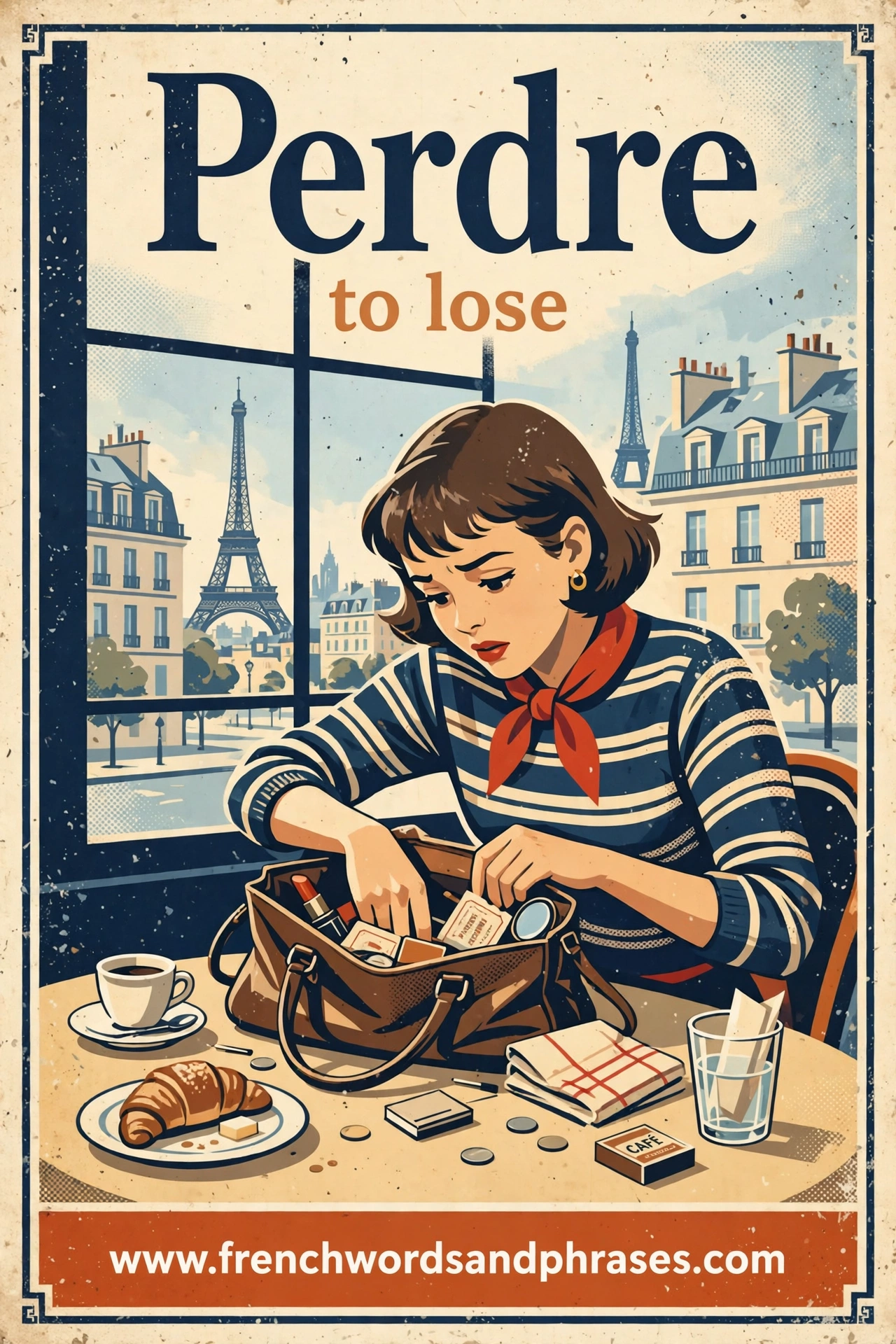
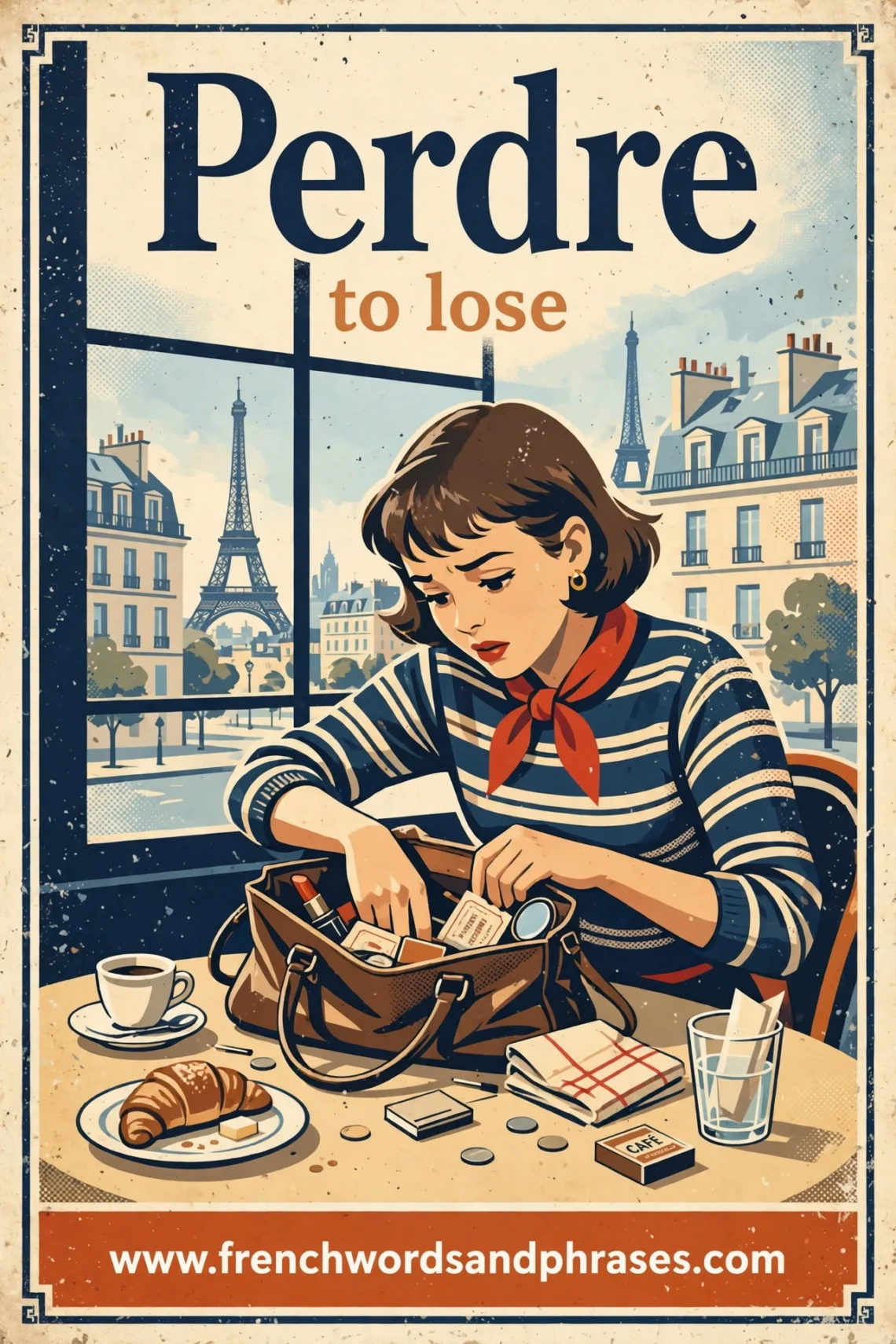
A platform full of people, and your train is the one you have just missed. Your keys are somewhere — down the side of the sofa, in a coat, at the bottom of a bag. Losing is one of life’s small daily dramas — that is perdre.
In this guide, you’ll learn how to conjugate perdre in all the major French tenses and moods. Explore complete conjugation tables, French examples, English translations, and practice quizzes.
Understanding the French Verb Perdre
Perdre is an irregular French verb belonging to the third group of verbs, those ending in -re.
It means to lose. It is commonly used for misplacing things, for losing games and matches, for wasting time — perdre son temps — and for losing your way, perdre son chemin.
Verb classification: Third group (irregular -re verb)
Auxiliary verb: Avoir
Past participle: perdu
Present participle: perdant
English equivalents: To lose.
One important spelling detail: the stem perd- keeps its d before a vowel — nous perdons, vous perdez, ils perdent — but in the written singular of the present the d is silent and the forms end differently: je perds, tu perds, il perd.
Experience the Word
Perdre is more than misplacing a thing. It is the small shock of reaching for something that was there a moment ago — and finding it gone.
Imagine the final minute of a match. Your team has led all afternoon, and then, in one breath, the other side scores.
You have not just misplaced something. You have lost.
How to Conjugate Perdre: Complete French Conjugation Guide
Let’s explore every major conjugation of perdre, beginning with the indicative mood.
How to Conjugate Perdre in the Indicative Mood
The indicative mood is used to express facts, observations, actions, and events.
How to Conjugate Perdre in the Present Tense (Présent)
Used for actions happening now, habitual actions, and general truths.
| Subject | Conjugation |
|---|---|
| je | perds |
| tu | perds |
| il / elle | perd |
| nous | perdons |
| vous | perdez |
| ils / elles | perdent |
Example
Il perd toujours ses clés.
He always loses his keys.
Quick Quiz 1
Complete the sentence:
Je ______ souvent mes clés.
Reveal the answer
perds
Je perds souvent mes clés.
I often lose my keys.
How to Conjugate Perdre in the Passé Composé
Used for completed actions in the past. Perdre takes the auxiliary verb avoir.
| Subject | Conjugation |
|---|---|
| j’ | ai perdu |
| tu | as perdu |
| il / elle | a perdu |
| nous | avons perdu |
| vous | avez perdu |
| ils / elles | ont perdu |
Example
J’ai perdu mon portefeuille.
I lost my wallet.
How to Conjugate Perdre in the Imparfait (Imperfect Tense)
Used for habitual past actions, descriptions, and ongoing situations in the past.
| Subject | Conjugation |
|---|---|
| je | perdais |
| tu | perdais |
| il / elle | perdait |
| nous | perdions |
| vous | perdiez |
| ils / elles | perdaient |
Example
Quand elle était enfant, elle perdait souvent ses gants.
When she was a child, she often lost her gloves.
Quick Quiz 2
Choose the correct form:
He always lost at tennis.
Il ______ toujours au tennis.
Reveal the answer
perdait
Il perdait toujours au tennis.
How to Conjugate Perdre in the Plus-que-parfait
Used to describe an action that had already been completed before another past event.
| Subject | Conjugation |
|---|---|
| j’ | avais perdu |
| tu | avais perdu |
| il / elle | avait perdu |
| nous | avions perdu |
| vous | aviez perdu |
| ils / elles | avaient perdu |
Example
J’avais déjà perdu mes clés avant de partir.
I had already lost my keys before leaving.
How to Conjugate Perdre in the Passé Simple
Primarily used in formal writing, literature, and historical narratives. It is rarely used in everyday conversation.
| Subject | Conjugation |
|---|---|
| je | perdis |
| tu | perdis |
| il / elle | perdit |
| nous | perdîmes |
| vous | perdîtes |
| ils / elles | perdirent |
Example
Il perdit le match en finale.
He lost the match in the final.
How to Conjugate Perdre in the Passé Antérieur
A literary tense used to express an action completed immediately before another past action, generally in the passé simple.
| Subject | Conjugation |
|---|---|
| j’ | eus perdu |
| tu | eus perdu |
| il / elle | eut perdu |
| nous | eûmes perdu |
| vous | eûtes perdu |
| ils / elles | eurent perdu |
Example
Dès qu’il eut perdu la partie, il quitta la table.
As soon as he had lost the game, he left the table.
How to Conjugate Perdre in the Future Tense (Futur Simple)
Used to describe actions that will take place in the future.
| Subject | Conjugation |
|---|---|
| je | perdrai |
| tu | perdras |
| il / elle | perdra |
| nous | perdrons |
| vous | perdrez |
| ils / elles | perdront |
Example
Si tu ne fais pas attention, tu perdras tes clés.
If you are not careful, you will lose your keys.
How to Conjugate Perdre in the Futur Antérieur (Future Perfect)
Used for an action that will have been completed before a particular point in the future.
| Subject | Conjugation |
|---|---|
| j’ | aurai perdu |
| tu | auras perdu |
| il / elle | aura perdu |
| nous | aurons perdu |
| vous | aurez perdu |
| ils / elles | auront perdu |
Example
À midi, j’aurai déjà perdu patience.
By noon, I will already have lost patience.
How to Conjugate Perdre in the Near Future (Futur Proche)
Used to describe something that is going to happen soon. Formed with aller + infinitive.
| Subject | Conjugation |
|---|---|
| je | vais perdre |
| tu | vas perdre |
| il / elle | va perdre |
| nous | allons perdre |
| vous | allez perdre |
| ils / elles | vont perdre |
Example
Je vais perdre mes clés si je continue ainsi.
I am going to lose my keys if I go on like this.
How to Conjugate Perdre in the Conditional Mood
The conditional mood expresses what would happen under certain circumstances. It is also frequently used to make polite requests or express wishes.
How to Conjugate Perdre in the Present Conditional
| Subject | Conjugation |
|---|---|
| je | perdrais |
| tu | perdrais |
| il / elle | perdrait |
| nous | perdrions |
| vous | perdriez |
| ils / elles | perdraient |
Example
Sans mon aide, il perdrait le match.
Without my help, he would lose the match.
How to Conjugate Perdre in the Past Conditional
| Subject | Conjugation |
|---|---|
| j’ | aurais perdu |
| tu | aurais perdu |
| il / elle | aurait perdu |
| nous | aurions perdu |
| vous | auriez perdu |
| ils / elles | auraient perdu |
Example
J’aurais perdu mes clés si tu ne les avais pas trouvées.
I would have lost my keys if you had not found them.
Perdre in the Literary Past Conditional Form
This less common literary form uses the imperfect subjunctive of avoir.
| Subject | Conjugation |
|---|---|
| j’ | eusse perdu |
| tu | eusses perdu |
| il / elle | eût perdu |
| nous | eussions perdu |
| vous | eussiez perdu |
| ils / elles | eussent perdu |
Example
Il eût perdu patience si l’attente avait duré.
He would have lost patience if the wait had lasted.
How to Conjugate Perdre in the Subjunctive Mood
The subjunctive is used to express wishes, emotions, doubts, necessity, and uncertainty. It frequently follows expressions such as il faut que (it is necessary that) or bien que (although).
How to Conjugate Perdre in the Present Subjunctive
| Subject | Conjugation |
|---|---|
| que je | perde |
| que tu | perdes |
| qu’il / qu’elle | perde |
| que nous | perdions |
| que vous | perdiez |
| qu’ils / qu’elles | perdent |
Example
Il est important que tu ne perdes pas ton passeport.
It is important that you do not lose your passport.
Quick Quiz 3
Complete the sentence using the subjunctive:
Il est important que tu ne ______ pas ton passeport.
Reveal the answer
perdes
Il est important que tu ne perdes pas ton passeport.
It is important that you do not lose your passport.
How to Conjugate Perdre in the Imperfect Subjunctive
A literary tense, rarely encountered in modern spoken French.
| Subject | Conjugation |
|---|---|
| que je | perdisse |
| que tu | perdisses |
| qu’il / qu’elle | perdît |
| que nous | perdissions |
| que vous | perdissiez |
| qu’ils / qu’elles | perdissent |
Example
Il souhaitait qu’elle ne perdît pas courage.
He wished that she would not lose heart.
How to Conjugate Perdre in the Pluperfect Subjunctive
A literary construction used to express an action completed before another past action.
| Subject | Conjugation |
|---|---|
| que j’ | eusse perdu |
| que tu | eusses perdu |
| qu’il / qu’elle | eût perdu |
| que nous | eussions perdu |
| que vous | eussiez perdu |
| qu’ils / qu’elles | eussent perdu |
Example
Il regrettait que nous eussions perdu le match.
He regretted that we had lost the match.
How to Conjugate Perdre in the Past Subjunctive
| Subject | Conjugation |
|---|---|
| que j’ | aie perdu |
| que tu | aies perdu |
| qu’il / qu’elle | ait perdu |
| que nous | ayons perdu |
| que vous | ayez perdu |
| qu’ils / qu’elles | aient perdu |
Example
Je suis désolé que tu aies perdu ton portefeuille.
I am sorry that you lost your wallet.
How to Conjugate Perdre in the Imperative
The imperative is used to give commands, instructions, invitations, or suggestions. Subject pronouns are omitted.
How to Conjugate Perdre in the Present Imperative
| Person | Conjugation |
|---|---|
| (tu) | perds |
| (nous) | perdons |
| (vous) | perdez |
Example
Ne perds pas tes clés !
Don’t lose your keys!
Quick Quiz 4
How would you say Don’t lose your keys! (tu form)?
Reveal the answer
Ne perds pas tes clés !
French Participles of Perdre
Participles are verb forms that can be used in compound tenses and other grammatical constructions.
Present Participle of Perdre
perdant
En perdant ses clés, il a dû attendre dehors.
By losing his keys, he had to wait outside.
Past Participle of Perdre
perdu
Elle a perdu son écharpe dans le train.
She lost her scarf on the train.
Perdre in Everyday French: Real-Life Examples
Now that you know the conjugations, let’s see how perdre appears in everyday French.
Example 1 — Present
Je perds souvent mes clés.
I often lose my keys.
Example 2 — Passé composé
Elle a perdu son portefeuille hier.
She lost her wallet yesterday.
Example 3 — Imparfait
Il perdait toujours au tennis.
He always lost at tennis.
Example 4 — Future
Nous ne perdrons pas courage.
We will not lose heart.
Example 5 — Conditional
Sans entraînement, ils perdraient le match.
Without training, they would lose the match.
Example 6 — Subjunctive
Bien que tu perdes parfois, tu progresses.
Although you sometimes lose, you are making progress.
Beyond Translation: The Meaning of Perdre
English has one word, lose, for the meaning of perdre. But the French word also covers wasting time — perdre son temps — losing patience — perdre patience — and a thread, an argument, or a game slipping away in the last minute.
What is lost can be found again.
To perdre is to watch something slip through your fingers. It evokes the missed train, the searched pocket, and the match that turned at the very end.
How to Remember the French Verb Perdre
Remember it this way: Perdre is about letting something slip away.
- You put your keys down and cannot find them an hour later — tu perds tes clés.
- Your team is beaten in the final minute — tu perds le match.
- You take the wrong street in a new town — tu perds ton chemin.
The key idea is letting something slip away.
Test Your Knowledge of Perdre
Let’s see how much you’ve learned. Try answering these questions before revealing the answers.
Question 1
What auxiliary verb is used with perdre in compound tenses?
Reveal the answer
Avoir
Question 2
How do you say I will lose in French?
Reveal the answer
Je perdrai.
Question 3
Translate: I lost my wallet.
Reveal the answer
J’ai perdu mon portefeuille.
Question 4
What is the present participle of perdre?
Reveal the answer
Perdant.
Question 5
Complete the sentence:
Si tu ne fais pas attention, tu ______ tes clés.
Reveal the answer
perdras
Si tu ne fais pas attention, tu perdras tes clés.
If you are not careful, you will lose your keys.
Your Final Challenge
Can You Use It?
How would you say this in French?
“Tomorrow, I will be careful not to lose my keys.”
Reveal the answer
Demain, je ferai attention à ne pas perdre mes clés.
Tomorrow, I will be careful not to lose my keys.
A little French. A little curiosity. A richer everyday life.
LEARN FRENCH ONE WORD AT A TIME