How to Conjugate Pâmer in French
/pa.me/
Pâmer means to swoon — to faint clean away, overcome by heat, emotion or a tight corset, in the grand theatrical manner of another century.
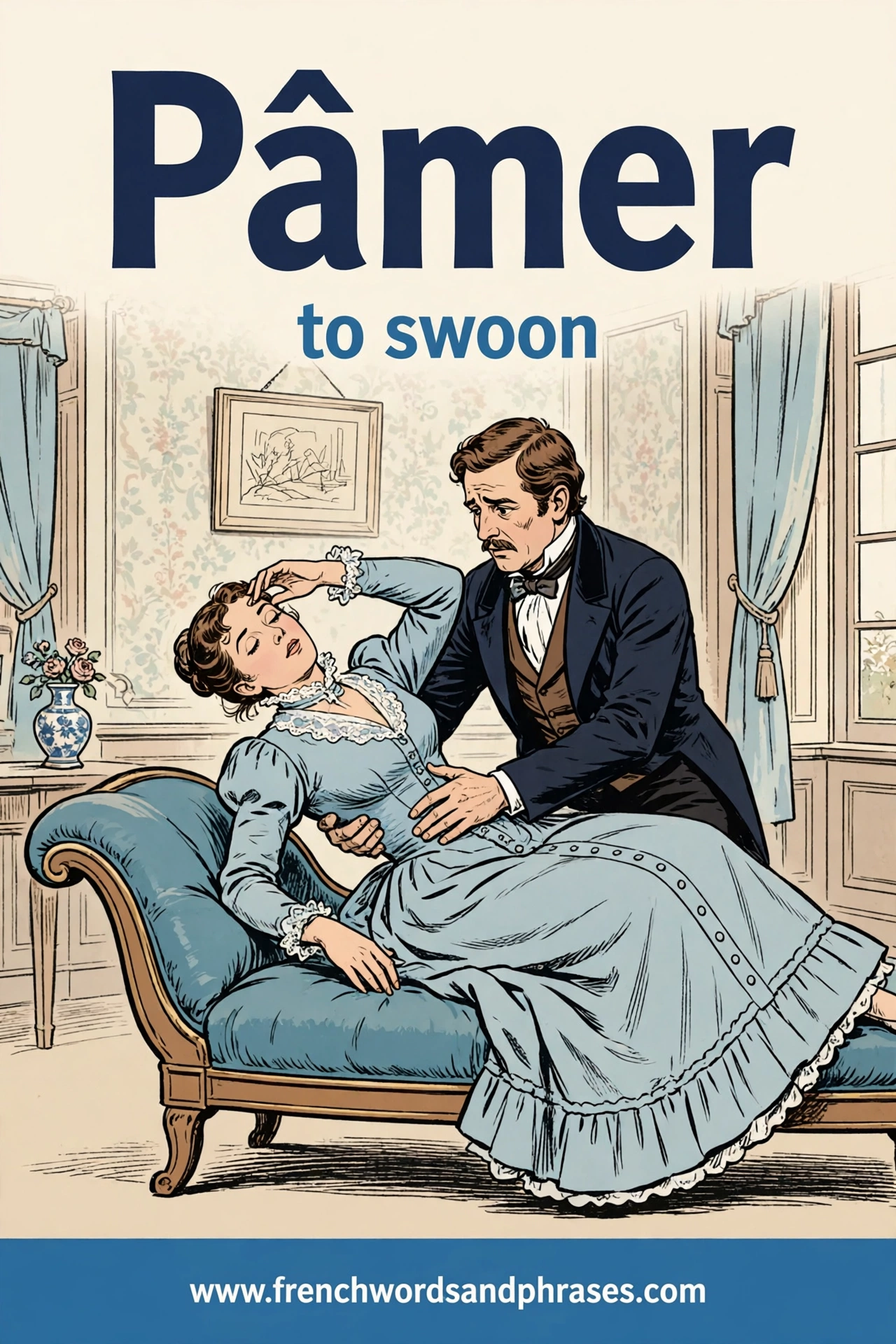
A drawing room in 1890, a shocking piece of news, and a lady sinks gracefully onto the chaise longue while someone calls for the smelling salts. Pâmer is the verb of the swoon: the knees soften, the room tilts, and down you go — the dramatic faint of heroines, nowadays used mostly with a smile for anyone overcome by emotion.
In this guide, you’ll learn how to conjugate pâmer in all the major French tenses and moods. Explore complete conjugation tables, French examples, English translations, and practice quizzes.
Understanding the French Verb Pâmer
Pâmer is a regular French verb belonging to the first group of verbs, those ending in -er.
It means to swoon. It is used for fainting from heat, shock, emotion or hunger, in a register that is literary, old-fashioned or playful — a modern speaker who says elle a pâmé is usually quoting the nineteenth century on purpose. For a real faint in real life, s’évanouir and tomber dans les pommes do the everyday work.
Verb classification: First group (-er)
Auxiliary verb: Avoir
Past participle: pâmé
Present participle: pâmant
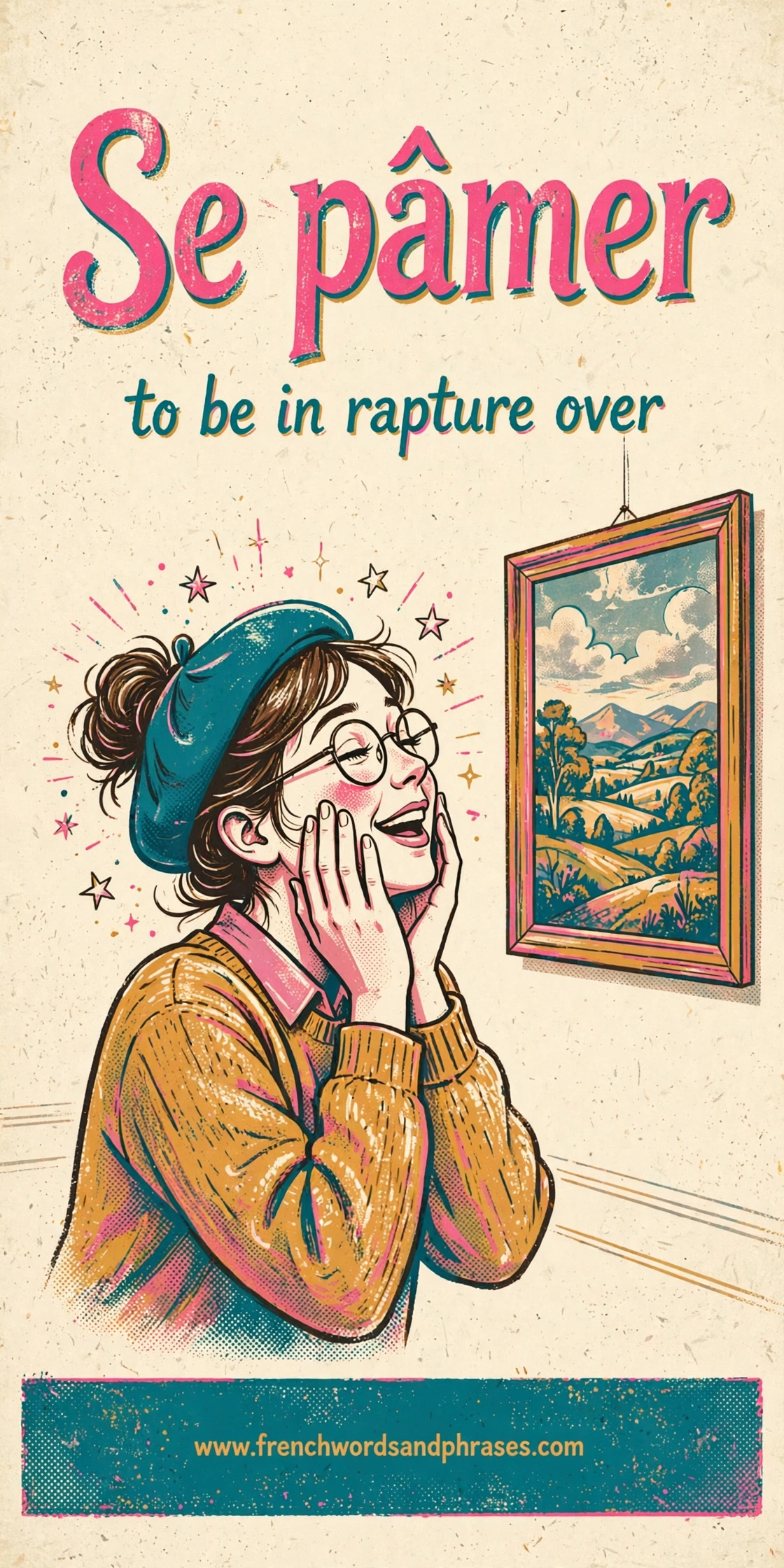
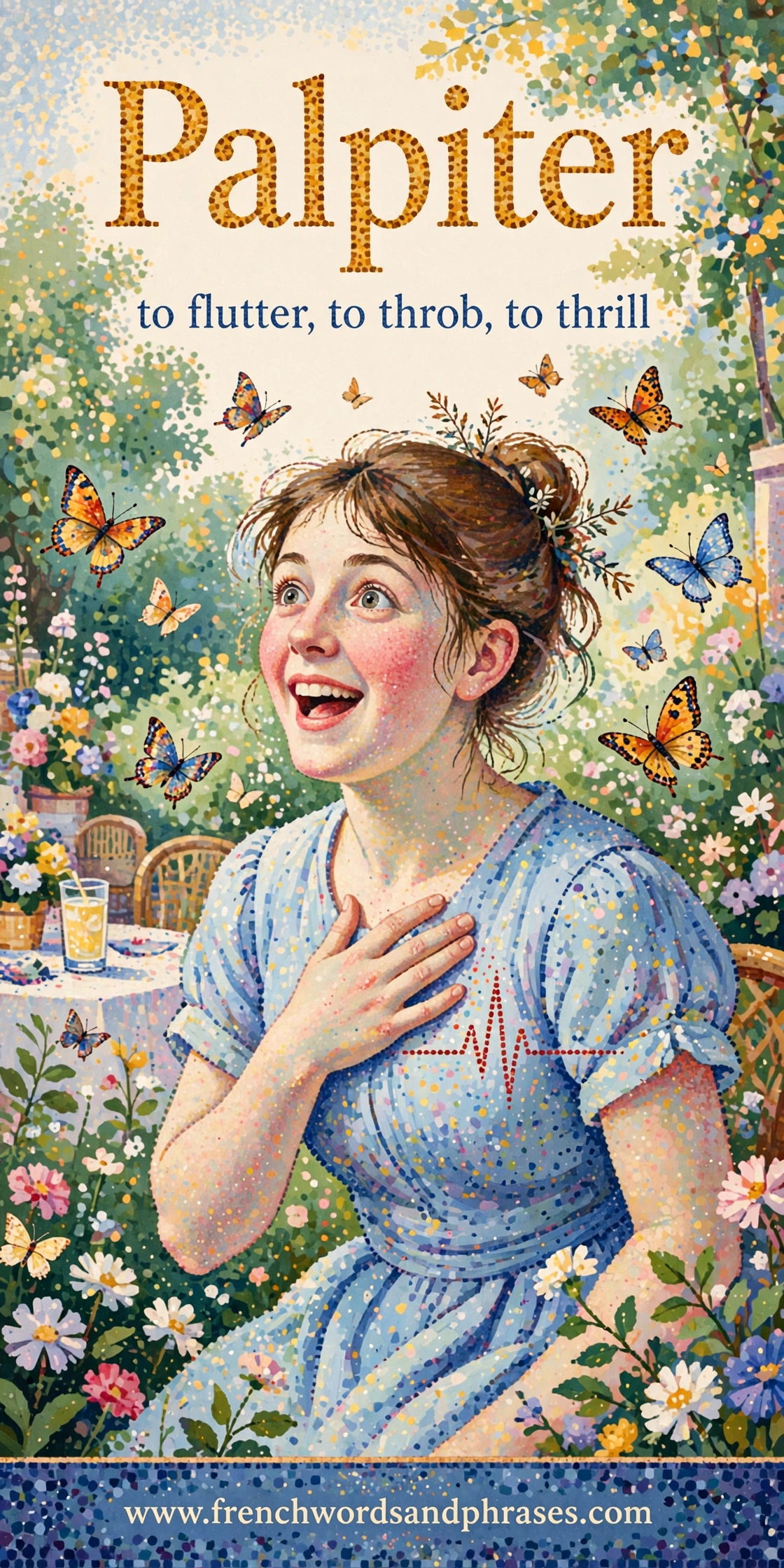
English equivalents: To swoon, to faint; pâmer de chaleur — to swoon with the heat; elle a pâmi de saisissement — she swooned with shock; se pâmer — to be in raptures (see its own page); une pâmoison — a swoon, a fainting fit.
One important detail: plain pâmer, to faint, lives today mostly in books and gentle humour — modern French reaches for s’évanouir at the doctor’s. Note the family trap: elle a pâmi uses the old past participle pâmi in set literary phrases, but the regular participle of the modern conjugation is pâmé: elle a pâmé de chaleur. The circumflex rides on the infinitive and the participle; the stem stays pâm- throughout: je pâme, nous pâmons. Its reflexive twin se pâmer — to be in raptures — is by far the livelier verb today, and has its own page.
Experience the Word
Pâmer is the verb of the elegant collapse — nobody simply faints in a French novel; they swoon, beautifully, onto the nearest sofa.
Imagine a provincial theatre in 1880. The heroine reads the fatal letter, presses it to her heart, and pâme — slowly, in full view of the stalls, timed to the orchestra’s trembling chord — while three gentlemen compete to catch her and a fourth is already fanning her with the programme.
It is not an illness, it is an event. She has swooned — pâmé — and the whole evening now revolves around her chaise longue.
How to Conjugate Pâmer: Complete French Conjugation Guide
Let’s explore every major conjugation of pâmer, beginning with the indicative mood.
How to Conjugate Pâmer in the Indicative Mood
The indicative mood is used to express facts, observations, actions, and events.
How to Conjugate Pâmer in the Present Tense (Présent)
Used for actions happening now, habitual actions, and general truths.
| Subject | Conjugation |
|---|---|
| je | pâme |
| tu | pâmes |
| il / elle | pâme |
| nous | pâmons |
| vous | pâmez |
| ils / elles | pâment |
La chaleur est telle que les dames pâment dans la salle.
The heat is such that the ladies are swooning in the hall.
Complete the sentence:
Nous ______ de chaleur dans cette salle étouffante.
Reveal the answer
pâmons
Nous pâmons de chaleur dans cette salle étouffante.
We are swooning with heat in this stifling hall.
How to Conjugate Pâmer in the Passé Composé
Used for completed actions in the past. Pâmer takes the auxiliary verb avoir.
| Subject | Conjugation |
|---|---|
| j’ | ai pâmé |
| tu | as pâmé |
| il / elle | a pâmé |
| nous | avons pâmé |
| vous | avez pâmé |
| ils / elles | ont pâmé |
Elle a pâmé en apprenant la nouvelle.
She swooned on hearing the news.
How to Conjugate Pâmer in the Imparfait (Imperfect Tense)
Used for habitual past actions, descriptions, and ongoing situations in the past.
| Subject | Conjugation |
|---|---|
| je | pâmais |
| tu | pâmais |
| il / elle | pâmait |
| nous | pâmions |
| vous | pâmiez |
| ils / elles | pâmaient |
Autrefois, les héroïnes pâmaient à chaque chapitre.
In the old days, heroines used to swoon in every chapter.
Choose the correct form:
She swooned with the heat.
Elle ______ de chaleur. (a pâmé / est pâmée)
Reveal the answer
a pâmé
Elle a pâmé de chaleur.
Plain pâmer takes avoir; only the reflexive se pâmer takes être.
How to Conjugate Pâmer in the Plus-que-parfait
Used to describe an action that had already been completed before another past event.
| Subject | Conjugation |
|---|---|
| j’ | avais pâmé |
| tu | avais pâmé |
| il / elle | avait pâmé |
| nous | avions pâmé |
| vous | aviez pâmé |
| ils / elles | avaient pâmé |
Il avait pâmé de chaleur pendant la cérémonie.
He had swooned with the heat during the ceremony.
How to Conjugate Pâmer in the Passé Simple
Primarily used in formal writing, literature, and historical narratives. It is rarely used in everyday conversation.
| Subject | Conjugation |
|---|---|
| je | pâmai |
| tu | pâmas |
| il / elle | pâma |
| nous | pâmâmes |
| vous | pâmâtes |
| ils / elles | pâmèrent |
La jeune femme pâma et glissa sur le tapis.
The young woman swooned and slipped onto the carpet.
How to Conjugate Pâmer in the Passé Antérieur
A literary tense used to express an action completed immediately before another past action, generally in the passé simple.
| Subject | Conjugation |
|---|---|
| j’ | eus pâmé |
| tu | eus pâmé |
| il / elle | eut pâmé |
| nous | eûmes pâmé |
| vous | eûtes pâmé |
| ils / elles | eurent pâmé |
Dès qu’elle eut pâmé, on apporta les sels.
As soon as she had swooned, they brought the smelling salts.
How to Conjugate Pâmer in the Future Tense (Futur Simple)
Used to describe actions that will take place in the future.
| Subject | Conjugation |
|---|---|
| je | pâmerai |
| tu | pâmeras |
| il / elle | pâmera |
| nous | pâmerons |
| vous | pâmerez |
| ils / elles | pâmeront |
Si la chaleur continue, la moitié de la salle pâmera.
If the heat continues, half the hall will swoon.
How to Conjugate Pâmer in the Futur Antérieur (Future Perfect)
Used for an action that will have been completed before a particular point in the future.
| Subject | Conjugation |
|---|---|
| j’ | aurai pâmé |
| tu | auras pâmé |
| il / elle | aura pâmé |
| nous | aurons pâmé |
| vous | aurez pâmé |
| ils / elles | auront pâmé |
À la fin de la cérémonie, trois invités auront pâmé.
By the end of the ceremony, three guests will have swooned.
How to Conjugate Pâmer in the Near Future (Futur Proche)
Used to describe something that is going to happen soon. Formed with aller + infinitive.
| Subject | Conjugation |
|---|---|
| je | vais pâmer |
| tu | vas pâmer |
| il / elle | va pâmer |
| nous | allons pâmer |
| vous | allez pâmer |
| ils / elles | vont pâmer |
Regarde-la, elle va pâmer, vite, un fauteuil !
Look at her, she is going to swoon, quick, an armchair!
How to Conjugate Pâmer in the Conditional Mood
The conditional mood expresses what would happen under certain circumstances. It is also frequently used to make polite requests or express wishes.
How to Conjugate Pâmer in the Present Conditional
| Subject | Conjugation |
|---|---|
| je | pâmerais |
| tu | pâmerais |
| il / elle | pâmerait |
| nous | pâmerions |
| vous | pâmeriez |
| ils / elles | pâmeraient |
Sans air, même le marié pâmerait.
Without air, even the groom would swoon.
How to Conjugate Pâmer in the Past Conditional
| Subject | Conjugation |
|---|---|
| j’ | aurais pâmé |
| tu | aurais pâmé |
| il / elle | aurait pâmé |
| nous | aurions pâmé |
| vous | auriez pâmé |
| ils / elles | auraient pâmé |
Elle aurait pâmé si on ne l’avait pas retenue.
She would have swooned if they had not caught her.
Pâmer in the Literary Past Conditional Form
This less common literary form uses the imperfect subjunctive of avoir.
| Subject | Conjugation |
|---|---|
| j’ | eusse pâmé |
| tu | eusses pâmé |
| il / elle | eût pâmé |
| nous | eussions pâmé |
| vous | eussiez pâmé |
| ils / elles | eussent pâmé |
La marquise eût pâmé à cette annonce sans son éventail.
The marquise would have swooned at that announcement, but for her fan.
How to Conjugate Pâmer in the Subjunctive Mood
The subjunctive is used to express wishes, emotions, doubts, necessity, and uncertainty. It frequently follows expressions such as il faut que (it is necessary that) or bien que (although).
How to Conjugate Pâmer in the Present Subjunctive
| Subject | Conjugation |
|---|---|
| que je | pâme |
| que tu | pâmes |
| qu’il / qu’elle | pâme |
| que nous | pâmions |
| que vous | pâmiez |
| qu’ils / qu’elles | pâment |
Je crains qu’elle pâme pendant la messe.
I fear she may swoon during mass.
Complete the sentence using the subjunctive:
Je crains que vous ______ sous les projecteurs.
Reveal the answer
pâmiez
Je crains que vous pâmiez sous les projecteurs.
I fear you may swoon under the spotlights.
How to Conjugate Pâmer in the Imperfect Subjunctive
A literary tense, rarely encountered in modern spoken French.
| Subject | Conjugation |
|---|---|
| que je | pâmasse |
| que tu | pâmasses |
| qu’il / qu’elle | pâmât |
| que nous | pâmassions |
| que vous | pâmassiez |
| qu’ils / qu’elles | pâmassent |
On redoutait que la chanteuse pâmât sous les projecteurs.
People dreaded that the singer might swoon under the spotlights.
How to Conjugate Pâmer in the Pluperfect Subjunctive
A literary construction used to express an action completed before another past action.
| Subject | Conjugation |
|---|---|
| que j’ | eusse pâmé |
| que tu | eusses pâmé |
| qu’il / qu’elle | eût pâmé |
| que nous | eussions pâmé |
| que vous | eussiez pâmé |
| qu’ils / qu’elles | eussent pâmé |
Le roman raconte qu’elle eût pâmé trois fois en une soirée.
The novel tells that she had swooned three times in one evening.
How to Conjugate Pâmer in the Past Subjunctive
| Subject | Conjugation |
|---|---|
| que j’ | aie pâmé |
| que tu | aies pâmé |
| qu’il / qu’elle | ait pâmé |
| que nous | ayons pâmé |
| que vous | ayez pâmé |
| qu’ils / qu’elles | aient pâmé |
Je suis étonné qu’il ait pâmé pour un si petit choc.
I am surprised he swooned over such a small shock.
How to Conjugate Pâmer in the Imperative
The imperative is used to give commands, instructions, invitations, or suggestions. Subject pronouns are omitted.
How to Conjugate Pâmer in the Present Imperative
| Person | Conjugation |
|---|---|
| (tu) | pâme |
| (nous) | pâmons |
| (vous) | pâmez |
Ne pâme pas ici, tiens-toi au bras de ton frère !
Do not swoon here, hold on to your brother’s arm!
How would you say Do not swoon here (tu form)?
Reveal the answer
Ne pâme pas ici !
French Participles of Pâmer
Participles are verb forms that can be used in compound tenses and other grammatical constructions.
Present Participle of Pâmer
pâmant
En pâmant à point nommé, elle a évité les questions.
By swooning at just the right moment, she avoided the questions.
Past Participle of Pâmer
pâmé
Pâmée sur la chaise longue, la marquise écoutait les compliments.
Swooned on the chaise longue, the marquise listened to the compliments.
Pâmer in Everyday French: Real-Life Examples
Now that you know the conjugations, let’s see how pâmer appears in everyday French.
Les dames pâment sous la chaleur.
The ladies are swooning in the heat.
Elle a pâmé en apprenant la nouvelle.
She swooned on hearing the news.
Les héroïnes pâmaient à chaque chapitre.
Heroines used to swoon in every chapter.
La moitié de la salle pâmera si la chaleur continue.
Half the hall will swoon if the heat continues.
Elle aurait pâmé sans son éventail.
She would have swooned without her fan.
Ne pâme pas, tiens-toi à moi !
Do not swoon, hold on to me!
Beyond Translation: The Meaning of Pâmer
English swoon and French pâmer are partners from the same theatre — both survive today more as style than as medicine.
The noun la pâmoison keeps the drama alive.
Tomber en pâmoison is to fall into a swoon, and modern speakers use the whole family with tongue in cheek — which is exactly how the reflexive se pâmer, to go into raptures, took over the living language.
How to Remember the French Verb Pâmer
Remember it this way: Pâmer is about the heroine sinking onto the chaise longue, salts at the ready.
- Picture the smelling salts and the chaise longue: pâmer is the theatrical faint of the novels.
- Everyday French faints with s’évanouir; pâmer is literary or playful.
- Regular -er under the costume: je pâme, nous pâmons, past participle pâmé.
The key idea is the heroine sinking onto the chaise longue, salts at the ready.
Test Your Knowledge of Pâmer
Let’s see how much you’ve learned. Try answering these questions before revealing the answers.
What does pâmer describe, and in what register?
Reveal the answer
A swoon — fainting away, in a literary, old-fashioned or playful register; everyday French prefers s’évanouir.
How do you say She swooned on hearing the news in French?
Reveal the answer
Elle a pâmé en apprenant la nouvelle.
Translate: The ladies are swooning in the heat.
Reveal the answer
Les dames pâment sous la chaleur.
What is the past participle of pâmer?
Reveal the answer
Pâmé — the old form pâmi survives only in set literary phrases.
Complete the sentence:
Je crains qu’elle ______ pendant la messe.
Reveal the answer
pâme
Je crains qu’elle pâme pendant la messe.
I fear she may swoon during mass.
Can You Use It?
How would you say this in French?
At the terrible announcement, the marquise swoons gracefully, as befits her rank.
Reveal the answer
À la terrible annonce, la marquise pâme avec grâce, comme il sied à son rang.
At the terrible announcement, the marquise swoons gracefully, as befits her rank.
LEARN FRENCH ONE WORD AT A TIME