How to Conjugate Pallier in French
/pa.lje/
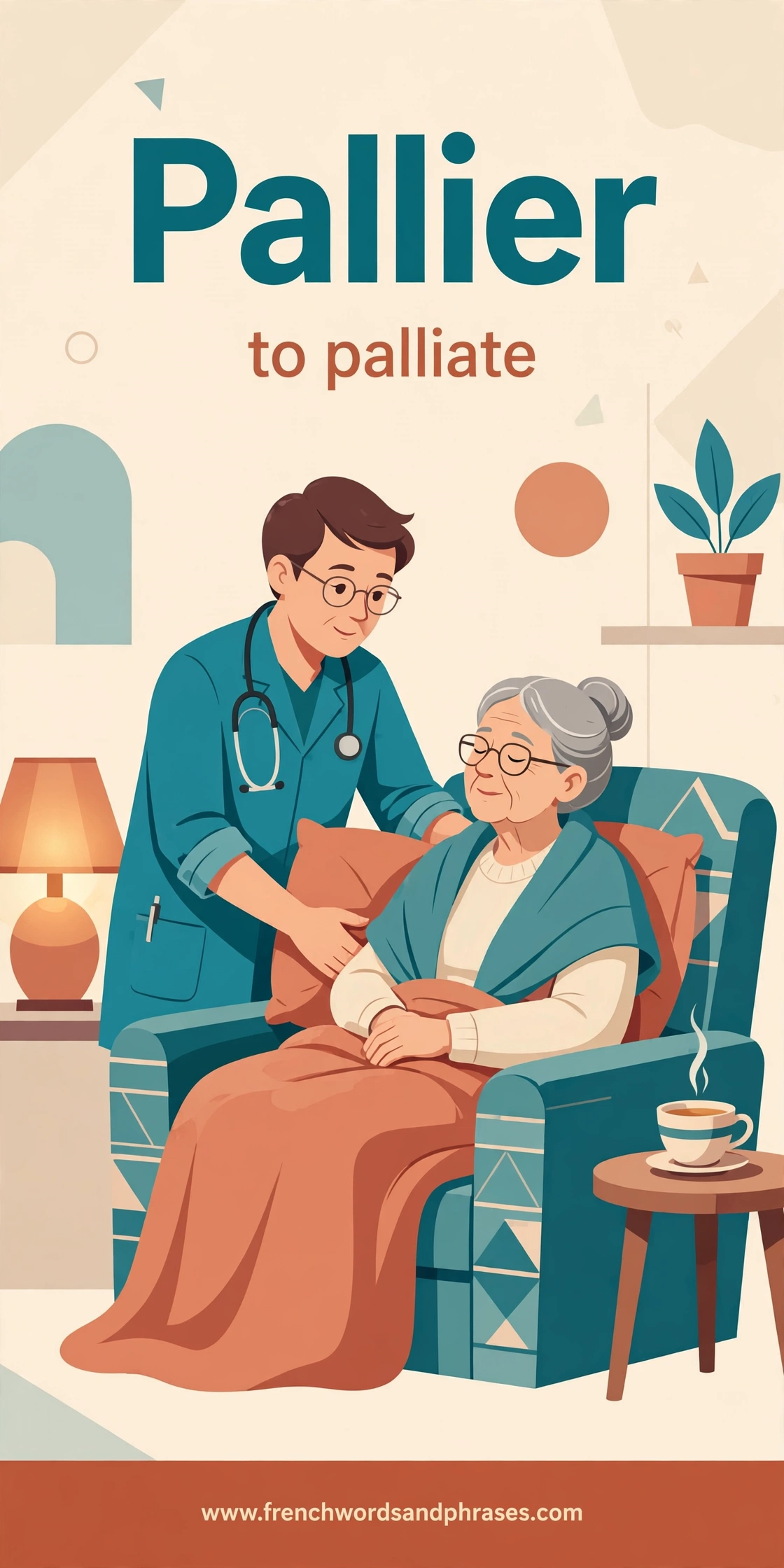
Pallier means to palliate — to soften a problem you cannot solve, covering the lack, the pain or the shortage with something that makes it bearable for now.
A hospital has no more beds, so camp beds appear in the corridor. A ministry has no money, so a temporary grant appears in the budget. Pallier is the verb of the makeshift remedy: it cures nothing, but it covers the gap — a cloak thrown over a difficulty until a real solution, if ever, arrives.
In this guide, you’ll learn how to conjugate pallier in all the major French tenses and moods. Explore complete conjugation tables, French examples, English translations, and practice quizzes.
Understanding the French Verb Pallier
Pallier is a regular French verb belonging to the first group of verbs, those ending in -er.
It means to palliate. It is the verb of administrators, doctors and engineers facing something they cannot fix outright: staff shortages, budget gaps, side effects, droughts. In medicine it gives les soins palliatifs, palliative care; everywhere else it signals an honest stopgap — useful, temporary, and no substitute for the cure.
Verb classification: First group (-er)
Auxiliary verb: Avoir
Past participle: pallié
Present participle: palliant
English equivalents: To palliate, to make up for, to offset; pallier un manque — to make up for a lack; pallier une pénurie — to alleviate a shortage; pallier les effets de la crise — to cushion the effects of the crisis; pallier à (common but disputed) — to remedy; un palliatif — a palliative, a stopgap.
One important detail: pallier is an -ier verb, so watch the double i where two i sounds collide — in the imperfect and the present subjunctive, nous and vous keep both: nous palliions, vous palliiez; que nous palliions, que vous palliiez. In the present the i is single: je pallie, nous pallions. Usage note: purists insist pallier is transitive — pallier un manque, never pallier à un manque — yet the à version is everywhere in speech and the press; the safe, elegant habit is the direct object. The word hides a cloak: Latin pallium, a mantle — to palliate is to throw a cloak over a problem.
Experience the Word
Pallier is the verb of the cloak over the crack — the problem is still there, but life can go on around it.
Imagine a small town whose only doctor retires in June. By July the mayor has hired nurses, opened a telemedicine room and laid on a bus to the city hospital: rien n’est guéri, but every measure pallie le manque — the gap is covered, clumsily, kindly, for now.
The town still needs a doctor. It has palliated — pallié — the absence, one makeshift at a time.
How to Conjugate Pallier: Complete French Conjugation Guide
Let’s explore every major conjugation of pallier, beginning with the indicative mood.
How to Conjugate Pallier in the Indicative Mood
The indicative mood is used to express facts, observations, actions, and events.
How to Conjugate Pallier in the Present Tense (Présent)
Used for actions happening now, habitual actions, and general truths.
| Subject | Conjugation |
|---|---|
| je | pallie |
| tu | pallies |
| il / elle | pallie |
| nous | pallions |
| vous | palliez |
| ils / elles | pallient |
Ces mesures pallient le manque de personnel.
These measures make up for the staff shortage.
Complete the sentence:
Nous ______ le manque de lits avec des lits de camp.
Reveal the answer
pallions
Nous pallions le manque de lits avec des lits de camp.
We are making up for the lack of beds with camp beds.
How to Conjugate Pallier in the Passé Composé
Used for completed actions in the past. Pallier takes the auxiliary verb avoir.
| Subject | Conjugation |
|---|---|
| j’ | ai pallié |
| tu | as pallié |
| il / elle | a pallié |
| nous | avons pallié |
| vous | avez pallié |
| ils / elles | ont pallié |
Le gouvernement a pallié la pénurie par des importations.
The government alleviated the shortage with imports.
How to Conjugate Pallier in the Imparfait (Imperfect Tense)
Used for habitual past actions, descriptions, and ongoing situations in the past.
| Subject | Conjugation |
|---|---|
| je | palliais |
| tu | palliais |
| il / elle | palliait |
| nous | palliions |
| vous | palliiez |
| ils / elles | palliaient |
Autrefois, les corvées palliaient le manque d’argent du village.
In the old days, communal labour used to make up for the village’s lack of money.
Choose the correct form:
She covered for the boss’s absence.
Elle ______ l’absence du chef. (a pallié / est palliée)
Reveal the answer
a pallié
Elle a pallié l’absence du chef.
Pallier takes avoir.
How to Conjugate Pallier in the Plus-que-parfait
Used to describe an action that had already been completed before another past event.
| Subject | Conjugation |
|---|---|
| j’ | avais pallié |
| tu | avais pallié |
| il / elle | avait pallié |
| nous | avions pallié |
| vous | aviez pallié |
| ils / elles | avaient pallié |
Elle avait pallié l’absence du chef pendant des mois.
She had covered for the boss’s absence for months.
How to Conjugate Pallier in the Passé Simple
Primarily used in formal writing, literature, and historical narratives. It is rarely used in everyday conversation.
| Subject | Conjugation |
|---|---|
| je | palliai |
| tu | pallias |
| il / elle | pallia |
| nous | palliâmes |
| vous | palliâtes |
| ils / elles | pallièrent |
La récolte exceptionnelle pallia les pertes de l’hiver.
The exceptional harvest made up for the winter’s losses.
How to Conjugate Pallier in the Passé Antérieur
A literary tense used to express an action completed immediately before another past action, generally in the passé simple.
| Subject | Conjugation |
|---|---|
| j’ | eus pallié |
| tu | eus pallié |
| il / elle | eut pallié |
| nous | eûmes pallié |
| vous | eûtes pallié |
| ils / elles | eurent pallié |
Quand il eut pallié le déficit par un emprunt, la mairie souffla.
When he had covered the deficit with a loan, the town hall breathed again.
How to Conjugate Pallier in the Future Tense (Futur Simple)
Used to describe actions that will take place in the future.
| Subject | Conjugation |
|---|---|
| je | pallierai |
| tu | pallieras |
| il / elle | palliera |
| nous | pallierons |
| vous | pallierez |
| ils / elles | pallieront |
Ce nouveau dispositif palliera le manque de lits.
This new scheme will make up for the lack of beds.
How to Conjugate Pallier in the Futur Antérieur (Future Perfect)
Used for an action that will have been completed before a particular point in the future.
| Subject | Conjugation |
|---|---|
| j’ | aurai pallié |
| tu | auras pallié |
| il / elle | aura pallié |
| nous | aurons pallié |
| vous | aurez pallié |
| ils / elles | auront pallié |
À la rentrée, ces recrutements auront pallié les départs.
By the start of term, these recruitments will have offset the departures.
How to Conjugate Pallier in the Near Future (Futur Proche)
Used to describe something that is going to happen soon. Formed with aller + infinitive.
| Subject | Conjugation |
|---|---|
| je | vais pallier |
| tu | vas pallier |
| il / elle | va pallier |
| nous | allons pallier |
| vous | allez pallier |
| ils / elles | vont pallier |
On va pallier le problème avec des heures supplémentaires.
We are going to cover the problem with overtime.
How to Conjugate Pallier in the Conditional Mood
The conditional mood expresses what would happen under certain circumstances. It is also frequently used to make polite requests or express wishes.
How to Conjugate Pallier in the Present Conditional
| Subject | Conjugation |
|---|---|
| je | pallierais |
| tu | pallierais |
| il / elle | pallierait |
| nous | pallierions |
| vous | pallieriez |
| ils / elles | pallieraient |
Un deuxième médecin pallierait bien des difficultés.
A second doctor would make up for many difficulties.
How to Conjugate Pallier in the Past Conditional
| Subject | Conjugation |
|---|---|
| j’ | aurais pallié |
| tu | aurais pallié |
| il / elle | aurait pallié |
| nous | aurions pallié |
| vous | auriez pallié |
| ils / elles | auraient pallié |
Ces fonds auraient pallié la crise sans les retards.
These funds would have cushioned the crisis without the delays.
Pallier in the Literary Past Conditional Form
This less common literary form uses the imperfect subjunctive of avoir.
| Subject | Conjugation |
|---|---|
| j’ | eusse pallié |
| tu | eusses pallié |
| il / elle | eût pallié |
| nous | eussions pallié |
| vous | eussiez pallié |
| ils / elles | eussent pallié |
La charité eût pallié la misère sans jamais la guérir.
Charity would have palliated the poverty without ever curing it.
How to Conjugate Pallier in the Subjunctive Mood
The subjunctive is used to express wishes, emotions, doubts, necessity, and uncertainty. It frequently follows expressions such as il faut que (it is necessary that) or bien que (although).
How to Conjugate Pallier in the Present Subjunctive
| Subject | Conjugation |
|---|---|
| que je | pallie |
| que tu | pallies |
| qu’il / qu’elle | pallie |
| que nous | palliions |
| que vous | palliiez |
| qu’ils / qu’elles | pallient |
Il faut que ce plan pallie le manque d’eau dès cet été.
This plan must make up for the water shortage starting this summer.
Complete the sentence using the subjunctive:
Il faut que vous ______ ce déficit rapidement.
Reveal the answer
palliiez
Il faut que vous palliiez ce déficit rapidement.
You must offset this deficit quickly.
How to Conjugate Pallier in the Imperfect Subjunctive
A literary tense, rarely encountered in modern spoken French.
| Subject | Conjugation |
|---|---|
| que je | palliasse |
| que tu | palliasses |
| qu’il / qu’elle | palliât |
| que nous | palliassions |
| que vous | palliassiez |
| qu’ils / qu’elles | palliassent |
On cherchait une solution qui palliât vraiment le déficit.
They were looking for a solution that would genuinely offset the deficit.
How to Conjugate Pallier in the Pluperfect Subjunctive
A literary construction used to express an action completed before another past action.
| Subject | Conjugation |
|---|---|
| que j’ | eusse pallié |
| que tu | eusses pallié |
| qu’il / qu’elle | eût pallié |
| que nous | eussions pallié |
| que vous | eussiez pallié |
| qu’ils / qu’elles | eussent pallié |
On admit que ces mesures eussent pallié le pire.
It was admitted that these measures had averted the worst.
How to Conjugate Pallier in the Past Subjunctive
| Subject | Conjugation |
|---|---|
| que j’ | aie pallié |
| que tu | aies pallié |
| qu’il / qu’elle | ait pallié |
| que nous | ayons pallié |
| que vous | ayez pallié |
| qu’ils / qu’elles | aient pallié |
Je suis content que vous ayez pallié cette absence si vite.
I am glad you covered for this absence so quickly.
How to Conjugate Pallier in the Imperative
The imperative is used to give commands, instructions, invitations, or suggestions. Subject pronouns are omitted.
How to Conjugate Pallier in the Present Imperative
| Person | Conjugation |
|---|---|
| (tu) | pallie |
| (nous) | pallions |
| (vous) | palliez |
Pallie ce manque comme tu peux, en attendant mieux !
Make up for this lack as best you can, until something better comes!
How would you say Make up for this lack (tu form)?
Reveal the answer
Pallie ce manque !
French Participles of Pallier
Participles are verb forms that can be used in compound tenses and other grammatical constructions.
Present Participle of Pallier
palliant
En palliant les effets de la sécheresse, la région a tenu bon.
By cushioning the effects of the drought, the region held on.
Past Participle of Pallier
pallié
Pallié par des mesures d’urgence, le déficit restait réel.
Palliated by emergency measures, the deficit remained real.
Pallier in Everyday French: Real-Life Examples
Now that you know the conjugations, let’s see how pallier appears in everyday French.
Ces mesures pallient le manque de personnel.
These measures make up for the staff shortage.
Le gouvernement a pallié la pénurie.
The government alleviated the shortage.
Elle palliait l’absence du chef.
She used to cover for the boss’s absence.
Ce dispositif palliera le manque de lits.
This scheme will make up for the lack of beds.
Un deuxième médecin pallierait bien des difficultés.
A second doctor would make up for many difficulties.
Palliez ce manque en attendant mieux !
Make up for this lack until something better comes!
Beyond Translation: The Meaning of Pallier
English palliate is the same Latin cloak — pallium, a mantle thrown over something to hide it — and both languages keep the faint reproach: a palliative covers, it does not cure.
French uses the word with clear eyes.
To say ça ne fait que pallier le problème — that only papers over the problem — is a complete political critique in six words, and les soins palliatifs gave the cloak a tender second life at the bedside.
How to Remember the French Verb Pallier
Remember it this way: Pallier is about a cloak thrown over the crack — the stopgap that covers, not cures.
- Picture a cloak (pallium) thrown over a crack: pallier covers a lack without curing it.
- Mind the double i: nous palliions, vous palliiez in the imperfect and subjunctive.
- Elegant French says pallier un manque — a direct object, no à.
The key idea is a cloak thrown over the crack — the stopgap that covers, not cures.
Test Your Knowledge of Pallier
Let’s see how much you’ve learned. Try answering these questions before revealing the answers.
Does pallier cure a problem, or cover it?
Reveal the answer
It covers it — pallier is to make up for a lack with a stopgap, from pallium, a cloak.
How do you say These measures make up for the staff shortage in French?
Reveal the answer
Ces mesures pallient le manque de personnel.
Translate: The government alleviated the shortage.
Reveal the answer
Le gouvernement a pallié la pénurie.
What is special about the nous form of pallier in the imperfect?
Reveal the answer
It has a double i — nous palliions, because the -ier stem meets the -ions ending.
Complete the sentence:
Il faut que ce plan ______ le manque d’eau.
Reveal the answer
pallie
Il faut que ce plan pallie le manque d’eau.
This plan must make up for the water shortage.
Can You Use It?
How would you say this in French?
They make up for the lack as best they can, but the village is still waiting for its doctor.
Reveal the answer
On pallie le manque comme on peut, mais le village attend toujours son médecin.
They make up for the lack as best they can, but the village is still waiting for its doctor.
LEARN FRENCH ONE WORD AT A TIME