A French Word to Live By
Translate Les to English
/le/
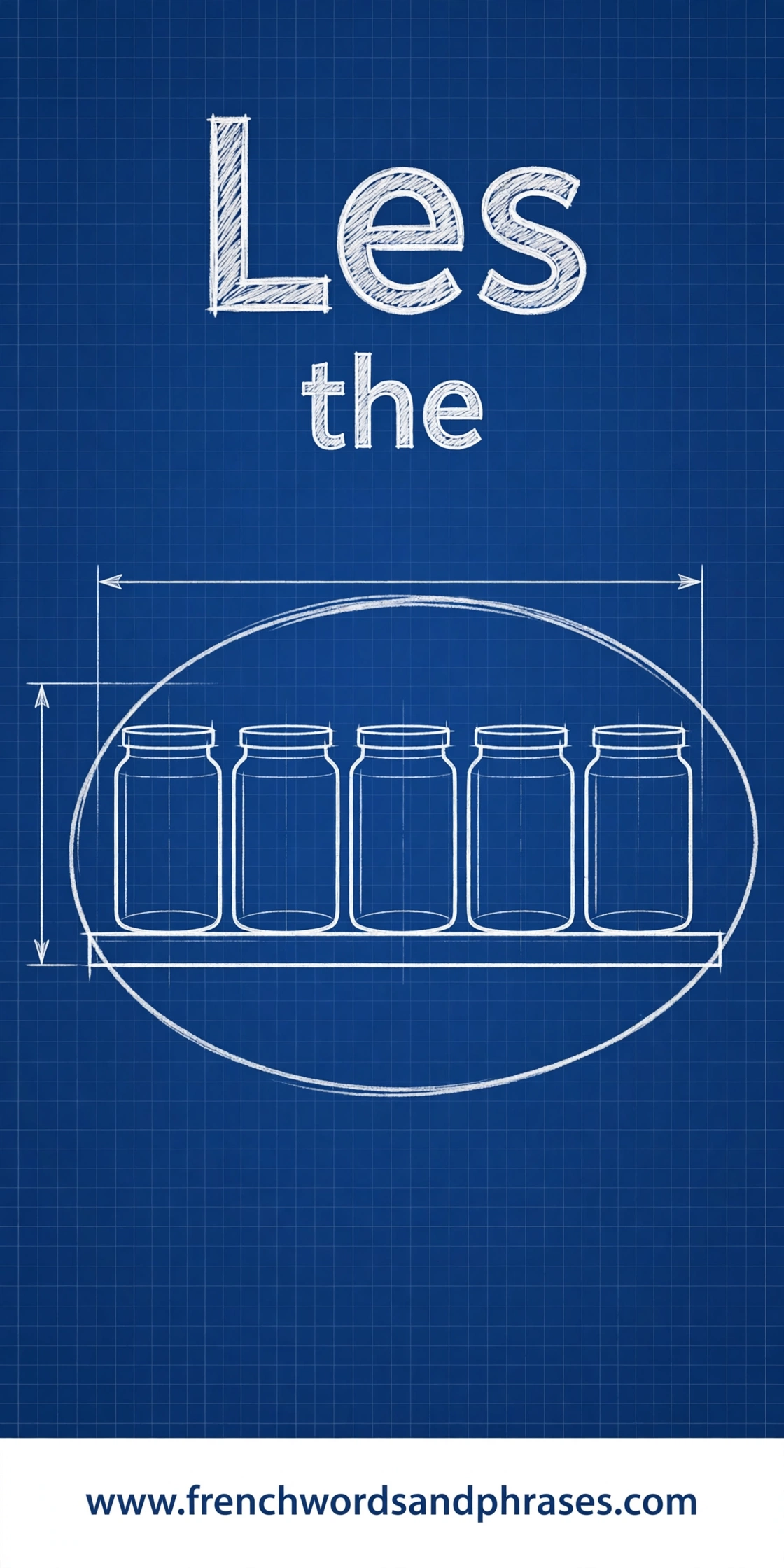
Les means the.
A bell rings and a wave of children pours out of the school gates, laughing in the spring sun. « Les enfants courent vers le parc » — the children run towards the park. Les is the plural of ‘the’: one small word that stands in front of every plural noun, masculine or feminine alike.
Let’s explore how les works in French, beginning with the whole word on one card.
Understanding the French Determiner Les
Les is a French definite article — the plural form of ‘the’, the same for masculine and feminine nouns. It stands in front of a plural noun and announces that the group is a specific one, already known to the listener.
It means the. The picture it paints is an open hand over a whole group: not some children, not any children, but les enfants — the children, those ones, the ones we have been talking about. Where English ‘the’ never changes, French uses les whenever the noun is plural, whatever its gender.
Type: Definite article — plural (masculine and feminine)
Answers the question: Lesquels ? / Lesquelles ? — Which ones? (Answer: the specific ones, not just any)
What follows it: A plural noun: les enfants, les tables, les idées
Watch the pair: les (the, specific) vs des (some, unspecified) — les pommes = the apples, des pommes = some apples
One important usage detail: les is the article of habits with days of the week — les lundis, je reste à la maison (on Mondays, I stay at home). And les never disappears before a vowel: les amis, les écoles stay whole, linked by a z sound.
Experience the Word
Les is the article of the whole group — the children, the stars, every member of the set gathered under one word.
Imagine a harbour at dawn: les bateaux rock on the water, les pêcheurs prepare their nets, les mouettes cry overhead — every plural noun steps forward with the same little companion in front of it.
You have not just pointed at things. You have told your listener: you know these ones, the whole group of them.
How to Use Les in French: Complete Guide
Let’s explore how les works in French, beginning with the whole word on one card.
Les at a Glance
The Whole Word on One Card
Meaning, job, family and signal — les in four lines.
| Point | Les |
|---|---|
| Meaning | the |
| Job | definite article — marks a specific, known plural noun |
| The family | les (plural), le (masc. sg.), la (fem. sg.), l’ (before a vowel) |
| What it signals | these ones, the group we know — not just any |
Example
Les enfants jouent dans le jardin.
The children are playing in the garden.
The Pattern in Action: The Group We Know
Les connects a group of nouns to shared knowledge — specific things, general truths, weekly habits.
| Pattern | Example |
|---|---|
| specific things | les clés sont sur la table — the keys are on the table (these keys, right here) |
| a general truth | les chiens sont des animaux fidèles — dogs are loyal animals (dogs in general) |
| a habit, with days | les samedis, nous allons au marché — on Saturdays, we go to the market |
| a whole group | les voisins sont très gentils — the neighbours are very kind |
Example
Les fleurs du jardin attirent les abeilles.
The flowers in the garden attract the bees.
Quick Quiz 1
In les chiens sont fidèles, does les point to some specific dogs?
Reveal the answer
No — les covers the whole kind: dogs in general, all of them.
Les chiens sont fidèles.
Dogs are loyal.
The Tricky Bit: When Les Fuses and Links
Les melts into à and de to make two new words — and before a vowel it keeps its shape but grows a z.
| Situation | What happens |
|---|---|
| à + les contracts to aux | je parle aux enfants — I am talking to the children (never ‘à les’) |
| de + les contracts to des | la maison des voisins — the neighbours’ house (never ‘de les’) |
| before a vowel, les links with a z sound | les amis, les écoles — the s is heard as z, but les never becomes l’ |
| des is also ‘some’ | des pommes can mean some apples — context tells you whether des = de + les or the indefinite ‘some’ |
Example
Je donne des fleurs aux enfants.
I am giving flowers to the children.
Where It Goes: Stuck to the Front of the Noun
Les leads the parade for every plural noun: article first, then any adjective, then the noun — and each noun gets its own.
| Position / pattern | Example |
|---|---|
| directly before the noun | les enfants, les tables, les idées — the article leads, the noun follows |
| for both genders | les frères et les sœurs — brothers and sisters take the same les |
| at the very front, adjectives included | les petits enfants, les enfants sages — les always stands first |
| repeated before each noun | les pommes et les poires — the apples and the pears (each noun gets its own article) |
Example
Les vieilles maisons entourent la place.
The old houses surround the square.
Quick Quiz 2
“I am talking to the children” — à les enfants or aux enfants?
Reveal the answer
aux enfants — à + les always contracts to aux.
Je parle aux enfants.
I am talking to the children.
Everyday Expressions with Les
Les gathers the crowds of daily life — holidays, people, Mondays and pairs.
| Expression | In English |
|---|---|
| les vacances | the holidays / vacation |
| les gens | people |
| les lundis | on Mondays (every Monday) |
| les deux | both (of them) |
| les mains | hands — lève les mains, hands up |
Example
Les vacances commencent la semaine prochaine.
The holidays start next week.
Close Cousins: Les, Des, Ces
Three small words before a plural noun — the difference is how well you know the group, and how close it is.
| Word | The difference |
|---|---|
| les | the — a specific, known group: les pommes du jardin (the apples from the garden) |
| des | some — an unspecified group, newly mentioned: des pommes (some apples, any apples) |
| ces | these / those — pointing at a group: ces pommes-ci (these apples here) |
| le / la | the same ‘the’ in singular shapes: le (masculine), la (feminine) |
Example
Les pommes sont mûres ; donne-moi les plus rouges.
The apples are ripe; give me the reddest ones.
Quick Quiz 3
Which cousin means “some” — les or des?
Reveal the answer
des — des introduces a new, unspecified group; les points to a known one.
Il y a des enfants dans le parc.
There are some children in the park.
Les and Its Neighbours
The article shelf: the whole family of ‘the’, with the indefinites next door.
| French | In English |
|---|---|
| le | the (masculine singular) |
| la | the (feminine singular) |
| l’ | the (before a vowel or mute h) |
| les | the (plural) |
| des / ces | some (indefinite) / these, those (demonstrative) |
Example
Les chats, les chiens et les oiseaux vivent dans la même ferme.
The cats, the dogs and the birds live on the same farm.
Watch Out: The Traps Around Les
The traps: dropping les where French keeps it, and writing à les or de les where French fuses them.
| Trap | The truth |
|---|---|
| dropping the article in general statements | English says ‘I like vegetables’; French keeps the article: j’aime les légumes |
| writing ‘à les’ or ‘de les’ | they always fuse: aux enfants, des voisins — never à les, de les |
| eliding les before a vowel | les stays whole: les amis, les idées — never ‘l’amis’; the s simply links as a z |
| confusing des the contraction with des ‘some’ | le livre des enfants = the children’s book (de + les); des enfants = some children — same spelling, different job |
Example
Les légumes du marché sont frais et pas chers.
The vegetables at the market are fresh and cheap.
Quick Quiz 4
Complete: Je parle ______ enfants. (I am talking to the children.)
Reveal the answer
aux — à + les always contracts to aux.
Je parle aux enfants.
I am talking to the children.
Les in Everyday French: Real-Life Examples
Now that you know the word, let’s see how les appears in everyday French.
Example Example 1 — School
Les enfants rentrent à la maison à quatre heures.
The children go home at four o’clock.
Example Example 2 — The garden
Les fleurs s’ouvrent au printemps.
The flowers open in spring.
Example Example 3 — Neighbours
Les voisins préparent une fête pour samedi.
The neighbours are preparing a party for Saturday.
Example Example 4 — Holidays
Les vacances sont toujours trop courtes.
The holidays are always too short.
Example Example 5 — Night sky
Les étoiles brillent au-dessus des montagnes.
The stars shine above the mountains.
Example Example 6 — The market
Les marchés français sont pleins de couleurs.
French markets are full of colour.
Beyond Translation: The Meaning of Les
English “the” does one quiet job; French splits it four ways — le, la, l’ and les — and les is the generous one: it covers every plural noun in the language, masculine and feminine alike, the whole crowd under a single word.
To say les is to announce: plural, and already known to us both — all of them.
That is why les feels so sweeping. Les enfants grow up, les saisons pass, and some groups — les amis, les souvenirs — need no introduction at all.
How to Remember the French Determiner Les
Remember it this way: Remember it this way: Les is the pointing hand over a whole group — it singles out the ones you both already know, all of them at once.
- You ask which ones? — if the answer is ‘the ones we know’ and the noun is plural, the word is les.
- You never write à les or de les — they fuse into aux and des every time.
- You keep les whole before vowels — les amis, les écoles; the final s just links with a z sound.
The key idea is les means the for every plural noun — it fuses with à and de into aux and des, and it never elides before a vowel.
Test Your Knowledge of Les
Let’s see how much you’ve learned. Try answering these questions before revealing the answers.
Question 1
What does les mean?
Reveal the answer
The — the definite article for all plural nouns, masculine and feminine.
Question 2
What are the four forms of ‘the’ in French?
Reveal the answer
Le, la, l’ and les — le (masculine singular), la (feminine singular), l’ (before a vowel), les (plural).
Question 3
Translate: The children are in the garden.
Reveal the answer
Les enfants sont dans le jardin.
Question 4
What do à + les and de + les become?
Reveal the answer
Aux and des — je parle aux enfants (I am talking to the children), la maison des voisins (the neighbours’ house).
Question 5
Complete the sentence:
Je donne le livre ______ enfants. (I give the book to the children.)
Reveal the answer
aux
Je donne le livre aux enfants.
I give the book to the children.
Your Final Challenge
Can You Use It?
How would you say this in French?
“How would you say this in French?”
Reveal the answer
Les enfants jouent dans le jardin.
The children are playing in the garden.
A little French. A little curiosity. A richer everyday life.
LEARN FRENCH ONE WORD AT A TIME