
A French Word to Live By
How to Conjugate Gambader in French
/ɡɑ̃.ba.de/
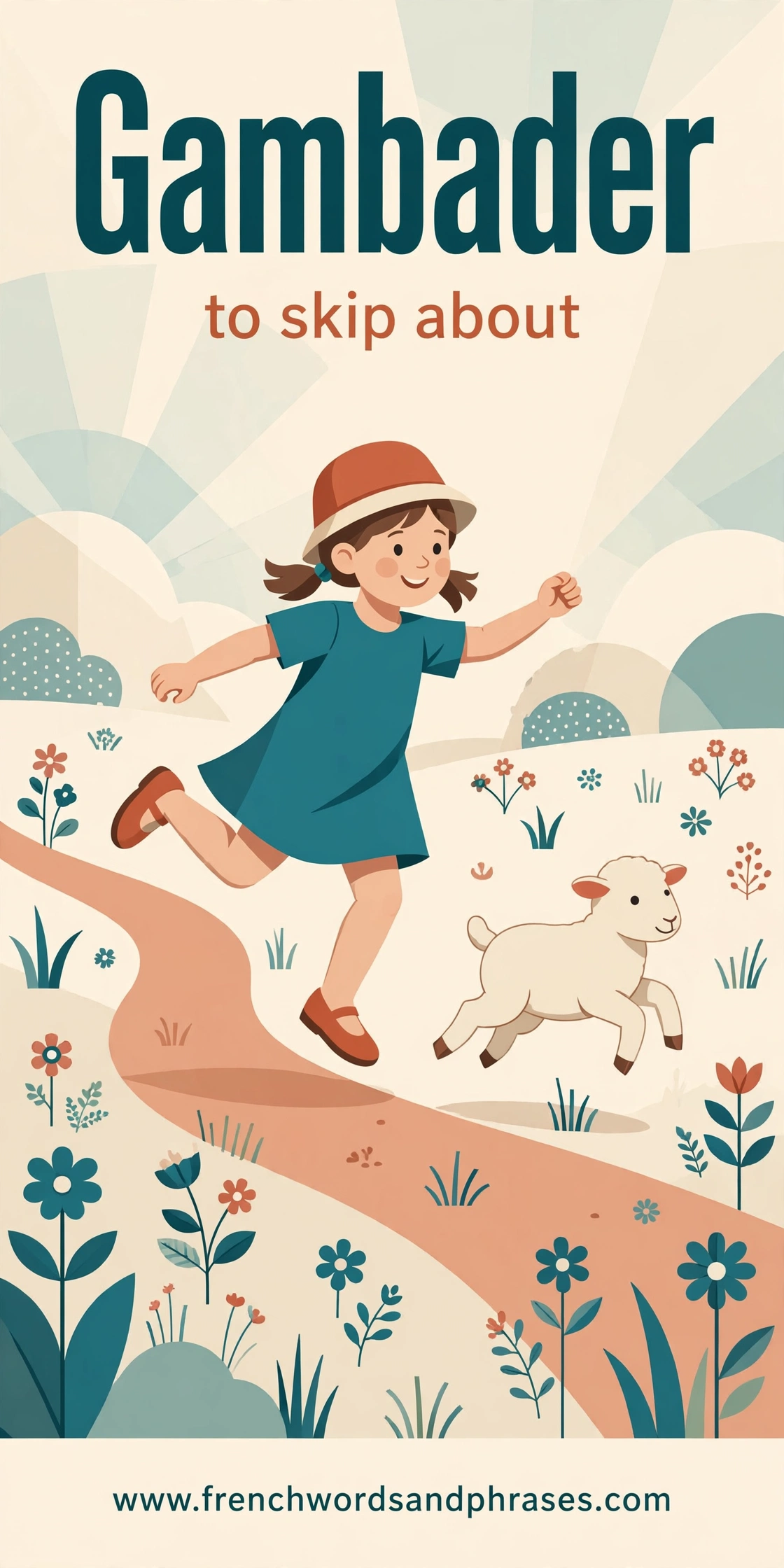
Gambader means to skip about, to frolic.
Spring lambs in the field, children let out of school, a dancer who cannot keep still — gambader is the happiest verb in this lesson: skipping about for the pure pleasure of moving, with no destination at all.
In this guide, you’ll learn how to conjugate gambader in all the major French tenses and moods. Explore complete conjugation tables, French examples, English translations, and practice quizzes.
Understanding the French Verb Gambader
Gambader is a regular French verb belonging to the first group of verbs, those ending in -er.
It means to skip about, to frolic. It is commonly used for children, lambs and young animals skipping about outdoors, and for dancers whose steps turn into joyful little leaps.
Verb classification: First group (-er)
Auxiliary verb: Avoir
Past participle: gambadé
Present participle: gambadant
English equivalents: To skip about, to frolic, to gambol, to frisk.
One important detail: gambader is a perfectly regular -er verb built on la gambe, the old word for a leg — the same root the Italians kept in gamba. Its noun is une gambade, a frolicsome skip: faire des gambades, to cut capers. Where sauter leaves the ground once, gambader keeps leaving it, joyfully, in every direction.
Experience the Word
Gambader is the verb of released energy — the school gate in June, the field in April, the dance that starts before the music does.
Imagine the lambs in the spring field: four legs leaving the grass at once, a twist in the air, a landing already aimed at the next leap — gambader is written all over them.
You have not just moved. You have celebrated having legs.
How to Conjugate Gambader: Complete French Conjugation Guide
Let’s explore every major conjugation of gambader, beginning with the indicative mood.
How to Conjugate Gambader in the Indicative Mood
The indicative mood is used to express facts, observations, actions, and events.
How to Conjugate Gambader in the Present Tense (Présent)
Used for actions happening now, habitual actions, and general truths.
| Subject | Conjugation |
|---|---|
| je | gambade |
| tu | gambades |
| il / elle | gambade |
| nous | gambadons |
| vous | gambadez |
| ils / elles | gambadent |
Example
Les agneaux gambadent dans le pré.
The lambs are frolicking in the meadow.
Quick Quiz 1
Complete the sentence:
Les enfants ______ dans la cour.
Reveal the answer
gambadent
Les enfants gambadent dans la cour.
The children are skipping about in the yard.
How to Conjugate Gambader in the Passé Composé
Used for completed actions in the past. Gambader takes the auxiliary verb avoir.
| Subject | Conjugation |
|---|---|
| j’ | ai gambadé |
| tu | as gambadé |
| il / elle | a gambadé |
| nous | avons gambadé |
| vous | avez gambadé |
| ils / elles | ont gambadé |
Example
Les enfants ont gambadé dans le jardin tout l’après-midi.
The children skipped about in the garden all afternoon.
How to Conjugate Gambader in the Imparfait (Imperfect Tense)
Used for habitual past actions, descriptions, and ongoing situations in the past.
| Subject | Conjugation |
|---|---|
| je | gambadais |
| tu | gambadais |
| il / elle | gambadait |
| nous | gambadions |
| vous | gambadiez |
| ils / elles | gambadaient |
Example
Le petit chien gambadait autour de nous pendant la promenade.
The little dog used to frolic around us during the walk.
Quick Quiz 2
Choose the correct form:
The puppy frolicked around the table.
Le chiot ______ autour de la table. (a gambadé / est gambadé)
Reveal the answer
a gambadé
Le chiot a gambadé autour de la table.
Gambader takes avoir in the passé composé.
How to Conjugate Gambader in the Plus-que-parfait
Used to describe an action that had already been completed before another past event.
| Subject | Conjugation |
|---|---|
| j’ | avais gambadé |
| tu | avais gambadé |
| il / elle | avait gambadé |
| nous | avions gambadé |
| vous | aviez gambadé |
| ils / elles | avaient gambadé |
Example
Ils avaient gambadé sur la plage avant le déjeuner.
They had skipped about on the beach before lunch.
How to Conjugate Gambader in the Passé Simple
Primarily used in formal writing, literature, and historical narratives. It is rarely used in everyday conversation.
| Subject | Conjugation |
|---|---|
| je | gambadai |
| tu | gambadas |
| il / elle | gambada |
| nous | gambadâmes |
| vous | gambadâtes |
| ils / elles | gambadèrent |
Example
Les chevreaux gambadèrent autour de leur mère.
The kid goats frolicked around their mother.
How to Conjugate Gambader in the Passé Antérieur
A literary tense used to express an action completed immediately before another past action, generally in the passé simple.
| Subject | Conjugation |
|---|---|
| j’ | eus gambadé |
| tu | eus gambadé |
| il / elle | eut gambadé |
| nous | eûmes gambadé |
| vous | eûtes gambadé |
| ils / elles | eurent gambadé |
Example
Dès qu’ils eurent gambadé une heure, ils s’endormirent.
As soon as they had frolicked for an hour, they fell asleep.
How to Conjugate Gambader in the Future Tense (Futur Simple)
Used to describe actions that will take place in the future.
| Subject | Conjugation |
|---|---|
| je | gambaderai |
| tu | gambaderas |
| il / elle | gambadera |
| nous | gambaderons |
| vous | gambaderez |
| ils / elles | gambaderont |
Example
Au printemps, les agneaux gambaderont dans les prés.
In spring, the lambs will frolic in the meadows.
How to Conjugate Gambader in the Futur Antérieur (Future Perfect)
Used for an action that will have been completed before a particular point in the future.
| Subject | Conjugation |
|---|---|
| j’ | aurai gambadé |
| tu | auras gambadé |
| il / elle | aura gambadé |
| nous | aurons gambadé |
| vous | aurez gambadé |
| ils / elles | auront gambadé |
Example
À midi, les enfants auront bien gambadé.
By noon, the children will have had a good frolic.
How to Conjugate Gambader in the Near Future (Futur Proche)
Used to describe something that is going to happen soon. Formed with aller + infinitive.
| Subject | Conjugation |
|---|---|
| je | vais gambader |
| tu | vas gambader |
| il / elle | va gambader |
| nous | allons gambader |
| vous | allez gambader |
| ils / elles | vont gambader |
Example
Regarde, le chiot va gambader dans l’herbe.
Look, the puppy is going to frolic in the grass.
How to Conjugate Gambader in the Conditional Mood
The conditional mood expresses what would happen under certain circumstances. It is also frequently used to make polite requests or express wishes.
How to Conjugate Gambader in the Present Conditional
| Subject | Conjugation |
|---|---|
| je | gambaderais |
| tu | gambaderais |
| il / elle | gambaderait |
| nous | gambaderions |
| vous | gambaderiez |
| ils / elles | gambaderaient |
Example
Avec un jardin pareil, les enfants gambaderaient toute la journée.
With a garden like that, the children would skip about all day.
How to Conjugate Gambader in the Past Conditional
| Subject | Conjugation |
|---|---|
| j’ | aurais gambadé |
| tu | aurais gambadé |
| il / elle | aurait gambadé |
| nous | aurions gambadé |
| vous | auriez gambadé |
| ils / elles | auraient gambadé |
Example
Ils auraient gambadé dehors s’il n’avait pas plu.
They would have frolicked outside if it hadn’t rained.
Gambader in the Literary Past Conditional Form
This less common literary form uses the imperfect subjunctive of avoir.
| Subject | Conjugation |
|---|---|
| j’ | eusse gambadé |
| tu | eusses gambadé |
| il / elle | eût gambadé |
| nous | eussions gambadé |
| vous | eussiez gambadé |
| ils / elles | eussent gambadé |
Example
Elle eût gambadé de joie à cette nouvelle.
She would have skipped for joy at the news.
How to Conjugate Gambader in the Subjunctive Mood
The subjunctive is used to express wishes, emotions, doubts, necessity, and uncertainty. It frequently follows expressions such as il faut que (it is necessary that) or bien que (although).
How to Conjugate Gambader in the Present Subjunctive
| Subject | Conjugation |
|---|---|
| que je | gambade |
| que tu | gambades |
| qu’il / qu’elle | gambade |
| que nous | gambadions |
| que vous | gambadiez |
| qu’ils / qu’elles | gambadent |
Example
Il est amusant que les enfants gambadent ainsi.
It’s sweet that the children frolic like that.
Quick Quiz 3
Complete the sentence using the subjunctive:
Il est doux que vous ______ au soleil.
Reveal the answer
gambadiez
Il est doux que vous gambadiez au soleil.
It’s sweet that you frolic in the sun.
How to Conjugate Gambader in the Imperfect Subjunctive
A literary tense, rarely encountered in modern spoken French.
| Subject | Conjugation |
|---|---|
| que je | gambadasse |
| que tu | gambadasses |
| qu’il / qu’elle | gambadât |
| que nous | gambadassions |
| que vous | gambadassiez |
| qu’ils / qu’elles | gambadassent |
Example
Il riait que le chiot gambadât autour de la table.
He laughed that the puppy should frolic around the table.
How to Conjugate Gambader in the Pluperfect Subjunctive
A literary construction used to express an action completed before another past action.
| Subject | Conjugation |
|---|---|
| que j’ | eusse gambadé |
| que tu | eusses gambadé |
| qu’il / qu’elle | eût gambadé |
| que nous | eussions gambadé |
| que vous | eussiez gambadé |
| qu’ils / qu’elles | eussent gambadé |
Example
Elle souriait qu’ils eussent gambadé toute la matinée.
She smiled that they had frolicked all morning.
How to Conjugate Gambader in the Past Subjunctive
| Subject | Conjugation |
|---|---|
| que j’ | aie gambadé |
| que tu | aies gambadé |
| qu’il / qu’elle | ait gambadé |
| que nous | ayons gambadé |
| que vous | ayez gambadé |
| qu’ils / qu’elles | aient gambadé |
Example
Je suis ravie que les agneaux aient gambadé au soleil.
I’m delighted the lambs frolicked in the sun.
How to Conjugate Gambader in the Imperative
The imperative is used to give commands, instructions, invitations, or suggestions. Subject pronouns are omitted.
How to Conjugate Gambader in the Present Imperative
| Person | Conjugation |
|---|---|
| (tu) | gambade |
| (nous) | gambadons |
| (vous) | gambadez |
Example
Gambade, petit chien, l’herbe est à toi !
Frolic, little dog, the grass is yours!
Quick Quiz 4
How would you say Frolic!, using the tu form?
Reveal the answer
Gambade !
French Participles of Gambader
Participles are verb forms that can be used in compound tenses and other grammatical constructions.
Present Participle of Gambader
gambadant
En gambadant, la petite fille a traversé tout le pré.
Skipping about, the little girl crossed the whole meadow.
Past Participle of Gambader
gambadé
Après avoir gambadé, les enfants ont réclamé le goûter.
After frolicking, the children asked for their snack.
Gambader in Everyday French: Real-Life Examples
Now that you know the conjugations, let’s see how gambader appears in everyday French.
Example 1 — Present
Les enfants gambadent dans la cour de récréation.
The children are skipping about in the playground.
Example 2 — Passé composé
Le chiot a gambadé autour de la table.
The puppy frolicked around the table.
Example 3 — Imparfait
Les agneaux gambadaient au soleil de printemps.
The lambs used to frolic in the spring sun.
Example 4 — Future
Demain, ils gambaderont sur la plage.
Tomorrow, they will skip about on the beach.
Example 5 — Conditional
Elle gambaderait de joie à cette nouvelle.
She would skip for joy at the news.
Example 6 — Imperative
Allez, gambadez dans le jardin, pas dans le salon !
Go on, frolic in the garden, not in the living room!
See gambader in a story: Dance Vocabulary: French Vocabulary (Le Vocabulaire de la Danse) — a village fête under the lights.
Beyond Translation: The Meaning of Gambader
English keeps the learned cousin gambol for the meaning of gambader — but in French the word stayed in the field and the playground, alive and ordinary. It is built on legs (la gambe) and it means legs used for joy alone: no journey, no race, no work — movement as celebration.
To gambader is to move because standing still would waste the day.
It evokes lambs in April, puppies on the lawn, and dancers whose feet invent steps the music never asked for.
How to Remember the French Verb Gambader
Remember it this way: Gambader is about gambader — legs at play, joy without a destination.
- You think of lambs — les agneaux gambadent: auxiliary avoir, participle gambadé.
- You remember the legs — gambader is la gambe at play, skipping in every direction.
- You keep the noun — faire des gambades, to cut capers.
The key idea is gambader — legs at play, joy without a destination.
Test Your Knowledge of Gambader
Let’s see how much you’ve learned. Try answering these questions before revealing the answers.
Question 1
What is the past participle of gambader?
Reveal the answer
Gambadé.
Question 2
How do you say The lambs are frolicking in French?
Reveal the answer
Les agneaux gambadent.
Question 3
Translate: The children skipped about in the garden.
Reveal the answer
Les enfants ont gambadé dans le jardin.
Question 4
What is une gambade?
Reveal the answer
A frolicsome skip or caper — faire des gambades, to cut capers.
Question 5
Complete the sentence:
Il est doux que les enfants ______ dans le pré.
Reveal the answer
gambadent
Il est doux que les enfants gambadent dans le pré.
It’s sweet that the children frolic in the meadow.
Your Final Challenge
Can You Use It?
How would you say this in French?
In spring, the lambs frolic in the green meadows.
Reveal the answer
Au printemps, les agneaux gambadent dans les prés verts.
In spring, the lambs frolic in the green meadows.
A little French. A little curiosity. A richer everyday life.
LEARN FRENCH ONE WORD AT A TIME




