A French Word to Live By
How to Conjugate Balancer in French
/ba.lɑ̃.se/
Balancer means to sway, to swing, or to rock.
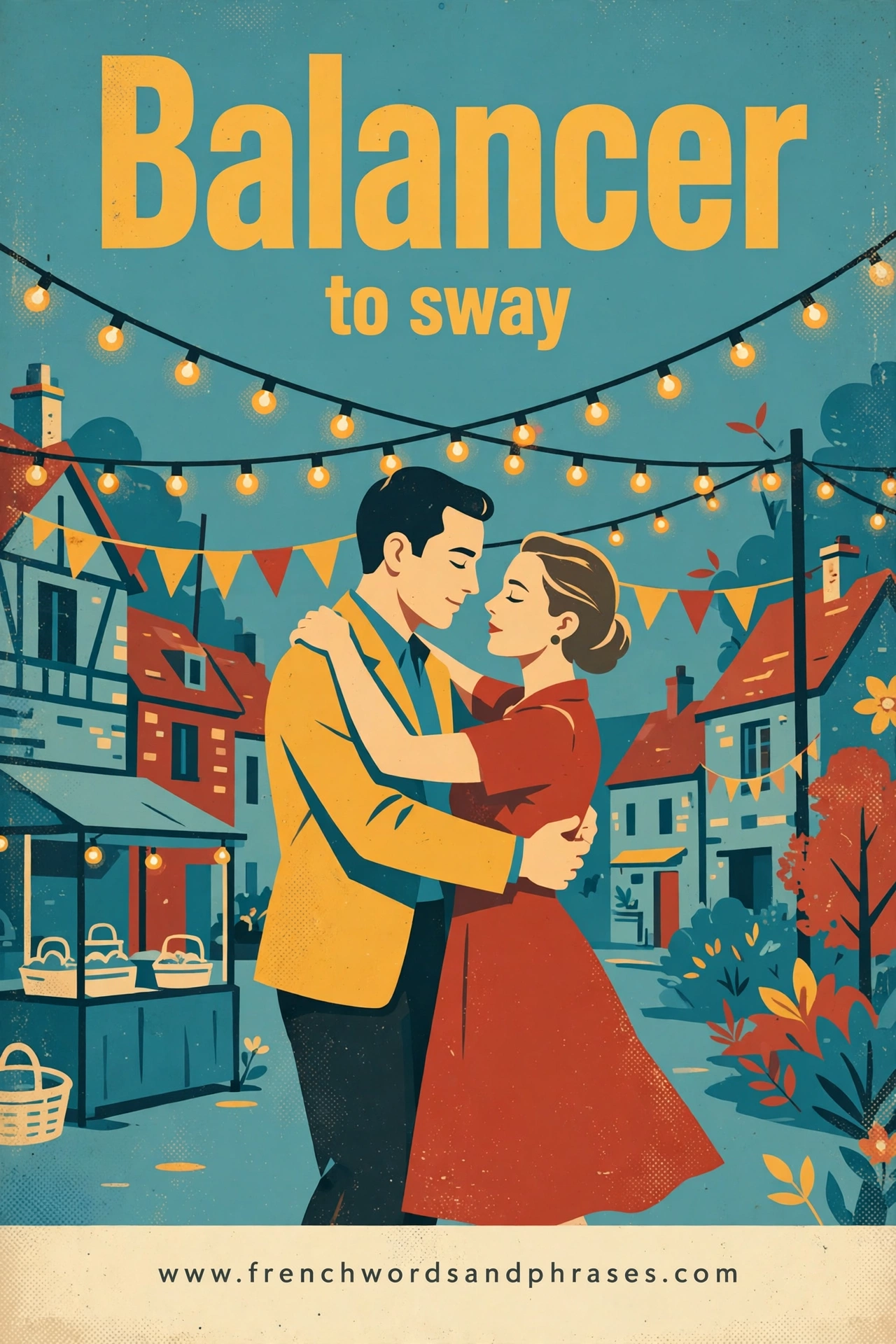
The boat at its mooring, the lamp over the table, the dancer’s skirt keeping time — balancer is the verb of the gentle to-and-fro. Nothing is lifted, nothing falls: everything rocks, swings and sways in rhythm.
In this guide, you’ll learn how to conjugate balancer in all the major French tenses and moods. Explore complete conjugation tables, French examples, English translations, and practice quizzes.
Understanding the French Verb Balancer
Balancer is a regular French verb belonging to the first group of verbs, those ending in -er.
It means to sway, to swing, or to rock. It is commonly used for things swinging or swaying — boats, lamps, branches — for rocking a child, and in its reflexive form se balancer for the swing in the playground. In familiar French it also means to chuck something away.
Verb classification: First group (-er)
Auxiliary verb: Avoir
Past participle: balancé
Present participle: balançant
English equivalents: To sway, to swing, to rock; (familiar) to chuck away; se balancer, to swing, to rock oneself.
One important spelling detail: balancer is a -cer verb. Before an ending that begins with a or o, the c takes a cedilla to stay soft: nous balançons, je balançais — but je balance and nous balancions keep the plain c before e and i. Watch for the ç in the nous form of the present and throughout the imparfait’s je form.
Experience the Word
Balancer is the verb of rhythm without hurry — the movement that rocks babies to sleep and keeps dancers on the beat.
Imagine the harbour at dusk: a hundred masts swaying a fraction out of time with each other, the ropes ticking against the poles, and the whole port breathing in and out with the water.
You have not just moved side to side. You have found the rhythm the world rocks to.
How to Conjugate Balancer: Complete French Conjugation Guide
Let’s explore every major conjugation of balancer, beginning with the indicative mood.
How to Conjugate Balancer in the Indicative Mood
The indicative mood is used to express facts, observations, actions, and events.
How to Conjugate Balancer in the Present Tense (Présent)
Used for actions happening now, habitual actions, and general truths.
| Subject | Conjugation |
|---|---|
| je | balance |
| tu | balances |
| il / elle | balance |
| nous | balançons |
| vous | balancez |
| ils / elles | balancent |
Example
Le bateau balance doucement sur l’eau calme.
The boat is rocking gently on the calm water.
Quick Quiz 1
Complete the sentence:
Nous ______ au rythme de la musique.
Reveal the answer
balançons
Nous balançons au rythme de la musique.
We are swaying to the rhythm of the music — mind the cedilla.
How to Conjugate Balancer in the Passé Composé
Used for completed actions in the past. Balancer takes the auxiliary verb avoir.
| Subject | Conjugation |
|---|---|
| j’ | ai balancé |
| tu | as balancé |
| il / elle | a balancé |
| nous | avons balancé |
| vous | avez balancé |
| ils / elles | ont balancé |
Example
Elle a balancé le bébé dans ses bras.
She rocked the baby in her arms.
How to Conjugate Balancer in the Imparfait (Imperfect Tense)
Used for habitual past actions, descriptions, and ongoing situations in the past.
| Subject | Conjugation |
|---|---|
| je | balançais |
| tu | balançais |
| il / elle | balançait |
| nous | balancions |
| vous | balanciez |
| ils / elles | balançaient |
Example
La lampe balançait au-dessus de la table.
The lamp used to sway above the table.
Quick Quiz 2
Choose the correct form:
She rocked the baby.
Elle ______ le bébé. (a balancé / est balancée)
Reveal the answer
a balancé
Elle a balancé le bébé.
Balancer takes avoir in the passé composé.
How to Conjugate Balancer in the Plus-que-parfait
Used to describe an action that had already been completed before another past event.
| Subject | Conjugation |
|---|---|
| j’ | avais balancé |
| tu | avais balancé |
| il / elle | avait balancé |
| nous | avions balancé |
| vous | aviez balancé |
| ils / elles | avaient balancé |
Example
Le vent avait balancé les branches toute la nuit.
The wind had swayed the branches all night.
How to Conjugate Balancer in the Passé Simple
Primarily used in formal writing, literature, and historical narratives. It is rarely used in everyday conversation.
| Subject | Conjugation |
|---|---|
| je | balançai |
| tu | balanças |
| il / elle | balança |
| nous | balançâmes |
| vous | balançâtes |
| ils / elles | balancèrent |
Example
Le navire balança lentement en entrant au port.
The ship rolled slowly as it entered the harbour.
How to Conjugate Balancer in the Passé Antérieur
A literary tense used to express an action completed immediately before another past action, generally in the passé simple.
| Subject | Conjugation |
|---|---|
| j’ | eus balancé |
| tu | eus balancé |
| il / elle | eut balancé |
| nous | eûmes balancé |
| vous | eûtes balancé |
| ils / elles | eurent balancé |
Example
Dès que la barque eut balancé une dernière fois, elle s’arrêta.
As soon as the boat had rocked one last time, it stopped.
How to Conjugate Balancer in the Future Tense (Futur Simple)
Used to describe actions that will take place in the future.
| Subject | Conjugation |
|---|---|
| je | balancerai |
| tu | balanceras |
| il / elle | balancera |
| nous | balancerons |
| vous | balancerez |
| ils / elles | balanceront |
Example
Les bateaux balanceront au mouillage ce soir.
The boats will rock at their moorings this evening.
How to Conjugate Balancer in the Futur Antérieur (Future Perfect)
Used for an action that will have been completed before a particular point in the future.
| Subject | Conjugation |
|---|---|
| j’ | aurai balancé |
| tu | auras balancé |
| il / elle | aura balancé |
| nous | aurons balancé |
| vous | aurez balancé |
| ils / elles | auront balancé |
Example
À la tombée de la nuit, la balançoire aura balancé mille fois.
By nightfall, the swing will have swung a thousand times.
How to Conjugate Balancer in the Near Future (Futur Proche)
Used to describe something that is going to happen soon. Formed with aller + infinitive.
| Subject | Conjugation |
|---|---|
| je | vais balancer |
| tu | vas balancer |
| il / elle | va balancer |
| nous | allons balancer |
| vous | allez balancer |
| ils / elles | vont balancer |
Example
Regarde, la branche va balancer dans le vent.
Look, the branch is going to sway in the wind.
How to Conjugate Balancer in the Conditional Mood
The conditional mood expresses what would happen under certain circumstances. It is also frequently used to make polite requests or express wishes.
How to Conjugate Balancer in the Present Conditional
| Subject | Conjugation |
|---|---|
| je | balancerais |
| tu | balancerais |
| il / elle | balancerait |
| nous | balancerions |
| vous | balanceriez |
| ils / elles | balanceraient |
Example
Sans le vent, rien ne balancerait dans le port.
Without the wind, nothing would sway in the harbour.
How to Conjugate Balancer in the Past Conditional
| Subject | Conjugation |
|---|---|
| j’ | aurais balancé |
| tu | aurais balancé |
| il / elle | aurait balancé |
| nous | aurions balancé |
| vous | auriez balancé |
| ils / elles | auraient balancé |
Example
Elle aurait balancé le berceau plus longtemps.
She would have rocked the cradle longer.
Balancer in the Literary Past Conditional Form
This less common literary form uses the imperfect subjunctive of avoir.
| Subject | Conjugation |
|---|---|
| j’ | eusse balancé |
| tu | eusses balancé |
| il / elle | eût balancé |
| nous | eussions balancé |
| vous | eussiez balancé |
| ils / elles | eussent balancé |
Example
Le navire eût balancé doucement sous la lune.
The ship would have rocked gently under the moon.
How to Conjugate Balancer in the Subjunctive Mood
The subjunctive is used to express wishes, emotions, doubts, necessity, and uncertainty. It frequently follows expressions such as il faut que (it is necessary that) or bien que (although).
How to Conjugate Balancer in the Present Subjunctive
| Subject | Conjugation |
|---|---|
| que je | balance |
| que tu | balances |
| qu’il / qu’elle | balance |
| que nous | balancions |
| que vous | balanciez |
| qu’ils / qu’elles | balancent |
Example
Il faut que tu balances le bébé doucement.
You need to rock the baby gently.
Quick Quiz 3
Complete the sentence using the subjunctive:
Il faut que vous ______ doucement.
Reveal the answer
balanciez
Il faut que vous balanciez doucement.
You need to sway gently.
How to Conjugate Balancer in the Imperfect Subjunctive
A literary tense, rarely encountered in modern spoken French.
| Subject | Conjugation |
|---|---|
| que je | balançasse |
| que tu | balançasses |
| qu’il / qu’elle | balançât |
| que nous | balançassions |
| que vous | balançassiez |
| qu’ils / qu’elles | balançassent |
Example
Il chantait pour qu’elle balançât le berceau.
He sang so that she would rock the cradle.
How to Conjugate Balancer in the Pluperfect Subjunctive
A literary construction used to express an action completed before another past action.
| Subject | Conjugation |
|---|---|
| que j’ | eusse balancé |
| que tu | eusses balancé |
| qu’il / qu’elle | eût balancé |
| que nous | eussions balancé |
| que vous | eussiez balancé |
| qu’ils / qu’elles | eussent balancé |
Example
Je souriais qu’ils eussent balancé au rythme de la musique.
I smiled that they had swayed to the rhythm of the music.
How to Conjugate Balancer in the Past Subjunctive
| Subject | Conjugation |
|---|---|
| que j’ | aie balancé |
| que tu | aies balancé |
| qu’il / qu’elle | ait balancé |
| que nous | ayons balancé |
| que vous | ayez balancé |
| qu’ils / qu’elles | aient balancé |
Example
Je suis content que tu aies balancé au bal.
I am glad you swayed at the dance.
How to Conjugate Balancer in the Imperative
The imperative is used to give commands, instructions, invitations, or suggestions. Subject pronouns are omitted.
How to Conjugate Balancer in the Present Imperative
| Person | Conjugation |
|---|---|
| (tu) | balance |
| (nous) | balançons |
| (vous) | balancez |
Example
Balance le berceau, le bébé s’endort.
Rock the cradle, the baby is falling asleep.
Quick Quiz 4
How would you say Rock the cradle!, using the tu form?
Reveal the answer
Balance le berceau !
French Participles of Balancer
Participles are verb forms that can be used in compound tenses and other grammatical constructions.
Present Participle of Balancer
balançant
En balançant les bras, elle gardait le rythme.
Swaying her arms, she kept the rhythm.
Past Participle of Balancer
balancé
Balancé par les vagues, le bateau avançait lentement.
Rocked by the waves, the boat moved slowly forward.
Balancer in Everyday French: Real-Life Examples
Now that you know the conjugations, let’s see how balancer appears in everyday French.
Example 1 — Present
Les danseurs balancent au rythme de la musique.
The dancers are swaying to the rhythm of the music.
Example 2 — Passé composé
Il a balancé le bébé jusqu’à ce qu’il dorme.
He rocked the baby until it slept.
Example 3 — Reflexive
Les enfants se balancent dans le jardin.
The children are swinging in the garden.
Example 4 — Imparfait
Le bateau balançait au mouillage.
The boat was rocking at its mooring.
Example 5 — Future
Le hamac balancera entre les deux arbres.
The hammock will sway between the two trees.
Example 6 — Familiar
Il a balancé ses vieilles chaussures.
He chucked his old shoes away.
See balancer in a story: Dance Vocabulary: French Vocabulary (Le Vocabulaire de la Danse) — a village fête under the lights.
Beyond Translation: The Meaning of Balancer
English needs sway, swing and rock where French rocks along with one verb — balancer — the verb of the scales (la balance) set in motion. Its family fills the playground: la balançoire, the swing; le balancier, the pendulum. And familiar French sends it to the bin: balancer un vieux truc, to chuck an old thing away — swung out of your life.
To balancer is to move as rhythm moves — to and fro, and never in a hurry.
It evokes masts in the harbour dusk, a cradle slowing towards sleep, and dancers balançant as one body on the beat.
How to Remember the French Verb Balancer
Remember it this way: Balancer is about balancer — sway with a cedilla: nous balançons.
- You watch the cedilla — nous balançons: the c goes soft before a and o.
- You rock and sway with avoir — elle a balancé le bébé: participle balancé.
- You climb on the swing — se balancer, the reflexive, for the playground.
The key idea is balancer — sway with a cedilla: nous balançons.
Test Your Knowledge of Balancer
Let’s see how much you’ve learned. Try answering these questions before revealing the answers.
Question 1
What is the past participle of balancer?
Reveal the answer
Balancé.
Question 2
How do you say We are swaying (nous form) in French?
Reveal the answer
Nous balançons.
Question 3
Translate: The boat is rocking gently.
Reveal the answer
Le bateau balance doucement.
Question 4
What is la balançoire?
Reveal the answer
The swing — balancer’s own playground noun.
Question 5
Complete the sentence:
Il faut que tu ______ le bébé doucement.
Reveal the answer
balances
Il faut que tu balances le bébé doucement.
You need to rock the baby gently.
Your Final Challenge
Can You Use It?
How would you say this in French?
The dancers are swaying gently to the rhythm of the music.
Reveal the answer
Les danseurs balancent doucement au rythme de la musique.
The dancers are swaying gently to the rhythm of the music.
A little French. A little curiosity. A richer everyday life.
LEARN FRENCH ONE WORD AT A TIME