A French Word to Live By
How to Conjugate Ébrécher in French
/e.bʁe.ʃe/
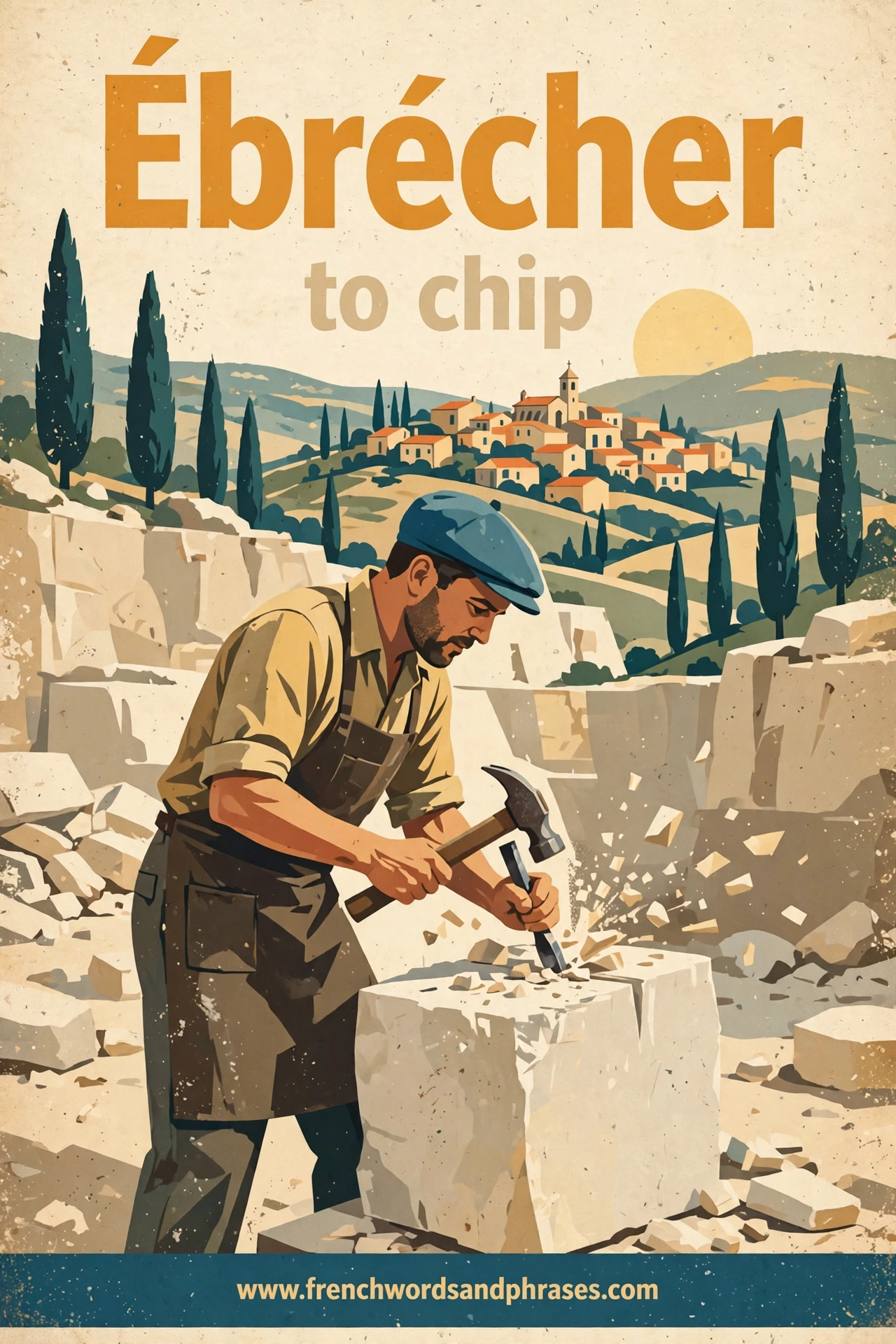
Ébrécher means to chip.
A favourite cup with a notch in its rim, a tooth that meets an olive stone, a knife blade dulled by one bone too many — ébrécher is the verb of the small, sad notch: to chip a hard edge and leave it forever slightly wounded.
In this guide, you’ll learn how to conjugate ébrécher in all the major French tenses and moods. Explore complete conjugation tables, French examples, English translations, and practice quizzes.
Understanding the French Verb Ébrécher
Ébrécher is a regular French verb belonging to the first group of verbs, those ending in -er.
It means to chip. It is commonly used for chipping cups, plates and porcelain, for chipping a tooth on something hard, for notching knife and sword blades, and in the reflexive for anything hard-edged that damages itself in use.
Verb classification: First group (-er)
Auxiliary verb: Avoir
Past participle: ébréché
Present participle: ébréchant
English equivalents: To chip, to notch; s’ébrécher — to get chipped (blade, tooth, china); une tasse ébréchée — a chipped cup.
One important detail: ébrécher is a céder-type verb — the é of the stem becomes è wherever the next syllable is mute: j’ébrèche, tu ébrèches, il ébrèche, ils ébrèchent, and in the subjunctive qu’il ébrèche. But where the ending is sounded, the é stays: nous ébréchons, vous ébréchez, and in the future, j’ébrècherai. The reflexive s’ébrécher is what blades, teeth and china do to themselves: la lame s’est ébréchée sur l’os.
Experience the Word
Ébrécher is the verb of the imperfect survivor — the cup is still a cup, the blade still cuts, but the notch tells the story.
Imagine a kitchen drawer in an old house. Every plate in it carries a small chip, every cup a tiny notch, and nobody throws them away: they have been ébréchés by fifty years of breakfasts, and they are loved the more for it.
Nothing is broken, nothing is ruined. It is chipped — marked by use, and still in service.
How to Conjugate Ébrécher: Complete French Conjugation Guide
Let’s explore every major conjugation of ébrécher, beginning with the indicative mood.
How to Conjugate Ébrécher in the Indicative Mood
The indicative mood is used to express facts, observations, actions, and events.
How to Conjugate Ébrécher in the Present Tense (Présent)
Used for actions happening now, habitual actions, and general truths.
| Subject | Conjugation |
|---|---|
| je | ébrèche |
| tu | ébrèches |
| il / elle | ébrèche |
| nous | ébréchons |
| vous | ébréchez |
| ils / elles | ébrèchent |
Example
Attention, tu ébrèches la lame sur cette pierre.
Careful, you are chipping the blade on that stone.
Quick Quiz 1
Complete the sentence:
Nous ______ les assiettes si nous ne faisons pas attention.
Reveal the answer
ébréchons
Nous ébréchons les assiettes si nous ne faisons pas attention.
We chip the plates if we are not careful. The nous form keeps é.
How to Conjugate Ébrécher in the Passé Composé
Used for completed actions in the past. Ébrécher takes the auxiliary verb avoir.
| Subject | Conjugation |
|---|---|
| j’ | ai ébréché |
| tu | as ébréché |
| il / elle | a ébréché |
| nous | avons ébréché |
| vous | avez ébréché |
| ils / elles | ont ébréché |
Example
Elle a ébréché sa tasse préférée en la lavant.
She chipped her favourite cup while washing it.
How to Conjugate Ébrécher in the Imparfait (Imperfect Tense)
Used for habitual past actions, descriptions, and ongoing situations in the past.
| Subject | Conjugation |
|---|---|
| je | ébréchais |
| tu | ébréchais |
| il / elle | ébréchait |
| nous | ébréchions |
| vous | ébréchiez |
| ils / elles | ébréchaient |
Example
Chaque hiver, le gel ébréchait les marches de l’escalier.
Every winter, the frost chipped the steps of the staircase.
Quick Quiz 2
Choose the correct form:
She chipped her tooth.
Elle ______ sa dent. (a ébréché / est ébréchée)
Reveal the answer
a ébréché
Elle a ébréché sa dent.
Ébrécher takes avoir.
How to Conjugate Ébrécher in the Plus-que-parfait
Used to describe an action that had already been completed before another past event.
| Subject | Conjugation |
|---|---|
| j’ | avais ébréché |
| tu | avais ébréché |
| il / elle | avait ébréché |
| nous | avions ébréché |
| vous | aviez ébréché |
| ils / elles | avaient ébréché |
Example
Le soldat avait ébréché son épée contre le bouclier.
The soldier had chipped his sword against the shield.
How to Conjugate Ébrécher in the Passé Simple
Primarily used in formal writing, literature, and historical narratives. It is rarely used in everyday conversation.
| Subject | Conjugation |
|---|---|
| je | ébréchai |
| tu | ébréchas |
| il / elle | ébrécha |
| nous | ébréchâmes |
| vous | ébréchâtes |
| ils / elles | ébréchèrent |
Example
La hache ébrécha le bord du billot.
The axe chipped the edge of the block.
How to Conjugate Ébrécher in the Passé Antérieur
A literary tense used to express an action completed immediately before another past action, generally in the passé simple.
| Subject | Conjugation |
|---|---|
| j’ | eus ébréché |
| tu | eus ébréché |
| il / elle | eut ébréché |
| nous | eûmes ébréché |
| vous | eûtes ébréché |
| ils / elles | eurent ébréché |
Example
Quand il eut ébréché le verre, il le mit de côté.
When he had chipped the glass, he put it to one side.
How to Conjugate Ébrécher in the Future Tense (Futur Simple)
Used to describe actions that will take place in the future.
| Subject | Conjugation |
|---|---|
| je | ébrècherai |
| tu | ébrècheras |
| il / elle | ébrèchera |
| nous | ébrècherons |
| vous | ébrècherez |
| ils / elles | ébrècheront |
Example
Si tu continues, tu ébrécheras le plat.
If you go on like that, you will chip the dish.
How to Conjugate Ébrécher in the Futur Antérieur (Future Perfect)
Used for an action that will have been completed before a particular point in the future.
| Subject | Conjugation |
|---|---|
| j’ | aurai ébréché |
| tu | auras ébréché |
| il / elle | aura ébréché |
| nous | aurons ébréché |
| vous | aurez ébréché |
| ils / elles | auront ébréché |
Example
À la fin du repas, les enfants auront ébréché deux assiettes.
By the end of the meal, the children will have chipped two plates.
How to Conjugate Ébrécher in the Near Future (Futur Proche)
Used to describe something that is going to happen soon. Formed with aller + infinitive.
| Subject | Conjugation |
|---|---|
| je | vais ébrécher |
| tu | vas ébrécher |
| il / elle | va ébrécher |
| nous | allons ébrécher |
| vous | allez ébrécher |
| ils / elles | vont ébrécher |
Example
Tu vas ébrécher la lame si tu coupes sur la pierre.
You are going to chip the blade if you cut on the stone.
How to Conjugate Ébrécher in the Conditional Mood
The conditional mood expresses what would happen under certain circumstances. It is also frequently used to make polite requests or express wishes.
How to Conjugate Ébrécher in the Present Conditional
| Subject | Conjugation |
|---|---|
| je | ébrècherais |
| tu | ébrècherais |
| il / elle | ébrècherait |
| nous | ébrècherions |
| vous | ébrècheriez |
| ils / elles | ébrècheraient |
Example
Un seul coup sec ébrécherait le bord de la tasse.
One sharp knock would chip the rim of the cup.
How to Conjugate Ébrécher in the Past Conditional
| Subject | Conjugation |
|---|---|
| j’ | aurais ébréché |
| tu | aurais ébréché |
| il / elle | aurait ébréché |
| nous | aurions ébréché |
| vous | auriez ébréché |
| ils / elles | auraient ébréché |
Example
Elle n’aurait pas ébréché sa dent sans ce noyau d’olive.
She would not have chipped her tooth without that olive stone.
Ébrécher in the Literary Past Conditional Form
This less common literary form uses the imperfect subjunctive of avoir.
| Subject | Conjugation |
|---|---|
| j’ | eusse ébréché |
| tu | eusses ébréché |
| il / elle | eût ébréché |
| nous | eussions ébréché |
| vous | eussiez ébréché |
| ils / elles | eussent ébréché |
Example
Le choc eût ébréché la plus fine porcelaine.
The blow would have chipped the finest porcelain.
How to Conjugate Ébrécher in the Subjunctive Mood
The subjunctive is used to express wishes, emotions, doubts, necessity, and uncertainty. It frequently follows expressions such as il faut que (it is necessary that) or bien que (although).
How to Conjugate Ébrécher in the Present Subjunctive
| Subject | Conjugation |
|---|---|
| que je | ébrèche |
| que tu | ébrèches |
| qu’il / qu’elle | ébrèche |
| que nous | ébréchions |
| que vous | ébréchiez |
| qu’ils / qu’elles | ébrèchent |
Example
Je crains que ce couteau ébrèche la porcelaine.
I fear this knife may chip the porcelain.
Quick Quiz 3
Complete the sentence using the subjunctive:
Je crains que vous ______ la porcelaine.
Reveal the answer
ébréchiez
Je crains que vous ébréchiez la porcelaine.
I fear you may chip the porcelain. The vous form keeps é.
How to Conjugate Ébrécher in the Imperfect Subjunctive
A literary tense, rarely encountered in modern spoken French.
| Subject | Conjugation |
|---|---|
| que je | ébréchasse |
| que tu | ébréchasses |
| qu’il / qu’elle | ébréchât |
| que nous | ébréchassions |
| que vous | ébréchassiez |
| qu’ils / qu’elles | ébréchassent |
Example
Il fallait éviter que la lame ébréchât le plat.
It was necessary to stop the blade chipping the dish.
How to Conjugate Ébrécher in the Pluperfect Subjunctive
A literary construction used to express an action completed before another past action.
| Subject | Conjugation |
|---|---|
| que j’ | eusse ébréché |
| que tu | eusses ébréché |
| qu’il / qu’elle | eût ébréché |
| que nous | eussions ébréché |
| que vous | eussiez ébréché |
| qu’ils / qu’elles | eussent ébréché |
Example
Elle regrettait qu’elle eût ébréché la statue en la déplaçant.
She regretted having chipped the statue while moving it.
How to Conjugate Ébrécher in the Past Subjunctive
| Subject | Conjugation |
|---|---|
| que j’ | aie ébréché |
| que tu | aies ébréché |
| qu’il / qu’elle | ait ébréché |
| que nous | ayons ébréché |
| que vous | ayez ébréché |
| qu’ils / qu’elles | aient ébréché |
Example
Je suis désolé que tu aies ébréché ta dent.
I am sorry you chipped your tooth.
How to Conjugate Ébrécher in the Imperative
The imperative is used to give commands, instructions, invitations, or suggestions. Subject pronouns are omitted.
How to Conjugate Ébrécher in the Present Imperative
| Person | Conjugation |
|---|---|
| (tu) | ébrèche |
| (nous) | ébréchons |
| (vous) | ébréchez |
Example
N’ébrèche pas le verre, pose-le doucement !
Do not chip the glass, put it down gently!
Quick Quiz 4
How would you say Do not chip the glass (tu form)?
Reveal the answer
N’ébrèche pas le verre !
French Participles of Ébrécher
Participles are verb forms that can be used in compound tenses and other grammatical constructions.
Present Participle of Ébrécher
ébréchant
En ébréchant l’assiette, il s’est coupé le doigt.
While chipping the plate, he cut his finger.
Past Participle of Ébrécher
ébréché
Ébréchée au bord, la tasse ne sert plus qu’aux fleurs.
Chipped at the rim, the cup now only serves for flowers.
Ébrécher in Everyday French: Real-Life Examples
Now that you know the conjugations, let’s see how ébrécher appears in everyday French.
Example 1 — Present
La lame s’ébrèche sur les os.
The blade gets chipped on the bones.
Example 2 — Passé composé
Il a ébréché le miroir en déménageant.
He chipped the mirror while moving house.
Example 3 — Imparfait
Le gel ébréchait les marches chaque hiver.
The frost used to chip the steps every winter.
Example 4 — Future
Tu ébrécheras le plat si tu le cognes.
You will chip the dish if you knock it.
Example 5 — Conditional
Un seul choc ébrécherait la porcelaine.
A single knock would chip the porcelain.
Example 6 — Imperative
N’ébrèche pas les verres !
Do not chip the glasses!
Beyond Translation: The Meaning of Ébrécher
English chip wanders between potatoes, computers and shoulders; French ébrécher stays at the hard edge — china, glass, enamel, blades and teeth.
It is the smallest unit of damage.
Une tasse ébréchée is not broken and not whole: French gives that in-between state, which every old kitchen knows, a verb of its own.
How to Remember the French Verb Ébrécher
Remember it this way: Ébrécher is about the small notch — chipped cups, blades and teeth.
- J’ébrèche with è where the next syllable is mute; nous ébréchons keeps é — the céder pattern.
- La lame s’ébrèche, une dent s’ébrèche — blades and teeth chip themselves, reflexively.
- Past participle ébréché: une tasse ébréchée, a chipped cup.
The key idea is the small notch — chipped cups, blades and teeth.
Test Your Knowledge of Ébrécher
Let’s see how much you’ve learned. Try answering these questions before revealing the answers.
Question 1
Which forms of ébrécher take è instead of é?
Reveal the answer
Je, tu, il and ils in the present (j’ébrèche, ils ébrèchent) — wherever the next syllable is mute.
Question 2
How do you say She chipped her favourite cup in French?
Reveal the answer
Elle a ébréché sa tasse préférée.
Question 3
Translate: The blade gets chipped on the bones.
Reveal the answer
La lame s’ébrèche sur les os.
Question 4
What is the past participle of ébrécher?
Reveal the answer
Ébréché.
Question 5
Complete the sentence:
Je crains que ce couteau ______ la porcelaine.
Reveal the answer
ébrèche
Je crains que ce couteau ébrèche la porcelaine.
I fear this knife may chip the porcelain.
Your Final Challenge
Can You Use It?
How would you say this in French?
The old cup is chipped, but that is still the one she drinks her coffee from.
Reveal the answer
La vieille tasse est ébréchée, mais c’est toujours dans celle-là qu’elle boit son café.
The old cup is chipped, but that is still the one she drinks her coffee from.
A little French. A little curiosity. A richer everyday life.
LEARN FRENCH ONE WORD AT A TIME