A French Word to Live By
How to Conjugate Danser in French
/dɑ̃.se/
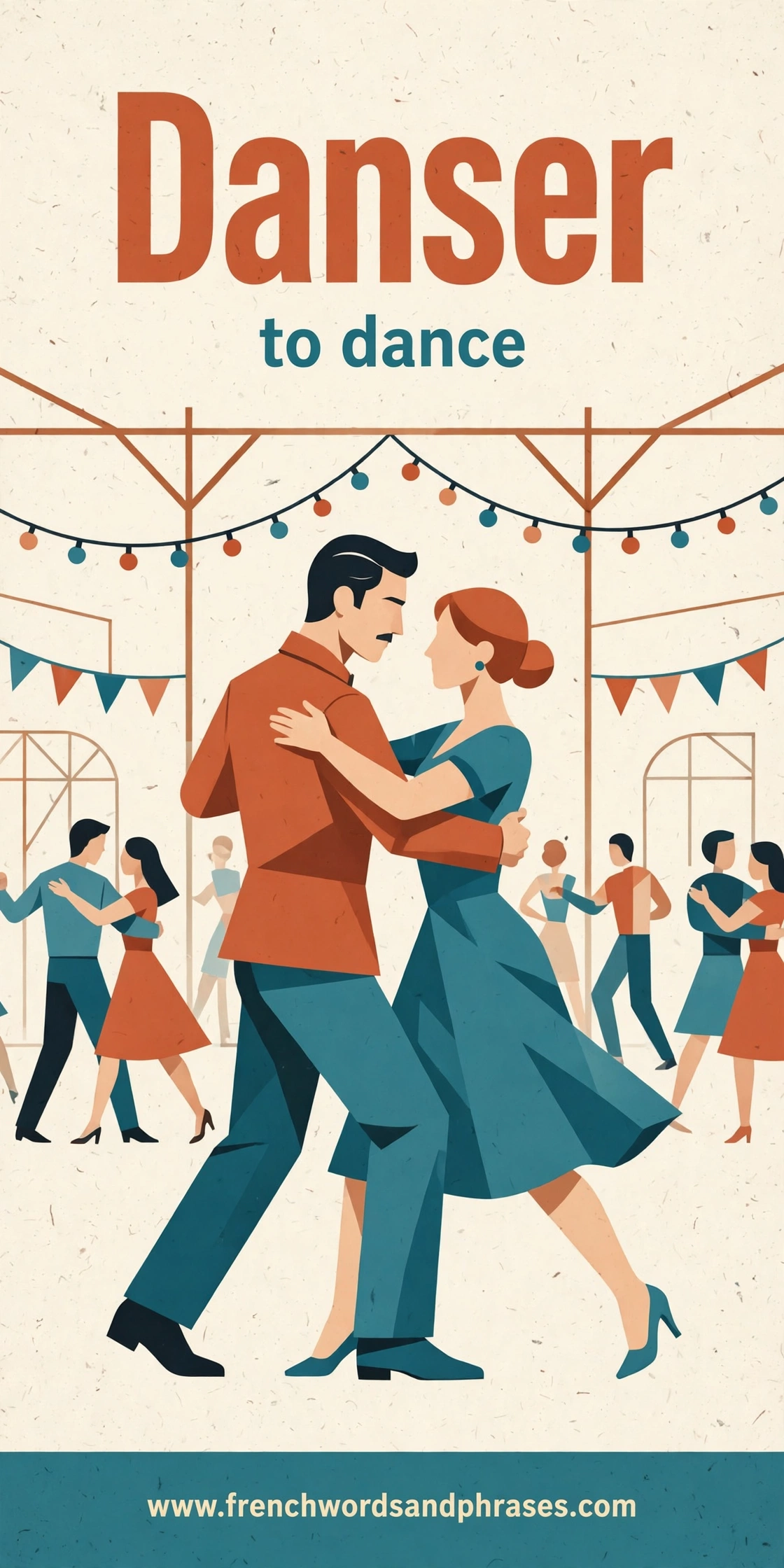
Danser means to dance.
Music starts in a village square, a grandmother takes a grandchild’s hand, and suddenly everyone is moving. Danser is the verb of weddings, festivals and kitchen radios — the moment the body answers the music before the mind can argue.
In this guide, you’ll learn how to conjugate danser in all the major French tenses and moods. Explore complete conjugation tables, French examples, English translations, and practice quizzes.
Understanding the French Verb Danser
Danser is a regular French verb belonging to the first group of verbs, those ending in -er.
It means to dance. It is commonly used for dancing at parties and weddings, for professional dancers on stage, and in the expression danser de joie — to dance with joy. The noun is la danse, and a dancer is un danseur or une danseuse.
Verb classification: First group (-er)
Auxiliary verb: Avoir
Past participle: dansé
Present participle: dansant
English equivalents: To dance.
One comforting detail: danser is perfectly regular — je danse, nous dansons, past participle dansé — with no spelling traps at all. It usually dances alone, with no object, but you can dance a particular dance: danser une valse, danser le tango.
Experience the Word
Danser is the verb of the body letting go — of rhythm arriving and dignity quietly leaving the room.
Imagine a wedding in a small Breton village. The band starts, the tables are pushed back, and three generations end up dancing on the grass under strings of lights, the oldest couple showing the youngest how it is done.
You have not performed. You have danced — and that is enough.
How to Conjugate Danser: Complete French Conjugation Guide
Let’s explore every major conjugation of danser, beginning with the indicative mood.
How to Conjugate Danser in the Indicative Mood
The indicative mood is used to express facts, observations, actions, and events.
How to Conjugate Danser in the Present Tense (Présent)
Used for actions happening now, habitual actions, and general truths.
| Subject | Conjugation |
|---|---|
| je | danse |
| tu | danses |
| il / elle | danse |
| nous | dansons |
| vous | dansez |
| ils / elles | dansent |
Example
Les enfants dansent dans la cour de l’école.
The children are dancing in the schoolyard.
Quick Quiz 1
Complete the sentence:
Les enfants ______ dès que la musique commence.
Reveal the answer
dansent
Les enfants dansent dès que la musique commence.
The children dance as soon as the music starts.
How to Conjugate Danser in the Passé Composé
Used for completed actions in the past. Danser takes the auxiliary verb avoir.
| Subject | Conjugation |
|---|---|
| j’ | ai dansé |
| tu | as dansé |
| il / elle | a dansé |
| nous | avons dansé |
| vous | avez dansé |
| ils / elles | ont dansé |
Example
Nous avons dansé toute la nuit au mariage.
We danced all night at the wedding.
How to Conjugate Danser in the Imparfait (Imperfect Tense)
Used for habitual past actions, descriptions, and ongoing situations in the past.
| Subject | Conjugation |
|---|---|
| je | dansais |
| tu | dansais |
| il / elle | dansait |
| nous | dansions |
| vous | dansiez |
| ils / elles | dansaient |
Example
Elle dansait dans un ballet quand elle était jeune.
She used to dance in a ballet when she was young.
Quick Quiz 2
Choose the correct form:
We danced all night.
Nous ______ toute la nuit. (avons dansé / sommes dansés)
Reveal the answer
avons dansé
Nous avons dansé toute la nuit.
Danser takes avoir.
How to Conjugate Danser in the Plus-que-parfait
Used to describe an action that had already been completed before another past event.
| Subject | Conjugation |
|---|---|
| j’ | avais dansé |
| tu | avais dansé |
| il / elle | avait dansé |
| nous | avions dansé |
| vous | aviez dansé |
| ils / elles | avaient dansé |
Example
Ils avaient dansé jusqu’à minuit avant de rentrer.
They had danced until midnight before going home.
How to Conjugate Danser in the Passé Simple
Primarily used in formal writing, literature, and historical narratives. It is rarely used in everyday conversation.
| Subject | Conjugation |
|---|---|
| je | dansai |
| tu | dansas |
| il / elle | dansa |
| nous | dansâmes |
| vous | dansâtes |
| ils / elles | dansèrent |
Example
Le couple dansa sous les étoiles.
The couple danced beneath the stars.
How to Conjugate Danser in the Passé Antérieur
A literary tense used to express an action completed immediately before another past action, generally in the passé simple.
| Subject | Conjugation |
|---|---|
| j’ | eus dansé |
| tu | eus dansé |
| il / elle | eut dansé |
| nous | eûmes dansé |
| vous | eûtes dansé |
| ils / elles | eurent dansé |
Example
Quand ils eurent dansé la première valse, les invités applaudirent.
When they had danced the first waltz, the guests applauded.
How to Conjugate Danser in the Future Tense (Futur Simple)
Used to describe actions that will take place in the future.
| Subject | Conjugation |
|---|---|
| je | danserai |
| tu | danseras |
| il / elle | dansera |
| nous | danserons |
| vous | danserez |
| ils / elles | danseront |
Example
Demain, tu danseras devant toute l’école.
Tomorrow, you will dance in front of the whole school.
How to Conjugate Danser in the Futur Antérieur (Future Perfect)
Used for an action that will have been completed before a particular point in the future.
| Subject | Conjugation |
|---|---|
| j’ | aurai dansé |
| tu | auras dansé |
| il / elle | aura dansé |
| nous | aurons dansé |
| vous | aurez dansé |
| ils / elles | auront dansé |
Example
À minuit, nous aurons dansé pendant trois heures.
By midnight, we will have danced for three hours.
How to Conjugate Danser in the Near Future (Futur Proche)
Used to describe something that is going to happen soon. Formed with aller + infinitive.
| Subject | Conjugation |
|---|---|
| je | vais danser |
| tu | vas danser |
| il / elle | va danser |
| nous | allons danser |
| vous | allez danser |
| ils / elles | vont danser |
Example
Ce soir, nous allons danser au bal du village.
This evening, we are going to dance at the village ball.
How to Conjugate Danser in the Conditional Mood
The conditional mood expresses what would happen under certain circumstances. It is also frequently used to make polite requests or express wishes.
How to Conjugate Danser in the Present Conditional
| Subject | Conjugation |
|---|---|
| je | danserais |
| tu | danserais |
| il / elle | danserait |
| nous | danserions |
| vous | danseriez |
| ils / elles | danseraient |
Example
Sans musique, personne ne danserait.
Without music, nobody would dance.
How to Conjugate Danser in the Past Conditional
| Subject | Conjugation |
|---|---|
| j’ | aurais dansé |
| tu | aurais dansé |
| il / elle | aurait dansé |
| nous | aurions dansé |
| vous | auriez dansé |
| ils / elles | auraient dansé |
Example
Elle aurait dansé avec lui s’il l’avait invitée.
She would have danced with him if he had asked her.
Danser in the Literary Past Conditional Form
This less common literary form uses the imperfect subjunctive of avoir.
| Subject | Conjugation |
|---|---|
| j’ | eusse dansé |
| tu | eusses dansé |
| il / elle | eût dansé |
| nous | eussions dansé |
| vous | eussiez dansé |
| ils / elles | eussent dansé |
Example
Elle eût dansé toute la nuit si la musique avait continué.
She would have danced all night if the music had gone on.
How to Conjugate Danser in the Subjunctive Mood
The subjunctive is used to express wishes, emotions, doubts, necessity, and uncertainty. It frequently follows expressions such as il faut que (it is necessary that) or bien que (although).
How to Conjugate Danser in the Present Subjunctive
| Subject | Conjugation |
|---|---|
| que je | danse |
| que tu | danses |
| qu’il / qu’elle | danse |
| que nous | dansions |
| que vous | dansiez |
| qu’ils / qu’elles | dansent |
Example
Il faut que tu danses au moins une fois.
You must dance at least once.
Quick Quiz 3
Complete the sentence using the subjunctive:
Il faut que vous ______ avec nous.
Reveal the answer
dansiez
Il faut que vous dansiez avec nous.
You must dance with us.
How to Conjugate Danser in the Imperfect Subjunctive
A literary tense, rarely encountered in modern spoken French.
| Subject | Conjugation |
|---|---|
| que je | dansasse |
| que tu | dansasses |
| qu’il / qu’elle | dansât |
| que nous | dansassions |
| que vous | dansassiez |
| qu’ils / qu’elles | dansassent |
Example
Je voulais qu’elle dansât avec moi.
I wanted her to dance with me.
How to Conjugate Danser in the Pluperfect Subjunctive
A literary construction used to express an action completed before another past action.
| Subject | Conjugation |
|---|---|
| que j’ | eusse dansé |
| que tu | eusses dansé |
| qu’il / qu’elle | eût dansé |
| que nous | eussions dansé |
| que vous | eussiez dansé |
| qu’ils / qu’elles | eussent dansé |
Example
Il regrettait que nous n’eussions pas dansé.
He regretted that we had not danced.
How to Conjugate Danser in the Past Subjunctive
| Subject | Conjugation |
|---|---|
| que j’ | aie dansé |
| que tu | aies dansé |
| qu’il / qu’elle | ait dansé |
| que nous | ayons dansé |
| que vous | ayez dansé |
| qu’ils / qu’elles | aient dansé |
Example
Je suis ravi que vous ayez dansé.
I am delighted that you danced.
How to Conjugate Danser in the Imperative
The imperative is used to give commands, instructions, invitations, or suggestions. Subject pronouns are omitted.
How to Conjugate Danser in the Present Imperative
| Person | Conjugation |
|---|---|
| (tu) | danse |
| (nous) | dansons |
| (vous) | dansez |
Example
Danse comme si personne ne regardait !
Dance as if nobody was watching!
Quick Quiz 4
How would you say Dance (tu form)?
Reveal the answer
Danse !
French Participles of Danser
Participles are verb forms that can be used in compound tenses and other grammatical constructions.
Present Participle of Danser
dansant
En dansant, elle oubliait tous ses soucis.
While dancing, she forgot all her worries.
Past Participle of Danser
dansé
La valse, dansée par tous les invités, ouvrit le bal.
The waltz, danced by all the guests, opened the ball.
Danser in Everyday French: Real-Life Examples
Now that you know the conjugations, let’s see how danser appears in everyday French.
Example 1 — Present
Les enfants dansent dès que la musique commence.
The children dance as soon as the music starts.
Example 2 — Passé composé
Nous avons dansé toute la nuit.
We danced all night.
Example 3 — Imparfait
Elle dansait dans un ballet quand elle était jeune.
She used to dance in a ballet when she was young.
Example 4 — Future
Tu danseras à la fête samedi.
You will dance at the party on Saturday.
Example 5 — Conditional
Je danserais bien, mais je suis fatigué.
I would gladly dance, but I am tired.
Example 6 — Imperative
Allez, dansez avec nous !
Come on, dance with us!
Beyond Translation: The Meaning of Danser
English dance and French danser are cousins — the same old word, worn by two languages until each made it their own.
And French dances in its idioms too.
Danser de joie is to dance with joy, and when the clouds gather over a picnic, the French simply decide: on dansera sous la pluie — we shall dance in the rain anyway.
How to Remember the French Verb Danser
Remember it this way: Danser is about the body answers — dancing at weddings and in kitchens.
- Danser is fully regular: je danse, nous dansons, past participle dansé.
- Dance a dance with danser directly — danser une valse, danser le tango.
- Danser de joie — to dance with joy, the happiest use of the verb.
The key idea is the body answers — dancing at weddings and in kitchens.
Test Your Knowledge of Danser
Let’s see how much you’ve learned. Try answering these questions before revealing the answers.
Question 1
What is the past participle of danser?
Reveal the answer
Dansé.
Question 2
How do you say We danced all night in French?
Reveal the answer
Nous avons dansé toute la nuit.
Question 3
Translate: She used to dance in a ballet.
Reveal the answer
Elle dansait dans un ballet.
Question 4
What does danser de joie mean?
Reveal the answer
To dance with joy.
Question 5
Complete the sentence:
Il faut que tu ______ au moins une fois.
Reveal the answer
danses
Il faut que tu danses au moins une fois.
You must dance at least once.
Your Final Challenge
Can You Use It?
How would you say this in French?
Tonight, we will dance under the stars like on the first day.
Reveal the answer
Ce soir, nous danserons sous les étoiles comme au premier jour.
Tonight, we will dance under the stars like on the first day.
A little French. A little curiosity. A richer everyday life.
LEARN FRENCH ONE WORD AT A TIME