A French Word to Live By
How to Conjugate Constater in French
/kɔ̃s.ta.te/
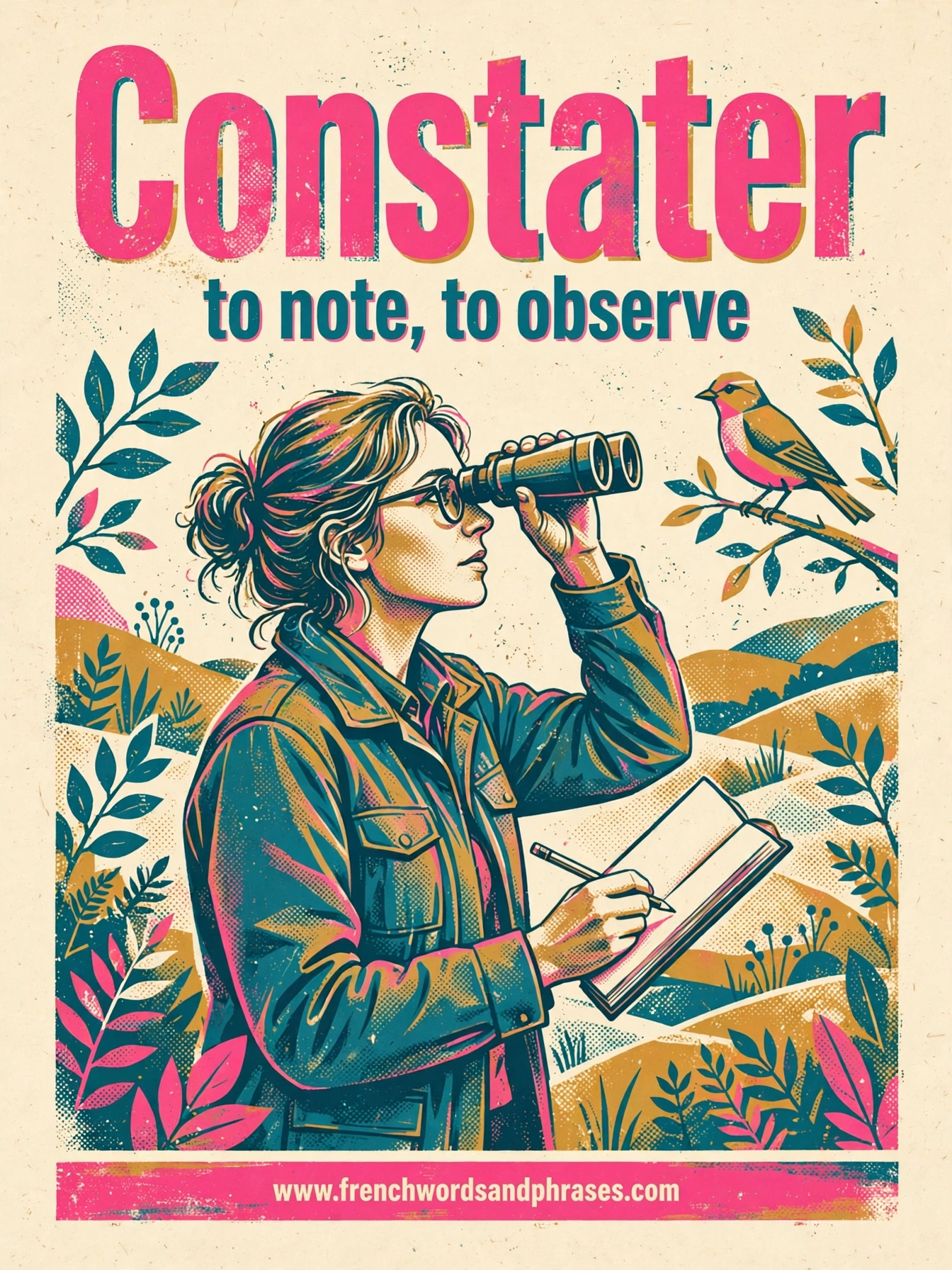
Constater means to note, to observe — to see something clearly, state it as a fact, and put it on the record.
A doctor examining a patient and writing down exactly what she finds, a policeman at a road accident noting the position of the cars, a traveller realising with surprise that the village has doubled in size — constater is the verb of the clear-eyed record: something is seen, and it is stated, plainly and officially.
In this guide, you’ll learn how to conjugate constater in all the major French tenses and moods. Explore complete conjugation tables, French examples, English translations, and practice quizzes.
Understanding the French Verb Constater
Constater is a regular French verb belonging to the first group of verbs, those ending in-er.
It means to note, to observe. It is the verb of reports and records: doctors, police officers, insurers and inspectors constatent — and what they write becomes un constat, the document itself (un constat d’accident is the form both drivers fill in after a crash). In essays, force est de constater que introduces a fact nobody can deny.
Verb classification: First group (-er)
Auxiliary verb: Avoir
Past participle: constaté
Present participle: constatant
English equivalents: To note, to observe, to record, to establish; constater que — to note that; constater les dégâts — to record the damage; constater un décès — to certify a death; force est de constater que — it must be acknowledged that; un constat — an official report, a statement of facts.
One important detail: constater is cooler and more official than its neighbours. Remarquer is the everyday notice — a glance, a remark; observer watches over time; but constater states a fact for the record: le médecin a constaté la fracture, le rapport constate que…. It is usually followed by que + a clause or by a solid official noun: constater les dégâts, constater une infraction, constater un décès. The verb itself is a perfectly regular -er.
Experience the Word
Constater is the verb of the notebook opening — the moment an observation becomes a fact on paper.
Imagine a country doctor on her morning round, fifty years ago. She lays her hand on the old farmer’s chest, listens, nods slowly. She does not hope, guess or fear; elle constate: the fever has broken. Two words in her notebook, and the family waiting downstairs can finally breathe.
No drama, no opinion. She has noted it — constaté — and a noted fact is solid ground.
How to Conjugate Constater: Complete French Conjugation Guide
Let’s explore every major conjugation of constater, beginning with the indicative mood.
How to Conjugate Constater in the Indicative Mood
The indicative mood is used to express facts, observations, actions, and events.
How to Conjugate Constater in the Present Tense (Présent)
Used for actions happening now, habitual actions, and general truths.
| Subject | Conjugation |
|---|---|
| je | constate |
| tu | constates |
| il / elle | constate |
| nous | constatons |
| vous | constatez |
| ils / elles | constatent |
Example
Le médecin constate une nette amélioration.
The doctor notes a clear improvement.
Quick Quiz 1
Complete the sentence:
Nous ______ une nette amélioration chez le patient.
Reveal the answer
constatons
Nous constatons une nette amélioration chez le patient.
We note a clear improvement in the patient.
How to Conjugate Constater in the Passé Composé
Used for completed actions in the past. Constater takes the auxiliary verb avoir.
| Subject | Conjugation |
|---|---|
| j’ | ai constaté |
| tu | as constaté |
| il / elle | a constaté |
| nous | avons constaté |
| vous | avez constaté |
| ils / elles | ont constaté |
Example
La police a constaté les dégâts après l’accident.
The police recorded the damage after the accident.
How to Conjugate Constater in the Imparfait (Imperfect Tense)
Used for habitual past actions, descriptions, and ongoing situations in the past.
| Subject | Conjugation |
|---|---|
| je | constatais |
| tu | constatais |
| il / elle | constatait |
| nous | constations |
| vous | constatiez |
| ils / elles | constataient |
Example
Chaque matin, le gardien constatait l’état des digues.
Every morning, the keeper used to check the state of the dykes.
Quick Quiz 2
Choose the correct form:
The police recorded the damage.
La police ______ les dégâts. (a constaté / est constatée)
Reveal the answer
a constaté
La police a constaté les dégâts.
Constater takes avoir.
How to Conjugate Constater in the Plus-que-parfait
Used to describe an action that had already been completed before another past event.
| Subject | Conjugation |
|---|---|
| j’ | avais constaté |
| tu | avais constaté |
| il / elle | avait constaté |
| nous | avions constaté |
| vous | aviez constaté |
| ils / elles | avaient constaté |
Example
Elle avait constaté la fuite avant l’arrivée des pompiers.
She had noticed the leak before the firefighters arrived.
How to Conjugate Constater in the Passé Simple
Primarily used in formal writing, literature, and historical narratives. It is rarely used in everyday conversation.
| Subject | Conjugation |
|---|---|
| je | constatai |
| tu | constatas |
| il / elle | constata |
| nous | constatâmes |
| vous | constatâtes |
| ils / elles | constatèrent |
Example
Le juge constata que le témoin se contredisait.
The judge noted that the witness was contradicting himself.
How to Conjugate Constater in the Passé Antérieur
A literary tense used to express an action completed immediately before another past action, generally in the passé simple.
| Subject | Conjugation |
|---|---|
| j’ | eus constaté |
| tu | eus constaté |
| il / elle | eut constaté |
| nous | eûmes constaté |
| vous | eûtes constaté |
| ils / elles | eurent constaté |
Example
Dès qu’il eut constaté l’erreur, il corrigea le registre.
As soon as he had spotted the error, he corrected the register.
How to Conjugate Constater in the Future Tense (Futur Simple)
Used to describe actions that will take place in the future.
| Subject | Conjugation |
|---|---|
| je | constaterai |
| tu | constateras |
| il / elle | constatera |
| nous | constaterons |
| vous | constaterez |
| ils / elles | constateront |
Example
Demain, l’expert constatera l’étendue des dégâts.
Tomorrow, the expert will record the extent of the damage.
How to Conjugate Constater in the Futur Antérieur (Future Perfect)
Used for an action that will have been completed before a particular point in the future.
| Subject | Conjugation |
|---|---|
| j’ | aurai constaté |
| tu | auras constaté |
| il / elle | aura constaté |
| nous | aurons constaté |
| vous | aurez constaté |
| ils / elles | auront constaté |
Example
À la fin de l’enquête, ils auront constaté trois infractions.
By the end of the investigation, they will have recorded three offences.
How to Conjugate Constater in the Near Future (Futur Proche)
Used to describe something that is going to happen soon. Formed with aller + infinitive.
| Subject | Conjugation |
|---|---|
| je | vais constater |
| tu | vas constater |
| il / elle | va constater |
| nous | allons constater |
| vous | allez constater |
| ils / elles | vont constater |
Example
Tu vas constater que le village a bien changé.
You are going to notice that the village has changed a lot.
How to Conjugate Constater in the Conditional Mood
The conditional mood expresses what would happen under certain circumstances. It is also frequently used to make polite requests or express wishes.
How to Conjugate Constater in the Present Conditional
| Subject | Conjugation |
|---|---|
| je | constaterais |
| tu | constaterais |
| il / elle | constaterait |
| nous | constaterions |
| vous | constateriez |
| ils / elles | constateraient |
Example
Un simple contrôle constaterait la vérité des faits.
A simple check would establish the truth of the facts.
How to Conjugate Constater in the Past Conditional
| Subject | Conjugation |
|---|---|
| j’ | aurais constaté |
| tu | aurais constaté |
| il / elle | aurait constaté |
| nous | aurions constaté |
| vous | auriez constaté |
| ils / elles | auraient constaté |
Example
Vous auriez constaté la différence avec de meilleurs instruments.
You would have noticed the difference with better instruments.
Constater in the Literary Past Conditional Form
This less common literary form uses the imperfect subjunctive of avoir.
| Subject | Conjugation |
|---|---|
| j’ | eusse constaté |
| tu | eusses constaté |
| il / elle | eût constaté |
| nous | eussions constaté |
| vous | eussiez constaté |
| ils / elles | eussent constaté |
Example
Le médecin eût constaté la guérison sans cette rechute.
The doctor would have recorded the recovery without that relapse.
How to Conjugate Constater in the Subjunctive Mood
The subjunctive is used to express wishes, emotions, doubts, necessity, and uncertainty. It frequently follows expressions such as il faut que (it is necessary that) or bien que (although).
How to Conjugate Constater in the Present Subjunctive
| Subject | Conjugation |
|---|---|
| que je | constate |
| que tu | constates |
| qu’il / qu’elle | constate |
| que nous | constations |
| que vous | constatiez |
| qu’ils / qu’elles | constatent |
Example
Il est possible que l’expert constate des dégâts importants.
It is possible the expert will find significant damage.
Quick Quiz 3
Complete the sentence using the subjunctive:
Il est possible que l’expert ______ des dégâts importants.
Reveal the answer
constate
Il est possible que l’expert constate des dégâts importants.
It is possible the expert will find significant damage.
How to Conjugate Constater in the Imperfect Subjunctive
A literary tense, rarely encountered in modern spoken French.
| Subject | Conjugation |
|---|---|
| que je | constatasse |
| que tu | constatasses |
| qu’il / qu’elle | constatât |
| que nous | constatassions |
| que vous | constatassiez |
| qu’ils / qu’elles | constatassent |
Example
Je ne pensais pas qu’il constatât une telle erreur.
I did not think he would spot such an error.
How to Conjugate Constater in the Pluperfect Subjunctive
A literary construction used to express an action completed before another past action.
| Subject | Conjugation |
|---|---|
| que j’ | eusse constaté |
| que tu | eusses constaté |
| qu’il / qu’elle | eût constaté |
| que nous | eussions constaté |
| que vous | eussiez constaté |
| qu’ils / qu’elles | eussent constaté |
Example
On affirmait que la commission eût constaté les faits dès 2019.
People claimed the commission had established the facts as early as 2019.
How to Conjugate Constater in the Past Subjunctive
| Subject | Conjugation |
|---|---|
| que j’ | aie constaté |
| que tu | aies constaté |
| qu’il / qu’elle | ait constaté |
| que nous | ayons constaté |
| que vous | ayez constaté |
| qu’ils / qu’elles | aient constaté |
Example
Je suis étonné qu’elle ait constaté la fuite si tôt.
I am surprised she noticed the leak so early.
How to Conjugate Constater in the Imperative
The imperative is used to give commands, instructions, invitations, or suggestions. Subject pronouns are omitted.
How to Conjugate Constater in the Present Imperative
| Person | Conjugation |
|---|---|
| (tu) | constate |
| (nous) | constatons |
| (vous) | constatez |
Example
Constatez les faits, rien que les faits !
Record the facts, nothing but the facts!
Quick Quiz 4
How would you say Note the facts (tu form)?
Reveal the answer
Constate les faits !
French Participles of Constater
Participles are verb forms that can be used in compound tenses and other grammatical constructions.
Present Participle of Constater
constatant
En constatant l’erreur, le comptable a évité un scandale.
By spotting the error, the accountant avoided a scandal.
Past Participle of Constater
constaté
Constatée par trois témoins, la panne ne faisait aucun doute.
Noted by three witnesses, the breakdown was beyond doubt.
Constater in Everyday French: Real-Life Examples
Now that you know the conjugations, let’s see how constater appears in everyday French.
Example 1 — Present
Le médecin constate une nette amélioration.
The doctor notes a clear improvement.
Example 2 — Passé composé
La police a constaté les dégâts.
The police recorded the damage.
Example 3 — Imparfait
Le gardien constatait l’état des digues.
The keeper used to check the state of the dykes.
Example 4 — Future
L’expert constatera l’étendue des dégâts.
The expert will record the extent of the damage.
Example 5 — Conditional
Un simple contrôle constaterait la vérité.
A simple check would establish the truth.
Example 6 — Imperative
Constate les faits avant de juger !
Note the facts before judging!
Beyond Translation: The Meaning of Constater
Constater comes from Latin constare, to stand firm, to be established — the root of English constant.
What is constaté stands firm.
That is the verb’s whole character: not a passing impression but a fact that can bear weight — which is why French law, medicine and insurance run on it, and why force est de constater que is the essayist’s way of laying an undeniable fact on the table.
How to Remember the French Verb Constater
Remember it this way: Constater is about the doctor’s notebook — the fever, noted, and therefore a fact.
- The official cousin: remarquer notices in passing, constater states it for the record — le médecin constate, la police constate.
- Usually followed by que or a solid noun: constater que…, constater les dégâts, constater un décès.
- Regular -er throughout: je constate, nous constatons, past participle constaté; its noun is un constat, an official report.
The key idea is the doctor’s notebook — the fever, noted, and therefore a fact.
Test Your Knowledge of Constater
Let’s see how much you’ve learned. Try answering these questions before revealing the answers.
How does constater differ from remarquer?
Reveal the answer
Constater is official — it states a fact for the record (le médecin constate); remarquer is everyday noticing in passing.
Question 2
How do you say The police recorded the damage in French?
Reveal the answer
La police a constaté les dégâts.
Question 3
Translate: The doctor notes a clear improvement.
Reveal the answer
Le médecin constate une nette amélioration.
Question 4
What is the past participle of constater?
Reveal the answer
Constaté.
Question 5
Complete the sentence:
Tu vas ______ que le village a bien changé.
Reveal the answer
constater
Tu vas constater que le village a bien changé.
You are going to notice that the village has changed a lot.
Your Final Challenge
Can You Use It?
How would you say this in French?
We can argue about the causes, but it must be acknowledged that the facts are there.
Reveal the answer
On peut discuter des causes, mais force est de constater que les faits sont là.
We can argue about the causes, but it must be acknowledged that the facts are there.
A little French. A little curiosity. A richer everyday life.
LEARN FRENCH ONE WORD AT A TIME