A French Word to Live By
How to Conjugate Compliquer in French
/kɔ̃.pli.ke/
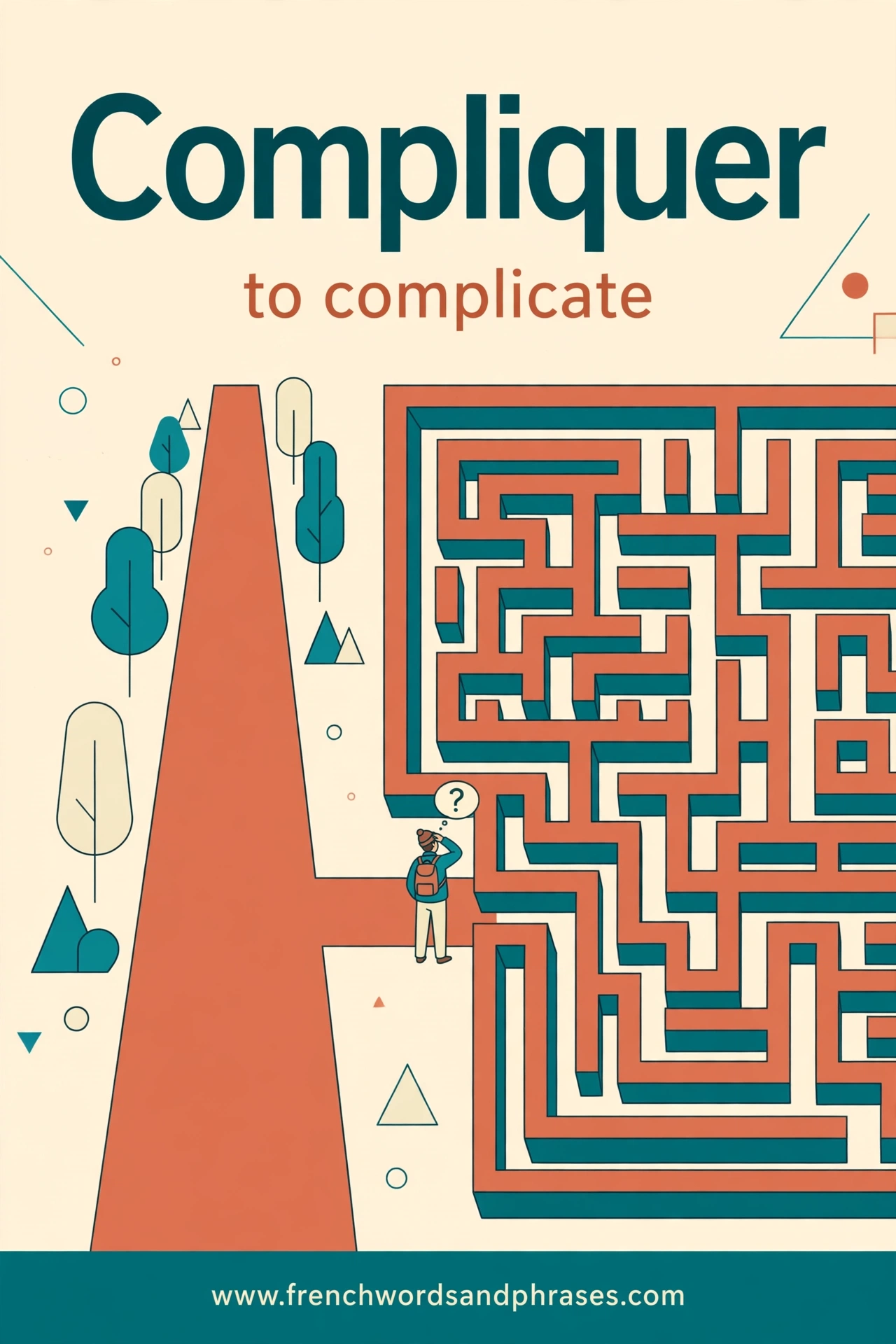
Compliquer means to complicate — to make something harder, messier and less clear than it ever needed to be.
A simple journey ruined by three changes of train, a love story tangled by one unsent letter, an explanation that starts in daylight and ends in fog — compliquer is the verb of the knot: life was running straight, and then someone, or something, tied it in bows.
In this guide, you’ll learn how to conjugate compliquer in all the major French tenses and moods. Explore complete conjugation tables, French examples, English translations, and practice quizzes.
Understanding the French Verb Compliquer
Compliquer is a regular French verb belonging to the first group of verbs, those ending in-er.
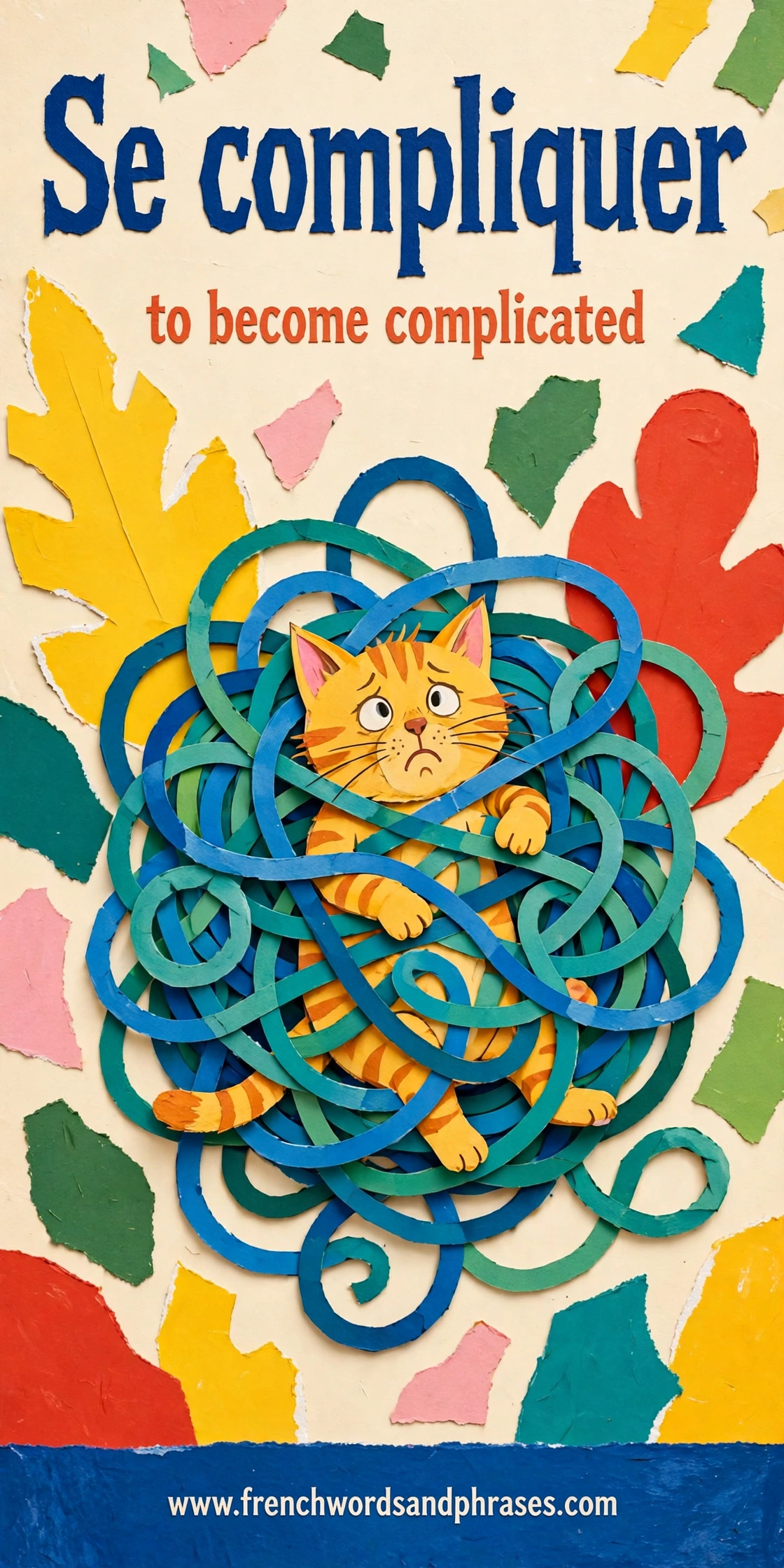
It means to complicate. It is the everyday complication verb — used of plans, journeys, explanations, relationships and health (une fracture compliquée). Its reflexive twin, se compliquer, takes the next page: there, things tangle themselves, or people tangle their own lives.
Verb classification: First group (-er)
Auxiliary verb: Avoir
Past participle: compliqué
Present participle: compliquant
English equivalents: To complicate, to make difficult; compliquer les choses — to complicate matters; compliquer la tâche à quelqu’un — to make someone’s task harder; ne complique pas ! — don’t make things complicated!; c’est compliqué — it’s complicated.
One important detail: compliquer keeps its qu in every single form — je complique, nous compliquons, je compliquais, and even in the passé simple, je compliquai. The u never drops, so the /k/ sound survives everywhere. The verb itself is perfectly regular -er, with past participle compliqué — and that participle, as an adjective, is one of the most useful words in French: une situation compliquée, un problème compliqué, c’est compliqué. For systems and structures, French prefers its formal cousin complexifier; compliquer is the word of journeys, stories and daily life.
Experience the Word
Compliquer is the verb of the fold in the flat page — everything was smooth, and now there is a crease that will not iron out.
Imagine two friends planning a picnic. It begins simply: bread, cheese, the river bank at noon. Then come the messages — one is vegetarian, one is bringing a cousin, the car is small, the weather is uncertain, should there be a plan B? By Friday, le pique-nique est devenu une expédition. Nobody wanted this. Step by reasonable step, ils ont compliqué les choses.
The picnic was never difficult. It was complicated — compliqué — one helpful suggestion at a time.
How to Conjugate Compliquer: Complete French Conjugation Guide
Let’s explore every major conjugation of compliquer, beginning with the indicative mood.
How to Conjugate Compliquer in the Indicative Mood
The indicative mood is used to express facts, observations, actions, and events.
How to Conjugate Compliquer in the Present Tense (Présent)
Used for actions happening now, habitual actions, and general truths.
| Subject | Conjugation |
|---|---|
| je | complique |
| tu | compliques |
| il / elle | complique |
| nous | compliquons |
| vous | compliquez |
| ils / elles | compliquent |
Example
Tu compliques toujours les choses simples.
You always complicate simple things.
Quick Quiz 1
Complete the sentence:
Nous ______ le plan avec ces changements.
Reveal the answer
compliquons
Nous compliquons le plan avec ces changements.
We are complicating the plan with these changes.
How to Conjugate Compliquer in the Passé Composé
Used for completed actions in the past. Compliquer takes the auxiliary verb avoir.
| Subject | Conjugation |
|---|---|
| j’ | ai compliqué |
| tu | as compliqué |
| il / elle | a compliqué |
| nous | avons compliqué |
| vous | avez compliqué |
| ils / elles | ont compliqué |
Example
La grève a compliqué notre retour de vacances.
The strike complicated our return from holiday.
How to Conjugate Compliquer in the Imparfait (Imperfect Tense)
Used for habitual past actions, descriptions, and ongoing situations in the past.
| Subject | Conjugation |
|---|---|
| je | compliquais |
| tu | compliquais |
| il / elle | compliquait |
| nous | compliquions |
| vous | compliquiez |
| ils / elles | compliquaient |
Example
Chaque nouvelle règle compliquait le travail des infirmières.
Each new rule used to complicate the nurses’ work.
Quick Quiz 2
Choose the correct form:
The rain complicated the party.
La pluie ______ la fête. (a compliqué / est compliquée)
Reveal the answer
a compliqué
La pluie a compliqué la fête.
Compliquer takes avoir.
How to Conjugate Compliquer in the Plus-que-parfait
Used to describe an action that had already been completed before another past event.
| Subject | Conjugation |
|---|---|
| j’ | avais compliqué |
| tu | avais compliqué |
| il / elle | avait compliqué |
| nous | avions compliqué |
| vous | aviez compliqué |
| ils / elles | avaient compliqué |
Example
Il avait compliqué l’histoire en ajoutant trois personnages.
He had complicated the story by adding three characters.
How to Conjugate Compliquer in the Passé Simple
Primarily used in formal writing, literature, and historical narratives. It is rarely used in everyday conversation.
| Subject | Conjugation |
|---|---|
| je | compliquai |
| tu | compliquas |
| il / elle | compliqua |
| nous | compliquâmes |
| vous | compliquâtes |
| ils / elles | compliquèrent |
Example
Une panne compliqua le voyage de retour.
A breakdown complicated the return journey.
How to Conjugate Compliquer in the Passé Antérieur
A literary tense used to express an action completed immediately before another past action, generally in the passé simple.
| Subject | Conjugation |
|---|---|
| j’ | eus compliqué |
| tu | eus compliqué |
| il / elle | eut compliqué |
| nous | eûmes compliqué |
| vous | eûtes compliqué |
| ils / elles | eurent compliqué |
Example
Quand la neige eut compliqué la route, ils s’arrêtèrent au village.
When the snow had complicated the road, they stopped at the village.
How to Conjugate Compliquer in the Future Tense (Futur Simple)
Used to describe actions that will take place in the future.
| Subject | Conjugation |
|---|---|
| je | compliquerai |
| tu | compliqueras |
| il / elle | compliquera |
| nous | compliquerons |
| vous | compliquerez |
| ils / elles | compliqueront |
Example
Ce détour compliquera l’itinéraire.
This detour will complicate the route.
How to Conjugate Compliquer in the Futur Antérieur (Future Perfect)
Used for an action that will have been completed before a particular point in the future.
| Subject | Conjugation |
|---|---|
| j’ | aurai compliqué |
| tu | auras compliqué |
| il / elle | aura compliqué |
| nous | aurons compliqué |
| vous | aurez compliqué |
| ils / elles | auront compliqué |
Example
À midi, les travaux auront compliqué tout le trajet.
By noon, the roadworks will have complicated the whole journey.
How to Conjugate Compliquer in the Near Future (Futur Proche)
Used to describe something that is going to happen soon. Formed with aller + infinitive.
| Subject | Conjugation |
|---|---|
| je | vais compliquer |
| tu | vas compliquer |
| il / elle | va compliquer |
| nous | allons compliquer |
| vous | allez compliquer |
| ils / elles | vont compliquer |
Example
Attention, ce changement va compliquer les choses.
Careful, this change is going to complicate things.
How to Conjugate Compliquer in the Conditional Mood
The conditional mood expresses what would happen under certain circumstances. It is also frequently used to make polite requests or express wishes.
How to Conjugate Compliquer in the Present Conditional
| Subject | Conjugation |
|---|---|
| je | compliquerais |
| tu | compliquerais |
| il / elle | compliquerait |
| nous | compliquerions |
| vous | compliqueriez |
| ils / elles | compliqueraient |
Example
Sans cette formalité, rien ne compliquerait le départ.
Without this formality, nothing would complicate the departure.
How to Conjugate Compliquer in the Past Conditional
| Subject | Conjugation |
|---|---|
| j’ | aurais compliqué |
| tu | aurais compliqué |
| il / elle | aurait compliqué |
| nous | aurions compliqué |
| vous | auriez compliqué |
| ils / elles | auraient compliqué |
Example
Tu aurais compliqué la situation en parlant trop tôt.
You would have complicated the situation by speaking too soon.
Compliquer in the Literary Past Conditional Form
This less common literary form uses the imperfect subjunctive of avoir.
| Subject | Conjugation |
|---|---|
| j’ | eusse compliqué |
| tu | eusses compliqué |
| il / elle | eût compliqué |
| nous | eussions compliqué |
| vous | eussiez compliqué |
| ils / elles | eussent compliqué |
Example
Un seul mot de trop eût compliqué toute l’affaire.
One word too many would have complicated the whole affair.
How to Conjugate Compliquer in the Subjunctive Mood
The subjunctive is used to express wishes, emotions, doubts, necessity, and uncertainty. It frequently follows expressions such as il faut que (it is necessary that) or bien que (although).
How to Conjugate Compliquer in the Present Subjunctive
| Subject | Conjugation |
|---|---|
| que je | complique |
| que tu | compliques |
| qu’il / qu’elle | complique |
| que nous | compliquions |
| que vous | compliquiez |
| qu’ils / qu’elles | compliquent |
Example
Il ne faut pas que ce détail complique le plan.
This detail must not complicate the plan.
Quick Quiz 3
Complete the sentence using the subjunctive:
Il faut que vous ne ______ pas la recette.
Reveal the answer
compliquiez
Il faut que vous ne compliquiez pas la recette.
You must not complicate the recipe.
How to Conjugate Compliquer in the Imperfect Subjunctive
A literary tense, rarely encountered in modern spoken French.
| Subject | Conjugation |
|---|---|
| que je | compliquasse |
| que tu | compliquasses |
| qu’il / qu’elle | compliquât |
| que nous | compliquassions |
| que vous | compliquassiez |
| qu’ils / qu’elles | compliquassent |
Example
On craignait que la météo compliquât la traversée.
People feared the weather would complicate the crossing.
How to Conjugate Compliquer in the Pluperfect Subjunctive
A literary construction used to express an action completed before another past action.
| Subject | Conjugation |
|---|---|
| que j’ | eusse compliqué |
| que tu | eusses compliqué |
| qu’il / qu’elle | eût compliqué |
| que nous | eussions compliqué |
| que vous | eussiez compliqué |
| qu’ils / qu’elles | eussent compliqué |
Example
Elle regrettait qu’il eût compliqué une affaire si simple.
She regretted that he had complicated such a simple matter.
How to Conjugate Compliquer in the Past Subjunctive
| Subject | Conjugation |
|---|---|
| que j’ | aie compliqué |
| que tu | aies compliqué |
| qu’il / qu’elle | ait compliqué |
| que nous | ayons compliqué |
| que vous | ayez compliqué |
| qu’ils / qu’elles | aient compliqué |
Example
Je suis surpris que ce retard ait compliqué votre journée.
I am surprised this delay complicated your day.
How to Conjugate Compliquer in the Imperative
The imperative is used to give commands, instructions, invitations, or suggestions. Subject pronouns are omitted.
How to Conjugate Compliquer in the Present Imperative
| Person | Conjugation |
|---|---|
| (tu) | complique |
| (nous) | compliquons |
| (vous) | compliquez |
Example
Ne compliquez pas les choses, suivez la recette !
Do not complicate things, follow the recipe!
Quick Quiz 4
How would you say Do not complicate things (tu form)?
Reveal the answer
Ne complique pas les choses !
French Participles of Compliquer
Participles are verb forms that can be used in compound tenses and other grammatical constructions.
Present Participle of Compliquer
compliquant
En compliquant l’explication, le professeur a perdu ses élèves.
By complicating the explanation, the teacher lost his students.
Past Participle of Compliquer
compliqué
Compliquée par la pluie, la fête a fini à l’intérieur.
Complicated by the rain, the party ended up indoors.
Compliquer in Everyday French: Real-Life Examples
Now that you know the conjugations, let’s see how compliquer appears in everyday French.
Example 1 — Present
Tu compliques tout, comme toujours.
You complicate everything, as always.
Example 2 — Passé composé
La grève a compliqué notre retour.
The strike complicated our return.
Example 3 — Imparfait
Ses explications compliquaient tout.
His explanations used to complicate everything.
Example 4 — Future
Ce détour compliquera le trajet.
This detour will complicate the journey.
Example 5 — Conditional
Cela compliquerait les choses inutilement.
That would complicate things needlessly.
Example 6 — Imperative
Ne complique pas, c’est simple !
Do not complicate it, it’s simple!
Beyond Translation: The Meaning of Compliquer
The secret of compliquer is a fold: Latin complicare, to fold together, from plicare, to fold — the same root as un pli (a fold, a crease) and, in mirror image, expliquer, to unfold, to explain.
To explain is to unfold; to complicate is to fold up again.
Every complication in French is a crease in what was flat — which is why the cure for a situation compliquée is always the same: unfold it, one fold at a time.
How to Remember the French Verb Compliquer
Remember it this way: Compliquer is about a straight road tied into bows.
- Compliquer is folding: Latin plicare, to fold — a complication is a fold in a flat, simple thing, and expliquer is its unfolding opposite.
- Qu never loses its u: nous compliquons, je compliquais, je compliquai.
- The everyday cry: ne complique pas ! — and the famous verdict on any mess: c’est compliqué.
The key idea is a straight road tied into bows.
Test Your Knowledge of Compliquer
Let’s see how much you’ve learned. Try answering these questions before revealing the answers.
Question 1
What image hides inside compliquer?
Reveal the answer
A fold — Latin plicare, to fold: a complication is a fold in something flat and simple, and expliquer is the unfolding.
Question 2
How do you say You always complicate simple things in French?
Reveal the answer
Tu compliques toujours les choses simples.
Question 3
Translate: The strike complicated our return.
Reveal the answer
La grève a compliqué notre retour.
Question 4
What is the past participle of compliquer?
Reveal the answer
Compliqué.
Question 5
Complete the sentence:
Il ne faut pas que ce détail ______ le plan.
Reveal the answer
complique
Il ne faut pas que ce détail complique le plan.
This detail must not complicate the plan.
Your Final Challenge
Can You Use It?
How would you say this in French?
He complicates the simplest things, but deep down, it is his way of looking at them closely.
Reveal the answer
Il complique les choses les plus simples, mais au fond, c’est sa façon de les regarder de près.
He complicates the simplest things, but deep down, it is his way of looking at them closely.
A little French. A little curiosity. A richer everyday life.
LEARN FRENCH ONE WORD AT A TIME