A French Word to Live By
How to Conjugate Colmater in French
/kɔl.ma.te/
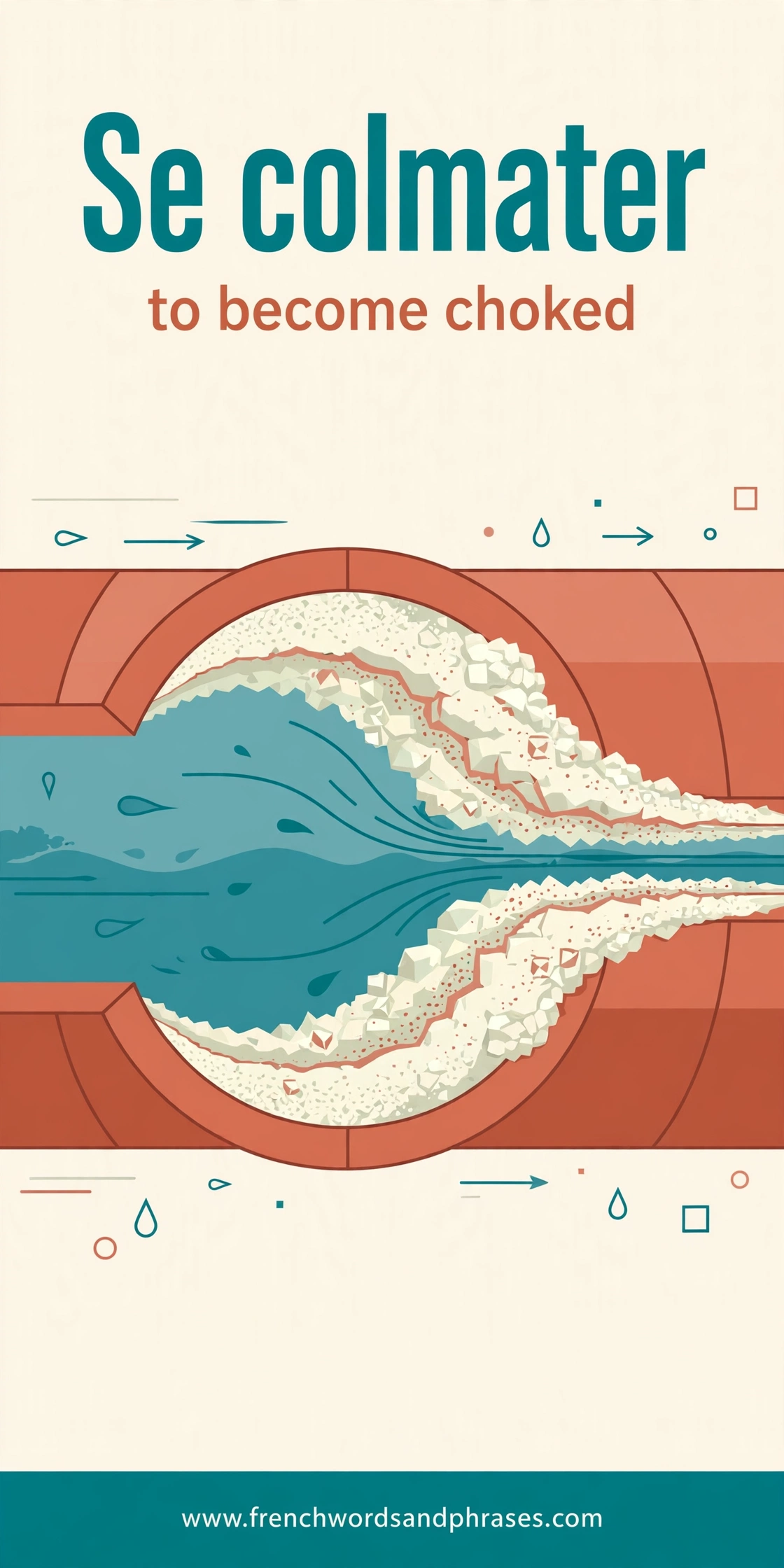
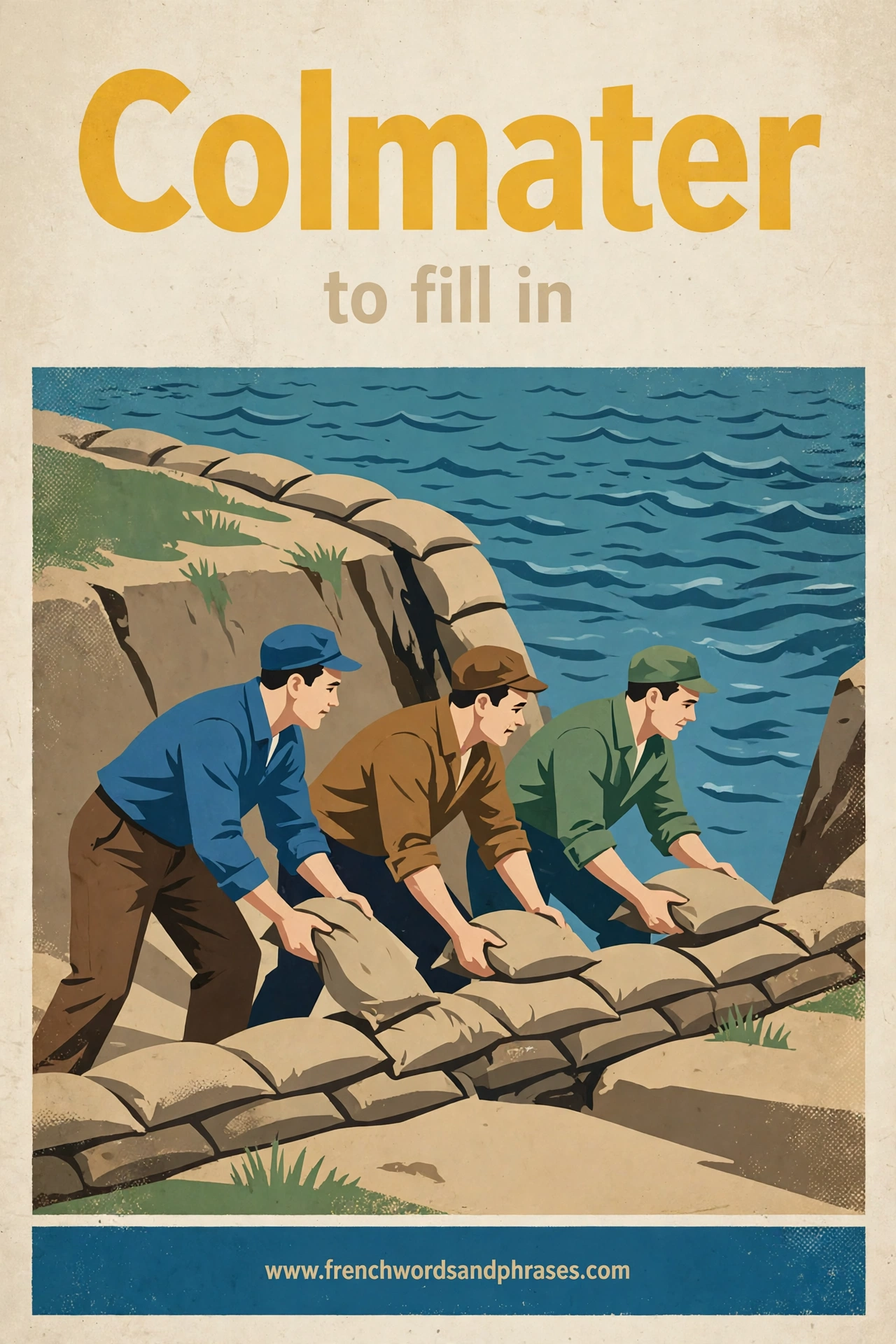
Colmater means to fill in — to plug a gap, a leak or a breach so that nothing escapes any more.
A firefighter packing sand against a leaking dyke, a plumber sealing a pipe at midnight, a minister announcing emergency repairs — colmater is the verb of the gap that must be closed: spread the filler, press it in, and stop the loss.
In this guide, you’ll learn how to conjugate colmater in all the major French tenses and moods. Explore complete conjugation tables, French examples, English translations, and practice quizzes.
Understanding the French Verb Colmater
Colmater is a regular French verb belonging to the first group of verbs, those ending in-er.
It means to fill in. It is used by builders, plumbers, sailors and firefighters for leaks, cracks, breaches and dykes, and figuratively wherever a loss must urgently be stopped — budgets, security, confidence. Its noun, le colmatage, is the word journalists reach for when a repair looks more like a patch than a solution.
Verb classification: First group (-er)
Auxiliary verb: Avoir
Past participle: colmaté
Present participle: colmatant
English equivalents: To fill in, to plug, to seal; colmater une fuite — to plug a leak; colmater une brèche — to seal a breach; colmater les fissures — to fill in the cracks; colmater les brèches (figurative) — to paper over the cracks, to patch things up.
One important detail: colmater is a builder’s verb before it is anything else — you colmater with something thick: mortar, cement, sand, putty, spread over a gap and pressed home. That is what separates it from boucher, which stops up a single hole (a bottle, a drain): colmater covers and seals a whole surface or breach. Hence its second career in politics and the press: colmater les brèches is what a government does with emergency measures — patching the damage, at least for now. The verb itself is perfectly regular: je colmate, nous colmatons, ils colmatent.
Experience the Word
Colmater is the verb of the emergency repair — not rebuilding, not renovating, just stopping the leak before it stops you.
Imagine a village street at three in the morning. A water main has burst, the road is a river, and by lantern light the crew packs, presses and seals, colmatant la brèche handful by handful, while the whole street watches from its windows in dressing gowns.
Nobody is rebuilding the water main tonight. They are plugging it — colmaté, sealed, and holding until morning.
How to Conjugate Colmater: Complete French Conjugation Guide
Let’s explore every major conjugation of colmater, beginning with the indicative mood.
How to Conjugate Colmater in the Indicative Mood
The indicative mood is used to express facts, observations, actions, and events.
How to Conjugate Colmater in the Present Tense (Présent)
Used for actions happening now, habitual actions, and general truths.
| Subject | Conjugation |
|---|---|
| je | colmate |
| tu | colmates |
| il / elle | colmate |
| nous | colmatons |
| vous | colmatez |
| ils / elles | colmatent |
Example
Les ouvriers colmatent la fissure avec du mortier.
The workmen are filling in the crack with mortar.
Quick Quiz 1
Complete the sentence:
Nous ______ la fissure avec du mortier.
Reveal the answer
colmatons
Nous colmatons la fissure avec du mortier.
We are filling in the crack with mortar.
How to Conjugate Colmater in the Passé Composé
Used for completed actions in the past. Colmater takes the auxiliary verb avoir.
| Subject | Conjugation |
|---|---|
| j’ | ai colmaté |
| tu | as colmaté |
| il / elle | a colmaté |
| nous | avons colmaté |
| vous | avez colmaté |
| ils / elles | ont colmaté |
Example
Le plombier a colmaté la fuite en dix minutes.
The plumber plugged the leak in ten minutes.
How to Conjugate Colmater in the Imparfait (Imperfect Tense)
Used for habitual past actions, descriptions, and ongoing situations in the past.
| Subject | Conjugation |
|---|---|
| je | colmatais |
| tu | colmatais |
| il / elle | colmatait |
| nous | colmations |
| vous | colmatiez |
| ils / elles | colmataient |
Example
Chaque printemps, ils colmataient les brèches du vieux mur.
Every spring, they used to seal the breaches in the old wall.
Quick Quiz 2
Choose the correct form:
The plumber plugged the leak.
Le plombier ______ la fuite. (a colmaté / est colmaté)
Reveal the answer
a colmaté
Le plombier a colmaté la fuite.
Colmater takes avoir.
How to Conjugate Colmater in the Plus-que-parfait
Used to describe an action that had already been completed before another past event.
| Subject | Conjugation |
|---|---|
| j’ | avais colmaté |
| tu | avais colmaté |
| il / elle | avait colmaté |
| nous | avions colmaté |
| vous | aviez colmaté |
| ils / elles | avaient colmaté |
Example
Elle avait colmaté le trou avant l’arrivée des inspecteurs.
She had plugged the hole before the inspectors arrived.
How to Conjugate Colmater in the Passé Simple
Primarily used in formal writing, literature, and historical narratives. It is rarely used in everyday conversation.
| Subject | Conjugation |
|---|---|
| je | colmatai |
| tu | colmatas |
| il / elle | colmata |
| nous | colmatâmes |
| vous | colmatâtes |
| ils / elles | colmatèrent |
Example
Les soldats colmatèrent la brèche pendant la nuit.
The soldiers sealed the breach during the night.
How to Conjugate Colmater in the Passé Antérieur
A literary tense used to express an action completed immediately before another past action, generally in the passé simple.
| Subject | Conjugation |
|---|---|
| j’ | eus colmaté |
| tu | eus colmaté |
| il / elle | eut colmaté |
| nous | eûmes colmaté |
| vous | eûtes colmaté |
| ils / elles | eurent colmaté |
Example
Dès qu’il eut colmaté la fuite, l’eau cessa de couler.
As soon as he had plugged the leak, the water stopped flowing.
How to Conjugate Colmater in the Future Tense (Futur Simple)
Used to describe actions that will take place in the future.
| Subject | Conjugation |
|---|---|
| je | colmaterai |
| tu | colmateras |
| il / elle | colmatera |
| nous | colmaterons |
| vous | colmaterez |
| ils / elles | colmateront |
Example
Demain, nous colmaterons les fissures du plafond.
Tomorrow, we will fill in the cracks in the ceiling.
How to Conjugate Colmater in the Futur Antérieur (Future Perfect)
Used for an action that will have been completed before a particular point in the future.
| Subject | Conjugation |
|---|---|
| j’ | aurai colmaté |
| tu | auras colmaté |
| il / elle | aura colmaté |
| nous | aurons colmaté |
| vous | aurez colmaté |
| ils / elles | auront colmaté |
Example
À la fin de la journée, ils auront colmaté toutes les brèches.
By the end of the day, they will have sealed all the breaches.
How to Conjugate Colmater in the Near Future (Futur Proche)
Used to describe something that is going to happen soon. Formed with aller + infinitive.
| Subject | Conjugation |
|---|---|
| je | vais colmater |
| tu | vas colmater |
| il / elle | va colmater |
| nous | allons colmater |
| vous | allez colmater |
| ils / elles | vont colmater |
Example
Vite, on va colmater ce trou avant la pluie !
Quick, we are going to plug this hole before the rain!
How to Conjugate Colmater in the Conditional Mood
The conditional mood expresses what would happen under certain circumstances. It is also frequently used to make polite requests or express wishes.
How to Conjugate Colmater in the Present Conditional
| Subject | Conjugation |
|---|---|
| je | colmaterais |
| tu | colmaterais |
| il / elle | colmaterait |
| nous | colmaterions |
| vous | colmateriez |
| ils / elles | colmateraient |
Example
Avec du bon ciment, on colmaterait ce mur en une heure.
With good cement, we would seal this wall in an hour.
How to Conjugate Colmater in the Past Conditional
| Subject | Conjugation |
|---|---|
| j’ | aurais colmaté |
| tu | aurais colmaté |
| il / elle | aurait colmaté |
| nous | aurions colmaté |
| vous | auriez colmaté |
| ils / elles | auraient colmaté |
Example
Ils auraient colmaté la brèche s’ils avaient eu le matériel.
They would have sealed the breach if they had had the equipment.
Colmater in the Literary Past Conditional Form
This less common literary form uses the imperfect subjunctive of avoir.
| Subject | Conjugation |
|---|---|
| j’ | eusse colmaté |
| tu | eusses colmaté |
| il / elle | eût colmaté |
| nous | eussions colmaté |
| vous | eussiez colmaté |
| ils / elles | eussent colmaté |
Example
Les pompiers eussent colmaté la digue sans la tempête.
The firefighters would have sealed the dyke without the storm.
How to Conjugate Colmater in the Subjunctive Mood
The subjunctive is used to express wishes, emotions, doubts, necessity, and uncertainty. It frequently follows expressions such as il faut que (it is necessary that) or bien que (although).
How to Conjugate Colmater in the Present Subjunctive
| Subject | Conjugation |
|---|---|
| que je | colmate |
| que tu | colmates |
| qu’il / qu’elle | colmate |
| que nous | colmations |
| que vous | colmatiez |
| qu’ils / qu’elles | colmatent |
Example
Il faut que tu colmates cette fuite avant ce soir.
You must plug this leak before tonight.
Quick Quiz 3
Complete the sentence using the subjunctive:
Il faut que vous ______ la brèche immédiatement.
Reveal the answer
colmatiez
Il faut que vous colmatiez la brèche immédiatement.
You must seal the breach immediately.
How to Conjugate Colmater in the Imperfect Subjunctive
A literary tense, rarely encountered in modern spoken French.
| Subject | Conjugation |
|---|---|
| que je | colmatasse |
| que tu | colmatasses |
| qu’il / qu’elle | colmatât |
| que nous | colmatassions |
| que vous | colmatassiez |
| qu’ils / qu’elles | colmatassent |
Example
Le chef exigeait que l’on colmatât la brèche immédiatement.
The chief demanded that the breach be sealed immediately.
How to Conjugate Colmater in the Pluperfect Subjunctive
A literary construction used to express an action completed before another past action.
| Subject | Conjugation |
|---|---|
| que j’ | eusse colmaté |
| que tu | eusses colmaté |
| qu’il / qu’elle | eût colmaté |
| que nous | eussions colmaté |
| que vous | eussiez colmaté |
| qu’ils / qu’elles | eussent colmaté |
Example
On doutait qu’ils eussent colmaté le mur à temps.
People doubted they had sealed the wall in time.
How to Conjugate Colmater in the Past Subjunctive
| Subject | Conjugation |
|---|---|
| que j’ | aie colmaté |
| que tu | aies colmaté |
| qu’il / qu’elle | ait colmaté |
| que nous | ayons colmaté |
| que vous | ayez colmaté |
| qu’ils / qu’elles | aient colmaté |
Example
Je suis content que vous ayez colmaté la fissure.
I am glad you filled in the crack.
How to Conjugate Colmater in the Imperative
The imperative is used to give commands, instructions, invitations, or suggestions. Subject pronouns are omitted.
How to Conjugate Colmater in the Present Imperative
| Person | Conjugation |
|---|---|
| (tu) | colmate |
| (nous) | colmatons |
| (vous) | colmatez |
Example
Colmate cette fuite, vite !
Plug this leak, quick!
Quick Quiz 4
How would you say Plug this leak, quick (tu form)?
Reveal the answer
Colmate cette fuite, vite !
French Participles of Colmater
Participles are verb forms that can be used in compound tenses and other grammatical constructions.
Present Participle of Colmater
colmatant
En colmatant la brèche, les pompiers ont sauvé le village.
By sealing the breach, the firefighters saved the village.
Past Participle of Colmater
colmaté
Colmatée à la hâte, la digue a tenu jusqu’au matin.
Plugged in haste, the dyke held until morning.
Colmater in Everyday French: Real-Life Examples
Now that you know the conjugations, let’s see how colmater appears in everyday French.
Example 1 — Present
Les ouvriers colmatent la fissure.
The workmen are filling in the crack.
Example 2 — Passé composé
Le plombier a colmaté la fuite.
The plumber plugged the leak.
Example 3 — Imparfait
Ils colmataient les brèches chaque printemps.
They used to seal the breaches every spring.
Example 4 — Future
Nous colmaterons les fissures demain.
We will fill in the cracks tomorrow.
Example 5 — Conditional
On colmaterait ce mur en une heure.
We would seal this wall in an hour.
Example 6 — Imperative
Colmate cette fuite, vite !
Plug this leak, quick!
Beyond Translation: The Meaning of Colmater
Colmater most likely comes from the Italian colmata, a filling-in of earth — the same gesture, whether the gap is in a dyke, a wall or a budget.
French politics lives by it.
A government that colmate les brèches is not solving the problem; it is stopping the water getting in tonight. Learn to hear the raised eyebrow inside the word: le colmatage is a repair everyone can see through.
How to Remember the French Verb Colmater
Remember it this way: Colmater is about the firefighter at the dyke — pressing the filler into the breach.
- Think filler, not cork: colmater spreads mortar over a gap; boucher stops a single hole.
- Its favourite nouns: une fuite, une brèche, les fissures.
- Regular -er: je colmate, nous colmatons, past participle colmaté.
The key idea is the firefighter at the dyke — pressing the filler into the breach.
Test Your Knowledge of Colmater
Let’s see how much you’ve learned. Try answering these questions before revealing the answers.
Question 1
What is the difference between colmater and boucher?
Reveal the answer
Colmater spreads filler over a gap or surface (une brèche, une fissure); boucher stops up one hole (une bouteille, un trou).
Question 2
How do you say The plumber plugged the leak in French?
Reveal the answer
Le plombier a colmaté la fuite.
Question 3
Translate: The firefighters sealed the breach.
Reveal the answer
Les pompiers ont colmaté la brèche.
Question 4
What is the past participle of colmater?
Reveal the answer
Colmaté.
Question 5
Complete the sentence:
Il faut que tu ______ cette fuite avant ce soir.
Reveal the answer
colmates
Il faut que tu colmates cette fuite avant ce soir.
You must plug this leak before tonight.
Your Final Challenge
Can You Use It?
How would you say this in French?
They plugged the breach all night, and by morning the village was dry.
Reveal the answer
Ils ont colmaté la brèche toute la nuit, et au matin, le village était sec.
They plugged the breach all night, and by morning the village was dry.
A little French. A little curiosity. A richer everyday life.
LEARN FRENCH ONE WORD AT A TIME