A French Word to Live By
How to Conjugate Chevronner in French
/ʃə.vʁɔ.ne/
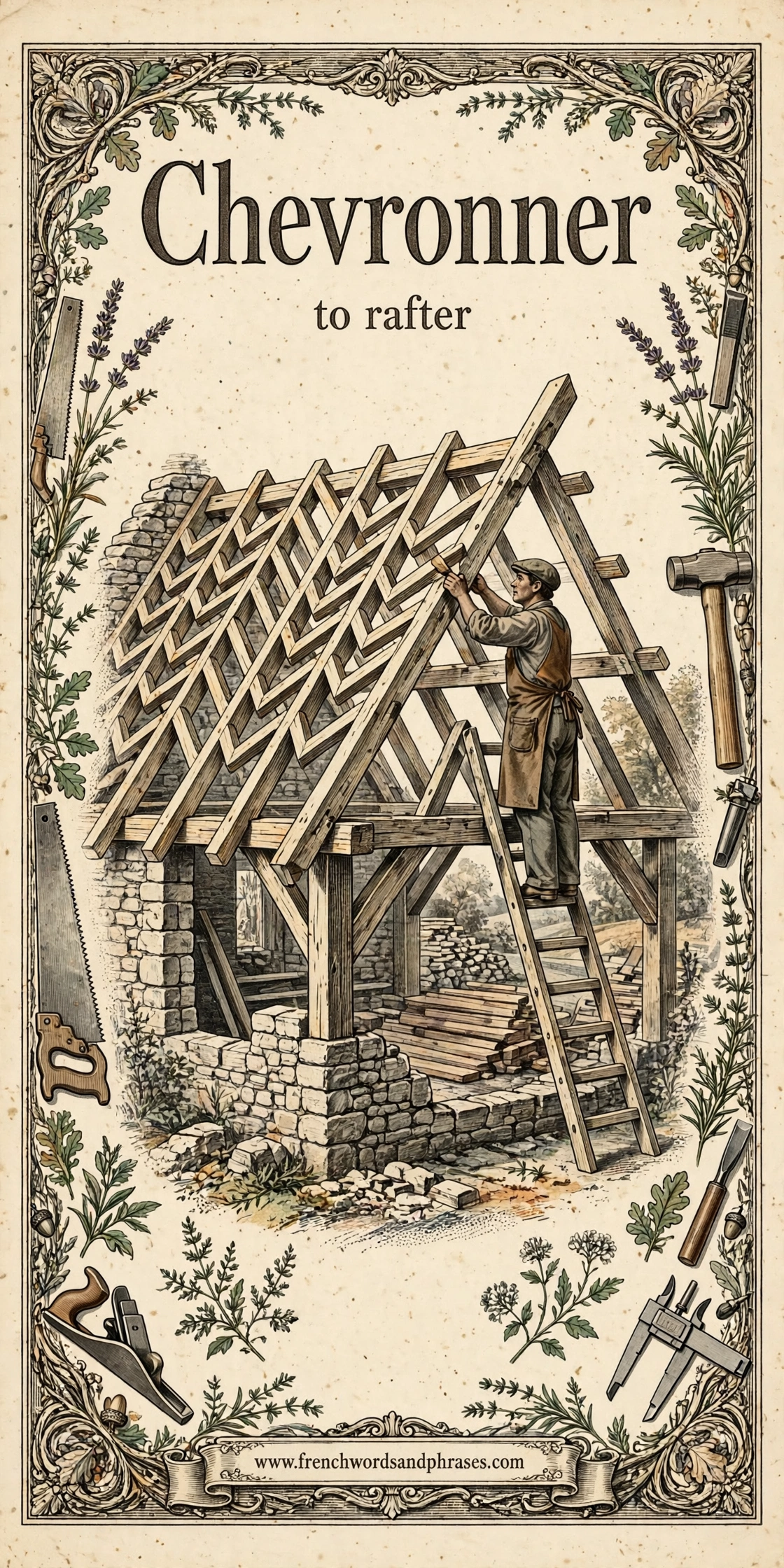
Chevronner means to rafter — to set the sloping rafters, the chevrons, that carry a roof from the ridge down to the walls.
The heavy frame is up, the ridge beam waits, and now the roofers lay the lighter sloping timbers that will carry the tiles: the chevrons. Chevronner is the roofer’s verb for that stage — raftering a roof, setting the regular ribs on which everything else will rest.
In this guide, you’ll learn how to conjugate chevronner in all the major French tenses and moods. Explore complete conjugation tables, French examples, English translations, and practice quizzes.
Understanding the French Verb Chevronner
Chevronner is a regular French verb belonging to the first group of verbs, those ending in-er.
It means to rafter. It names one precise stage of roofing — after the heavy trusses (les fermes) are standing and before the battens and tiles go on — so it lives in building specifications, restoration reports and the talk of couvreurs and charpentiers. Ordinary French gets by with poser les chevrons; chevronner is the trade’s own single word for the whole operation.
Verb classification: First group (-er)
Auxiliary verb: Avoir
Past participle: chevronné
Present participle: chevronnant
English equivalents: To rafter, to fit rafters; chevronner un toit — to rafter a roof; chevronner une charpente — to set the rafters of a frame; chevronner un versant — to rafter one slope; un chevron — a rafter (also a chevron stripe).
One important detail: chevronner is a technical verb of roofers and carpenters, built on un chevron — and that word leads a double life. On a roof, un chevron is a rafter, one of the light sloping timbers between the great frame and the tiles; on a uniform or a fabric, un chevron is the V-shaped stripe that English borrowed as chevron, the very pattern of herringbone cloth. The roof sense comes first: the rafters meet at the ridge in that same V. The verb is a regular -er: je chevronne, nous chevronnons.
Experience the Word
Chevronner is the verb of the roof’s ribs — the moment a bare frame becomes a slope that tiles, and rain, can travel down.
Imagine a farmhouse restoration in the Auvergne. The great oak trusses stand like the ribs of a ship; now the carpenters move along the slope chevronnant rafter after rafter, spacing each by eye and habit, until the whole hillside of the roof is ribbed and ready for its stone tiles.
By evening the skeleton has its covering of lines. Chevronné, the roof is a roof — it only lacks its skin.
How to Conjugate Chevronner: Complete French Conjugation Guide
Let’s explore every major conjugation of chevronner, beginning with the indicative mood.
How to Conjugate Chevronner in the Indicative Mood
The indicative mood is used to express facts, observations, actions, and events.
How to Conjugate Chevronner in the Present Tense (Présent)
Used for actions happening now, habitual actions, and general truths.
| Subject | Conjugation |
|---|---|
| je | chevronne |
| tu | chevronnes |
| il / elle | chevronne |
| nous | chevronnons |
| vous | chevronnez |
| ils / elles | chevronnent |
Example
Les couvreurs chevronnent le toit avant de poser les tuiles.
The roofers rafter the roof before laying the tiles.
Quick Quiz 1
Complete the sentence:
Nous ______ le versant sud demain.
Reveal the answer
chevronnerons
Nous chevronnerons le versant sud demain.
We will rafter the south slope tomorrow.
How to Conjugate Chevronner in the Passé Composé
Used for completed actions in the past. Chevronner takes the auxiliary verb avoir.
| Subject | Conjugation |
|---|---|
| j’ | ai chevronné |
| tu | as chevronné |
| il / elle | a chevronné |
| nous | avons chevronné |
| vous | avez chevronné |
| ils / elles | ont chevronné |
Example
Ils ont chevronné toute la toiture en deux jours.
They raftered the whole roof in two days.
How to Conjugate Chevronner in the Imparfait (Imperfect Tense)
Used for habitual past actions, descriptions, and ongoing situations in the past.
| Subject | Conjugation |
|---|---|
| je | chevronnais |
| tu | chevronnais |
| il / elle | chevronnait |
| nous | chevronnions |
| vous | chevronniez |
| ils / elles | chevronnaient |
Example
On chevronnait autrefois avec des chevrons de sapin.
In the old days, roofs were raftered with fir rafters.
Quick Quiz 2
Choose the correct form:
They raftered the roof in two days.
Ils ______ le toit en deux jours. (ont chevronné / sont chevronnés)
Reveal the answer
ont chevronné
Ils ont chevronné le toit en deux jours.
Chevronner takes avoir.
How to Conjugate Chevronner in the Plus-que-parfait
Used to describe an action that had already been completed before another past event.
| Subject | Conjugation |
|---|---|
| j’ | avais chevronné |
| tu | avais chevronné |
| il / elle | avait chevronné |
| nous | avions chevronné |
| vous | aviez chevronné |
| ils / elles | avaient chevronné |
Example
L’équipe avait chevronné le versant nord avant la pluie.
The team had raftered the north slope before the rain.
How to Conjugate Chevronner in the Passé Simple
Primarily used in formal writing, literature, and historical narratives. It is rarely used in everyday conversation.
| Subject | Conjugation |
|---|---|
| je | chevronnai |
| tu | chevronnas |
| il / elle | chevronna |
| nous | chevronnâmes |
| vous | chevronnâtes |
| ils / elles | chevronnèrent |
Example
Les charpentiers chevronnèrent la grange en une semaine.
The carpenters raftered the barn in a week.
How to Conjugate Chevronner in the Passé Antérieur
A literary tense used to express an action completed immediately before another past action, generally in the passé simple.
| Subject | Conjugation |
|---|---|
| j’ | eus chevronné |
| tu | eus chevronné |
| il / elle | eut chevronné |
| nous | eûmes chevronné |
| vous | eûtes chevronné |
| ils / elles | eurent chevronné |
Example
Quand ils eurent chevronné le toit, on posa la faîtière.
When they had raftered the roof, the ridge tiles were laid.
How to Conjugate Chevronner in the Future Tense (Futur Simple)
Used to describe actions that will take place in the future.
| Subject | Conjugation |
|---|---|
| je | chevronnerai |
| tu | chevronneras |
| il / elle | chevronnera |
| nous | chevronnerons |
| vous | chevronnerez |
| ils / elles | chevronneront |
Example
Demain, nous chevronnerons le versant sud.
Tomorrow, we will rafter the south slope.
How to Conjugate Chevronner in the Futur Antérieur (Future Perfect)
Used for an action that will have been completed before a particular point in the future.
| Subject | Conjugation |
|---|---|
| j’ | aurai chevronné |
| tu | auras chevronné |
| il / elle | aura chevronné |
| nous | aurons chevronné |
| vous | aurez chevronné |
| ils / elles | auront chevronné |
Example
À la fin du mois, ils auront chevronné les deux maisons.
By the end of the month, they will have raftered both houses.
How to Conjugate Chevronner in the Near Future (Futur Proche)
Used to describe something that is going to happen soon. Formed with aller + infinitive.
| Subject | Conjugation |
|---|---|
| je | vais chevronner |
| tu | vas chevronner |
| il / elle | va chevronner |
| nous | allons chevronner |
| vous | allez chevronner |
| ils / elles | vont chevronner |
Example
On va chevronner l’appentis ce matin.
We are going to rafter the lean-to this morning.
How to Conjugate Chevronner in the Conditional Mood
The conditional mood expresses what would happen under certain circumstances. It is also frequently used to make polite requests or express wishes.
How to Conjugate Chevronner in the Present Conditional
| Subject | Conjugation |
|---|---|
| je | chevronnerais |
| tu | chevronnerais |
| il / elle | chevronnerait |
| nous | chevronnerions |
| vous | chevronneriez |
| ils / elles | chevronneraient |
Example
Avec des chevrons plus longs, on chevronnerait la remise aussi.
With longer rafters, we would rafter the shed as well.
How to Conjugate Chevronner in the Past Conditional
| Subject | Conjugation |
|---|---|
| j’ | aurais chevronné |
| tu | aurais chevronné |
| il / elle | aurait chevronné |
| nous | aurions chevronné |
| vous | auriez chevronné |
| ils / elles | auraient chevronné |
Example
Ils auraient chevronné le toit sans la tempête.
They would have raftered the roof if not for the storm.
Chevronner in the Literary Past Conditional Form
This less common literary form uses the imperfect subjunctive of avoir.
| Subject | Conjugation |
|---|---|
| j’ | eusse chevronné |
| tu | eusses chevronné |
| il / elle | eût chevronné |
| nous | eussions chevronné |
| vous | eussiez chevronné |
| ils / elles | eussent chevronné |
Example
Le charpentier eût chevronné la grange avant l’hiver.
The carpenter would have raftered the barn before winter.
How to Conjugate Chevronner in the Subjunctive Mood
The subjunctive is used to express wishes, emotions, doubts, necessity, and uncertainty. It frequently follows expressions such as il faut que (it is necessary that) or bien que (although).
How to Conjugate Chevronner in the Present Subjunctive
| Subject | Conjugation |
|---|---|
| que je | chevronne |
| que tu | chevronnes |
| qu’il / qu’elle | chevronne |
| que nous | chevronnions |
| que vous | chevronniez |
| qu’ils / qu’elles | chevronnent |
Example
Il faut que vous chevronniez le toit avant les tuiles.
You must rafter the roof before the tiles.
Quick Quiz 3
Complete the sentence using the subjunctive:
Il faut que tu ______ le toit avant les tuiles.
Reveal the answer
chevronnes
Il faut que tu chevronnes le toit avant les tuiles.
You must rafter the roof before the tiles.
How to Conjugate Chevronner in the Imperfect Subjunctive
A literary tense, rarely encountered in modern spoken French.
| Subject | Conjugation |
|---|---|
| que je | chevronnasse |
| que tu | chevronnasses |
| qu’il / qu’elle | chevronnât |
| que nous | chevronnassions |
| que vous | chevronnassiez |
| qu’ils / qu’elles | chevronnassent |
Example
Le maître exigeait que l’on chevronnât d’abord le versant nord.
The master required the north slope to be raftered first.
How to Conjugate Chevronner in the Pluperfect Subjunctive
A literary construction used to express an action completed before another past action.
| Subject | Conjugation |
|---|---|
| que j’ | eusse chevronné |
| que tu | eusses chevronné |
| qu’il / qu’elle | eût chevronné |
| que nous | eussions chevronné |
| que vous | eussiez chevronné |
| qu’ils / qu’elles | eussent chevronné |
Example
On contrôla qu’ils eussent chevronné selon le plan.
They checked that they had raftered according to the plan.
How to Conjugate Chevronner in the Past Subjunctive
| Subject | Conjugation |
|---|---|
| que j’ | aie chevronné |
| que tu | aies chevronné |
| qu’il / qu’elle | ait chevronné |
| que nous | ayons chevronné |
| que vous | ayez chevronné |
| qu’ils / qu’elles | aient chevronné |
Example
Je suis rassuré qu’ils aient chevronné solidement.
I am relieved that they raftered solidly.
How to Conjugate Chevronner in the Imperative
The imperative is used to give commands, instructions, invitations, or suggestions. Subject pronouns are omitted.
How to Conjugate Chevronner in the Present Imperative
| Person | Conjugation |
|---|---|
| (tu) | chevronne |
| (nous) | chevronnons |
| (vous) | chevronnez |
Example
Chevronnez le toit avant la pluie !
Rafter the roof before the rain!
Quick Quiz 4
How would you say Rafter the roof (tu form)?
Reveal the answer
Chevronne le toit !
French Participles of Chevronner
Participles are verb forms that can be used in compound tenses and other grammatical constructions.
Present Participle of Chevronner
chevronnant
En chevronnant le toit, ils ont aperçu la vallée entière.
While raftering the roof, they caught sight of the whole valley.
Past Participle of Chevronner
chevronné
Chevronné avec soin, le toit attend ses tuiles.
Raftered with care, the roof awaits its tiles.
Chevronner in Everyday French: Real-Life Examples
Now that you know the conjugations, let’s see how chevronner appears in everyday French.
Example 1 — Present
Les couvreurs chevronnent le toit.
The roofers rafter the roof.
Example 2 — Passé composé
Ils ont chevronné la toiture en deux jours.
They raftered the roof in two days.
Example 3 — Imparfait
On chevronnait avec des chevrons de sapin.
Roofs were raftered with fir rafters.
Example 4 — Future
Nous chevronnerons le versant sud.
We will rafter the south slope.
Example 5 — Conditional
On chevronnerait la remise avec des chevrons plus longs.
We would rafter the shed with longer rafters.
Example 6 — Imperative
Chevronnez le toit avant la pluie !
Rafter the roof before the rain!
Beyond Translation: The Meaning of Chevronner
The two lives of chevron meet at the ridge of the roof: pairs of rafters lean together in a V, and that V — copied onto sleeves, shields and cloth — became the stripe English calls a chevron.
The pattern is the roof, remembered.
Herringbone tweed, a sergeant’s stripes and the ribs of a farmhouse roof are one picture at three scales, and chevronner is the verb of the largest of them: setting the V’s in timber, row after row, from ridge to eaves.
How to Remember the French Verb Chevronner
Remember it this way: Chevronner is about the roof’s ribs going on, V after V, from ridge to eaves.
- Un chevron is a rafter — the light sloping timber between the heavy frame and the tiles: chevronner is to set them.
- The same chevron is the V-stripe on uniforms and herringbone cloth — the rafters meet at the ridge in that same V.
- Regular -er: je chevronne, nous chevronnons, past participle chevronné.
The key idea is the roof’s ribs going on, V after V, from ridge to eaves.
Test Your Knowledge of Chevronner
Let’s see how much you’ve learned. Try answering these questions before revealing the answers.
Question 1
What is un chevron, and what stage of roofing does chevronner name?
Reveal the answer
A rafter — chevronner is setting the rafters, after the heavy frame and before the tiles.
Question 2
How do you say The roofers rafter the roof in French?
Reveal the answer
Les couvreurs chevronnent le toit.
Question 3
Translate: They raftered the whole roof in two days.
Reveal the answer
Ils ont chevronné toute la toiture en deux jours.
Question 4
What is the past participle of chevronner?
Reveal the answer
Chevronné.
Question 5
Complete the sentence:
Il faut que vous ______ le toit avant les tuiles.
Reveal the answer
chevronniez
Il faut que vous chevronniez le toit avant les tuiles.
You must rafter the roof before the tiles.
Your Final Challenge
Can You Use It?
How would you say this in French?
They rafter the roof facing the valley, and the house learns the shape of its hat.
Reveal the answer
Ils chevronnent le toit face à la vallée, et la maison apprend la forme de son chapeau.
They rafter the roof facing the valley, and the house learns the shape of its hat.
A little French. A little curiosity. A richer everyday life.
LEARN FRENCH ONE WORD AT A TIME