
A French Word to Live By
How to Conjugate Chavirer in French
/ʃa.vi.ʁe/
Chavirer means to capsize, to overturn.
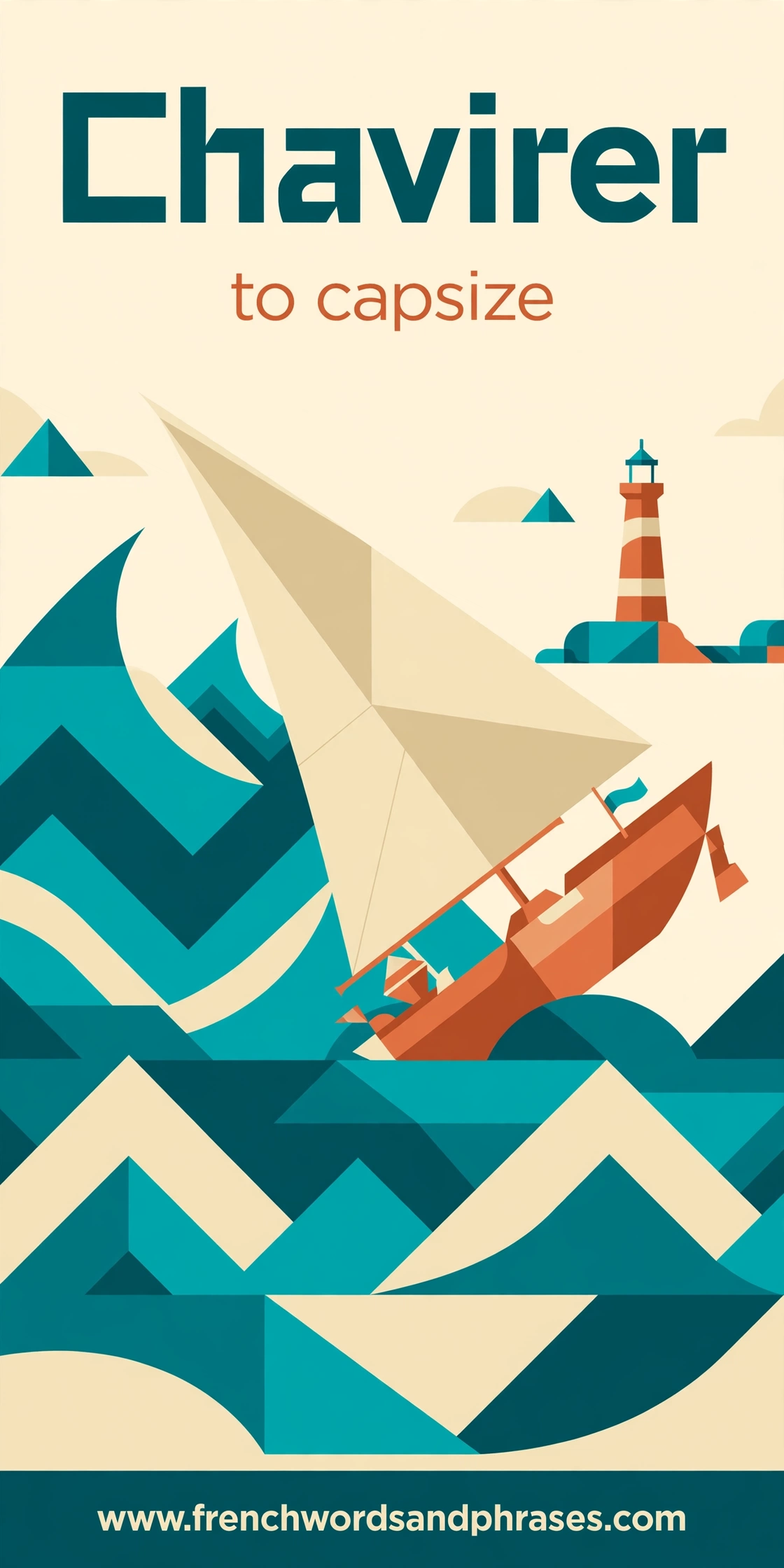
A wave hits the side of the boat, the hull rolls, and in a moment the world turns upside down. A boat capsizes, a canoe tips over, a heart turns over with emotion. In French, that sudden overturning is chavirer.
In this guide, you’ll learn how to conjugate chavirer in all the major French tenses and moods. Explore complete conjugation tables, French examples, English translations, and practice quizzes.
Understanding the French Verb Chavirer
Chavirer is a regular French verb belonging to the first group of verbs, those ending in -er.
It means to capsize, to overturn. It is commonly used for boats turning over, for objects tipping over, and figuratively for a heart turning over or a room spinning.
Verb classification: First group (-er)
Auxiliary verb: Avoir or être, depending on the construction
Past participle: chaviré
Present participle: chavirant
English equivalents: To capsize, to overturn, to keel over.
One important detail: chavirer takes avoir for the action of capsizing — le bateau a chaviré (the boat capsized). Être appears when the boat is seen lying capsized, the finished state — le voilier est chaviré sur le sable (the sailboat lies capsized on the sand). The tables on this page use avoir.
Experience the Word
Chavirer is the verb of the sudden tip — the moment balance is lost and everything goes over.
Imagine a small sailing boat on a windy afternoon. The wind catches the sail, the hull leans further and further, and suddenly the mast is in the water and the world is upside down.
You have not just tilted. You have capsized.
How to Conjugate Chavirer: Complete French Conjugation Guide
Let’s explore every major conjugation of chavirer, beginning with the indicative mood.
How to Conjugate Chavirer in the Indicative Mood
The indicative mood is used to express facts, observations, actions, and events.
How to Conjugate Chavirer in the Present Tense (Présent)
Used for actions happening now, habitual actions, and general truths.
| Subject | Conjugation |
|---|---|
| je | chavire |
| tu | chavires |
| il / elle | chavire |
| nous | chavirons |
| vous | chavirez |
| ils / elles | chavirent |
Example
Le voilier chavire dans la tempête.
The sailboat capsizes in the storm.
Quick Quiz 1
Complete the sentence:
Le bateau ______ dans la tempête.
Reveal the answer
chavire
Le bateau chavire dans la tempête.
The boat capsizes in the storm.
How to Conjugate Chavirer in the Passé Composé
Used for completed actions in the past. Chavirer takes the auxiliary verb avoir or être, depending on the construction.
| Subject | Conjugation |
|---|---|
| j’ | ai chaviré |
| tu | as chaviré |
| il / elle | a chaviré |
| nous | avons chaviré |
| vous | avez chaviré |
| ils / elles | ont chaviré |
Example
Le bateau a chaviré près du port.
The boat capsized near the harbour.
How to Conjugate Chavirer in the Imparfait (Imperfect Tense)
Used for habitual past actions, descriptions, and ongoing situations in the past.
| Subject | Conjugation |
|---|---|
| je | chavirais |
| tu | chavirais |
| il / elle | chavirait |
| nous | chavirions |
| vous | chaviriez |
| ils / elles | chaviraient |
Example
Dans la tempête, les barques chaviraient souvent.
In storms, the small boats used to capsize often.
Quick Quiz 2
Choose the correct form:
The boat capsized near the harbour.
Le bateau ______ près du port. (a chaviré / est chaviré)
Reveal the answer
a chaviré
Le bateau a chaviré près du port.
Chavirer takes avoir for the action of capsizing.
How to Conjugate Chavirer in the Plus-que-parfait
Used to describe an action that had already been completed before another past event.
| Subject | Conjugation |
|---|---|
| j’ | avais chaviré |
| tu | avais chaviré |
| il / elle | avait chaviré |
| nous | avions chaviré |
| vous | aviez chaviré |
| ils / elles | avaient chaviré |
Example
Le bateau avait déjà chaviré quand les secours sont arrivés.
The boat had already capsized when the rescuers arrived.
How to Conjugate Chavirer in the Passé Simple
Primarily used in formal writing, literature, and historical narratives. It is rarely used in everyday conversation.
| Subject | Conjugation |
|---|---|
| je | chavirai |
| tu | chaviras |
| il / elle | chavira |
| nous | chavirâmes |
| vous | chavirâtes |
| ils / elles | chavirèrent |
Example
Le navire chavira en pleine nuit.
The ship capsized in the middle of the night.
How to Conjugate Chavirer in the Passé Antérieur
A literary tense used to express an action completed immediately before another past action, generally in the passé simple.
| Subject | Conjugation |
|---|---|
| j’ | eus chaviré |
| tu | eus chaviré |
| il / elle | eut chaviré |
| nous | eûmes chaviré |
| vous | eûtes chaviré |
| ils / elles | eurent chaviré |
Example
Dès qu’il eut chaviré, l’équipage sauta à l’eau.
As soon as it had capsized, the crew jumped into the water.
How to Conjugate Chavirer in the Future Tense (Futur Simple)
Used to describe actions that will take place in the future.
| Subject | Conjugation |
|---|---|
| je | chavirerai |
| tu | chavireras |
| il / elle | chavirera |
| nous | chavirerons |
| vous | chavirerez |
| ils / elles | chaviront |
Example
Demain, le bateau chavirera si le vent continue.
Tomorrow, the boat will capsize if the wind keeps up.
How to Conjugate Chavirer in the Futur Antérieur (Future Perfect)
Used for an action that will have been completed before a particular point in the future.
| Subject | Conjugation |
|---|---|
| j’ | aurai chaviré |
| tu | auras chaviré |
| il / elle | aura chaviré |
| nous | aurons chaviré |
| vous | aurez chaviré |
| ils / elles | auront chaviré |
Example
À minuit, le voilier aura chaviré dans la baie.
By midnight, the sailboat will have capsized in the bay.
How to Conjugate Chavirer in the Near Future (Futur Proche)
Used to describe something that is going to happen soon. Formed with aller + infinitive.
| Subject | Conjugation |
|---|---|
| je | vais chavirer |
| tu | vas chavirer |
| il / elle | va chavirer |
| nous | allons chavirer |
| vous | allez chavirer |
| ils / elles | vont chavirer |
Example
Le canoë va chavirer, attention !
The canoe is going to capsize, watch out!
How to Conjugate Chavirer in the Conditional Mood
The conditional mood expresses what would happen under certain circumstances. It is also frequently used to make polite requests or express wishes.
How to Conjugate Chavirer in the Present Conditional
| Subject | Conjugation |
|---|---|
| je | chavirerais |
| tu | chavirerais |
| il / elle | chavirerait |
| nous | chavirerions |
| vous | chavireriez |
| ils / elles | chavireraient |
Example
Le bateau chavirerait avec une vague comme celle-là.
The boat would capsize with a wave like that one.
How to Conjugate Chavirer in the Past Conditional
| Subject | Conjugation |
|---|---|
| j’ | aurais chaviré |
| tu | aurais chaviré |
| il / elle | aurait chaviré |
| nous | aurions chaviré |
| vous | auriez chaviré |
| ils / elles | auraient chaviré |
Example
Le voilier aurait chaviré sans le poids du lest.
The sailboat would have capsized without the weight of the ballast.
Chavirer in the Literary Past Conditional Form
This less common literary form uses the imperfect subjunctive of avoir or être, depending on the construction.
| Subject | Conjugation |
|---|---|
| j’ | eusse chaviré |
| tu | eusses chaviré |
| il / elle | eût chaviré |
| nous | eussions chaviré |
| vous | eussiez chaviré |
| ils / elles | eussent chaviré |
Example
Il eût chaviré s’il n’avait pas ralenti.
It would have capsized if it had not slowed down.
How to Conjugate Chavirer in the Subjunctive Mood
The subjunctive is used to express wishes, emotions, doubts, necessity, and uncertainty. It frequently follows expressions such as il faut que (it is necessary that) or bien que (although).
How to Conjugate Chavirer in the Present Subjunctive
| Subject | Conjugation |
|---|---|
| que je | chavire |
| que tu | chavires |
| qu’il / qu’elle | chavire |
| que nous | chavirions |
| que vous | chaviriez |
| qu’ils / qu’elles | chavirent |
Example
Il faut que le bateau ne chavire pas.
The boat must not capsize.
Quick Quiz 3
Complete the sentence using the subjunctive:
Il faut que le bateau ne ______ pas.
Reveal the answer
chavire
Il faut que le bateau ne chavire pas.
The boat must not capsize.
How to Conjugate Chavirer in the Imperfect Subjunctive
A literary tense, rarely encountered in modern spoken French.
| Subject | Conjugation |
|---|---|
| que je | chavirasse |
| que tu | chavirasses |
| qu’il / qu’elle | chavirât |
| que nous | chavirassions |
| que vous | chavirassiez |
| qu’ils / qu’elles | chavirassent |
Example
Il craignait que le bateau chavirât dans la tempête.
He feared that the boat would capsize in the storm.
How to Conjugate Chavirer in the Pluperfect Subjunctive
A literary construction used to express an action completed before another past action.
| Subject | Conjugation |
|---|---|
| que j’ | eusse chaviré |
| que tu | eusses chaviré |
| qu’il / qu’elle | eût chaviré |
| que nous | eussions chaviré |
| que vous | eussiez chaviré |
| qu’ils / qu’elles | eussent chaviré |
Example
Il regrettait que nous eussions chaviré si près du port.
He regretted that we had capsized so close to the harbour.
How to Conjugate Chavirer in the Past Subjunctive
| Subject | Conjugation |
|---|---|
| que j’ | aie chaviré |
| que tu | aies chaviré |
| qu’il / qu’elle | ait chaviré |
| que nous | ayons chaviré |
| que vous | ayez chaviré |
| qu’ils / qu’elles | aient chaviré |
Example
Je suis content que le bateau n’ait pas chaviré.
I am glad the boat did not capsize.
How to Conjugate Chavirer in the Imperative
The imperative is used to give commands, instructions, invitations, or suggestions. Subject pronouns are omitted.
How to Conjugate Chavirer in the Present Imperative
| Person | Conjugation |
|---|---|
| (tu) | chavire |
| (nous) | chavirons |
| (vous) | chavirez |
Example
Ne chavire pas, tiens bien la barre !
Don’t capsize, hold the tiller tight!
Quick Quiz 4
How would you say Don’t capsize, hold the tiller, using the tu form?
Reveal the answer
Ne chavire pas, tiens la barre !
French Participles of Chavirer
Participles are verb forms that can be used in compound tenses and other grammatical constructions.
Present Participle of Chavirer
chavirant
En chavirant, le bateau a perdu son mât.
While capsizing, the boat lost its mast.
Past Participle of Chavirer
chaviré
Le voilier est chaviré sur le sable.
The sailboat lies capsized on the sand.
Chavirer in Everyday French: Real-Life Examples
Now that you know the conjugations, let’s see how chavirer appears in everyday French.
Example 1 — Present
Le canoë chavire facilement.
The canoe capsizes easily.
Example 2 — Passé composé — avoir
Le bateau a chaviré pendant la tempête.
The boat capsized during the storm.
Example 3 — Passé composé — être
Le voilier est chaviré sur le sable.
The sailboat lies capsized on the sand.
Example 4 — Imparfait
Les yeux lui chaviraient de fatigue.
Her eyes were rolling with tiredness.
Example 5 — Future
Le bateau chavirera si le vent se lève.
The boat will capsize if the wind rises.
Example 6 — Conditional
Je chavirerais de peur sur ce bateau.
I would keel over with fear on that boat.
Beyond Translation: The Meaning of Chavirer
English has one word, capsize, for the meaning of chavirer, but the French word also describes a heart turning over with emotion — son cœur chavire — or a room spinning around you.
And chavirer carries its famous lesson with it.
It is one of the verbs where the old rule still shows: avoir for the action of capsizing, être for the capsized state. In modern French, le bateau a chaviré does almost all the work.
How to Remember the French Verb Chavirer
Remember it this way: Chavirer is about capsizing — avoir for the action, être for the capsized state.
- Avoir for the action of capsizing — le bateau a chaviré.
- Être for the capsized state — le voilier est chaviré sur le sable.
- Figuratively, a heart can capsize too — son cœur chavire.
The key idea is capsizing — avoir for the action, être for the capsized state.
Test Your Knowledge of Chavirer
Let’s see how much you’ve learned. Try answering these questions before revealing the answers.
Question 1
When does chavirer take avoir, and when does it take être?
Reveal the answer
Avoir is the auxiliary for the action of capsizing — le bateau a chaviré. Être appears when the boat is seen lying capsized, the finished state — le voilier est chaviré sur le sable.
Question 2
How do you say The boat will capsize in French?
Reveal the answer
Le bateau chavirera.
Question 3
Translate: The boat capsized near the harbour.
Reveal the answer
Le bateau a chaviré près du port.
Question 4
What is the present participle of chavirer?
Reveal the answer
Chavirant.
Question 5
Complete the sentence:
Si le vent se levait, le bateau ______.
Reveal the answer
chavirerait
Si le vent se levait, le bateau chavirerait.
If the wind rose, the boat would capsize.
Your Final Challenge
Can You Use It?
How would you say this in French?
Tomorrow, I want to sail without capsizing.
Reveal the answer
Demain, je veux naviguer sans chavirer.
Tomorrow, I want to sail without capsizing.
A little French. A little curiosity. A richer everyday life.
LEARN FRENCH ONE WORD AT A TIME




