A French Word to Live By
How to Conjugate Chanter in French
/ʃɑ̃.te/
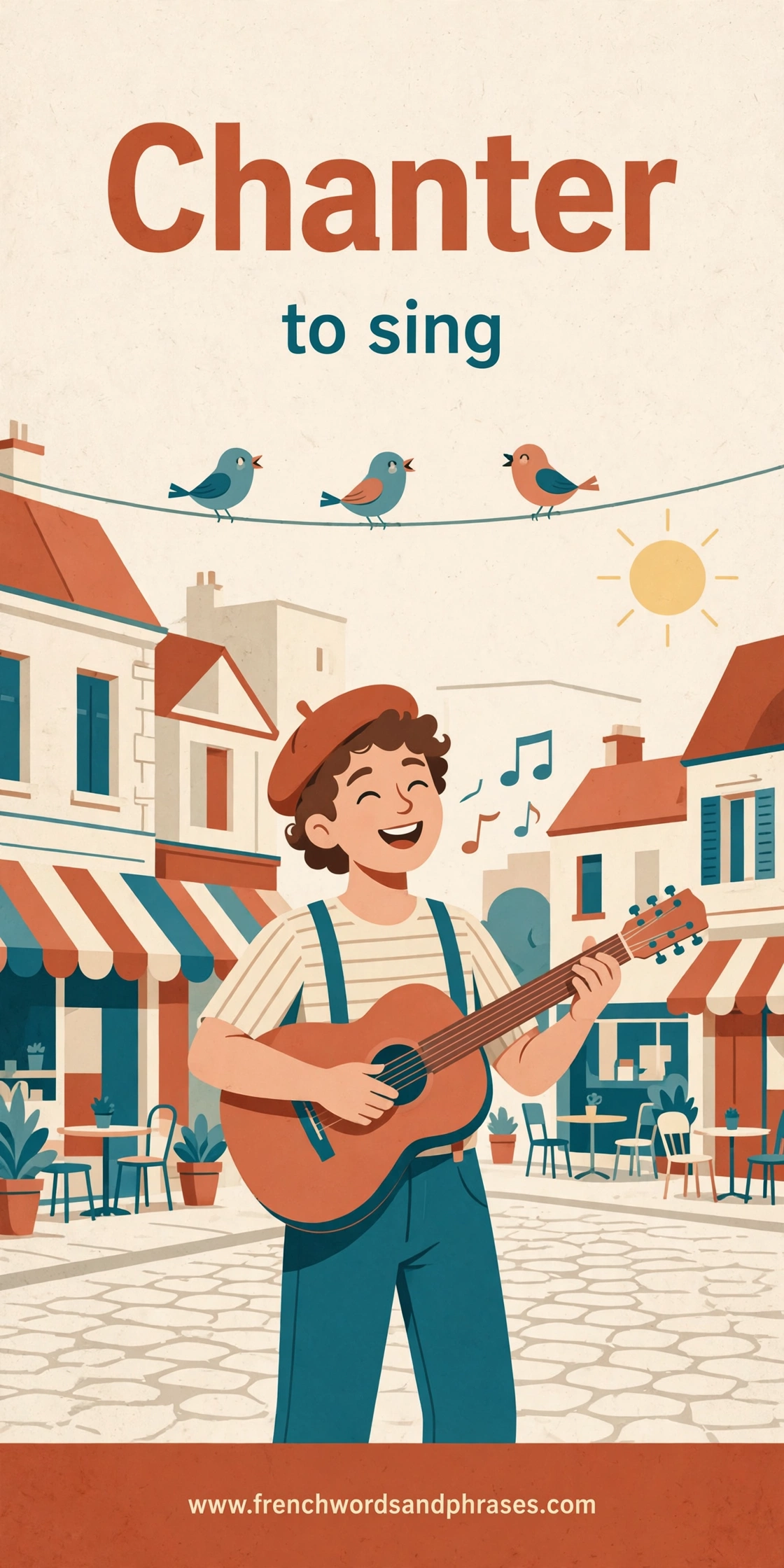
Chanter means to sing.
A lullaby over a cradle, a choir in a stone church, supporters singing in a stadium — chanter is the verb of the voice set free, the oldest music there is.
In this guide, you’ll learn how to conjugate chanter in all the major French tenses and moods. Explore complete conjugation tables, French examples, English translations, and practice quizzes.
Understanding the French Verb Chanter
Chanter is a regular French verb belonging to the first group of verbs, those ending in -er.
It means to sing. It is commonly used for singing songs, hymns and anthems, for birdsong at dawn, for singing someone’s praises (chanter les louanges de quelqu’un), and in the cheeky question qu’est-ce que tu me chantes là ? — what are you telling me now?
Verb classification: First group (-er)
Auxiliary verb: Avoir
Past participle: chanté
Present participle: chantant
English equivalents: To sing; (of birds, water, wind) to sing; to chant.
One important detail: chanter sings songs, but it also sings without words — les oiseaux chantent, the birds sing, le vent chante dans les arbres, and a happy kettle can chant too. The family is musical: une chanson is a song, un chanteur / une chanteuse a singer, and un chant a song or chant. If someone tries to blackmail you, that is another branch entirely: faire chanter quelqu’un.
Experience the Word
Chanter is the verb of joy with a melody — the moment feelings get too big for ordinary speech and climb into song.
Imagine a village wedding in the South. The meal ends, an uncle stands on a chair, and the whole table joins the chorus of a song everyone has known since childhood. Nobody is in tune. Everybody is happy.
Nothing has been performed. People have simply sung — together, which is the point.
How to Conjugate Chanter: Complete French Conjugation Guide
Let’s explore every major conjugation of chanter, beginning with the indicative mood.
How to Conjugate Chanter in the Indicative Mood
The indicative mood is used to express facts, observations, actions, and events.
How to Conjugate Chanter in the Present Tense (Présent)
Used for actions happening now, habitual actions, and general truths.
| Subject | Conjugation |
|---|---|
| je | chante |
| tu | chantes |
| il / elle | chante |
| nous | chantons |
| vous | chantez |
| ils / elles | chantent |
Example
Les oiseaux chantent dès l’aube.
The birds sing from dawn.
Quick Quiz 1
Complete the sentence:
Nous ______ une chanson ancienne.
Reveal the answer
chantons
Nous chantons une chanson ancienne.
We are singing an old song.
How to Conjugate Chanter in the Passé Composé
Used for completed actions in the past. Chanter takes the auxiliary verb avoir.
| Subject | Conjugation |
|---|---|
| j’ | ai chanté |
| tu | as chanté |
| il / elle | a chanté |
| nous | avons chanté |
| vous | avez chanté |
| ils / elles | ont chanté |
Example
Elle a chanté une vieille chanson à son enfant.
She sang an old song to her child.
How to Conjugate Chanter in the Imparfait (Imperfect Tense)
Used for habitual past actions, descriptions, and ongoing situations in the past.
| Subject | Conjugation |
|---|---|
| je | chantais |
| tu | chantais |
| il / elle | chantait |
| nous | chantions |
| vous | chantiez |
| ils / elles | chantaient |
Example
Autrefois, les marins chantaient en travaillant.
In the old days, sailors used to sing while working.
Quick Quiz 2
Choose the correct form:
They sang all evening.
Ils ______ toute la soirée. (ont chanté / sont chantés)
Reveal the answer
ont chanté
Ils ont chanté toute la soirée.
Chanter takes avoir.
How to Conjugate Chanter in the Plus-que-parfait
Used to describe an action that had already been completed before another past event.
| Subject | Conjugation |
|---|---|
| j’ | avais chanté |
| tu | avais chanté |
| il / elle | avait chanté |
| nous | avions chanté |
| vous | aviez chanté |
| ils / elles | avaient chanté |
Example
Le chœur avait chanté ce chant à Noël dernier.
The choir had sung that carol last Christmas.
How to Conjugate Chanter in the Passé Simple
Primarily used in formal writing, literature, and historical narratives. It is rarely used in everyday conversation.
| Subject | Conjugation |
|---|---|
| je | chantai |
| tu | chantas |
| il / elle | chanta |
| nous | chantâmes |
| vous | chantâtes |
| ils / elles | chantèrent |
Example
La cantatrice chanta et la salle retint son souffle.
The opera singer sang and the hall held its breath.
How to Conjugate Chanter in the Passé Antérieur
A literary tense used to express an action completed immediately before another past action, generally in the passé simple.
| Subject | Conjugation |
|---|---|
| j’ | eus chanté |
| tu | eus chanté |
| il / elle | eut chanté |
| nous | eûmes chanté |
| vous | eûtes chanté |
| ils / elles | eurent chanté |
Example
Quand il eut chanté son dernier air, le rideau tomba.
When he had sung his last aria, the curtain fell.
How to Conjugate Chanter in the Future Tense (Futur Simple)
Used to describe actions that will take place in the future.
| Subject | Conjugation |
|---|---|
| je | chanterai |
| tu | chanteras |
| il / elle | chantera |
| nous | chanterons |
| vous | chanterez |
| ils / elles | chanteront |
Example
Demain, les enfants chanteront pour la fête de l’école.
Tomorrow, the children will sing for the school fête.
How to Conjugate Chanter in the Futur Antérieur (Future Perfect)
Used for an action that will have been completed before a particular point in the future.
| Subject | Conjugation |
|---|---|
| j’ | aurai chanté |
| tu | auras chanté |
| il / elle | aura chanté |
| nous | aurons chanté |
| vous | aurez chanté |
| ils / elles | auront chanté |
Example
À la fin du concert, elle aura chanté douze chansons.
By the end of the concert, she will have sung twelve songs.
How to Conjugate Chanter in the Near Future (Futur Proche)
Used to describe something that is going to happen soon. Formed with aller + infinitive.
| Subject | Conjugation |
|---|---|
| je | vais chanter |
| tu | vas chanter |
| il / elle | va chanter |
| nous | allons chanter |
| vous | allez chanter |
| ils / elles | vont chanter |
Example
Écoute, le merle va chanter.
Listen, the blackbird is going to sing.
How to Conjugate Chanter in the Conditional Mood
The conditional mood expresses what would happen under certain circumstances. It is also frequently used to make polite requests or express wishes.
How to Conjugate Chanter in the Present Conditional
| Subject | Conjugation |
|---|---|
| je | chanterais |
| tu | chanterais |
| il / elle | chanterait |
| nous | chanterions |
| vous | chanteriez |
| ils / elles | chanteraient |
Example
Je chanterais volontiers, mais je n’ai pas de voix.
I would gladly sing, but I have no voice.
How to Conjugate Chanter in the Past Conditional
| Subject | Conjugation |
|---|---|
| j’ | aurais chanté |
| tu | aurais chanté |
| il / elle | aurait chanté |
| nous | aurions chanté |
| vous | auriez chanté |
| ils / elles | auraient chanté |
Example
Ils auraient chanté plus fort avec un piano.
They would have sung louder with a piano.
Chanter in the Literary Past Conditional Form
This less common literary form uses the imperfect subjunctive of avoir.
| Subject | Conjugation |
|---|---|
| j’ | eusse chanté |
| tu | eusses chanté |
| il / elle | eût chanté |
| nous | eussions chanté |
| vous | eussiez chanté |
| ils / elles | eussent chanté |
Example
Elle eût chanté pour lui toute la nuit.
She would have sung for him all night.
How to Conjugate Chanter in the Subjunctive Mood
The subjunctive is used to express wishes, emotions, doubts, necessity, and uncertainty. It frequently follows expressions such as il faut que (it is necessary that) or bien que (although).
How to Conjugate Chanter in the Present Subjunctive
| Subject | Conjugation |
|---|---|
| que je | chante |
| que tu | chantes |
| qu’il / qu’elle | chante |
| que nous | chantions |
| que vous | chantiez |
| qu’ils / qu’elles | chantent |
Example
Il faut que tu chantes plus fort.
You must sing louder.
Quick Quiz 3
Complete the sentence using the subjunctive:
Il faut que vous ______ avec le chœur.
Reveal the answer
chantiez
Il faut que vous chantiez avec le chœur.
You must sing with the choir.
How to Conjugate Chanter in the Imperfect Subjunctive
A literary tense, rarely encountered in modern spoken French.
| Subject | Conjugation |
|---|---|
| que je | chantasse |
| que tu | chantasses |
| qu’il / qu’elle | chantât |
| que nous | chantassions |
| que vous | chantassiez |
| qu’ils / qu’elles | chantassent |
Example
Je voulais qu’elle chantât comme autrefois.
I wanted her to sing as she used to.
How to Conjugate Chanter in the Pluperfect Subjunctive
A literary construction used to express an action completed before another past action.
| Subject | Conjugation |
|---|---|
| que j’ | eusse chanté |
| que tu | eusses chanté |
| qu’il / qu’elle | eût chanté |
| que nous | eussions chanté |
| que vous | eussiez chanté |
| ils / elles | eussent chanté |
Example
Il regrettait que nous eussions chanté si tard.
He regretted that we had sung so late.
How to Conjugate Chanter in the Past Subjunctive
| Subject | Conjugation |
|---|---|
| que j’ | aie chanté |
| que tu | aies chanté |
| qu’il / qu’elle | ait chanté |
| que nous | ayons chanté |
| que vous | ayez chanté |
| ils / elles | aient chanté |
Example
Je suis ravi que tu aies chanté avec nous.
I am delighted you sang with us.
How to Conjugate Chanter in the Imperative
The imperative is used to give commands, instructions, invitations, or suggestions. Subject pronouns are omitted.
How to Conjugate Chanter in the Present Imperative
| Person | Conjugation |
|---|---|
| (tu) | chante |
| (nous) | chantons |
| (vous) | chantez |
Example
Chante-nous une chanson de ton pays !
Sing us a song from your country!
Quick Quiz 4
How would you say Sing us a song (tu form)?
Reveal the answer
Chante-nous une chanson !
French Participles of Chanter
Participles are verb forms that can be used in compound tenses and other grammatical constructions.
Present Participle of Chanter
chantant
En chantant, elle oubliait toutes ses peines.
While singing, she forgot all her troubles.
Past Participle of Chanter
chanté
Chanté par tout le stade, l’hymne faisait vibrer les murs.
Sung by the whole stadium, the anthem made the walls shake.
Chanter in Everyday French: Real-Life Examples
Now that you know the conjugations, let’s see how chanter appears in everyday French.
Example 1 — Present
Ma grand-mère chante en cuisinant.
My grandmother sings while cooking.
Example 2 — Passé composé
Nous avons chanté toute la soirée.
We sang all evening.
Example 3 — Imparfait
Le coq chantait à cinq heures du matin.
The rooster used to crow (sing) at five in the morning.
Example 4 — Future
La chorale chantera à la messe de dimanche.
The choir will sing at Sunday mass.
Example 5 — Conditional
Je chanterais si je connaissais les paroles.
I would sing if I knew the words.
Example 6 — Imperative
Chantez tous avec nous !
Sing, everyone, with us!
Beyond Translation: The Meaning of Chanter
English keeps sing for voices and lets birds sing too, but French chanter goes further — wind, water, kettles and even crickets chantent, the whole world humming its tune.
Its most famous line needs no music.
Je ne regrette rien was chantée — sung — by Édith Piaf, whose voice made chanter mean not just singing, but singing your whole life out loud.
How to Remember the French Verb Chanter
Remember it this way: Chanter is about the voice set free — songs, birds and choruses.
- Chanter une chanson — the verb and its song share the same root: easy to remember, impossible to separate.
- Birds, wind and kettles can chanter too — French hears music everywhere.
- Regular -er: je chante, nous chantons, past participle chanté.
The key idea is the voice set free — songs, birds and choruses.
Test Your Knowledge of Chanter
Let’s see how much you’ve learned. Try answering these questions before revealing the answers.
Question 1
How do you say The birds sing at dawn in French?
Reveal the answer
Les oiseaux chantent dès l’aube.
Question 2
How do you say She sang an old song in French?
Reveal the answer
Elle a chanté une vieille chanson.
Question 3
Translate: We sang all evening.
Reveal the answer
Nous avons chanté toute la soirée.
Question 4
What is the past participle of chanter?
Reveal the answer
Chanté.
Question 5
Complete the sentence:
Il faut que tu ______ plus fort.
Reveal the answer
chantes
Il faut que tu chantes plus fort.
You must sing louder.
Your Final Challenge
Can You Use It?
How would you say this in French?
When she sings, even the neighbours open their windows.
Reveal the answer
Quand elle chante, même les voisins ouvrent leurs fenêtres.
When she sings, even the neighbours open their windows.
A little French. A little curiosity. A richer everyday life.
LEARN FRENCH ONE WORD AT A TIME