A French Word to Live By
How to Conjugate Brosser in French
/bʁɔ.se/
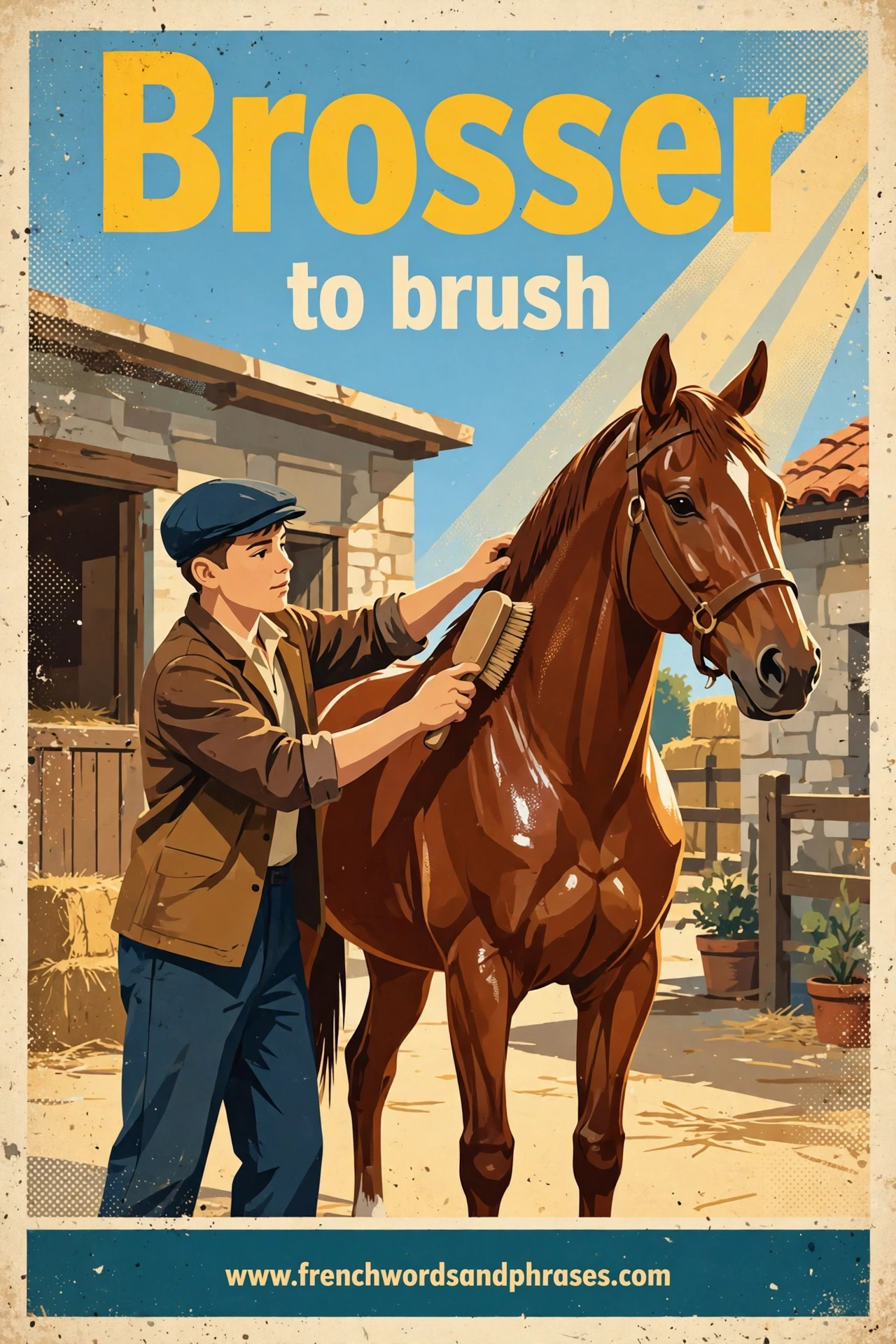
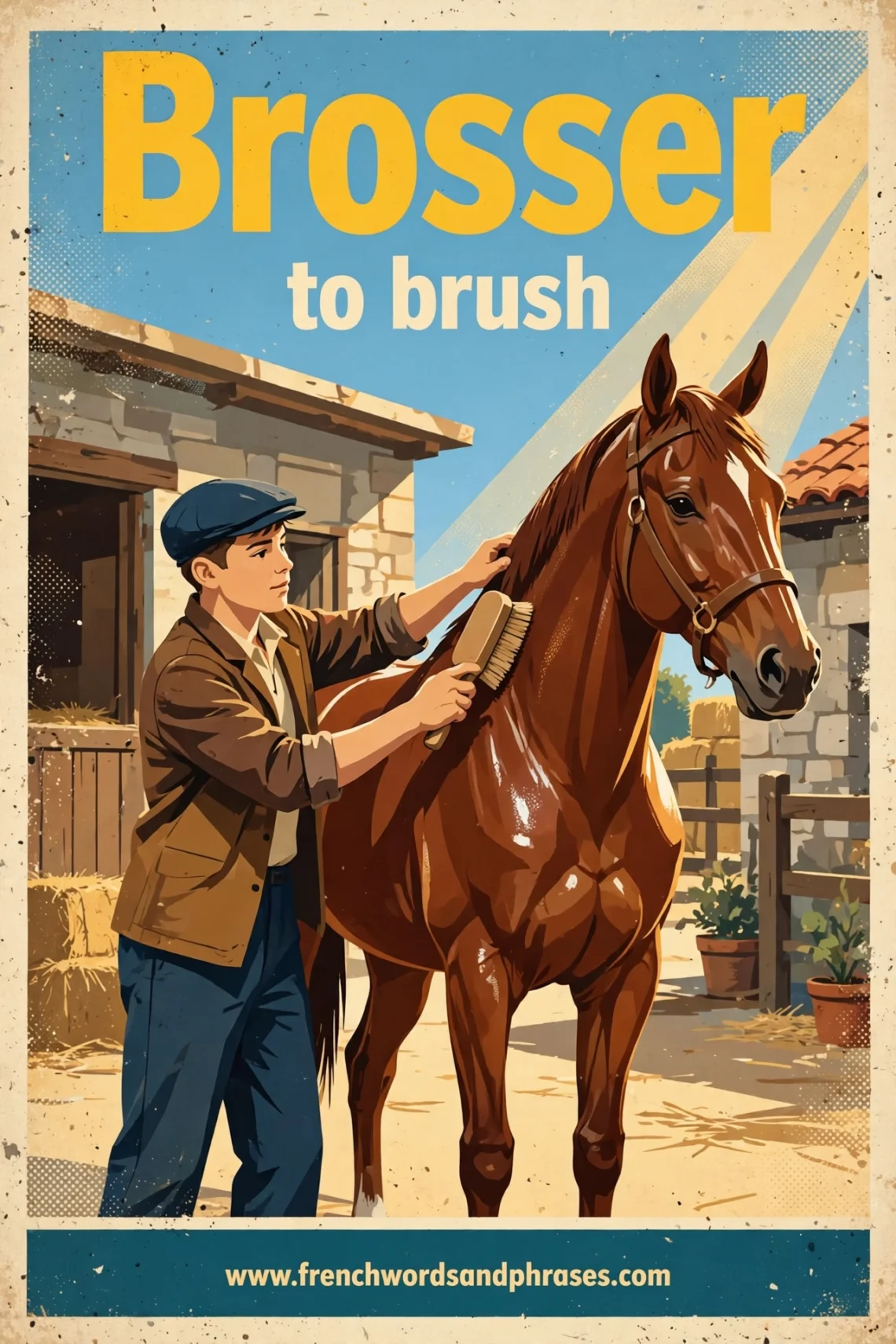
Brosser means to brush.
Teeth in the morning, hair before school, mud off a coat after a country walk — brosser is the verb of the brush, the small daily tool that keeps the world tidy.
In this guide, you’ll learn how to conjugate brosser in all the major French tenses and moods. Explore complete conjugation tables, French examples, English translations, and practice quizzes.
Understanding the French Verb Brosser
Brosser is a regular French verb belonging to the first group of verbs, those ending in -er.
It means to brush. It is commonly used for brushing teeth, hair, clothes and shoes, for brushing animals, and in the figurative painter’s sense — brosser le portrait de quelqu’un, to paint someone’s portrait in a few strokes of words.
Verb classification: First group (-er)
Auxiliary verb: Avoir
Past participle: brossé
Present participle: brossant
English equivalents: To brush; (se) to brush one’s own hair or teeth; to sketch broadly (brosser un tableau).
One important detail: brosser usually works with its noun close by — une brosse is the brush, une brosse à dents a toothbrush. For your own body, French goes reflexive: je me brosse les dents, elle se brosse les cheveux. And painters gave the verb a second career: brosser un tableau, to sketch a picture in broad strokes — or, figuratively, to paint a portrait of a situation.
Experience the Word
Brosser is the verb of small daily care — thirty seconds with a brush that stand between us and chaos.
Imagine a grandmother in a farmhouse kitchen, brushing the mud from her grandson’s coat with great firm strokes while the soup warms. No lecture, just the brush: that is love in the brosser tense.
The coat is not new. It is brushed — cared for, and ready to go out again.
How to Conjugate Brosser: Complete French Conjugation Guide
Let’s explore every major conjugation of brosser, beginning with the indicative mood.
How to Conjugate Brosser in the Indicative Mood
The indicative mood is used to express facts, observations, actions, and events.
How to Conjugate Brosser in the Present Tense (Présent)
Used for actions happening now, habitual actions, and general truths.
| Subject | Conjugation |
|---|---|
| je | brosse |
| tu | brosses |
| il / elle | brosse |
| nous | brossons |
| vous | brossez |
| ils / elles | brossent |
Example
Elle brosse son manteau avant de sortir.
She brushes her coat before going out.
Quick Quiz 1
Complete the sentence:
Nous ______ le chien après la promenade.
Reveal the answer
brossons
Nous brossons le chien après la promenade.
We brush the dog after the walk.
How to Conjugate Brosser in the Passé Composé
Used for completed actions in the past. Brosser takes the auxiliary verb avoir.
| Subject | Conjugation |
|---|---|
| j’ | ai brossé |
| tu | as brossé |
| il / elle | a brossé |
| nous | avons brossé |
| vous | avez brossé |
| ils / elles | ont brossé |
Example
Il a brossé ses chaussures jusqu’à les faire briller.
He brushed his shoes until they shone.
How to Conjugate Brosser in the Imparfait (Imperfect Tense)
Used for habitual past actions, descriptions, and ongoing situations in the past.
| Subject | Conjugation |
|---|---|
| je | brossais |
| tu | brossais |
| il / elle | brossait |
| nous | brossions |
| vous | brossiez |
| ils / elles | brossaient |
Example
Chaque matin, le coiffeur brossait les habits des clients.
Every morning, the barber used to brush the clients’ clothes.
Quick Quiz 2
Choose the correct form:
She brushed her hair.
Elle ______ les cheveux. (s’est brossé / a brossée)
Reveal the answer
s’est brossé
Elle s’est brossé les cheveux.
For your own hair, French uses the reflexive se brosser.
How to Conjugate Brosser in the Plus-que-parfait
Used to describe an action that had already been completed before another past event.
| Subject | Conjugation |
|---|---|
| j’ | avais brossé |
| tu | avais brossé |
| il / elle | avait brossé |
| nous | avions brossé |
| vous | aviez brossé |
| ils / elles | avaient brossé |
Example
Nous avions brossé le chien avant la promenade.
We had brushed the dog before the walk.
How to Conjugate Brosser in the Passé Simple
Primarily used in formal writing, literature, and historical narratives. It is rarely used in everyday conversation.
| Subject | Conjugation |
|---|---|
| je | brossai |
| tu | brossas |
| il / elle | brossa |
| nous | brossâmes |
| vous | brossâtes |
| ils / elles | brossèrent |
Example
Elle brossa ses cheveux et sortit dans la lumière.
She brushed her hair and went out into the light.
How to Conjugate Brosser in the Passé Antérieur
A literary tense used to express an action completed immediately before another past action, generally in the passé simple.
| Subject | Conjugation |
|---|---|
| j’ | eus brossé |
| tu | eus brossé |
| il / elle | eut brossé |
| nous | eûmes brossé |
| vous | eûtes brossé |
| ils / elles | eurent brossé |
Example
Quand il eut brossé son chapeau, il le remit fièrement.
When he had brushed his hat, he proudly put it back on.
How to Conjugate Brosser in the Future Tense (Futur Simple)
Used to describe actions that will take place in the future.
| Subject | Conjugation |
|---|---|
| je | brosserai |
| tu | brosseras |
| il / elle | brossera |
| nous | brosserons |
| vous | brosserez |
| ils / elles | brosseront |
Example
Tu brosseras tes dents après le petit déjeuner.
You will brush your teeth after breakfast.
How to Conjugate Brosser in the Futur Antérieur (Future Perfect)
Used for an action that will have been completed before a particular point in the future.
| Subject | Conjugation |
|---|---|
| j’ | aurai brossé |
| tu | auras brossé |
| il / elle | aura brossé |
| nous | aurons brossé |
| vous | aurez brossé |
| ils / elles | auront brossé |
Example
À huit heures, les enfants auront brossé leurs dents.
By eight o’clock, the children will have brushed their teeth.
How to Conjugate Brosser in the Near Future (Futur Proche)
Used to describe something that is going to happen soon. Formed with aller + infinitive.
| Subject | Conjugation |
|---|---|
| je | vais brosser |
| tu | vas brosser |
| il / elle | va brosser |
| nous | allons brosser |
| vous | allez brosser |
| ils / elles | vont brosser |
Example
Je vais brosser le tapis, il est plein de poussière.
I am going to brush the rug, it is full of dust.
How to Conjugate Brosser in the Conditional Mood
The conditional mood expresses what would happen under certain circumstances. It is also frequently used to make polite requests or express wishes.
How to Conjugate Brosser in the Present Conditional
| Subject | Conjugation |
|---|---|
| je | brosserais |
| tu | brosserais |
| il / elle | brosserait |
| nous | brosserions |
| vous | brosseriez |
| ils / elles | brosseraient |
Example
Sans brosse, je ne brosserais jamais ce manteau correctement.
Without a brush, I would never brush this coat properly.
How to Conjugate Brosser in the Past Conditional
| Subject | Conjugation |
|---|---|
| j’ | aurais brossé |
| tu | aurais brossé |
| il / elle | aurait brossé |
| nous | aurions brossé |
| vous | auriez brossé |
| ils / elles | auraient brossé |
Example
Elle aurait brossé ses cheveux avec plus de soin.
She would have brushed her hair more carefully.
Brosser in the Literary Past Conditional Form
This less common literary form uses the imperfect subjunctive of avoir.
| Subject | Conjugation |
|---|---|
| j’ | eusse brossé |
| tu | eusses brossé |
| il / elle | eût brossé |
| nous | eussions brossé |
| vous | eussiez brossé |
| ils / elles | eussent brossé |
Example
Il eût brossé son uniforme avant l’inspection.
He would have brushed his uniform before the inspection.
How to Conjugate Brosser in the Subjunctive Mood
The subjunctive is used to express wishes, emotions, doubts, necessity, and uncertainty. It frequently follows expressions such as il faut que (it is necessary that) or bien que (although).
How to Conjugate Brosser in the Present Subjunctive
| Subject | Conjugation |
|---|---|
| que je | brosse |
| que tu | brosses |
| qu’il / qu’elle | brosse |
| que nous | brossions |
| que vous | brossiez |
| qu’ils / qu’elles | brossent |
Example
Il faut que tu brosses tes dents deux fois par jour.
You must brush your teeth twice a day.
Quick Quiz 3
Complete the sentence using the subjunctive:
Il faut que vous ______ vos chaussures.
Reveal the answer
brossiez
Il faut que vous brossiez vos chaussures.
You must brush your shoes.
How to Conjugate Brosser in the Imperfect Subjunctive
A literary tense, rarely encountered in modern spoken French.
| Subject | Conjugation |
|---|---|
| que je | brossasse |
| que tu | brossasses |
| qu’il / qu’elle | brossât |
| que nous | brossassions |
| que vous | brossassiez |
| qu’ils / qu’elles | brossassent |
Example
Je voulais qu’elle brossât le velours dans le bon sens.
I wanted her to brush the velvet the right way.
How to Conjugate Brosser in the Pluperfect Subjunctive
A literary construction used to express an action completed before another past action.
| Subject | Conjugation |
|---|---|
| que j’ | eusse brossé |
| que tu | eusses brossé |
| qu’il / qu’elle | eût brossé |
| que nous | eussions brossé |
| que vous | eussiez brossé |
| ils / elles | eussent brossé |
Example
Il regrettait que nous eussions brossé le tapis si fort.
He regretted that we had brushed the rug so hard.
How to Conjugate Brosser in the Past Subjunctive
| Subject | Conjugation |
|---|---|
| que j’ | aie brossé |
| que tu | aies brossé |
| qu’il / qu’elle | ait brossé |
| que nous | ayons brossé |
| que vous | ayez brossé |
| qu’ils / qu’elles | aient brossé |
Example
Je suis content que tu aies brossé tes chaussures.
I am glad you brushed your shoes.
How to Conjugate Brosser in the Imperative
The imperative is used to give commands, instructions, invitations, or suggestions. Subject pronouns are omitted.
How to Conjugate Brosser in the Present Imperative
| Person | Conjugation |
|---|---|
| (tu) | brosse |
| (nous) | brossons |
| (vous) | brossez |
Example
Brosse tes cheveux avant de partir !
Brush your hair before leaving!
Quick Quiz 4
How would you say Brush your teeth (tu form)?
Reveal the answer
Brosse-toi les dents !
French Participles of Brosser
Participles are verb forms that can be used in compound tenses and other grammatical constructions.
Present Participle of Brosser
brossant
En brossant son cheval, elle lui parlait doucement.
While brushing her horse, she spoke to it softly.
Past Participle of Brosser
brossé
Son portrait, brossé en quelques mots, fit rire toute la salle.
His portrait, sketched in a few words, made the whole room laugh.
Brosser in Everyday French: Real-Life Examples
Now that you know the conjugations, let’s see how brosser appears in everyday French.
Example 1 — Present
Je me brosse les dents matin et soir.
I brush my teeth morning and evening.
Example 2 — Passé composé
Elle s’est brossé les cheveux devant le miroir.
She brushed her hair in front of the mirror.
Example 3 — Imparfait
Le valet brossait les manteaux des invités.
The valet used to brush the guests’ coats.
Example 4 — Future
Nous brosserons le chien après la promenade.
We will brush the dog after the walk.
Example 5 — Conditional
Je brosserais ce tapis dehors, si j’étais toi.
I would brush that rug outside, if I were you.
Example 6 — Imperative
Brossez vos chaussures avant d’entrer !
Brush your shoes before coming in!
Beyond Translation: The Meaning of Brosser
English brush is a tool and a verb in one; French splits the work — une brosse holds the handle, brosser does the brushing.
Then the painters borrowed it.
To brosser un tableau is to lay down the broad strokes first and worry about details later — advice, in French, that works for paintings, speeches and portraits of difficult uncles alike.
How to Remember the French Verb Brosser
Remember it this way: Brosser is about the brush — teeth, hair, coats and portraits.
- For your own teeth and hair, go reflexive — je me brosse les dents.
- Une brosse à dents, une brosse à cheveux — the noun names the tool for each job.
- Regular -er: je brosse, nous brossons, past participle brossé.
The key idea is the brush — teeth, hair, coats and portraits.
Test Your Knowledge of Brosser
Let’s see how much you’ve learned. Try answering these questions before revealing the answers.
Question 1
How do you say I brush my teeth in French?
Reveal the answer
Je me brosse les dents.
Question 2
How do you say She brushed her shoes in French?
Reveal the answer
Elle a brossé ses chaussures.
Question 3
Translate: He sketched a portrait of the village in a few words.
Reveal the answer
Il a brossé le portrait du village en quelques mots.
Question 4
What is the past participle of brosser?
Reveal the answer
Brossé.
Question 5
Complete the sentence:
Il faut que tu ______ tes dents deux fois par jour.
Reveal the answer
brosses
Il faut que tu brosses tes dents deux fois par jour.
You must brush your teeth twice a day.
Your Final Challenge
Can You Use It?
How would you say this in French?
Every morning, he brushes his coat and starts the day properly.
Reveal the answer
Chaque matin, il brosse son manteau et commence la journée proprement.
Every morning, he brushes his coat and starts the day properly.
A little French. A little curiosity. A richer everyday life.
LEARN FRENCH ONE WORD AT A TIME