A French Word to Live By
Translate Bronzé to English
/bʁɔ̃ze/
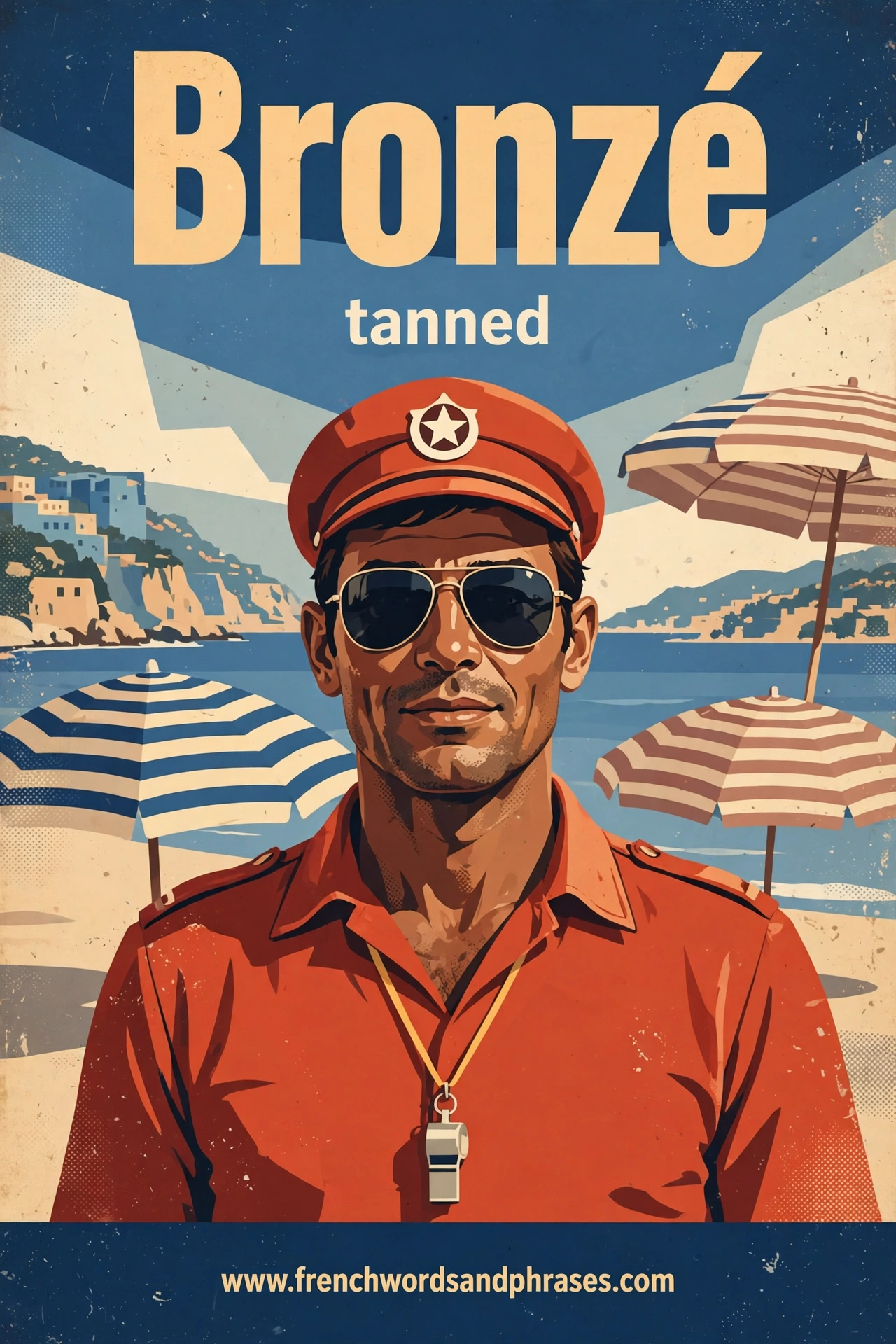
Bronzé means tanned.
The last evening of August at the campsite: the family packs the car slowly, and everyone has changed colour. Arms the shade of honey, shoulders deep gold, faces glowing from two weeks of Mediterranean sun. The neighbour takes one look and laughs: « Vous êtes bien bronzés, vous au moins ! »
In this guide, you’ll learn what bronzé means in English, how its feminine is formed, why it stands after the noun, and how it is related to the metal that gives it its colour. Explore French examples, English translations, and practice quizzes.
Understanding the French Adjective Bronzé
Bronzé is a French adjective of appearance — the adjective of sun-coloured skin, and the past participle of the verb bronzer, to tan. It agrees like a regular -é adjective: bronzé, bronzée, bronzés, bronzées.
It means tanned — skin turned golden or brown by the sun: un teint bronzé, a tanned complexion; des jambes bronzées, tanned legs. Behind the word stands the metal, le bronze: bronzé skin is skin that has taken the colour of bronze.
Type: Adjective of appearance — sun-tanned skin
Answers the question: What does it look like? — tanned
Changes form: Yes — bronzé, bronzée, bronzés, bronzées
English equivalents: Tanned; sun-kissed; bronzed.
One important usage detail: bronzé stands AFTER the noun — un visage bronzé — and it appears constantly after être at the end of a holiday: tu es bien bronzé ! The noun for the tan itself is le bronzage.
Experience the Word
Bronzé is the adjective of the return from holiday — the colour that walks back into the office on Monday morning and tells the whole story of the beach without a word.
Imagine the lifeguard at the end of September, his arms the colour of old bronze statues, watching the last swimmers. The summer is written on his skin, day by day, like rings in a tree.
You have not just described a colour. You have described two weeks of sun, kept.
How to Use Bronzé in French: Complete Guide
Let’s explore how bronzé works in French, beginning with the whole word on one card.
Bronzé at a Glance
Before the details, here is the whole word on one card.
The Whole Word on One Card
Meaning, type, position and forms — bronzé in four lines.
| Point | Bronzé |
|---|---|
| Meaning | tanned |
| Type | adjective of appearance — sun-tanned skin |
| Usual position | after the noun — un teint bronzé |
| Form | bronzé / bronzée / bronzés / bronzées |
Example
Il a un teint bronzé.
He has a tanned complexion.
The Four Forms of Bronzé
Bronzé agrees with the noun it describes. The feminine adds an e, the plurals add an s, and the sound never changes.
| Form | Bronzé | Example |
|---|---|---|
| Masculine singular | bronzé | un visage bronzé — a tanned face |
| Feminine singular | bronzée | une peau bronzée — tanned skin |
| Masculine plural | bronzés | des bras bronzés — tanned arms |
| Feminine plural | bronzées | des jambes bronzées — tanned legs |
Example
Elle revient de Grèce, bronzée et reposée.
She comes back from Greece, tanned and rested.
Quick Quiz 1
Which form of bronzé goes with jambes (feminine plural)?
Reveal the answer
bronzées
Des jambes bronzées.
Tanned legs.
Bronzée: The Feminine Just Adds an E
The feminine of bronzé is formed the regular way: add an e and keep the é. The spelling changes; the sound stays exactly the same.
| Situation | Example |
|---|---|
| The rule | just add -e — bronzé → bronzée |
| The sound | bronzé and bronzée sound the same: /bʁɔ̃ze/ |
| Masculine plural | bronzés — des enfants bronzés |
| Feminine plural | bronzées — des épaules bronzées |
Example
La surfeuse bronzée sort de l’eau en souriant.
The tanned surfer comes out of the water smiling.
Where Bronzé Goes: After the Noun
Bronzé follows the noun it describes, like most adjectives of appearance, and it lives happily after être in every end-of-holiday conversation.
| Pattern | Example |
|---|---|
| After the noun | un teint bronzé — a tanned complexion |
| After être | tu es bien bronzé — you are nicely tanned |
| With an adverb | légèrement bronzé — lightly tanned |
| Before the noun | un bronzé visage — not in everyday French |
Example
Les enfants bronzés jouent encore sur la plage.
The tanned children are still playing on the beach.
Quick Quiz 2
How do you say ‘tanned legs’ — des bronzées jambes or des jambes bronzées?
Reveal the answer
des jambes bronzées
Bronzé stands after the noun.
Tanned legs.
More Tanned: Comparing with Bronzé
Bronzé compares the regular way, with plus, moins and aussi — and the superlative agrees as usual: le plus bronzé, la plus bronzée.
| Degree | Example |
|---|---|
| As tanned as | aussi bronzé que — as tanned as |
| More tanned | plus bronzé — more tanned |
| Less tanned | moins bronzé — less tanned |
| The most tanned (masc.) | le plus bronzé — le plus bronzé de la famille |
| The most tanned (fem.) | la plus bronzée — la plus bronzée de ses amies |
Example
Après un mois à la mer, il est plus bronzé que jamais.
After a month at the sea, he is more tanned than ever.
Everyday Expressions with Bronzé
Bronzé belongs to the beach towel and the holiday photo — and its family includes the metal of statues and medals, and the noun for the tan itself.
| Expression | In English |
|---|---|
| un teint bronzé | a tanned complexion |
| être bien bronzé | to be nicely tanned |
| bronzer au soleil | to tan, to sunbathe in the sun (the verb) |
| le bronzage | the tan; tanning (the noun) |
| une peau bronzée | tanned skin |
| un bronze | a bronze — the metal, a statue, a medal |
Example
Elle adore bronzer au soleil, mais avec une bonne crème.
She loves tanning in the sun, but with a good sun cream.
Quick Quiz 3
What is le bronzage?
Reveal the answer
The tan
Son bronzage est encore visible en octobre.
Her tan is still visible in October.
Bronzé and Its Neighbours
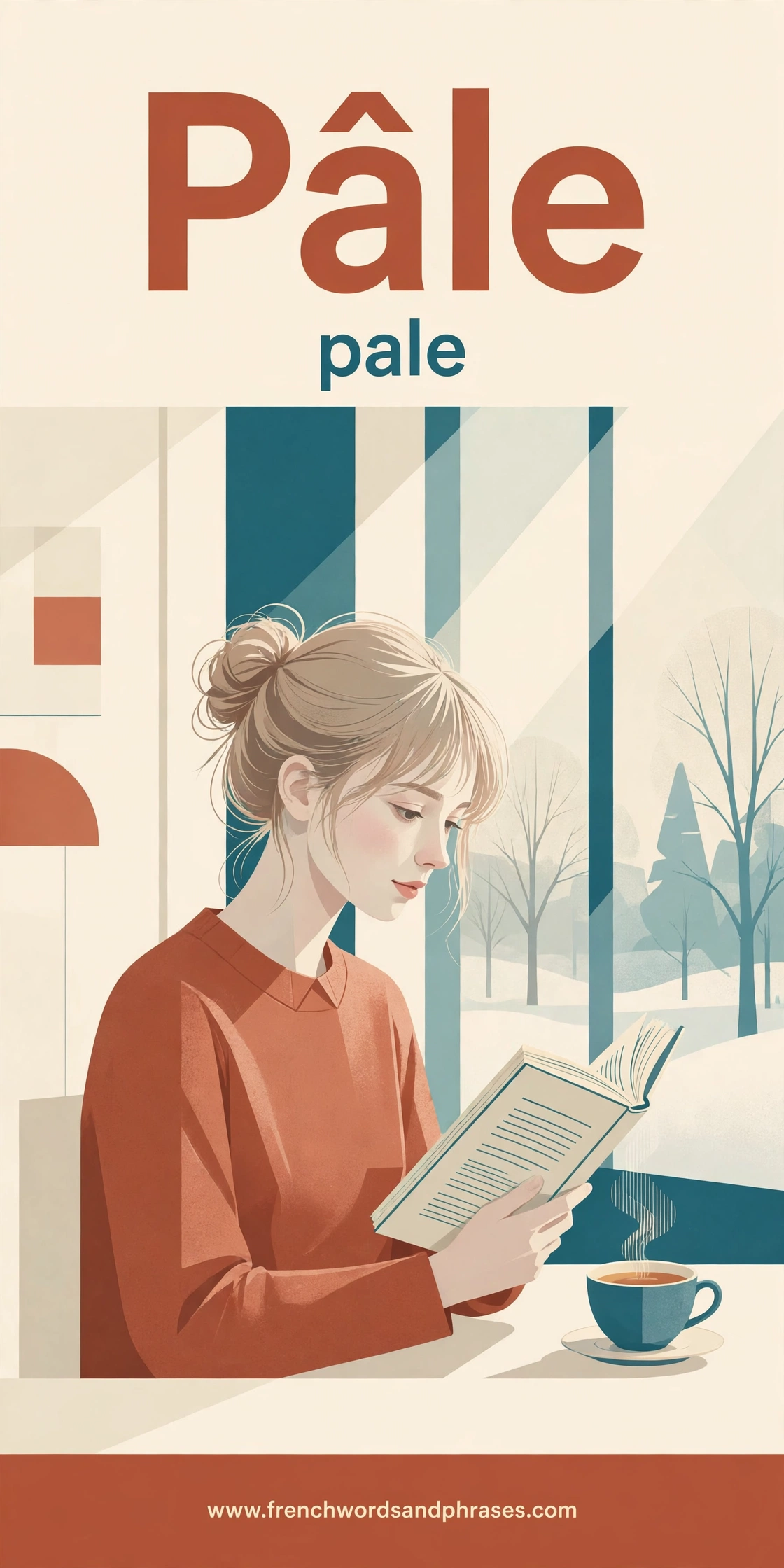
Bronzé is the golden middle of the skin-colour family — pâle at one end, hâlé as its elegant synonym, and rouge waiting for anyone who forgot the sun cream.
| French | In English |
|---|---|
| hâlé | sun-tanned — the elegant synonym of bronzé |
| pâle | pale — the opposite, the before-holiday colour |
| doré | golden — of skin or pastry kissed by heat |
| rouge | red — sunburnt, when the sun wins |
| mat | matte, olive — of a naturally darker complexion (une peau mate) |
Example
Elle est revenue hâlée et bronzée de ses vacances.
She came back sun-tanned and bronzed from her holiday.
Watch Out: The Traps Around Bronzé
The traps here are the metal that shares the family name, and agreements that hide inside plural nouns like jambes and épaules.
| Trap | The truth |
|---|---|
| un bronze | with the article, bronze is the metal or a statue — bronzé is the adjective for skin |
| Agreement | legs are feminine plural: des jambes bronzées |
| Spelling | the é stays in every form — bronzée, bronzés, bronzées |
| English ‘bronze’ | a bronze medal is une médaille de bronze — the adjective bronzé is for skin and colour |
Example
La statue de bronze se dresse devant la mairie.
The bronze statue stands in front of the town hall.
Quick Quiz 4
Is this right or wrong: des jambes bronzés?
Reveal the answer
Wrong
Jambes is feminine plural, so: des jambes bronzées.
Tanned legs.
Bronzé in Everyday French: Real-Life Examples
Now that you know the word, let’s see how bronzé appears in everyday French.
Example 1 — Back from holiday
Tu es bien bronzé, les vacances ont été bonnes !
You’re nicely tanned, the holiday must have been good!
Example 2 — At the beach
Les enfants sont bronzés comme des petits pains dorés.
The children are tanned like little golden rolls.
Example 3 — A photo
Sur cette photo, elle est bronzée et souriante.
In this photo, she is tanned and smiling.
Example 4 — The lifeguard
Le maître-nageur bronzé surveille la plage depuis juin.
The tanned lifeguard has been watching the beach since June.
Example 5 — October
Son bronzage reste visible, ses bras sont encore bronzés.
Her tan is still visible, her arms are still tanned.
Example 6 — A warning
Bronzé, oui, mais jamais sans crème solaire.
Tanned, yes, but never without sun cream.
Beyond Translation: The Meaning of Bronzé
English says tanned for the meaning of bronzé — a word borrowed from leather. French chose a nobler material: bronze, the metal of statues and church bells. Bronzé skin is skin the sun has cast like a statue.
To call someone bronzé is to say the summer has left its metal on them.
It is the one souvenir no suitcase has to carry: two weeks after the return, the bronzage is still telling the story of the beach at every meeting.
How to Remember the French Adjective Bronzé
Remember it this way: Bronzé is the statue’s colour on living skin — it follows the noun, and its feminine simply adds an e.
- You picture the statue — le bronze — because bronzé skin takes the metal’s colour.
- You put it after the noun — un teint bronzé, des jambes bronzées.
- You keep the é everywhere — bronzée, bronzés, bronzées.
The key idea is bronzé stands after the noun, and its feminine bronzée just adds an e.
Test Your Knowledge of Bronzé
Let’s see how much you’ve learned. Try answering these questions before revealing the answers.
Question 1
What does bronzé mean?
Reveal the answer
Tanned — turned golden or brown by the sun.
Question 2
What is the feminine of bronzé?
Reveal the answer
bronzée — just add an e.
Question 3
Translate: tanned legs.
Reveal the answer
Des jambes bronzées.
Question 4
Complete the sentence:
Après deux semaines à la mer, les enfants sont ______ .
Reveal the answer
bronzés
Après deux semaines à la mer, les enfants sont bronzés.
After two weeks at the sea, the children are tanned.
Question 5
What metal gives bronzé its name?
Reveal the answer
Bronze — bronzé skin takes the colour of the metal.
Your Final Challenge
Can You Use It?
How would you say this in French?
“After two weeks at the sea, the children are tanned.”
Reveal the answer
Après deux semaines à la mer, les enfants sont bronzés.
After two weeks at the sea, the children are tanned.
A little French. A little curiosity. A richer everyday life.
LEARN FRENCH ONE WORD AT A TIME