A French Word to Live By
Translate Animé to English
/anime/
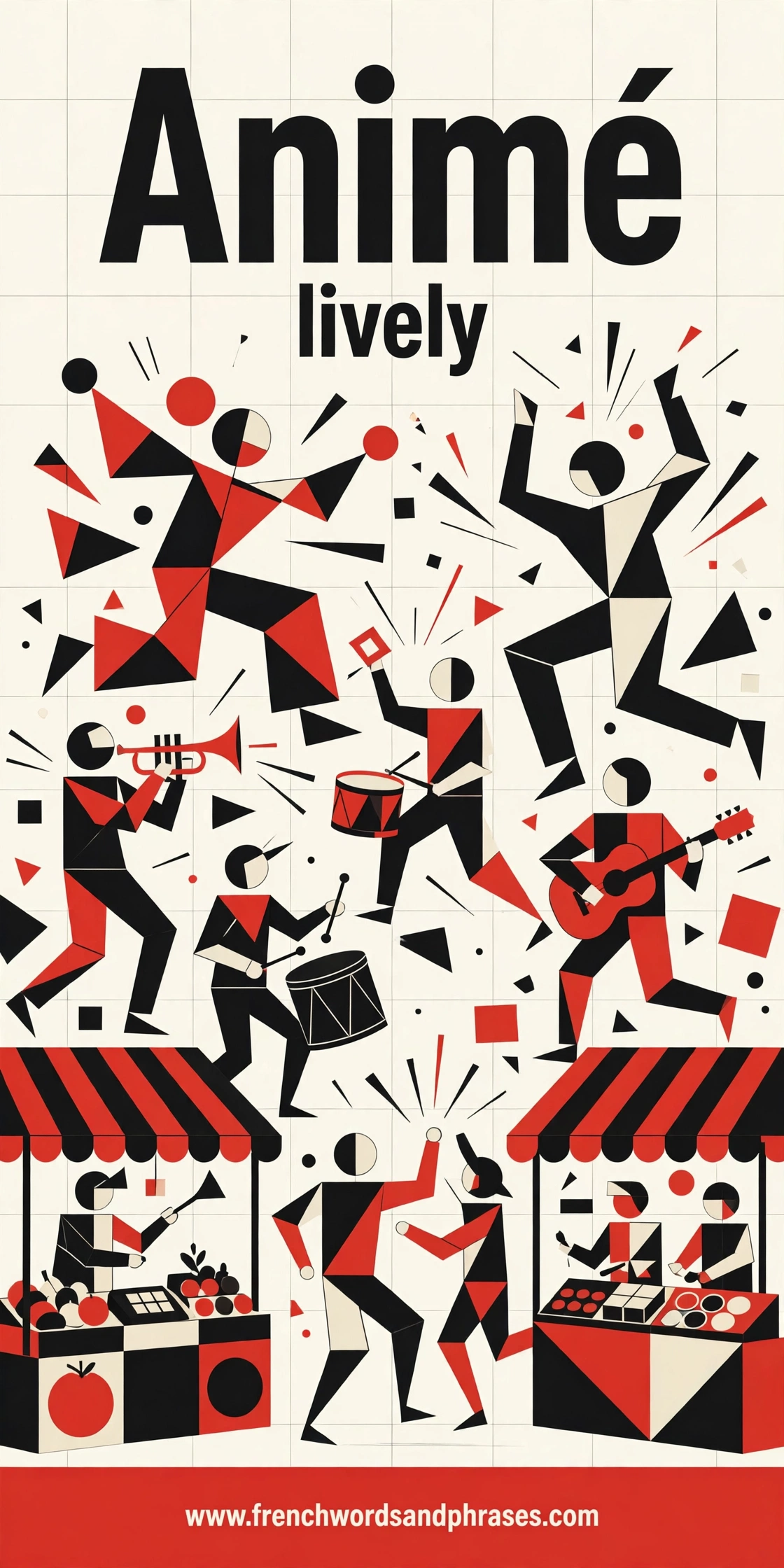
Animé means lively.
Saturday morning in the old town: the café terraces are full, a busker is tuning his guitar by the fountain, and three streets away the market is already roaring. Nothing here stands still for long. French has one word for a place humming with life like this: animé.
In this guide, you’ll learn what animé means in English, how its regular feminine is formed, where it stands in the sentence, and why the same word also describes a cartoon. Explore French examples, English translations, and practice quizzes.
Understanding the French Adjective Animé
Animé is a French adjective of quality — the adjective of life and movement in a place. It agrees in the regular -é way: animé, animée, animés, animées. Une rue animée is a street that never sits still.
It means lively — full of people, movement and noise, in the good sense. It describes streets (une rue animée, a lively street), districts (un quartier animé, a lively neighbourhood), markets and evenings (une soirée animée). Wherever a town feels awake, animé is the word.
Type: Adjective of quality — life and movement
Answers the question: What is the place like? — lively
Changes form: Yes — animé, animée, animés, animées
English equivalents: Lively; bustling; animated.
One important usage detail: animé stands AFTER the noun — un quartier animé, une rue animée. And keep its second life in mind: un dessin animé is a cartoon — animé also means animated when it talks about films.
Experience the Word
Animé is the adjective of the square at seven in the evening — shutters opening, glasses clinking, children chasing a ball between the café tables.
Imagine arriving in a small town on market day after a long, silent drive through the hills. Suddenly there are voices, colours, smells of bread and coffee, a crowd flowing around the stalls — the whole place seems to be breathing faster.
You have not just described a busy place. You have described a place that feels alive.
How to Use Animé in French: Complete Guide
Let’s explore how animé works in French, beginning with the whole word on one card.
Animé at a Glance
Before the details, here is the whole word on one card.
The Whole Word on One Card
Meaning, type, position and forms — animé in four lines.
| Point | Animé |
|---|---|
| Meaning | lively |
| Type | adjective of quality — life and movement |
| Usual position | after the noun — une rue animée |
| Form | animé / animée / animés / animées |
Example
C’est un quartier animé.
It’s a lively neighbourhood.
The Four Forms of Animé
Animé agrees with the noun it describes, following the regular pattern of adjectives in -é: the feminine adds an e, the plurals add an s.
| Form | Animé | Example |
|---|---|---|
| Masculine singular | animé | un marché animé — a lively market |
| Feminine singular | animée | une rue animée — a lively street |
| Masculine plural | animés | des quartiers animés — lively districts |
| Feminine plural | animées | des rues animées — lively streets |
Example
Le marché est animé et les rues sont animées.
The market is lively and the streets are lively.
Quick Quiz 1
Which form of animé goes with rue (feminine)?
Reveal the answer
animée
Une rue animée.
A lively street.
Animée: The Regular Feminine in -ée
The feminine of animé is formed by adding a single e. It changes the spelling only — animé and animée sound exactly alike.
| Situation | Example |
|---|---|
| The rule | just add -e — animé → animée |
| The sound | animé and animée sound exactly the same |
| Masculine plural | animés — des marchés animés |
| Feminine plural | animées — des places animées |
Example
La place est animée le soir.
The square is lively in the evening.
Where Animé Goes: After the Noun
Animé follows the noun it describes, like most French adjectives, and it sits comfortably after être with an adverb in front of it.
| Pattern | Example |
|---|---|
| After the noun | une rue animée — a lively street |
| After être | ce quartier est animé — this district is lively |
| With an adverb | un centre très animé — a very lively centre |
| Before the noun | une animée rue — not in everyday French |
Example
Le centre-ville est très animé le samedi.
The town centre is very lively on Saturdays.
Quick Quiz 2
Where does animé stand — before or after the noun?
Reveal the answer
After
Un quartier animé, une rue animée.
A lively district, a lively street.
More Lively: Comparing with Animé
Animé compares the regular way, with plus, moins and aussi — and the superlative agrees as usual: le plus animé, la plus animée.
| Degree | Example |
|---|---|
| As lively as | aussi animé que — as lively as |
| More lively | plus animé — more lively |
| Less lively | moins animé — less lively |
| The most lively (masc.) | le plus animé — le plus animé des quartiers |
| The most lively (fem.) | la plus animée — la plus animée des rues |
Example
Cette rue est plus animée que la nôtre.
This street is livelier than ours.
Everyday Expressions with Animé
Animé is the word French reaches for when a place wakes up — and it keeps a second job at the cinema.
| Expression | In English |
|---|---|
| un quartier animé | a lively neighbourhood |
| une rue animée | a busy, lively street |
| un marché animé | a bustling market |
| une soirée animée | a lively evening, a party with energy |
| un dessin animé | a cartoon — literally, an animated drawing |
| une conversation animée | a lively, animated conversation |
Example
Les enfants regardent un dessin animé.
The children are watching a cartoon.
Quick Quiz 3
What does un dessin animé mean?
Reveal the answer
A cartoon
Un dessin animé is an animated film.
A cartoon.
Animé and Its Neighbours
Animé shares its corner of town life with vivant and bruyant; at the other end, calme and désert describe the streets where nothing moves.
| French | In English |
|---|---|
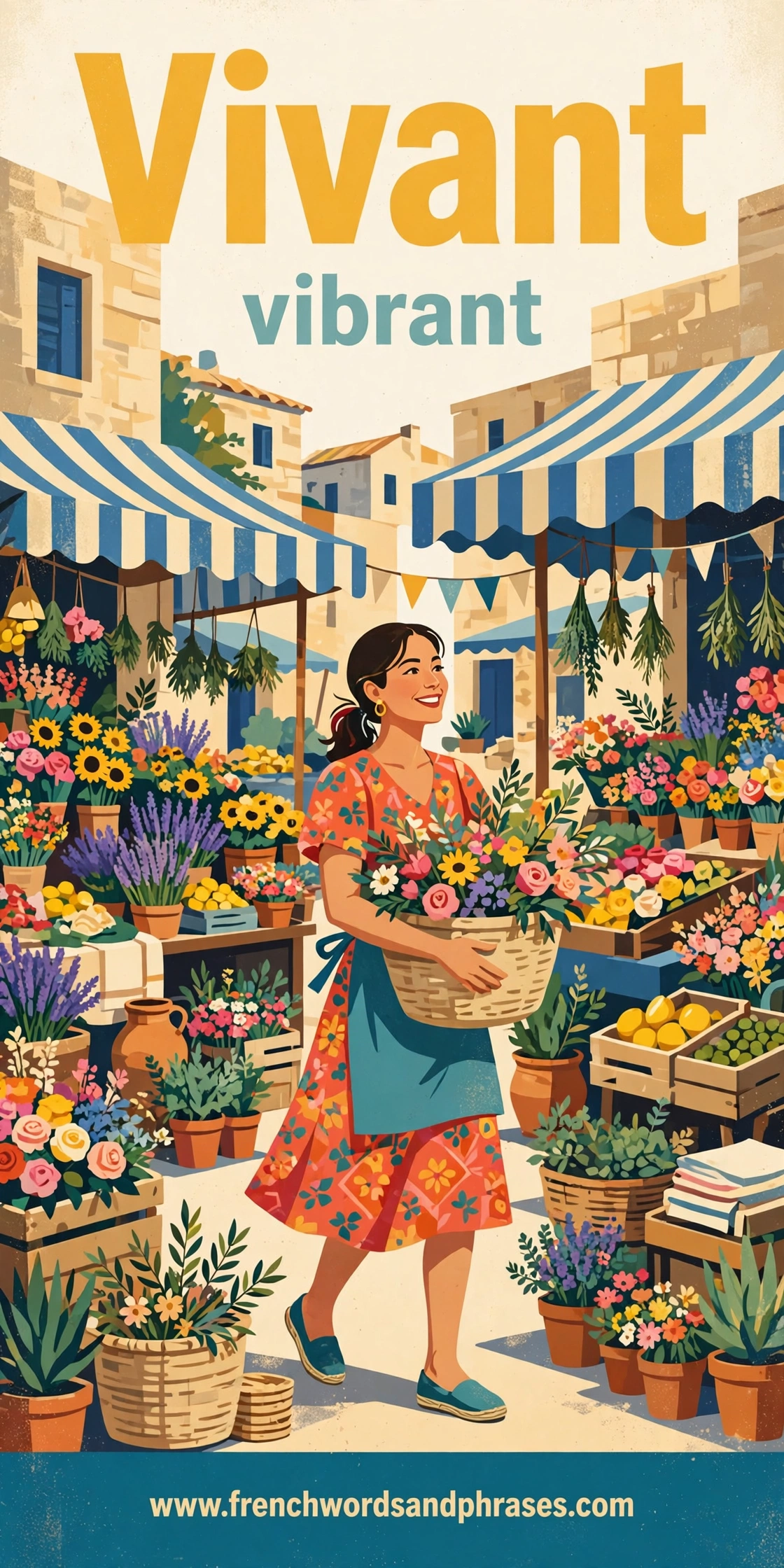
| vivant | vibrant, full of life — a close synonym |
| bruyant | noisy — lively, but hard on the ears |
| fréquenté | busy, well-frequented — people actually go there |
| mouvementé | eventful, hectic — of days and trips |
| calme | calm, quiet — the opposite |
| désert | deserted — the empty opposite |
Example
Le quartier est animé mais pas trop bruyant.
The district is lively but not too noisy.
Watch Out: The Traps Around Animé
The traps here are the cartoon hiding inside the word, and a near-twin that means something ruder.
| Trap | The truth |
|---|---|
| un dessin animé | with dessin, animé means animated — a cartoon, not a lively drawing |
| animal | animé looks like animal but means lively — the animal is un animal |
| Too much of it | a street can be trop animée — lively is good, chaotic is not |
| Agreement | streets are feminine: une rue animée, never animé |
Example
Cette rue est animée, mais ce n’est pas un dessin animé !
This street is lively, but it isn’t a cartoon!
Quick Quiz 4
How do you say ‘a lively neighbourhood’?
Reveal the answer
un quartier animé
Animé follows the noun and agrees with it.
A lively neighbourhood.
Animé in Everyday French: Real-Life Examples
Now that you know the word, let’s see how animé appears in everyday French.
Example 1 — The old town
La vieille ville est animée le samedi matin.
The old town is lively on Saturday mornings.
Example 2 — A street
Cette rue est animée, il y a des cafés partout.
This street is lively, there are cafés everywhere.
Example 3 — The market
Le marché est très animé aujourd’hui.
The market is very lively today.
Example 4 — Choosing a hotel
Je cherche un quartier animé, près des restaurants.
I’m looking for a lively district, near the restaurants.
Example 5 — The evening
La place devient animée après huit heures.
The square becomes lively after eight o’clock.
Example 6 — A contrast
Le centre est animé, mais les faubourgs sont calmes.
The centre is lively, but the suburbs are quiet.
Beyond Translation: The Meaning of Animé
English says lively for the meaning of animé — but the French word is built on animer, to bring to life, the same root that gives English animate. An animé street is not merely busy: it has been given a soul, une âme, and it shows.
To call a town animée is to say it is awake.
That is why the word doubles at the cinema: un dessin animé is a drawing brought to life, exactly as the market square is brought to life on a Saturday morning.
How to Remember the French Adjective Animé
Remember it this way: Animé is the wide-awake adjective — a regular -ée feminine, its place behind the noun, and a secret second job at the cinema.
- You hear the life inside it — animé is a place brought to life, like a dessin animé.
- You add only an e for a street — une rue animée.
- You put it after the noun — un quartier animé, un marché animé.
The key idea is animé means lively, stands after the noun, and a dessin animé is a cartoon.
Test Your Knowledge of Animé
Let’s see how much you’ve learned. Try answering these questions before revealing the answers.
Question 1
What does animé mean?
Reveal the answer
Lively — full of people, movement and life.
Question 2
What is the feminine of animé?
Reveal the answer
animée — just add an e: une rue animée.
Question 3
Translate: a lively market.
Reveal the answer
Un marché animé.
Question 4
Complete the sentence:
La place est très ______ le soir.
Reveal the answer
animée
La place est très animée le soir.
The square is very lively in the evening.
Question 5
What is un dessin animé?
Reveal the answer
A cartoon — animé also means animated for films.
Your Final Challenge
Can You Use It?
How would you say this in French?
“Our neighbourhood is lively, with cafés and a market every morning.”
Reveal the answer
Notre quartier est animé, avec des cafés et un marché tous les matins.
Our neighbourhood is lively, with cafés and a market every morning.
A little French. A little curiosity. A richer everyday life.
LEARN FRENCH ONE WORD AT A TIME