A French Word to Live By
How to Conjugate Abandonner in French
/a.bɑ̃.dɔ.ne/
Abandonner means to abandon — to walk away from a person, a place, a project or a hope, and leave it behind for good.
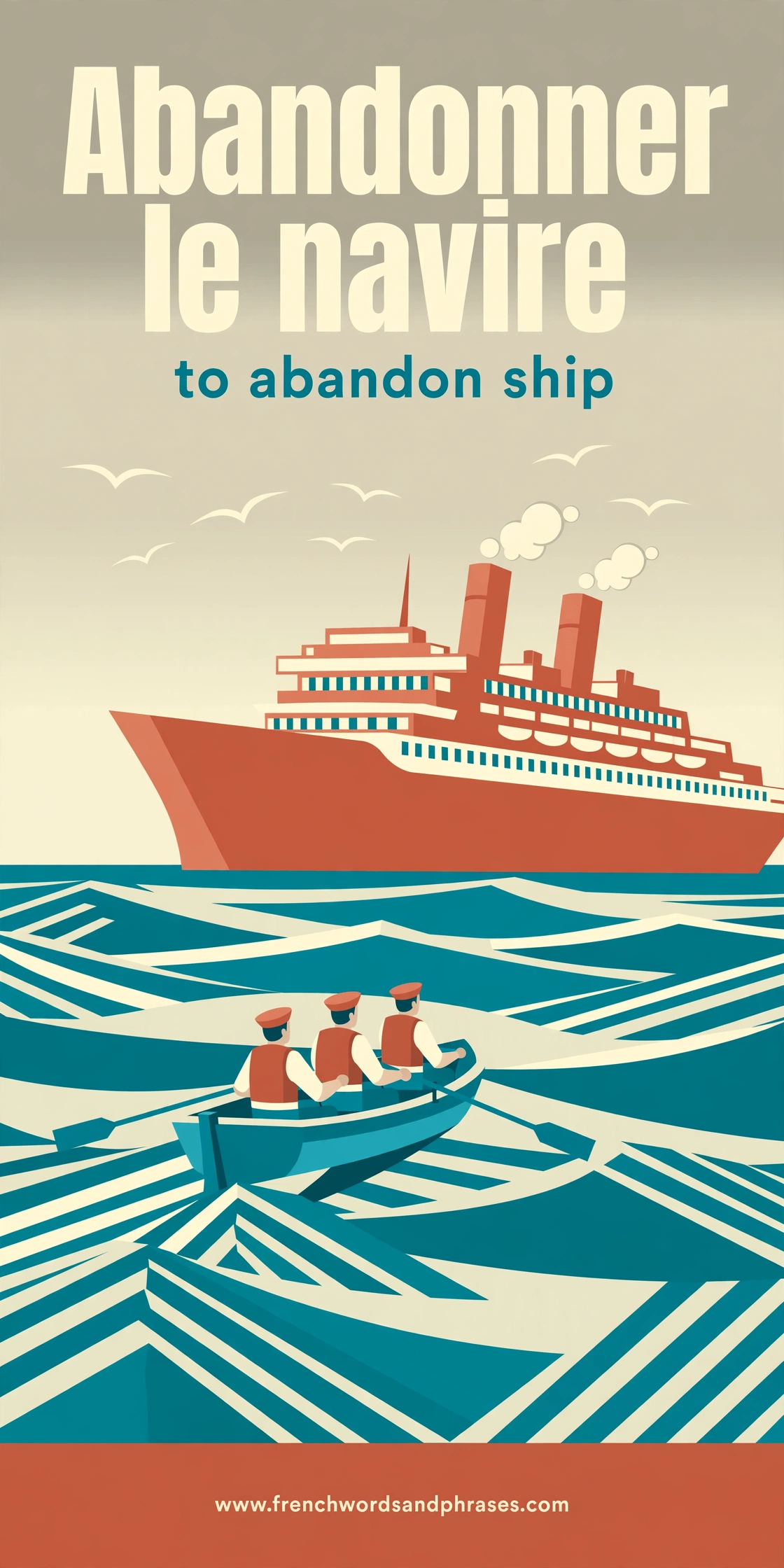
A captain leaving a sinking ship, a writer closing a novel at page fifty, a cat left at a shelter door — abandonner is the verb of letting go completely: whatever is dropped, given up or deserted, once abandoned, stays abandoned.
In this guide, you’ll learn how to conjugate abandonner in all the major French tenses and moods. Explore complete conjugation tables, French examples, English translations, and practice quizzes.
Understanding the French Verb Abandonner
Abandonner is a regular French verb belonging to the first group of verbs, those ending in-er.
It means to abandon. It is commonly used for projects and plans given up halfway, for animals and houses left behind, in sport for competitors who pull out of a race (abandonner la course), and in set phrases like abandonner la partie — to throw in the towel — and ne jamais abandonner, never give up.
Verb classification: First group (-er)
Auxiliary verb: Avoir
Past participle: abandonné
Present participle: abandonnant
English equivalents: To abandon, to give up, to leave behind, to drop; abandonner un projet — to abandon a project; abandonner la partie — to give up the game; abandonner quelqu’un — to leave someone behind; l’abandon — abandonment; un abandon de poste — walking off the job.
One important detail: abandonner doubles its n everywhere — j’abandonne, nous abandonnons, ils abandonnent — because the noun l’abandon sits inside it, and the verb never sheds it. The verb is otherwise a model regular -er: j’abandonne, nous abandonnons, j’abandonnais, j’abandonnerai, past participle abandonné. Its reflexive twin s’abandonner turns the sense inside out — to let oneself go, to give in to sleep, grief or pleasure: elle s’abandonne au sommeil, she surrenders to sleep.
Experience the Word
Abandonner is the verb of the closed door — the decision, sometimes cowardly, sometimes merciful, to stop carrying something and walk on without it.
Imagine a climber two hundred metres below the summit, the storm rising, his fingers numb. Every instinct of pride says continue; wisdom says abandonner — the mountain will still be there next year, and he intends to be there too. He turns, descends, and abandons the summit to the wind.
He has not failed or fled. He has abandoned — abandonné — deliberately, and lives to climb again.
How to Conjugate Abandonner: Complete French Conjugation Guide
Let’s explore every major conjugation of abandonner, beginning with the indicative mood.
How to Conjugate Abandonner in the Indicative Mood
The indicative mood is used to express facts, observations, actions, and events.
How to Conjugate Abandonner in the Present Tense (Présent)
Used for actions happening now, habitual actions, and general truths.
| Subject | Conjugation |
|---|---|
| je | abandonne |
| tu | abandonnes |
| il / elle | abandonne |
| nous | abandonnons |
| vous | abandonnez |
| ils / elles | abandonnent |
Example
Il abandonne son projet après deux ans de travail.
He is abandoning his project after two years of work.
Quick Quiz 1
Complete the sentence:
Nous ______ le vieux bureau demain.
Reveal the answer
abandonnons
Nous abandonnons le vieux bureau demain.
We are leaving the old office behind tomorrow.
How to Conjugate Abandonner in the Passé Composé
Used for completed actions in the past. Abandonner takes the auxiliary verb avoir.
| Subject | Conjugation |
|---|---|
| j’ | ai abandonné |
| tu | as abandonné |
| il / elle | a abandonné |
| nous | avons abandonné |
| vous | avez abandonné |
| ils / elles | ont abandonné |
Example
Elle a abandonné la course au trentième kilomètre.
She dropped out of the race at the thirtieth kilometre.
How to Conjugate Abandonner in the Imparfait (Imperfect Tense)
Used for habitual past actions, descriptions, and ongoing situations in the past.
| Subject | Conjugation |
|---|---|
| je | abandonnais |
| tu | abandonnais |
| il / elle | abandonnait |
| nous | abandonnions |
| vous | abandonniez |
| ils / elles | abandonnaient |
Example
Chaque hiver, les villageois abandonnaient les maisons de montagne.
Every winter, the villagers used to leave the mountain houses behind.
Quick Quiz 2
Choose the correct form:
She gave up the project.
Elle ______ le projet. (a abandonné / est abandonnée)
Reveal the answer
a abandonné
Elle a abandonné le projet.
Abandonner takes avoir.
How to Conjugate Abandonner in the Plus-que-parfait
Used to describe an action that had already been completed before another past event.
| Subject | Conjugation |
|---|---|
| j’ | avais abandonné |
| tu | avais abandonné |
| il / elle | avait abandonné |
| nous | avions abandonné |
| vous | aviez abandonné |
| ils / elles | avaient abandonné |
Example
Ils avaient abandonné la vieille ferme depuis longtemps.
They had abandoned the old farm long before.
How to Conjugate Abandonner in the Passé Simple
Primarily used in formal writing, literature, and historical narratives. It is rarely used in everyday conversation.
| Subject | Conjugation |
|---|---|
| je | abandonnai |
| tu | abandonnas |
| il / elle | abandonna |
| nous | abandonnâmes |
| vous | abandonnâtes |
| ils / elles | abandonnèrent |
Example
Le capitaine abandonna le navire le dernier.
The captain left the ship last.
How to Conjugate Abandonner in the Passé Antérieur
A literary tense used to express an action completed immediately before another past action, generally in the passé simple.
| Subject | Conjugation |
|---|---|
| j’ | eus abandonné |
| tu | eus abandonné |
| il / elle | eut abandonné |
| nous | eûmes abandonné |
| vous | eûtes abandonné |
| ils / elles | eurent abandonné |
Example
Quand il eut abandonné tout espoir, la lettre arriva enfin.
When he had given up all hope, the letter finally arrived.
How to Conjugate Abandonner in the Future Tense (Futur Simple)
Used to describe actions that will take place in the future.
| Subject | Conjugation |
|---|---|
| je | abandonnerai |
| tu | abandonneras |
| il / elle | abandonnera |
| nous | abandonnerons |
| vous | abandonnerez |
| ils / elles | abandonneront |
Example
Je n’abandonnerai jamais mes amis.
I will never abandon my friends.
How to Conjugate Abandonner in the Futur Antérieur (Future Perfect)
Used for an action that will have been completed before a particular point in the future.
| Subject | Conjugation |
|---|---|
| j’ | aurai abandonné |
| tu | auras abandonné |
| il / elle | aura abandonné |
| nous | aurons abandonné |
| vous | aurez abandonné |
| ils / elles | auront abandonné |
Example
À la fin du mois, nous aurons abandonné l’ancien bureau.
By the end of the month, we will have left the old office behind.
How to Conjugate Abandonner in the Near Future (Futur Proche)
Used to describe something that is going to happen soon. Formed with aller + infinitive.
| Subject | Conjugation |
|---|---|
| je | vais abandonner |
| tu | vas abandonner |
| il / elle | va abandonner |
| nous | allons abandonner |
| vous | allez abandonner |
| ils / elles | vont abandonner |
Example
Tu vas vraiment abandonner maintenant, si près du but ?
Are you really going to give up now, so close to the goal?
How to Conjugate Abandonner in the Conditional Mood
The conditional mood expresses what would happen under certain circumstances. It is also frequently used to make polite requests or express wishes.
How to Conjugate Abandonner in the Present Conditional
| Subject | Conjugation |
|---|---|
| je | abandonnerais |
| tu | abandonnerais |
| il / elle | abandonnerait |
| nous | abandonnerions |
| vous | abandonneriez |
| ils / elles | abandonneraient |
Example
Sans ton aide, j’abandonnerais le projet.
Without your help, I would abandon the project.
How to Conjugate Abandonner in the Past Conditional
| Subject | Conjugation |
|---|---|
| j’ | aurais abandonné |
| tu | aurais abandonné |
| il / elle | aurait abandonné |
| nous | aurions abandonné |
| vous | auriez abandonné |
| ils / elles | auraient abandonné |
Example
Elle aurait abandonné plus tôt si elle avait su.
She would have given up sooner if she had known.
Abandonner in the Literary Past Conditional Form
This less common literary form uses the imperfect subjunctive of avoir.
| Subject | Conjugation |
|---|---|
| j’ | eusse abandonné |
| tu | eusses abandonné |
| il / elle | eût abandonné |
| nous | eussions abandonné |
| vous | eussiez abandonné |
| ils / elles | eussent abandonné |
Example
Il eût abandonné la partie plutôt que de tricher.
He would have thrown in the towel rather than cheat.
How to Conjugate Abandonner in the Subjunctive Mood
The subjunctive is used to express wishes, emotions, doubts, necessity, and uncertainty. It frequently follows expressions such as il faut que (it is necessary that) or bien que (although).
How to Conjugate Abandonner in the Present Subjunctive
| Subject | Conjugation |
|---|---|
| que je | abandonne |
| que tu | abandonnes |
| qu’il / qu’elle | abandonne |
| que nous | abandonnions |
| que vous | abandonniez |
| qu’ils / qu’elles | abandonnent |
Example
Je ne veux pas que tu abandonnes tes études.
I do not want you to give up your studies.
Quick Quiz 3
Complete the sentence using the subjunctive:
Il est important que vous n’______ pas vos rêves.
Reveal the answer
abandonniez
Il est important que vous n’abandonniez pas vos rêves.
It is important that you do not give up your dreams.
How to Conjugate Abandonner in the Imperfect Subjunctive
A literary tense, rarely encountered in modern spoken French.
| Subject | Conjugation |
|---|---|
| que je | abandonnasse |
| que tu | abandonnasses |
| qu’il / qu’elle | abandonnât |
| que nous | abandonnassions |
| que vous | abandonnassiez |
| qu’ils / qu’elles | abandonnassent |
Example
Il craignait qu’elle abandonnât son rêve de devenir médecin.
He feared she might abandon her dream of becoming a doctor.
How to Conjugate Abandonner in the Pluperfect Subjunctive
A literary construction used to express an action completed before another past action.
| Subject | Conjugation |
|---|---|
| que j’ | eusse abandonné |
| que tu | eusses abandonné |
| qu’il / qu’elle | eût abandonné |
| que nous | eussions abandonné |
| que vous | eussiez abandonné |
| qu’ils / qu’elles | eussent abandonné |
Example
On racontait qu’ils eussent abandonné le village pendant la guerre.
People said they had abandoned the village during the war.
How to Conjugate Abandonner in the Past Subjunctive
| Subject | Conjugation |
|---|---|
| que j’ | aie abandonné |
| que tu | aies abandonné |
| qu’il / qu’elle | ait abandonné |
| que nous | ayons abandonné |
| que vous | ayez abandonné |
| qu’ils / qu’elles | aient abandonné |
Example
Je regrette qu’il ait abandonné si vite.
I regret that he gave up so quickly.
How to Conjugate Abandonner in the Imperative
The imperative is used to give commands, instructions, invitations, or suggestions. Subject pronouns are omitted.
How to Conjugate Abandonner in the Present Imperative
| Person | Conjugation |
|---|---|
| (tu) | abandonne |
| (nous) | abandonnons |
| (vous) | abandonnez |
Example
N’abandonne jamais tes rêves !
Never give up your dreams!
Quick Quiz 4
How would you say Never give up (tu form)?
Reveal the answer
N’abandonne jamais !
French Participles of Abandonner
Participles are verb forms that can be used in compound tenses and other grammatical constructions.
Present Participle of Abandonner
abandonnant
En abandonnant la partie, il a sauvé son honneur.
By throwing in the towel, he saved his honour.
Past Participle of Abandonner
abandonné
Abandonnée au bord de la route, la vieille voiture rouillait.
Abandoned at the side of the road, the old car was rusting.
Abandonner in Everyday French: Real-Life Examples
Now that you know the conjugations, let’s see how abandonner appears in everyday French.
Example 1 — Present
Il abandonne son projet cette semaine.
He is abandoning his project this week.
Example 2 — Passé composé
Elle a abandonné la course à mi-chemin.
She dropped out of the race halfway.
Example 3 — Imparfait
Ils abandonnaient la maison chaque hiver.
They used to leave the house behind every winter.
Example 4 — Future
Je n’abandonnerai jamais.
I will never give up.
Example 5 — Conditional
Sans aide, nous abandonnerions le chantier.
Without help, we would abandon the building site.
Example 6 — Imperative
N’abandonne pas tes amis !
Do not abandon your friends!
Beyond Translation: The Meaning of Abandonner
English abandon is the very same word — French gave it to English centuries ago — and both languages keep its two faces: the cold act of desertion, and the warm noun with abandon, dancing avec abandon, freely and without restraint.
To abandon can be a surrender or a liberation.
The climber abandons the summit and saves his life; the dancer abandons herself to the music and finds joy. French keeps both movements in one family: abandonner walks away, s’abandonner lets go.
How to Remember the French Verb Abandonner
Remember it this way: Abandonner is about the closed door — walking away and leaving it behind for good.
- Double n everywhere: j’abandonne, nous abandonnons — the noun l’abandon lives inside the verb.
- Its reflexive twin reverses the sense: s’abandonner au sommeil — to surrender to sleep.
- Regular -er: j’abandonne, nous abandonnons, past participle abandonné, auxiliary avoir.
The key idea is the closed door — walking away and leaving it behind for good.
Test Your Knowledge of Abandonner
Let’s see how much you’ve learned. Try answering these questions before revealing the answers.
Question 1
How many n’s does abandonner keep in nous abandonnons, and why?
Reveal the answer
Two — the noun l’abandon sits inside the verb, and the double n never drops.
Question 2
How do you say She dropped out of the race at the thirtieth kilometre in French?
Reveal the answer
Elle a abandonné la course au trentième kilomètre.
Question 3
Translate: I will never abandon my friends.
Reveal the answer
Je n’abandonnerai jamais mes amis.
Question 4
What is the past participle of abandonner?
Reveal the answer
Abandonné.
Question 5
Complete the sentence:
Je ne veux pas que tu ______ tes études.
Reveal the answer
abandonnes
Je ne veux pas que tu abandonnes tes études.
I do not want you to give up your studies.
Your Final Challenge
Can You Use It?
How would you say this in French?
The captain leaves the ship last, but he never abandons his crew.
Reveal the answer
Le capitaine abandonne le navire le dernier, mais il n’abandonne jamais son équipage.
The captain leaves the ship last, but he never abandons his crew.
A little French. A little curiosity. A richer everyday life.
LEARN FRENCH ONE WORD AT A TIME