A French Word to Live By
How to Conjugate Chevaucher in French
/ʃə.vo.ʃe/
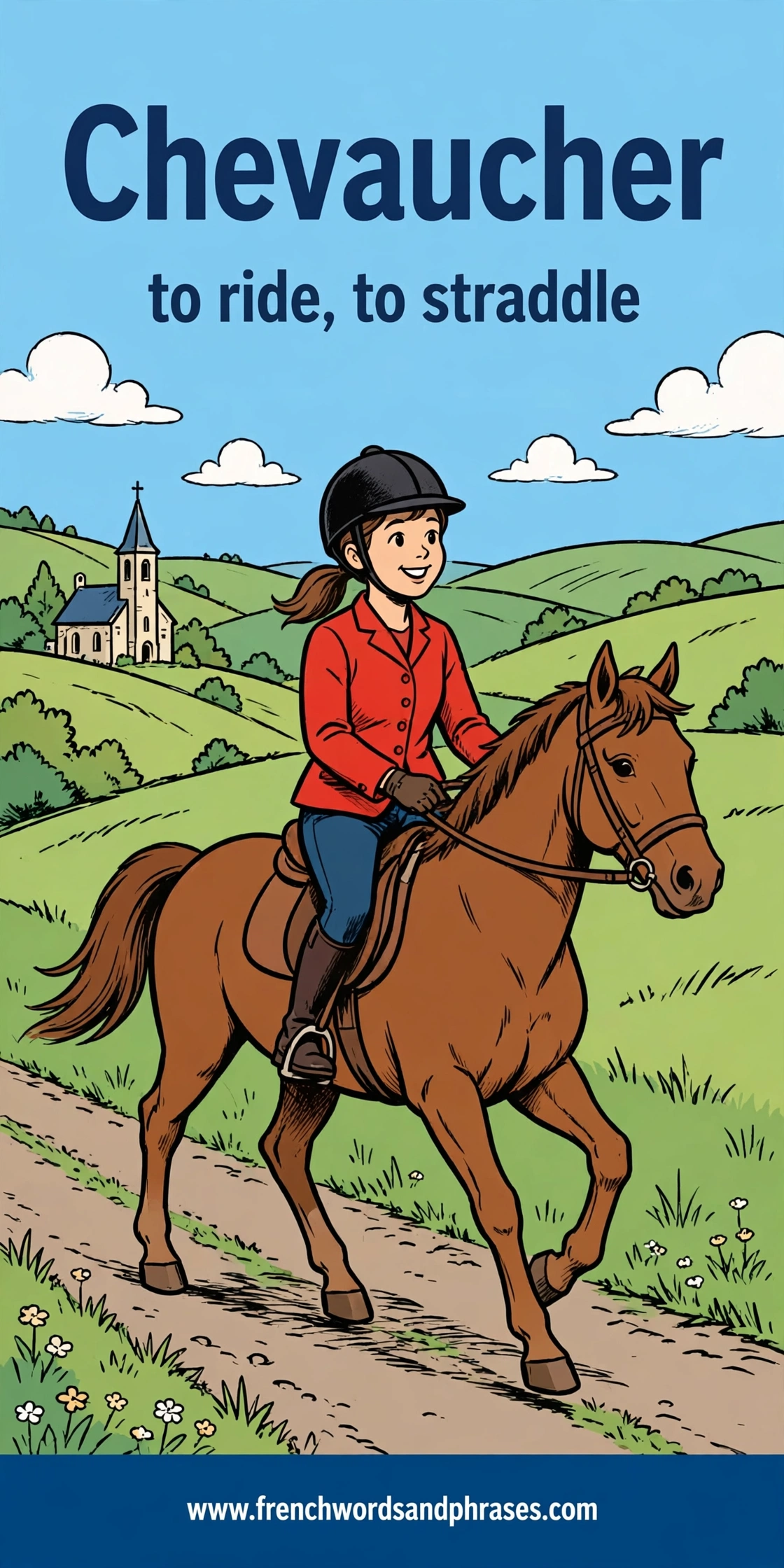
Chevaucher means to ride, to straddle — to sit astride a horse, a wall or a motorbike, with a leg thrown over each side.
A knight on the road at dawn, a boy astride the garden wall watching the street, a courier swinging a leg over his motorbike — chevaucher is the verb of the astride position: whatever you sit on with a leg on either side, you chevauches it.
In this guide, you’ll learn how to conjugate chevaucher in all the major French tenses and moods. Explore complete conjugation tables, French examples, English translations, and practice quizzes.
Understanding the French Verb Chevaucher
Chevaucher is a regular French verb belonging to the first group of verbs, those ending in-er.
It means to ride, to straddle. It belongs to a slightly literary, pictorial register — storytellers and journalists love it (le cavalier chevauchait vers le couchant) — and it extends gracefully to anything that straddles: a bridge chevauchant la rivière, a novel chevauchant deux siècles. In the saddle or on the map, the image is always the same: two sides, one seat.
Verb classification: First group (-er)
Auxiliary verb: Avoir
Past participle: chevauché
Present participle: chevauchant
English equivalents: To ride, to straddle, to sit astride; chevaucher un cheval — to ride a horse; chevaucher un mur — to sit astride a wall; chevaucher une moto — to ride a motorbike; chevaucher la frontière — to straddle the border; deux époques qui se chevauchent — two periods that overlap.
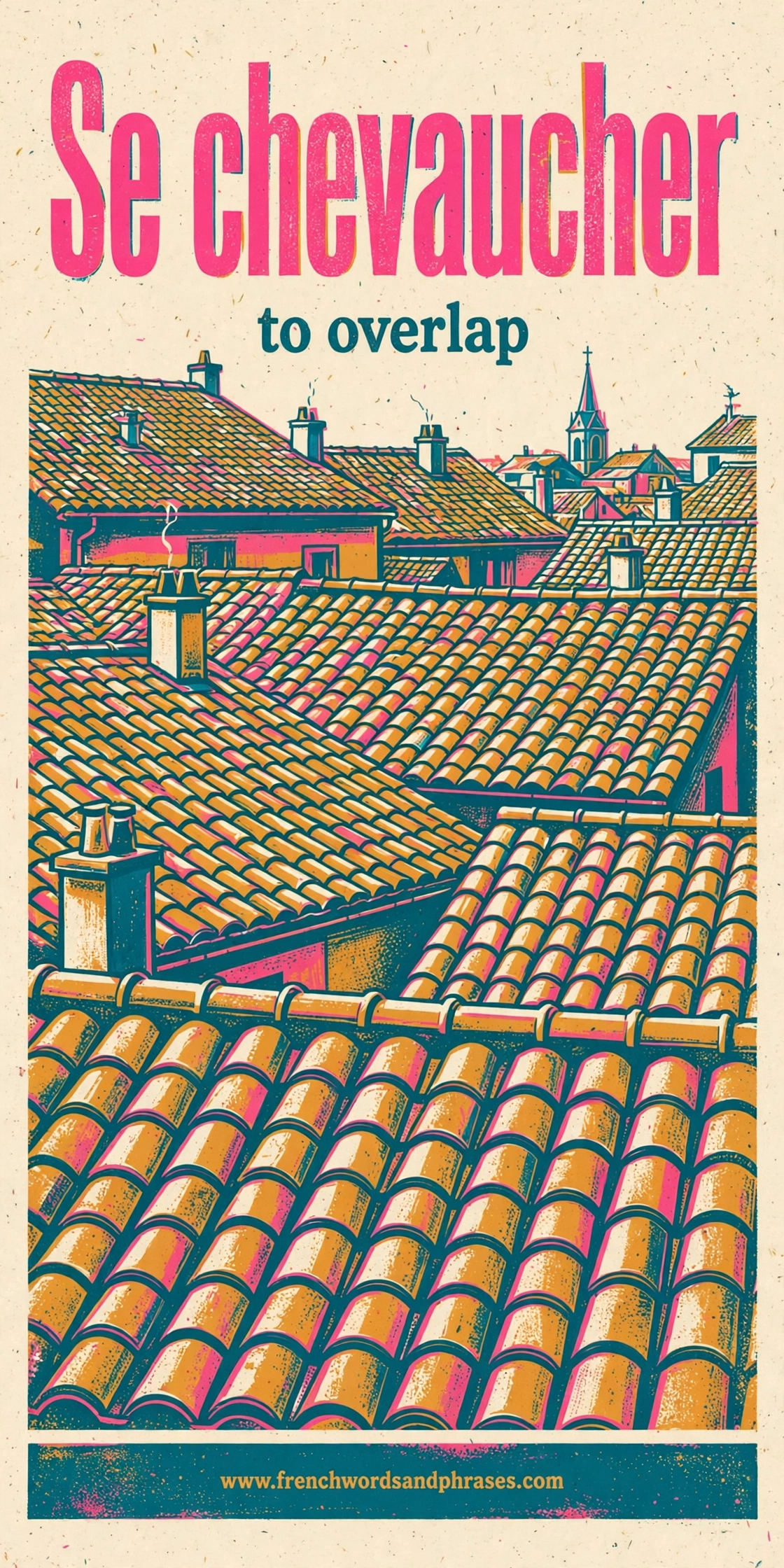
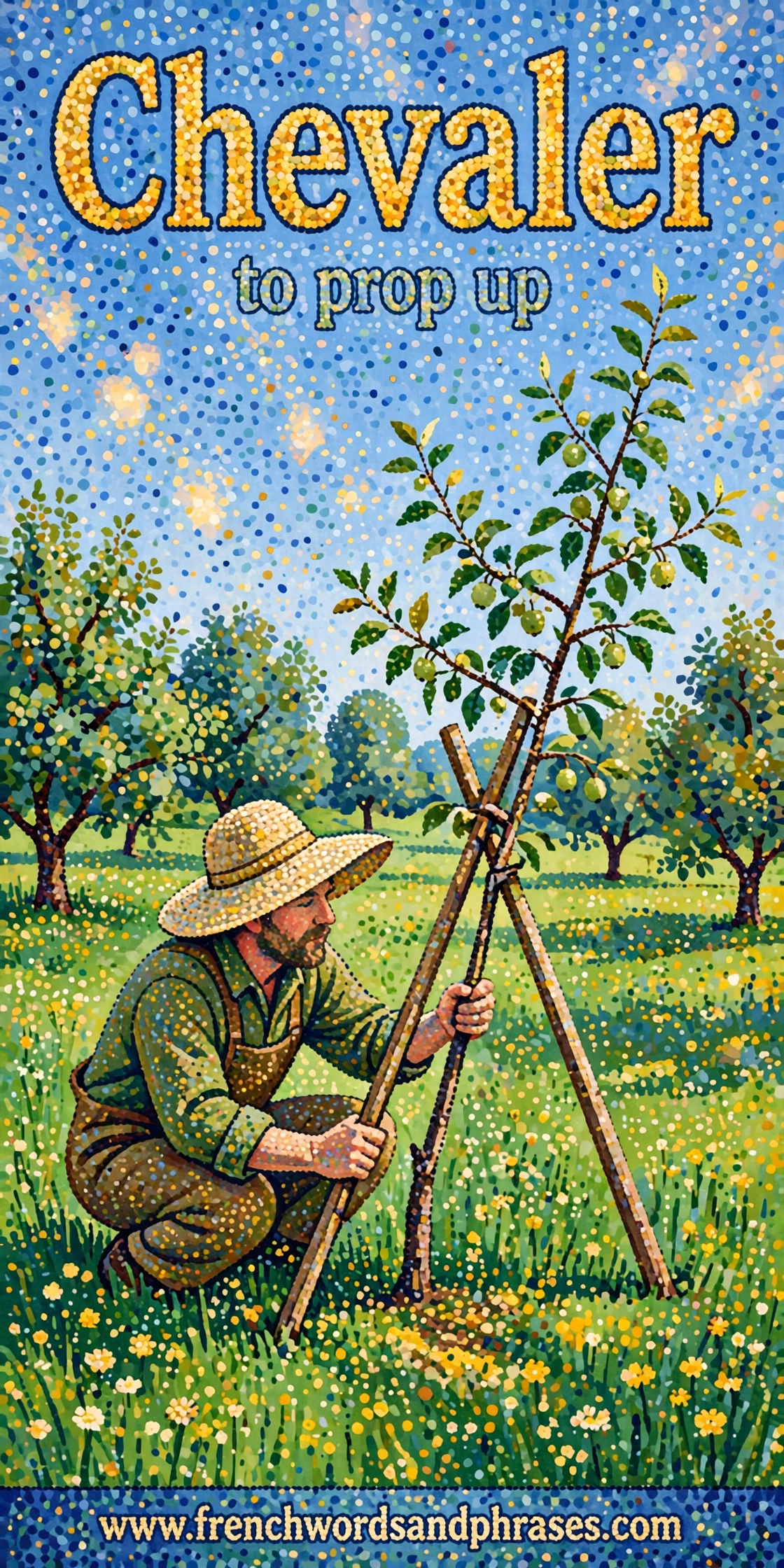
One important detail: chevaucher names a posture before it names a journey — to be astride, one leg on each side. That is why it takes a direct object so naturally: chevaucher un cheval, un mur, une moto, une frontière. For the ordinary activity of horse-riding French more often says monter à cheval, but the moment the picture is of the seat itself — astride the wall, astride the bike — chevaucher is the word. It is a regular -er verb: je chevauche, nous chevauchons. Mind the neighbours: chevaler is to prop up with trestles, and the reflexive se chevaucher, to overlap, has its own page.
Experience the Word
Chevaucher is the verb of the two-sided seat — horse, wall, motorbike or border, everything is ridden the same way: a leg over, and astride.
Imagine a boy of ten on the garden wall at dusk, one leg in his own garden, one leg in the street, king of both. Below him the cat passes, the neighbours return, the lamps come on — he does not ride anywhere, and yet he chevauche: his wall is his horse, and the whole evening files past beneath him.
He will come down for dinner, eventually. For now he rides — il chevauche — perfectly still, and perfectly astride.
How to Conjugate Chevaucher: Complete French Conjugation Guide
Let’s explore every major conjugation of chevaucher, beginning with the indicative mood.
How to Conjugate Chevaucher in the Indicative Mood
The indicative mood is used to express facts, observations, actions, and events.
How to Conjugate Chevaucher in the Present Tense (Présent)
Used for actions happening now, habitual actions, and general truths.
| Subject | Conjugation |
|---|---|
| je | chevauche |
| tu | chevauches |
| il / elle | chevauche |
| nous | chevauchons |
| vous | chevauchez |
| ils / elles | chevauchent |
Example
Elle chevauche son cheval blanc chaque matin au bord de la mer.
She rides her white horse every morning by the sea.
Quick Quiz 1
Complete the sentence:
Nous ______ le long de la plage demain.
Reveal the answer
chevaucherons
Nous chevaucherons le long de la plage demain.
We will ride along the beach tomorrow.
How to Conjugate Chevaucher in the Passé Composé
Used for completed actions in the past. Chevaucher takes the auxiliary verb avoir.
| Subject | Conjugation |
|---|---|
| j’ | ai chevauché |
| tu | as chevauché |
| il / elle | a chevauché |
| nous | avons chevauché |
| vous | avez chevauché |
| ils / elles | ont chevauché |
Example
Il a chevauché sa moto jusqu’à la côte en une journée.
He rode his motorbike to the coast in one day.
How to Conjugate Chevaucher in the Imparfait (Imperfect Tense)
Used for habitual past actions, descriptions, and ongoing situations in the past.
| Subject | Conjugation |
|---|---|
| je | chevauchais |
| tu | chevauchais |
| il / elle | chevauchait |
| nous | chevauchions |
| vous | chevauchiez |
| ils / elles | chevauchaient |
Example
Les chevaliers chevauchaient vers le château au crépuscule.
The knights used to ride towards the castle at dusk.
Quick Quiz 2
Choose the correct form:
He rode his motorbike to the coast.
Il ______ sa moto jusqu’à la côte. (a chevauché / est chevauché)
Reveal the answer
a chevauché
Il a chevauché sa moto jusqu’à la côte.
Chevaucher takes avoir.
How to Conjugate Chevaucher in the Plus-que-parfait
Used to describe an action that had already been completed before another past event.
| Subject | Conjugation |
|---|---|
| j’ | avais chevauché |
| tu | avais chevauché |
| il / elle | avait chevauché |
| nous | avions chevauché |
| vous | aviez chevauché |
| ils / elles | avaient chevauché |
Example
Elle avait chevauché toute la journée sans s’arrêter.
She had ridden all day without stopping.
How to Conjugate Chevaucher in the Passé Simple
Primarily used in formal writing, literature, and historical narratives. It is rarely used in everyday conversation.
| Subject | Conjugation |
|---|---|
| je | chevauchai |
| tu | chevauchas |
| il / elle | chevaucha |
| nous | chevauchâmes |
| vous | chevauchâtes |
| ils / elles | chevauchèrent |
Example
Le messager chevaucha trois jours pour porter la nouvelle.
The messenger rode for three days to carry the news.
How to Conjugate Chevaucher in the Passé Antérieur
A literary tense used to express an action completed immediately before another past action, generally in the passé simple.
| Subject | Conjugation |
|---|---|
| j’ | eus chevauché |
| tu | eus chevauché |
| il / elle | eut chevauché |
| nous | eûmes chevauché |
| vous | eûtes chevauché |
| ils / elles | eurent chevauché |
Example
Quand il eut chevauché jusqu’au fleuve, il fit boire son cheval.
When he had ridden as far as the river, he let his horse drink.
How to Conjugate Chevaucher in the Future Tense (Futur Simple)
Used to describe actions that will take place in the future.
| Subject | Conjugation |
|---|---|
| je | chevaucherai |
| tu | chevaucheras |
| il / elle | chevauchera |
| nous | chevaucherons |
| vous | chevaucherez |
| ils / elles | chevaucheront |
Example
Demain, nous chevaucherons le long de la plage.
Tomorrow, we will ride along the beach.
How to Conjugate Chevaucher in the Futur Antérieur (Future Perfect)
Used for an action that will have been completed before a particular point in the future.
| Subject | Conjugation |
|---|---|
| j’ | aurai chevauché |
| tu | auras chevauché |
| il / elle | aura chevauché |
| nous | aurons chevauché |
| vous | aurez chevauché |
| ils / elles | auront chevauché |
Example
À la tombée de la nuit, ils auront chevauché quarante kilomètres.
By nightfall, they will have ridden forty kilometres.
How to Conjugate Chevaucher in the Near Future (Futur Proche)
Used to describe something that is going to happen soon. Formed with aller + infinitive.
| Subject | Conjugation |
|---|---|
| je | vais chevaucher |
| tu | vas chevaucher |
| il / elle | va chevaucher |
| nous | allons chevaucher |
| vous | allez chevaucher |
| ils / elles | vont chevaucher |
Example
Regarde, il va chevaucher le mur du jardin !
Look, he is going to sit astride the garden wall!
How to Conjugate Chevaucher in the Conditional Mood
The conditional mood expresses what would happen under certain circumstances. It is also frequently used to make polite requests or express wishes.
How to Conjugate Chevaucher in the Present Conditional
| Subject | Conjugation |
|---|---|
| je | chevaucherais |
| tu | chevaucherais |
| il / elle | chevaucherait |
| nous | chevaucherions |
| vous | chevaucheriez |
| ils / elles | chevaucheraient |
Example
Sans la pluie, nous chevaucherions jusqu’au village.
Without the rain, we would ride as far as the village.
How to Conjugate Chevaucher in the Past Conditional
| Subject | Conjugation |
|---|---|
| j’ | aurais chevauché |
| tu | aurais chevauché |
| il / elle | aurait chevauché |
| nous | aurions chevauché |
| vous | auriez chevauché |
| ils / elles | auraient chevauché |
Example
Elle aurait chevauché plus loin si son cheval n’avait pas été fatigué.
She would have ridden further if her horse had not been tired.
Chevaucher in the Literary Past Conditional Form
This less common literary form uses the imperfect subjunctive of avoir.
| Subject | Conjugation |
|---|---|
| j’ | eusse chevauché |
| tu | eusses chevauché |
| il / elle | eût chevauché |
| nous | eussions chevauché |
| vous | eussiez chevauché |
| ils / elles | eussent chevauché |
Example
Le cavalier eût chevauché toute la nuit pour la revoir.
The horseman would have ridden all night to see her again.
How to Conjugate Chevaucher in the Subjunctive Mood
The subjunctive is used to express wishes, emotions, doubts, necessity, and uncertainty. It frequently follows expressions such as il faut que (it is necessary that) or bien que (although).
How to Conjugate Chevaucher in the Present Subjunctive
| Subject | Conjugation |
|---|---|
| que je | chevauche |
| que tu | chevauches |
| qu’il / qu’elle | chevauche |
| que nous | chevauchions |
| que vous | chevauchiez |
| qu’ils / qu’elles | chevauchent |
Example
Je veux que tu chevauches prudemment sur ces chemins de montagne.
I want you to ride carefully on these mountain paths.
Quick Quiz 3
Complete the sentence using the subjunctive:
Il fallait qu’elle ______ sans selle, comme les bergers.
Reveal the answer
chevauchât
Il fallait qu’elle chevauchât sans selle, comme les bergers.
She had to ride without a saddle, like the shepherds.
How to Conjugate Chevaucher in the Imperfect Subjunctive
A literary tense, rarely encountered in modern spoken French.
| Subject | Conjugation |
|---|---|
| que je | chevauchasse |
| que tu | chevauchasses |
| qu’il / qu’elle | chevauchât |
| que nous | chevauchassions |
| que vous | chevauchassiez |
| qu’ils / qu’elles | chevauchassent |
Example
Il fallait qu’elle chevauchât sans selle, comme les bergers.
She had to ride without a saddle, like the shepherds.
How to Conjugate Chevaucher in the Pluperfect Subjunctive
A literary construction used to express an action completed before another past action.
| Subject | Conjugation |
|---|---|
| que j’ | eusse chevauché |
| que tu | eusses chevauché |
| qu’il / qu’elle | eût chevauché |
| que nous | eussions chevauché |
| que vous | eussiez chevauché |
| qu’ils / qu’elles | eussent chevauché |
Example
On racontait qu’il eût chevauché jusqu’à la frontière en une nuit.
People told how he had ridden to the border in a single night.
How to Conjugate Chevaucher in the Past Subjunctive
| Subject | Conjugation |
|---|---|
| que j’ | aie chevauché |
| que tu | aies chevauché |
| qu’il / qu’elle | ait chevauché |
| que nous | ayons chevauché |
| que vous | ayez chevauché |
| qu’ils / qu’elles | aient chevauché |
Example
Je suis étonné qu’il ait chevauché si loin en une journée.
I am amazed that he rode so far in one day.
How to Conjugate Chevaucher in the Imperative
The imperative is used to give commands, instructions, invitations, or suggestions. Subject pronouns are omitted.
How to Conjugate Chevaucher in the Present Imperative
| Person | Conjugation |
|---|---|
| (tu) | chevauche |
| (nous) | chevauchons |
| (vous) | chevauchez |
Example
Chevauche ce mur et regarde de l’autre côté !
Sit astride this wall and look at the other side!
Quick Quiz 4
How would you say Sit astride the wall (tu form)?
Reveal the answer
Chevauche le mur !
French Participles of Chevaucher
Participles are verb forms that can be used in compound tenses and other grammatical constructions.
Present Participle of Chevaucher
chevauchant
En chevauchant le long de la rivière, ils ont vu un héron.
Riding along the river, they saw a heron.
Past Participle of Chevaucher
chevauché
Chevauchée par son jeune cavalier, la jument restait calme.
Ridden by her young rider, the mare stayed calm.
Chevaucher in Everyday French: Real-Life Examples
Now that you know the conjugations, let’s see how chevaucher appears in everyday French.
Example 1 — Present
Elle chevauche son cheval blanc.
She rides her white horse.
Example 2 — Passé composé
Il a chevauché sa moto jusqu’à la mer.
He rode his motorbike to the sea.
Example 3 — Imparfait
Les chevaliers chevauchaient au crépuscule.
The knights used to ride at dusk.
Example 4 — Future
Nous chevaucherons le long de la plage.
We will ride along the beach.
Example 5 — Conditional
Je chevaucherais jusqu’au village sans cette pluie.
I would ride to the village without this rain.
Example 6 — Imperative
Chevauche le mur et regarde !
Sit astride the wall and look!
Beyond Translation: The Meaning of Chevaucher
Chevaucher is cheval at work again, but seen from the rider’s side: where chevaler sets the wooden horse under a roof, chevaucher throws a leg over the real one.
English keeps the family portraits.
Cavalry, cavalier and chivalry all descend from the same horse; French chevaucher is their working cousin — the one still in the saddle, astride everything from a mare to a mountain wall.
How to Remember the French Verb Chevaucher
Remember it this way: Chevaucher is about the boy astride the garden wall, one leg in each world.
- Think posture, not transport: chevaucher is to sit astride — un cheval, un mur, une moto — one leg on each side.
- For everyday horse-riding French often says monter à cheval; chevaucher is the pictorial word, the storyteller’s word.
- Regular -er: je chevauche, nous chevauchons, past participle chevauché.
The key idea is the boy astride the garden wall, one leg in each world.
Test Your Knowledge of Chevaucher
Let’s see how much you’ve learned. Try answering these questions before revealing the answers.
Question 1
What single picture do all the uses of chevaucher share?
Reveal the answer
Sitting astride — a leg on each side, of a horse, a wall, a motorbike or even a border.
Question 2
How do you say She rides her white horse in French?
Reveal the answer
Elle chevauche son cheval blanc.
Question 3
Translate: The messenger rode for three days.
Reveal the answer
Le messager chevaucha trois jours.
Question 4
What is the past participle of chevaucher?
Reveal the answer
Chevauché.
Question 5
Complete the sentence:
Je veux que tu ______ prudemment sur ces chemins.
Reveal the answer
chevauches
Je veux que tu chevauches prudemment sur ces chemins.
I want you to ride carefully on these paths.
Your Final Challenge
Can You Use It?
How would you say this in French?
The boy sits astride the garden wall, one foot in each world, and watches the evening go by.
Reveal the answer
Le garçon chevauche le mur du jardin, un pied dans chaque monde, et regarde passer le soir.
The boy sits astride the garden wall, one foot in each world, and watches the evening go by.
A little French. A little curiosity. A richer everyday life.
LEARN FRENCH ONE WORD AT A TIME