A French Word to Live By
How to Conjugate Chauler in French
/ʃo.le/
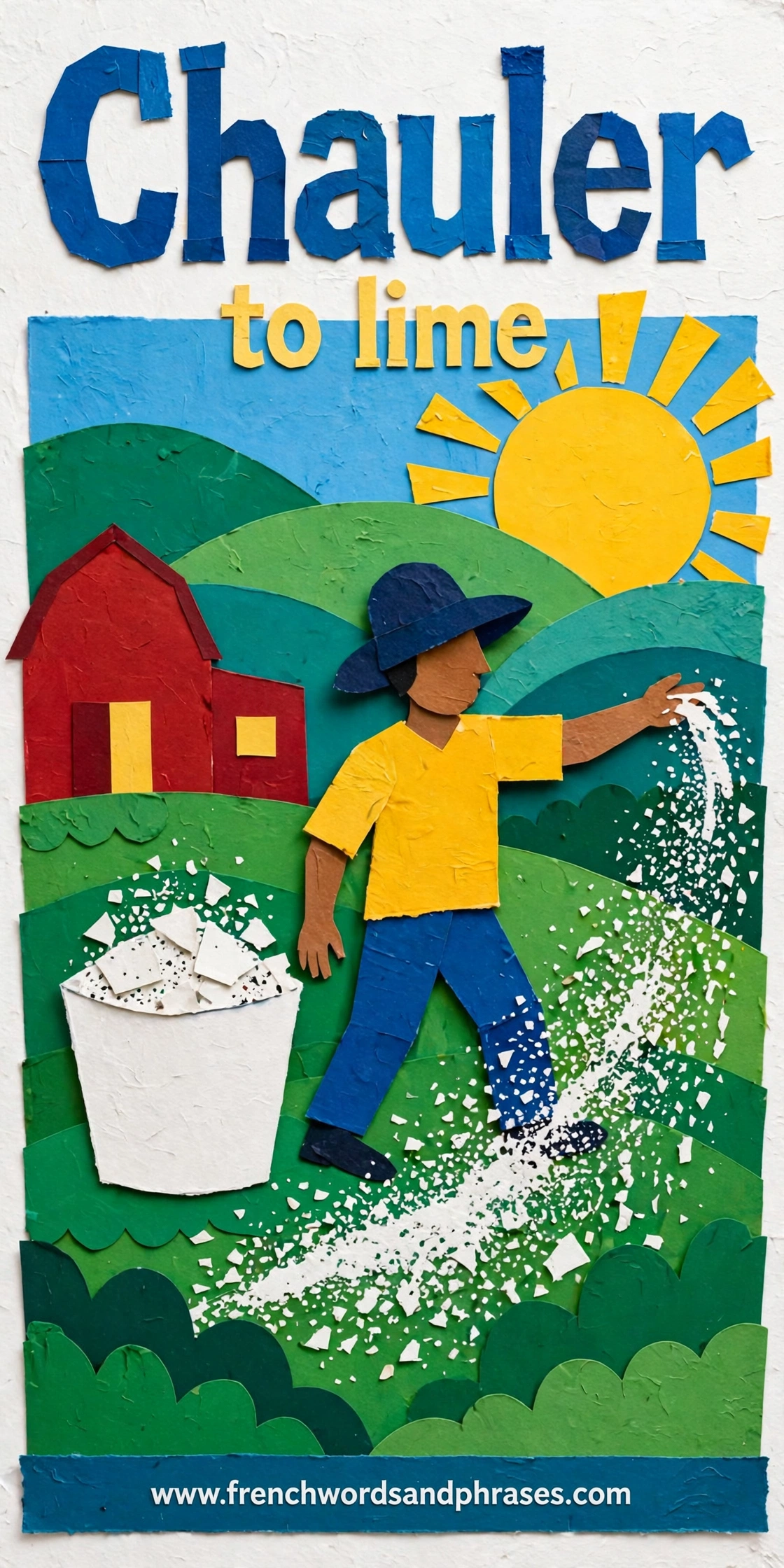
Chauler means to lime — to spread lime over soil, walls or tree trunks to sweeten, protect or whiten them.
A sack of white powder on the farmer’s shoulder, a brush dripping whitewash down a stable wall, apple trunks painted ghost-white against the insects — chauler is the old farm verb of lime: one substance, spread everywhere the land needs correcting or protecting.
In this guide, you’ll learn how to conjugate chauler in all the major French tenses and moods. Explore complete conjugation tables, French examples, English translations, and practice quizzes.
Understanding the French Verb Chauler
Chauler is a regular French verb belonging to the first group of verbs, those ending in-er.
It means to lime. It belongs to the traditional farming year: lime sweetens acid soil before sowing, protects fruit trees when painted on their trunks, and whitewashes and disinfects the walls of stables and barns — a technical verb, still alive wherever land is worked in the old way.
Verb classification: First group (-er)
Auxiliary verb: Avoir
Past participle: chaulé
Present participle: chaulant
English equivalents: To lime, to dress with lime; chauler un champ — to lime a field; chauler les arbres — to lime-wash the trees; chauler un mur — to whitewash a wall with lime; la chaux — lime.
One important detail: chauler is simply the verb of la chaux, lime — to chauler is to give something its dose of lime. It is a regular -er verb with avoir, and its objects are the farm’s surfaces: fields whose soil is too acid, tree trunks painted against parasites, stable walls whitened and disinfected. Do not confuse it with its dictionary neighbour chaumer: chauler spreads lime, chaumer clears stubble — the two jobs share a season, not a tool.
Experience the Word
Chauler is the verb of the white dose — lime spread on whatever the farm wants to correct, protect or clean.
Imagine an orchard in early spring. The farmer walks the rows with a bucket and a broad brush, chaulant each trunk from the ground to the first branches, until the whole orchard stands in white socks, ready for the insects to be disappointed.
The trees have not changed, nor the soil. They have been limed — chaulés — and the season can begin.
How to Conjugate Chauler: Complete French Conjugation Guide
Let’s explore every major conjugation of chauler, beginning with the indicative mood.
How to Conjugate Chauler in the Indicative Mood
The indicative mood is used to express facts, observations, actions, and events.
How to Conjugate Chauler in the Present Tense (Présent)
Used for actions happening now, habitual actions, and general truths.
| Subject | Conjugation |
|---|---|
| je | chaule |
| tu | chaules |
| il / elle | chaule |
| nous | chaulons |
| vous | chaulez |
| ils / elles | chaulent |
Example
Chaque automne, il chaule ses champs pour corriger l’acidité.
Every autumn, he limes his fields to correct the acidity.
Quick Quiz 1
Complete the sentence:
Nous ______ le verger au printemps.
Reveal the answer
chaulons
Nous chaulons le verger au printemps.
We lime the orchard in spring.
How to Conjugate Chauler in the Passé Composé
Used for completed actions in the past. Chauler takes the auxiliary verb avoir.
| Subject | Conjugation |
|---|---|
| j’ | ai chaulé |
| tu | as chaulé |
| il / elle | a chaulé |
| nous | avons chaulé |
| vous | avez chaulé |
| ils / elles | ont chaulé |
Example
Nous avons chaulé le verger au printemps.
We limed the orchard in spring.
How to Conjugate Chauler in the Imparfait (Imperfect Tense)
Used for habitual past actions, descriptions, and ongoing situations in the past.
| Subject | Conjugation |
|---|---|
| je | chaulais |
| tu | chaulais |
| il / elle | chaulait |
| nous | chaulions |
| vous | chauliez |
| ils / elles | chaulaient |
Example
Autrefois, les paysans chaulaient les murs des étables.
In the old days, farmers used to whitewash the stable walls with lime.
Quick Quiz 2
Choose the correct form:
They limed the field.
Ils ______ le champ. (ont chaulé / sont chaulés)
Reveal the answer
ont chaulé
Ils ont chaulé le champ.
Chauler takes avoir.
How to Conjugate Chauler in the Plus-que-parfait
Used to describe an action that had already been completed before another past event.
| Subject | Conjugation |
|---|---|
| j’ | avais chaulé |
| tu | avais chaulé |
| il / elle | avait chaulé |
| nous | avions chaulé |
| vous | aviez chaulé |
| ils / elles | avaient chaulé |
Example
Elle avait chaulé le champ avant les pluies.
She had limed the field before the rains.
How to Conjugate Chauler in the Passé Simple
Primarily used in formal writing, literature, and historical narratives. It is rarely used in everyday conversation.
| Subject | Conjugation |
|---|---|
| je | chaulai |
| tu | chaulas |
| il / elle | chaula |
| nous | chaulâmes |
| vous | chaulâtes |
| ils / elles | chaulèrent |
Example
Le fermier chaula ses terres avant l’hiver.
The farmer limed his land before winter.
How to Conjugate Chauler in the Passé Antérieur
A literary tense used to express an action completed immediately before another past action, generally in the passé simple.
| Subject | Conjugation |
|---|---|
| j’ | eus chaulé |
| tu | eus chaulé |
| il / elle | eut chaulé |
| nous | eûmes chaulé |
| vous | eûtes chaulé |
| ils / elles | eurent chaulé |
Example
Quand il eut chaulé le verger, il rangea le matériel.
When he had limed the orchard, he put the equipment away.
How to Conjugate Chauler in the Future Tense (Futur Simple)
Used to describe actions that will take place in the future.
| Subject | Conjugation |
|---|---|
| je | chaulerai |
| tu | chauleras |
| il / elle | chaulera |
| nous | chaulerons |
| vous | chaulerez |
| ils / elles | chauleront |
Example
Demain, nous chaulerons le grand champ derrière la grange.
Tomorrow, we will lime the big field behind the barn.
How to Conjugate Chauler in the Futur Antérieur (Future Perfect)
Used for an action that will have been completed before a particular point in the future.
| Subject | Conjugation |
|---|---|
| j’ | aurai chaulé |
| tu | auras chaulé |
| il / elle | aura chaulé |
| nous | aurons chaulé |
| vous | aurez chaulé |
| ils / elles | auront chaulé |
Example
À la fin de la semaine, tu auras chaulé toutes les parcelles.
By the end of the week, you will have limed all the plots.
How to Conjugate Chauler in the Near Future (Futur Proche)
Used to describe something that is going to happen soon. Formed with aller + infinitive.
| Subject | Conjugation |
|---|---|
| je | vais chauler |
| tu | vas chauler |
| il / elle | va chauler |
| nous | allons chauler |
| vous | allez chauler |
| ils / elles | vont chauler |
Example
Je vais chauler les troncs des pommiers.
I am going to lime-wash the apple tree trunks.
How to Conjugate Chauler in the Conditional Mood
The conditional mood expresses what would happen under certain circumstances. It is also frequently used to make polite requests or express wishes.
How to Conjugate Chauler in the Present Conditional
| Subject | Conjugation |
|---|---|
| je | chaulerais |
| tu | chaulerais |
| il / elle | chaulerait |
| nous | chaulerions |
| vous | chauleriez |
| ils / elles | chauleraient |
Example
Avec plus de chaux, il chaulerait aussi le potager.
With more lime, he would lime the vegetable garden too.
How to Conjugate Chauler in the Past Conditional
| Subject | Conjugation |
|---|---|
| j’ | aurais chaulé |
| tu | aurais chaulé |
| il / elle | aurait chaulé |
| nous | aurions chaulé |
| vous | auriez chaulé |
| ils / elles | auraient chaulé |
Example
Tu aurais chaulé le mur si tu avais eu le temps.
You would have whitewashed the wall if you had had time.
Chauler in the Literary Past Conditional Form
This less common literary form uses the imperfect subjunctive of avoir.
| Subject | Conjugation |
|---|---|
| j’ | eusse chaulé |
| tu | eusses chaulé |
| il / elle | eût chaulé |
| nous | eussions chaulé |
| vous | eussiez chaulé |
| ils / elles | eussent chaulé |
Example
Il eût chaulé ses terres sans la sécheresse.
He would have limed his land if not for the drought.
How to Conjugate Chauler in the Subjunctive Mood
The subjunctive is used to express wishes, emotions, doubts, necessity, and uncertainty. It frequently follows expressions such as il faut que (it is necessary that) or bien que (although).
How to Conjugate Chauler in the Present Subjunctive
| Subject | Conjugation |
|---|---|
| que je | chaule |
| que tu | chaules |
| qu’il / qu’elle | chaule |
| que nous | chaulions |
| que vous | chauliez |
| qu’ils / qu’elles | chaulent |
Example
Il faut que tu chaules ce champ avant les semailles.
You must lime this field before sowing.
Quick Quiz 3
Complete the sentence using the subjunctive:
Il faut que vous ______ les troncs.
Reveal the answer
chauliez
Il faut que vous chauliez les troncs.
You must lime-wash the trunks.
How to Conjugate Chauler in the Imperfect Subjunctive
A literary tense, rarely encountered in modern spoken French.
| Subject | Conjugation |
|---|---|
| que je | chaulasse |
| que tu | chaulasses |
| qu’il / qu’elle | chaulât |
| que nous | chaulassions |
| que vous | chaulassiez |
| qu’ils / qu’elles | chaulassent |
Example
Le voisin conseillait qu’on chaulât les arbres chaque année.
The neighbour advised liming the trees every year.
How to Conjugate Chauler in the Pluperfect Subjunctive
A literary construction used to express an action completed before another past action.
| Subject | Conjugation |
|---|---|
| que j’ | eusse chaulé |
| que tu | eusses chaulé |
| qu’il / qu’elle | eût chaulé |
| que nous | eussions chaulé |
| que vous | eussiez chaulé |
| qu’ils / qu’elles | eussent chaulé |
Example
On disait qu’il eût chaulé tout le domaine en une semaine.
People said he had limed the whole estate in a week.
How to Conjugate Chauler in the Past Subjunctive
| Subject | Conjugation |
|---|---|
| que j’ | aie chaulé |
| que tu | aies chaulé |
| qu’il / qu’elle | ait chaulé |
| que nous | ayons chaulé |
| que vous | ayez chaulé |
| qu’ils / qu’elles | aient chaulé |
Example
Je suis content que vous ayez chaulé le verger.
I am glad you limed the orchard.
How to Conjugate Chauler in the Imperative
The imperative is used to give commands, instructions, invitations, or suggestions. Subject pronouns are omitted.
How to Conjugate Chauler in the Present Imperative
| Person | Conjugation |
|---|---|
| (tu) | chaule |
| (nous) | chaulons |
| (vous) | chaulez |
Example
Chaule les troncs avant l’arrivée des insectes !
Lime-wash the trunks before the insects arrive!
Quick Quiz 4
How would you say Lime this field (tu form)?
Reveal the answer
Chaule ce champ !
French Participles of Chauler
Participles are verb forms that can be used in compound tenses and other grammatical constructions.
Present Participle of Chauler
chaulant
En chaulant régulièrement, on protège les arbres des parasites.
By liming regularly, one protects the trees from parasites.
Past Participle of Chauler
chaulé
Chaulé au printemps, le champ a donné une belle récolte.
Limed in spring, the field gave a fine harvest.
Chauler in Everyday French: Real-Life Examples
Now that you know the conjugations, let’s see how chauler appears in everyday French.
Example 1 — Present
Il chaule ses champs chaque automne.
He limes his fields every autumn.
Example 2 — Passé composé
Nous avons chaulé le verger.
We limed the orchard.
Example 3 — Imparfait
Les paysans chaulaient les murs des étables.
The farmers used to whitewash the stable walls with lime.
Example 4 — Future
Nous chaulerons le grand champ demain.
We will lime the big field tomorrow.
Example 5 — Conditional
Il chaulerait aussi le potager avec plus de chaux.
He would lime the vegetable garden too with more lime.
Example 6 — Imperative
Chaule les troncs des pommiers !
Lime-wash the apple tree trunks!
Beyond Translation: The Meaning of Chauler
Behind chauler stands la chaux, from Latin calx — the same root that gives English calcium and chalk.
Lime was the farm’s medicine chest.
Spread on soil it sweetens, painted on trunks it protects, washed on walls it disinfects — one white powder, three trades, and a single verb to cover them all.
How to Remember the French Verb Chauler
Remember it this way: Chauler is about white lime on the field, the trunks and the stable wall.
- La chaux is lime; chauler is spreading it — on soil, on trunks, on walls.
- Chauler spreads lime, chaumer clears stubble: two farm neighbours, two different jobs.
- Regular -er with avoir: je chaule, nous chaulons, past participle chaulé.
The key idea is white lime on the field, the trunks and the stable wall.
Test Your Knowledge of Chauler
Let’s see how much you’ve learned. Try answering these questions before revealing the answers.
Question 1
What is la chaux, the noun behind chauler?
Reveal the answer
Lime — chauler is to spread it: chauler un champ, chauler les arbres.
Question 2
How do you say He limes his fields every autumn in French?
Reveal the answer
Il chaule ses champs chaque automne.
Question 3
Translate: We limed the orchard in spring.
Reveal the answer
Nous avons chaulé le verger au printemps.
Question 4
What is the past participle of chauler?
Reveal the answer
Chaulé.
Question 5
Complete the sentence:
Il faut que tu ______ ce champ avant les semailles.
Reveal the answer
chaules
Il faut que tu chaules ce champ avant les semailles.
You must lime this field before sowing.
Your Final Challenge
Can You Use It?
How would you say this in French?
He limes his fields in autumn, and the soil thanks him in spring.
Reveal the answer
Il chaule ses champs à l’automne, et la terre le remercie au printemps.
He limes his fields in autumn, and the soil thanks him in spring.
A little French. A little curiosity. A richer everyday life.
LEARN FRENCH ONE WORD AT A TIME