A French Word to Live By
How to Conjugate Chaperonner in French
/ʃa.pʁɔ.ne/
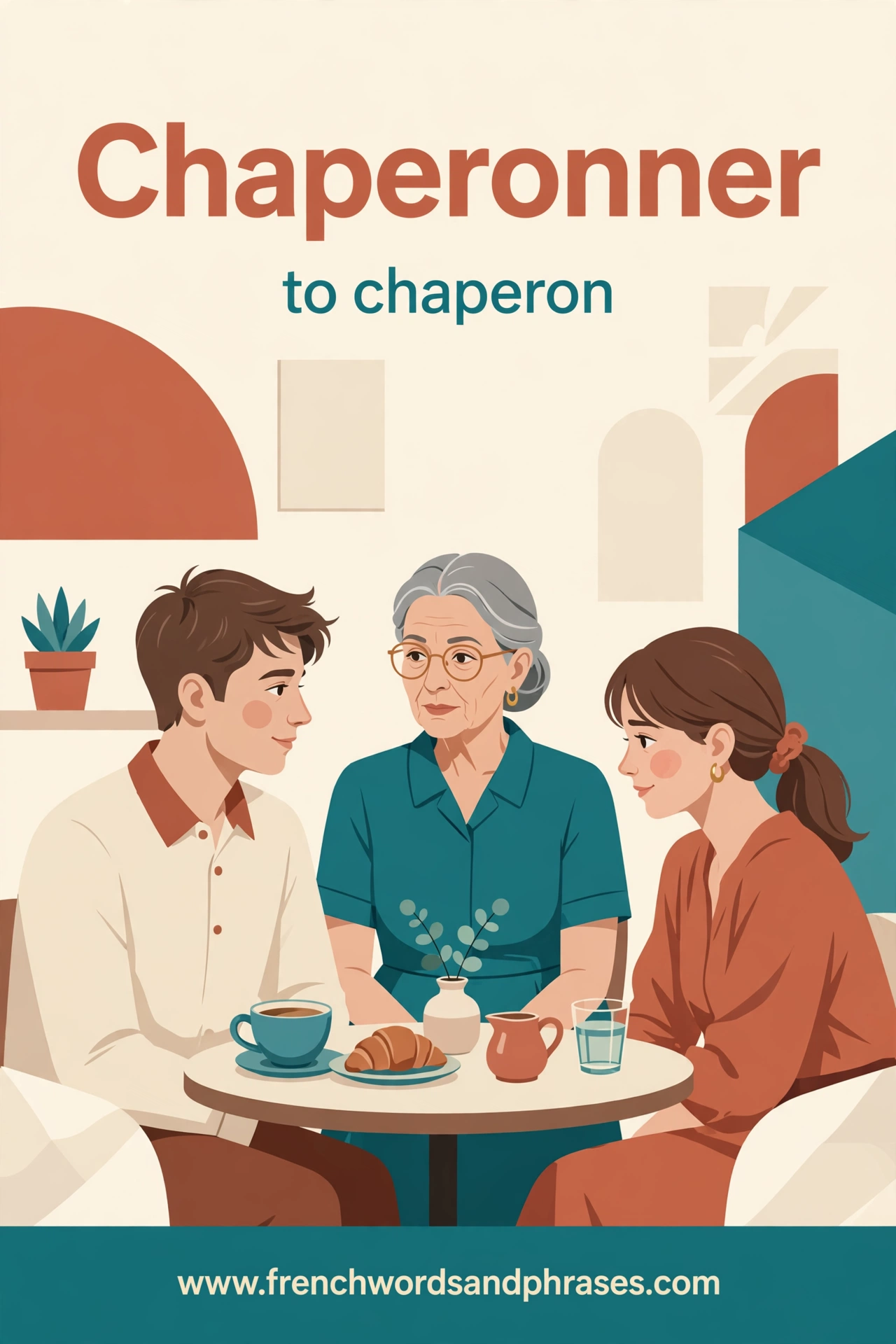
Chaperonner means to chaperon — to accompany a younger person in public and watch over their conduct, like a protective hood drawn over them.
A grandmother at a village dance keeping an eye on her granddaughter, two teachers counting heads on a school trip to the museum, a falconer fitting a leather hood over his bird — chaperonner is the verb of watchful accompaniment, in the ballroom, the classroom and the mews.
In this guide, you’ll learn how to conjugate chaperonner in all the major French tenses and moods. Explore complete conjugation tables, French examples, English translations, and practice quizzes.
Understanding the French Verb Chaperonner
Chaperonner is a regular French verb belonging to the first group of verbs, those ending in-er.
It means to chaperon. The social sense smells of another century — duennas, first balls and strict grandmothers — but the verb is alive and well for school trips, youth groups and museum visits, wherever an adult is officially in charge of other people’s children. The falconry sense is the technical term still used by falconers today.
Verb classification: First group (-er)
Auxiliary verb: Avoir
Past participle: chaperonné
Present participle: chaperonnant
English equivalents: To chaperon, to accompany and watch over; chaperonner une jeune fille — to chaperon a young girl; chaperonner un groupe d’élèves — to chaperon a group of pupils; chaperonner une sortie scolaire — to supervise a school outing; chaperonner un faucon — to hood a falcon (falconry).
One important detail: chaperonner comes from un chaperon, a hood — and the hood leads a double life in French. It is the hood of le Petit Chaperon rouge, Little Red Riding Hood, and the protective companion a young girl once needed in public; and it is also the small leather hood a falconer slips over a falcon’s head to keep it calm, which is why chaperonner un faucon means to hood a falcon. Note the spelling: the noun has one n, the verb doubles it — chaperonner. Otherwise the verb is a perfectly regular -er.
Experience the Word
Chaperonner is the verb of the watchful companion — never the star of the outing, always its safety net.
Imagine a school trip to the Louvre. Mme Laurent walks at the back of the group, counting heads at every doorway, a spare ticket in her pocket and an eye on the boy drifting towards the gift shop: elle chaperonne trente élèves, and not one of them will be lost.
She sees every painting twice — once for herself, once for her flock. She has chaperoned — chaperonné — the whole day into safety.
How to Conjugate Chaperonner: Complete French Conjugation Guide
Let’s explore every major conjugation of chaperonner, beginning with the indicative mood.
How to Conjugate Chaperonner in the Indicative Mood
The indicative mood is used to express facts, observations, actions, and events.
How to Conjugate Chaperonner in the Present Tense (Présent)
Used for actions happening now, habitual actions, and general truths.
| Subject | Conjugation |
|---|---|
| je | chaperonne |
| tu | chaperonnes |
| il / elle | chaperonne |
| nous | chaperonnons |
| vous | chaperonnez |
| ils / elles | chaperonnent |
Example
Mme Laurent chaperonne les élèves pendant la visite du musée.
Mrs Laurent is chaperoning the pupils during the museum visit.
Quick Quiz 1
Complete the sentence:
Nous ______ les élèves pendant la sortie.
Reveal the answer
chaperonnons
Nous chaperonnons les élèves pendant la sortie.
We are chaperoning the pupils during the outing.
How to Conjugate Chaperonner in the Passé Composé
Used for completed actions in the past. Chaperonner takes the auxiliary verb avoir.
| Subject | Conjugation |
|---|---|
| j’ | ai chaperonné |
| tu | as chaperonné |
| il / elle | a chaperonné |
| nous | avons chaperonné |
| vous | avez chaperonné |
| ils / elles | ont chaperonné |
Example
Ma grand-mère a chaperonné ma mère à son premier bal.
My grandmother chaperoned my mother at her first ball.
How to Conjugate Chaperonner in the Imparfait (Imperfect Tense)
Used for habitual past actions, descriptions, and ongoing situations in the past.
| Subject | Conjugation |
|---|---|
| je | chaperonnais |
| tu | chaperonnais |
| il / elle | chaperonnait |
| nous | chaperonnions |
| vous | chaperonniez |
| ils / elles | chaperonnaient |
Example
Autrefois, une tante chaperonnait toujours les jeunes filles au bal.
In the old days, an aunt always chaperoned the young girls at the ball.
Quick Quiz 2
Choose the correct form:
She chaperons the group all day.
Elle ______ le groupe toute la journée. (chaperonne / chaperonnent)
Reveal the answer
chaperonne
Elle chaperonne le groupe toute la journée.
Elle takes the singular form chaperonne.
How to Conjugate Chaperonner in the Plus-que-parfait
Used to describe an action that had already been completed before another past event.
| Subject | Conjugation |
|---|---|
| j’ | avais chaperonné |
| tu | avais chaperonné |
| il / elle | avait chaperonné |
| nous | avions chaperonné |
| vous | aviez chaperonné |
| ils / elles | avaient chaperonné |
Example
Il avait chaperonné le groupe pendant toute la semaine.
He had chaperoned the group all week.
How to Conjugate Chaperonner in the Passé Simple
Primarily used in formal writing, literature, and historical narratives. It is rarely used in everyday conversation.
| Subject | Conjugation |
|---|---|
| je | chaperonnai |
| tu | chaperonnas |
| il / elle | chaperonna |
| nous | chaperonnâmes |
| vous | chaperonnâtes |
| ils / elles | chaperonnèrent |
Example
Le fauconnier chaperonna le faucon avant le transport.
The falconer hooded the falcon before the journey.
How to Conjugate Chaperonner in the Passé Antérieur
A literary tense used to express an action completed immediately before another past action, generally in the passé simple.
| Subject | Conjugation |
|---|---|
| j’ | eus chaperonné |
| tu | eus chaperonné |
| il / elle | eut chaperonné |
| nous | eûmes chaperonné |
| vous | eûtes chaperonné |
| ils / elles | eurent chaperonné |
Example
Quand elle eut chaperonné les enfants jusqu’au car, elle souffla enfin.
When she had chaperoned the children to the coach, she finally breathed out.
How to Conjugate Chaperonner in the Future Tense (Futur Simple)
Used to describe actions that will take place in the future.
| Subject | Conjugation |
|---|---|
| je | chaperonnerai |
| tu | chaperonneras |
| il / elle | chaperonnera |
| nous | chaperonnerons |
| vous | chaperonnerez |
| ils / elles | chaperonneront |
Example
Deux parents chaperonneront la sortie de jeudi.
Two parents will chaperon Thursday’s outing.
How to Conjugate Chaperonner in the Futur Antérieur (Future Perfect)
Used for an action that will have been completed before a particular point in the future.
| Subject | Conjugation |
|---|---|
| j’ | aurai chaperonné |
| tu | auras chaperonné |
| il / elle | aura chaperonné |
| nous | aurons chaperonné |
| vous | aurez chaperonné |
| ils / elles | auront chaperonné |
Example
À la fin de la journée, nous aurons chaperonné quatre-vingts enfants.
By the end of the day, we will have chaperoned eighty children.
How to Conjugate Chaperonner in the Near Future (Futur Proche)
Used to describe something that is going to happen soon. Formed with aller + infinitive.
| Subject | Conjugation |
|---|---|
| je | vais chaperonner |
| tu | vas chaperonner |
| il / elle | va chaperonner |
| nous | allons chaperonner |
| vous | allez chaperonner |
| ils / elles | vont chaperonner |
Example
Tu vas chaperonner les petits pendant la visite ?
Are you going to chaperon the little ones during the visit?
How to Conjugate Chaperonner in the Conditional Mood
The conditional mood expresses what would happen under certain circumstances. It is also frequently used to make polite requests or express wishes.
How to Conjugate Chaperonner in the Present Conditional
| Subject | Conjugation |
|---|---|
| je | chaperonnerais |
| tu | chaperonnerais |
| il / elle | chaperonnerait |
| nous | chaperonnerions |
| vous | chaperonneriez |
| ils / elles | chaperonneraient |
Example
Sans toi, personne ne chaperonnerait la classe au musée.
Without you, nobody would chaperon the class at the museum.
How to Conjugate Chaperonner in the Past Conditional
| Subject | Conjugation |
|---|---|
| j’ | aurais chaperonné |
| tu | aurais chaperonné |
| il / elle | aurait chaperonné |
| nous | aurions chaperonné |
| vous | auriez chaperonné |
| ils / elles | auraient chaperonné |
Example
Elle aurait chaperonné la sortie si elle n’avait pas été malade.
She would have chaperoned the outing if she had not been ill.
Chaperonner in the Literary Past Conditional Form
This less common literary form uses the imperfect subjunctive of avoir.
| Subject | Conjugation |
|---|---|
| j’ | eusse chaperonné |
| tu | eusses chaperonné |
| il / elle | eût chaperonné |
| nous | eussions chaperonné |
| vous | eussiez chaperonné |
| ils / elles | eussent chaperonné |
Example
La vieille dame eût chaperonné toutes les jeunes filles du village.
The old lady would have chaperoned all the young girls in the village.
How to Conjugate Chaperonner in the Subjunctive Mood
The subjunctive is used to express wishes, emotions, doubts, necessity, and uncertainty. It frequently follows expressions such as il faut que (it is necessary that) or bien que (although).
How to Conjugate Chaperonner in the Present Subjunctive
| Subject | Conjugation |
|---|---|
| que je | chaperonne |
| que tu | chaperonnes |
| qu’il / qu’elle | chaperonne |
| que nous | chaperonnions |
| que vous | chaperonniez |
| qu’ils / qu’elles | chaperonnent |
Example
Il faut qu’un adulte chaperonne chaque groupe.
An adult must chaperon each group.
Quick Quiz 3
Complete the sentence using the subjunctive:
Il faut qu’un adulte ______ chaque groupe.
Reveal the answer
chaperonne
Il faut qu’un adulte chaperonne chaque groupe.
An adult must chaperon each group.
How to Conjugate Chaperonner in the Imperfect Subjunctive
A literary tense, rarely encountered in modern spoken French.
| Subject | Conjugation |
|---|---|
| que je | chaperonnasse |
| que tu | chaperonnasses |
| qu’il / qu’elle | chaperonnât |
| que nous | chaperonnassions |
| que vous | chaperonnassiez |
| qu’ils / qu’elles | chaperonnassent |
Example
On exigeait qu’elle chaperonnât sa nièce au bal.
They required her to chaperon her niece at the ball.
How to Conjugate Chaperonner in the Pluperfect Subjunctive
A literary construction used to express an action completed before another past action.
| Subject | Conjugation |
|---|---|
| que j’ | eusse chaperonné |
| que tu | eusses chaperonné |
| qu’il / qu’elle | eût chaperonné |
| que nous | eussions chaperonné |
| que vous | eussiez chaperonné |
| qu’ils / qu’elles | eussent chaperonné |
Example
On racontait qu’ils eussent chaperonné les enfants pendant tout le voyage.
It was said they had chaperoned the children throughout the trip.
How to Conjugate Chaperonner in the Past Subjunctive
| Subject | Conjugation |
|---|---|
| que j’ | aie chaperonné |
| que tu | aies chaperonné |
| qu’il / qu’elle | ait chaperonné |
| que nous | ayons chaperonné |
| que vous | ayez chaperonné |
| qu’ils / qu’elles | aient chaperonné |
Example
Je suis content que vous ayez chaperonné les élèves hier.
I am glad you chaperoned the pupils yesterday.
How to Conjugate Chaperonner in the Imperative
The imperative is used to give commands, instructions, invitations, or suggestions. Subject pronouns are omitted.
How to Conjugate Chaperonner in the Present Imperative
| Person | Conjugation |
|---|---|
| (tu) | chaperonne |
| (nous) | chaperonnons |
| (vous) | chaperonnez |
Example
Chaperonnez les enfants jusqu’au retour du car !
Chaperon the children until the coach returns!
Quick Quiz 4
How would you say Chaperon the children (tu form)?
Reveal the answer
Chaperonne les enfants !
French Participles of Chaperonner
Participles are verb forms that can be used in compound tenses and other grammatical constructions.
Present Participle of Chaperonner
chaperonnant
En chaperonnant le groupe, elle a tout visité gratuitement.
By chaperoning the group, she got to see everything for free.
Past Participle of Chaperonner
chaperonné
Chaperonnés par deux enseignants, les élèves ont été sages.
Chaperoned by two teachers, the pupils behaved well.
Chaperonner in Everyday French: Real-Life Examples
Now that you know the conjugations, let’s see how chaperonner appears in everyday French.
Example 1 — Present
Elle chaperonne les élèves au musée.
She is chaperoning the pupils at the museum.
Example 2 — Passé composé
Ma tante a chaperonné ma cousine au bal.
My aunt chaperoned my cousin at the ball.
Example 3 — Imparfait
Une duègne chaperonnait les jeunes filles.
A duenna used to chaperon the young girls.
Example 4 — Future
Deux parents chaperonneront la sortie.
Two parents will chaperon the outing.
Example 5 — Conditional
Je chaperonnerais le groupe avec plaisir.
I would chaperon the group with pleasure.
Example 6 — Imperative
Chaperonne les petits pendant la visite !
Chaperon the little ones during the visit!
Beyond Translation: The Meaning of Chaperonner
English borrowed chaperon from French and kept both the person and the duty; French kept the hood as well.
One hood, three worlds.
The little girl in the fairy tale, the strict companion at the ball and the falcon sitting calm and hooded on its perch all wear the same chaperon — protection you can put on a head.
How to Remember the French Verb Chaperonner
Remember it this way: Chaperonner is about the hood that watches over — girls, pupils and falcons.
- Un chaperon is a hood — think of Little Red Riding Hood — and chaperonner is to be someone’s protective hood in public.
- Watch the double n: the noun is chaperon, the verb is chaperonner.
- Regular -er: je chaperonne, nous chaperonnons, past participle chaperonné.
The key idea is the hood that watches over — girls, pupils and falcons.
Test Your Knowledge of Chaperonner
Let’s see how much you’ve learned. Try answering these questions before revealing the answers.
Question 1
Which famous fairy-tale character wears the noun behind chaperonner?
Reveal the answer
Le Petit Chaperon rouge — Little Red Riding Hood; un chaperon is a hood.
Question 2
How do you say Two parents will chaperon the outing in French?
Reveal the answer
Deux parents chaperonneront la sortie.
Question 3
Translate: My grandmother chaperoned my mother at her first ball.
Reveal the answer
Ma grand-mère a chaperonné ma mère à son premier bal.
Question 4
What is the past participle of chaperonner?
Reveal the answer
Chaperonné.
Question 5
Complete the sentence:
Il faut qu’un adulte ______ chaque groupe.
Reveal the answer
chaperonne
Il faut qu’un adulte chaperonne chaque groupe.
An adult must chaperon each group.
Your Final Challenge
Can You Use It?
How would you say this in French?
She chaperons the children at the museum, one eye on the paintings, the other on her troop.
Reveal the answer
Elle chaperonne les enfants au musée, un œil sur les tableaux, l’autre sur sa troupe.
She chaperons the children at the museum, one eye on the paintings, the other on her troop.
A little French. A little curiosity. A richer everyday life.
LEARN FRENCH ONE WORD AT A TIME