A French Word to Live By
How to Conjugate Chaîner in French
/ʃɛ.ne/
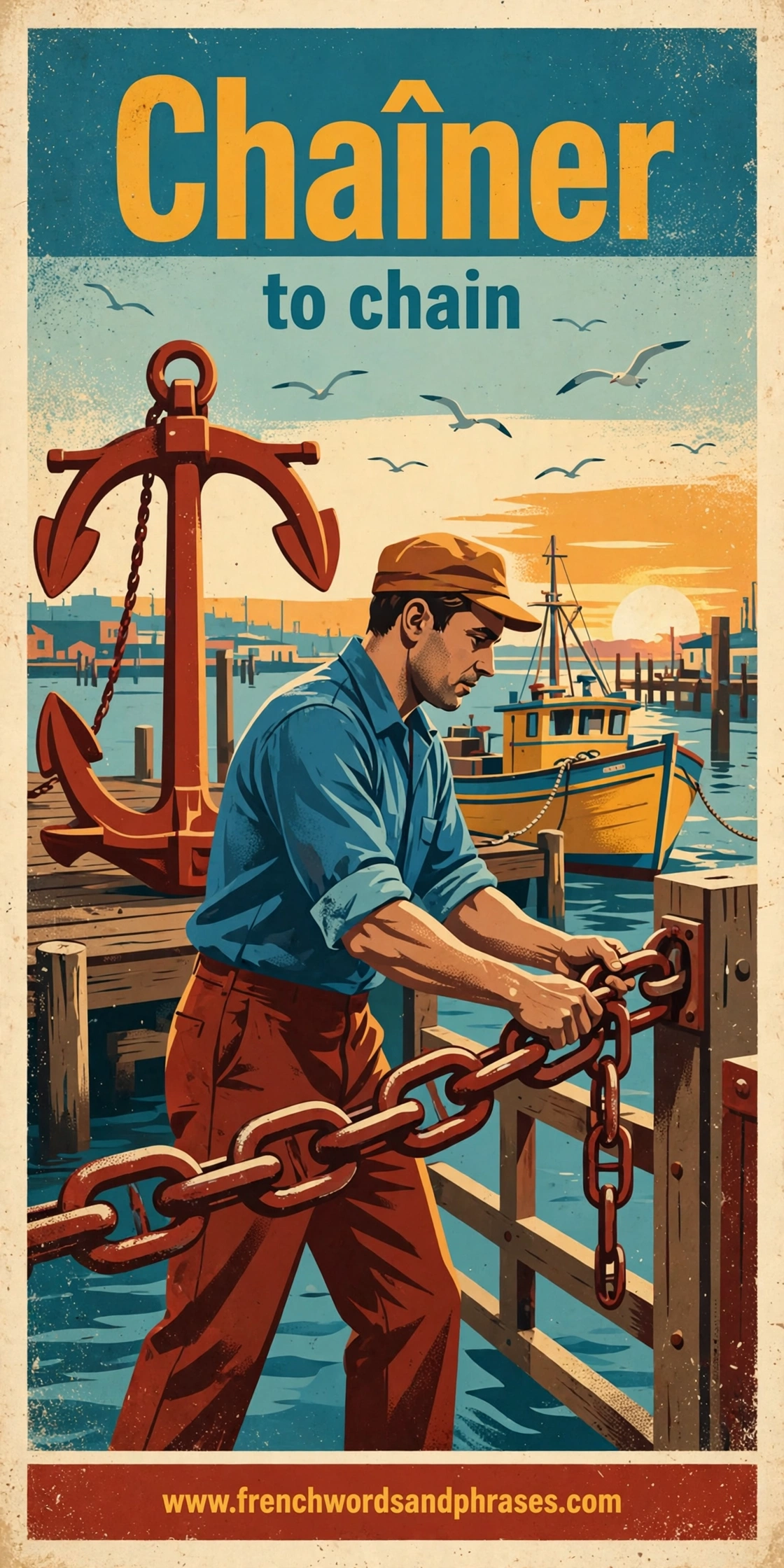
Chaîner means to chain — to fasten something with a chain, link by link, so that it cannot move or escape.
A harbour gate at closing time, a dog at the farmhouse door, a bicycle locked to a railing in a busy street — chaîner is the verb of the padlock and the link: fastening with a chain whatever must stay exactly where it is.
In this guide, you’ll learn how to conjugate chaîner in all the major French tenses and moods. Explore complete conjugation tables, French examples, English translations, and practice quizzes.
Understanding the French Verb Chaîner
Chaîner is a regular French verb belonging to the first group of verbs, those ending in-er.
It means to chain. It is commonly used for gates, doors, dogs and bicycles — anything secured against thieves, escape or the night — and in historical or literary texts for prisoners chained by the wrist or ankle.
Verb classification: First group (-er)
Auxiliary verb: Avoir
Past participle: chaîné
Present participle: chaînant
English equivalents: To chain, to chain up, to fasten with a chain; chaîner un chien — to chain a dog; chaîner une porte — to chain a door shut; chaîner un vélo à un poteau — to chain a bike to a post; une chaîne — a chain.
One important detail: chaîner keeps its circumflex on the î in every form — je chaîne, nous chaînons, ils chaînent — and it names the simple physical act of fastening with a chain. Its near-twin enchaîner is the everyday verb for chaining a prisoner and, above all, for things that follow on from each other (enchaîner les idées, to link ideas together). If a chain is literally involved, chaîner is your verb: chaîner un vélo, chaîner la grille.
Experience the Word
Chaîner is the verb of staying put — a chain is a promise that something will still be there in the morning.
Imagine the caretaker of a Paris park at dusk. The last children have gone, the pigeons are settling, and he walks the long railings with a heavy chain in his hands: il chaîne la grille, link by link, and the park sleeps behind iron until dawn.
Nothing will move tonight. It is chained — chaîné, link by link, until morning.
How to Conjugate Chaîner: Complete French Conjugation Guide
Let’s explore every major conjugation of chaîner, beginning with the indicative mood.
How to Conjugate Chaîner in the Indicative Mood
The indicative mood is used to express facts, observations, actions, and events.
How to Conjugate Chaîner in the Present Tense (Présent)
Used for actions happening now, habitual actions, and general truths.
| Subject | Conjugation |
|---|---|
| je | chaîne |
| tu | chaînes |
| il / elle | chaîne |
| nous | chaînons |
| vous | chaînez |
| ils / elles | chaînent |
Example
Le gardien chaîne la grille du parc à la tombée de la nuit.
The caretaker chains the park gate at nightfall.
Quick Quiz 1
Complete the sentence:
Nous ______ le portail chaque soir.
Reveal the answer
chaînons
Nous chaînons le portail chaque soir.
We chain the gate every evening.
How to Conjugate Chaîner in the Passé Composé
Used for completed actions in the past. Chaîner takes the auxiliary verb avoir.
| Subject | Conjugation |
|---|---|
| j’ | ai chaîné |
| tu | as chaîné |
| il / elle | a chaîné |
| nous | avons chaîné |
| vous | avez chaîné |
| ils / elles | ont chaîné |
Example
Elle a chaîné son vélo à la grille de la gare.
She chained her bike to the station railing.
How to Conjugate Chaîner in the Imparfait (Imperfect Tense)
Used for habitual past actions, descriptions, and ongoing situations in the past.
| Subject | Conjugation |
|---|---|
| je | chaînais |
| tu | chaînais |
| il / elle | chaînait |
| nous | chaînions |
| vous | chaîniez |
| ils / elles | chaînaient |
Example
Autrefois, on chaînait les prisonniers par les chevilles.
In the old days, prisoners were chained by the ankles.
Quick Quiz 2
Choose the correct form:
She chained her bike.
Elle ______ son vélo. (a chaîné / est chaînée)
Reveal the answer
a chaîné
Elle a chaîné son vélo.
Chaîner takes avoir.
How to Conjugate Chaîner in the Plus-que-parfait
Used to describe an action that had already been completed before another past event.
| Subject | Conjugation |
|---|---|
| j’ | avais chaîné |
| tu | avais chaîné |
| il / elle | avait chaîné |
| nous | avions chaîné |
| vous | aviez chaîné |
| ils / elles | avaient chaîné |
Example
Il avait chaîné la porte avant de partir en vacances.
He had chained the door before leaving on holiday.
How to Conjugate Chaîner in the Passé Simple
Primarily used in formal writing, literature, and historical narratives. It is rarely used in everyday conversation.
| Subject | Conjugation |
|---|---|
| je | chaînai |
| tu | chaînas |
| il / elle | chaîna |
| nous | chaînâmes |
| vous | chaînâtes |
| ils / elles | chaînèrent |
Example
Le geôlier chaîna les condamnés deux par deux.
The jailer chained the condemned men two by two.
How to Conjugate Chaîner in the Passé Antérieur
A literary tense used to express an action completed immediately before another past action, generally in the passé simple.
| Subject | Conjugation |
|---|---|
| j’ | eus chaîné |
| tu | eus chaîné |
| il / elle | eut chaîné |
| nous | eûmes chaîné |
| vous | eûtes chaîné |
| ils / elles | eurent chaîné |
Example
Quand il eut chaîné le chien, le facteur osa entrer.
When he had chained the dog, the postman dared to come in.
How to Conjugate Chaîner in the Future Tense (Futur Simple)
Used to describe actions that will take place in the future.
| Subject | Conjugation |
|---|---|
| je | chaînerai |
| tu | chaîneras |
| il / elle | chaînera |
| nous | chaînerons |
| vous | chaînerez |
| ils / elles | chaîneront |
Example
Nous chaînerons les barrières avant le concert.
We will chain the barriers before the concert.
How to Conjugate Chaîner in the Futur Antérieur (Future Perfect)
Used for an action that will have been completed before a particular point in the future.
| Subject | Conjugation |
|---|---|
| j’ | aurai chaîné |
| tu | auras chaîné |
| il / elle | aura chaîné |
| nous | aurons chaîné |
| vous | aurez chaîné |
| ils / elles | auront chaîné |
Example
À la fermeture, le gardien aura chaîné toutes les grilles.
By closing time, the caretaker will have chained all the gates.
How to Conjugate Chaîner in the Near Future (Futur Proche)
Used to describe something that is going to happen soon. Formed with aller + infinitive.
| Subject | Conjugation |
|---|---|
| je | vais chaîner |
| tu | vas chaîner |
| il / elle | va chaîner |
| nous | allons chaîner |
| vous | allez chaîner |
| ils / elles | vont chaîner |
Example
Attends, je vais chaîner le vélo avant d’entrer.
Wait, I am going to chain the bike before going in.
How to Conjugate Chaîner in the Conditional Mood
The conditional mood expresses what would happen under certain circumstances. It is also frequently used to make polite requests or express wishes.
How to Conjugate Chaîner in the Present Conditional
| Subject | Conjugation |
|---|---|
| je | chaînerais |
| tu | chaînerais |
| il / elle | chaînerait |
| nous | chaînerions |
| vous | chaîneriez |
| ils / elles | chaîneraient |
Example
Sans cadenas, on chaînerait les portes avec n’importe quoi.
Without padlocks, people would chain doors with anything at all.
How to Conjugate Chaîner in the Past Conditional
| Subject | Conjugation |
|---|---|
| j’ | aurais chaîné |
| tu | aurais chaîné |
| il / elle | aurait chaîné |
| nous | aurions chaîné |
| vous | auriez chaîné |
| ils / elles | auraient chaîné |
Example
Il aurait chaîné son chien s’il avait su qu’il mordait.
He would have chained his dog if he had known it bit.
Chaîner in the Literary Past Conditional Form
This less common literary form uses the imperfect subjunctive of avoir.
| Subject | Conjugation |
|---|---|
| j’ | eusse chaîné |
| tu | eusses chaîné |
| il / elle | eût chaîné |
| nous | eussions chaîné |
| vous | eussiez chaîné |
| ils / elles | eussent chaîné |
Example
Le tyran eût chaîné le peuple entier s’il l’avait pu.
The tyrant would have chained the whole people if he had been able to.
How to Conjugate Chaîner in the Subjunctive Mood
The subjunctive is used to express wishes, emotions, doubts, necessity, and uncertainty. It frequently follows expressions such as il faut que (it is necessary that) or bien que (although).
How to Conjugate Chaîner in the Present Subjunctive
| Subject | Conjugation |
|---|---|
| que je | chaîne |
| que tu | chaînes |
| qu’il / qu’elle | chaîne |
| que nous | chaînions |
| que vous | chaîniez |
| qu’ils / qu’elles | chaînent |
Example
Il faut que tu chaînes ton vélo dans cette rue.
You must chain your bike in this street.
Quick Quiz 3
Complete the sentence using the subjunctive:
Il faut que vous ______ les barrières avant le concert.
Reveal the answer
chaîniez
Il faut que vous chaîniez les barrières avant le concert.
You must chain the barriers before the concert.
How to Conjugate Chaîner in the Imperfect Subjunctive
A literary tense, rarely encountered in modern spoken French.
| Subject | Conjugation |
|---|---|
| que je | chaînasse |
| que tu | chaînasses |
| qu’il / qu’elle | chaînât |
| que nous | chaînassions |
| que vous | chaînassiez |
| qu’ils / qu’elles | chaînassent |
Example
Le règlement voulait qu’on chaînât les chiens au chenil.
The rules required the dogs to be chained in the kennel.
How to Conjugate Chaîner in the Pluperfect Subjunctive
A literary construction used to express an action completed before another past action.
| Subject | Conjugation |
|---|---|
| que j’ | eusse chaîné |
| que tu | eusses chaîné |
| qu’il / qu’elle | eût chaîné |
| que nous | eussions chaîné |
| que vous | eussiez chaîné |
| qu’ils / qu’elles | eussent chaîné |
Example
On racontait qu’il eût chaîné son trésor dans la cave.
People said he had chained up his treasure in the cellar.
How to Conjugate Chaîner in the Past Subjunctive
| Subject | Conjugation |
|---|---|
| que j’ | aie chaîné |
| que tu | aies chaîné |
| qu’il / qu’elle | ait chaîné |
| que nous | ayons chaîné |
| que vous | ayez chaîné |
| qu’ils / qu’elles | aient chaîné |
Example
Je doute qu’elle ait chaîné la porte hier soir.
I doubt she chained the door last night.
How to Conjugate Chaîner in the Imperative
The imperative is used to give commands, instructions, invitations, or suggestions. Subject pronouns are omitted.
How to Conjugate Chaîner in the Present Imperative
| Person | Conjugation |
|---|---|
| (tu) | chaîne |
| (nous) | chaînons |
| (vous) | chaînez |
Example
Chaîne le portail, sinon le chien sortira !
Chain the gate, or the dog will get out!
Quick Quiz 4
How would you say Chain the gate (tu form)?
Reveal the answer
Chaîne le portail !
French Participles of Chaîner
Participles are verb forms that can be used in compound tenses and other grammatical constructions.
Present Participle of Chaîner
chaînant
En chaînant le vélo à un poteau, il évite le vol.
By chaining the bike to a post, he avoids theft.
Past Participle of Chaîner
chaîné
Chaînée au poteau, la chienne attendait son maître.
Chained to the post, the dog waited for her master.
Chaîner in Everyday French: Real-Life Examples
Now that you know the conjugations, let’s see how chaîner appears in everyday French.
Example 1 — Present
Le gardien chaîne la grille chaque soir.
The caretaker chains the gate every evening.
Example 2 — Passé composé
Elle a chaîné son vélo à la gare.
She chained her bike at the station.
Example 3 — Imparfait
On chaînait les chiens autrefois.
Dogs used to be chained in the old days.
Example 4 — Future
Nous chaînerons les barrières avant le match.
We will chain the barriers before the match.
Example 5 — Conditional
Il chaînerait son chien s’il était méchant.
He would chain his dog if it were vicious.
Example 6 — Imperative
Chaînez la porte avant de partir !
Chain the door before you leave!
Beyond Translation: The Meaning of Chaîner
English chain is this very word, borrowed from Old French chaïne (Latin catena) — so French chaîner is simply ‘to chain’ rebuilt at home.
The noun came first; the verb is the noun at work.
Wherever French needs something held fast — a gate, a dog, a bicycle — the chain appears, and with it this plain, sturdy verb.
How to Remember the French Verb Chaîner
Remember it this way: Chaîner is about the caretaker chaining the park gate at dusk.
- The î never leaves: je chaîne, nous chaînons, chaîné — circumflex in every form.
- Chaîner is the literal chain; for ideas following on, French prefers enchaîner.
- Regular -er: je chaîne, nous chaînons, past participle chaîné.
The key idea is the caretaker chaining the park gate at dusk.
Test Your Knowledge of Chaîner
Let’s see how much you’ve learned. Try answering these questions before revealing the answers.
Question 1
What is the difference between chaîner and enchaîner?
Reveal the answer
Chaîner is the literal act of fastening with a chain (chaîner un vélo); enchaîner also means to link things that follow on, like ideas.
Question 2
How do you say She chained her bike to the railing in French?
Reveal the answer
Elle a chaîné son vélo à la grille.
Question 3
Translate: The caretaker chains the gate every evening.
Reveal the answer
Le gardien chaîne la grille chaque soir.
Question 4
What is the past participle of chaîner?
Reveal the answer
Chaîné — with the circumflex, like the infinitive.
Question 5
Complete the sentence:
Il faut que tu ______ ton vélo dans cette rue.
Reveal the answer
chaînes
Il faut que tu chaînes ton vélo dans cette rue.
You must chain your bike in this street.
Your Final Challenge
Can You Use It?
How would you say this in French?
The caretaker chains the last gate, and the park falls asleep behind the iron.
Reveal the answer
Le gardien chaîne la dernière grille, et le parc s’endort derrière le fer.
The caretaker chains the last gate, and the park falls asleep behind the iron.
A little French. A little curiosity. A richer everyday life.
LEARN FRENCH ONE WORD AT A TIME