A French Word to Live By
How to Conjugate Obturer in French
/ɔb.ty.ʁe/
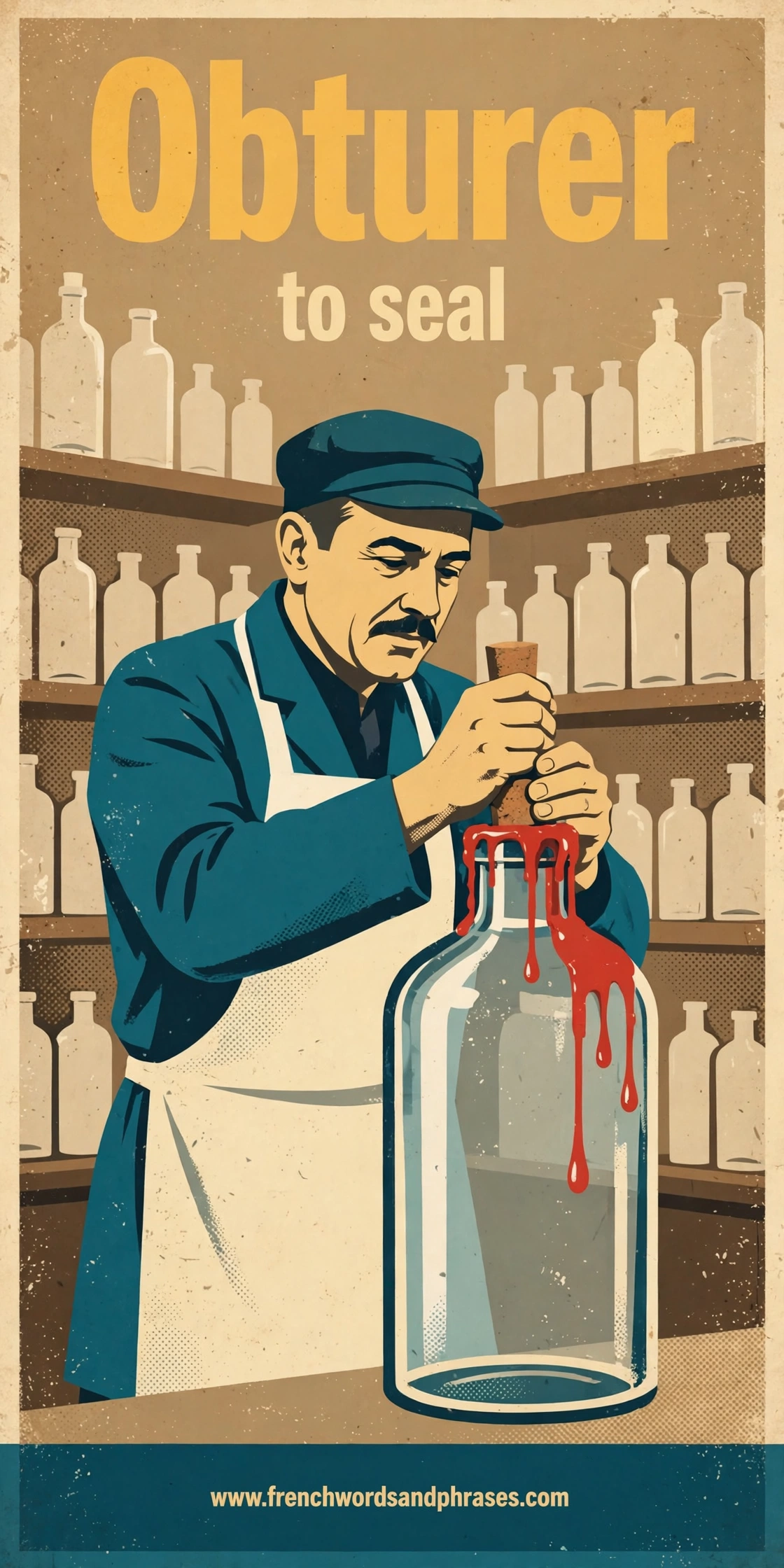
Obturer means to seal — to plug or close up a hole, a leak or a cavity so completely that nothing can pass.
A bead of sealant pressed into a crack, a cork driven home, a dentist’s drill falling silent over a filled tooth — obturer is the verb of plugging a hole so completely that nothing gets through.
In this guide, you’ll learn how to conjugate obturer in all the major French tenses and moods. Explore complete conjugation tables, French examples, English translations, and practice quizzes.
Understanding the French Verb Obturer
Obturer is a regular French verb belonging to the first group of verbs, those ending in -er.
It means to seal. It is commonly used in plumbing and building for sealing leaks, cracks and holes, in dentistry for filling teeth, and in photography through its noun obturateur, the shutter.
Verb classification: First group (-er)
Auxiliary verb: Avoir
Past participle: obturé
Present participle: obturant
English equivalents: To seal, to plug, to stop up; obturer une fuite — to seal a leak; obturer une dent — to fill a tooth; obturer un trou — to plug a hole.
One important detail: obturer is a perfectly regular -er verb, but its family is worth knowing: un obturateur is a shutter or stopper — the shutter inside a camera is l’obturateur — and at the dentist’s, une obturation is a filling. Wherever something solid and well-fitted closes an opening, this word family is at work.
Experience the Word
Obturer is the verb of the perfect plug — the hole is not covered, it is filled and finished.
Imagine a plumber under a farmhouse sink at midnight, water dripping into a bucket. He cleans the joint, presses in the sealant, smooths it with a wet finger — il obture la fuite — and the dripping stops for good.
The bucket is empty by morning. The leak has been sealed — obturée — and the house is quiet.
How to Conjugate Obturer: Complete French Conjugation Guide
Let’s explore every major conjugation of obturer, beginning with the indicative mood.
How to Conjugate Obturer in the Indicative Mood
The indicative mood is used to express facts, observations, actions, and events.
How to Conjugate Obturer in the Present Tense (Présent)
Used for actions happening now, habitual actions, and general truths.
| Subject | Conjugation |
|---|---|
| je | obture |
| tu | obtures |
| il / elle | obture |
| nous | obturons |
| vous | obturez |
| ils / elles | obturent |
Example
Le plombier obture la fuite avec un mastic spécial.
The plumber seals the leak with a special sealant.
Quick Quiz 1
Complete the sentence:
Nous ______ le trou avec du ciment.
Reveal the answer
obturons
Nous obturons le trou avec du ciment.
We plug the hole with cement.
How to Conjugate Obturer in the Passé Composé
Used for completed actions in the past. Obturer takes the auxiliary verb avoir.
| Subject | Conjugation |
|---|---|
| j’ | ai obturé |
| tu | as obturé |
| il / elle | a obturé |
| nous | avons obturé |
| vous | avez obturé |
| ils / elles | ont obturé |
Example
Nous avons obturé le trou dans le mur.
We plugged the hole in the wall.
How to Conjugate Obturer in the Imparfait (Imperfect Tense)
Used for habitual past actions, descriptions, and ongoing situations in the past.
| Subject | Conjugation |
|---|---|
| je | obturais |
| tu | obturais |
| il / elle | obturait |
| nous | obturions |
| vous | obturiez |
| ils / elles | obturaient |
Example
Le dentiste obturait la carie avec un amalgame.
The dentist used to fill the cavity with an amalgam.
Quick Quiz 2
Choose the correct form:
She sealed the bottle.
Elle ______ la bouteille. (a obturé / est obturée)
Reveal the answer
a obturé
Elle a obturé la bouteille.
Obturer takes avoir.
How to Conjugate Obturer in the Plus-que-parfait
Used to describe an action that had already been completed before another past event.
| Subject | Conjugation |
|---|---|
| j’ | avais obturé |
| tu | avais obturé |
| il / elle | avait obturé |
| nous | avions obturé |
| vous | aviez obturé |
| ils / elles | avaient obturé |
Example
Il avait obturé la brèche avant la marée montante.
He had sealed the breach before the rising tide.
How to Conjugate Obturer in the Passé Simple
Primarily used in formal writing, literature, and historical narratives. It is rarely used in everyday conversation.
| Subject | Conjugation |
|---|---|
| je | obturai |
| tu | obturas |
| il / elle | obtura |
| nous | obturâmes |
| vous | obturâtes |
| ils / elles | obturèrent |
Example
Elle obtura la bouteille avec un bouchon de liège.
She sealed the bottle with a cork.
How to Conjugate Obturer in the Passé Antérieur
A literary tense used to express an action completed immediately before another past action, generally in the passé simple.
| Subject | Conjugation |
|---|---|
| j’ | eus obturé |
| tu | eus obturé |
| il / elle | eut obturé |
| nous | eûmes obturé |
| vous | eûtes obturé |
| ils / elles | eurent obturé |
Example
Quand il eut obturé la fissure, l’eau cessa de couler.
When he had sealed the crack, the water stopped flowing.
How to Conjugate Obturer in the Future Tense (Futur Simple)
Used to describe actions that will take place in the future.
| Subject | Conjugation |
|---|---|
| je | obturerai |
| tu | obtureras |
| il / elle | obturera |
| nous | obturerons |
| vous | obturerez |
| ils / elles | obtureront |
Example
Demain, j’obturerai la cavité avant midi.
Tomorrow, I will fill the cavity before noon.
How to Conjugate Obturer in the Futur Antérieur (Future Perfect)
Used for an action that will have been completed before a particular point in the future.
| Subject | Conjugation |
|---|---|
| j’ | aurai obturé |
| tu | auras obturé |
| il / elle | aura obturé |
| nous | aurons obturé |
| vous | aurez obturé |
| ils / elles | auront obturé |
Example
À midi, ils auront obturé toutes les ouvertures.
By noon, they will have sealed all the openings.
How to Conjugate Obturer in the Near Future (Futur Proche)
Used to describe something that is going to happen soon. Formed with aller + infinitive.
| Subject | Conjugation |
|---|---|
| je | vais obturer |
| tu | vas obturer |
| il / elle | va obturer |
| nous | allons obturer |
| vous | allez obturer |
| ils / elles | vont obturer |
Example
Je vais obturer ce trou avant de peindre.
I am going to plug this hole before painting.
How to Conjugate Obturer in the Conditional Mood
The conditional mood expresses what would happen under certain circumstances. It is also frequently used to make polite requests or express wishes.
How to Conjugate Obturer in the Present Conditional
| Subject | Conjugation |
|---|---|
| je | obturerais |
| tu | obturerais |
| il / elle | obturerait |
| nous | obturerions |
| vous | obtureriez |
| ils / elles | obtureraient |
Example
Avec du ciment, tu obturerais cette brèche en dix minutes.
With cement, you would seal this breach in ten minutes.
How to Conjugate Obturer in the Past Conditional
| Subject | Conjugation |
|---|---|
| j’ | aurais obturé |
| tu | aurais obturé |
| il / elle | aurait obturé |
| nous | aurions obturé |
| vous | auriez obturé |
| ils / elles | auraient obturé |
Example
Il aurait obturé la fuite s’il avait eu le bon outil.
He would have sealed the leak if he had had the right tool.
Obturer in the Literary Past Conditional Form
This less common literary form uses the imperfect subjunctive of avoir.
| Subject | Conjugation |
|---|---|
| j’ | eusse obturé |
| tu | eusses obturé |
| il / elle | eût obturé |
| nous | eussions obturé |
| vous | eussiez obturé |
| ils / elles | eussent obturé |
Example
Il eût obturé la brèche avant la tempête.
He would have sealed the breach before the storm.
How to Conjugate Obturer in the Subjunctive Mood
The subjunctive is used to express wishes, emotions, doubts, necessity, and uncertainty. It frequently follows expressions such as il faut que (it is necessary that) or bien que (although).
How to Conjugate Obturer in the Present Subjunctive
| Subject | Conjugation |
|---|---|
| que je | obture |
| que tu | obtures |
| qu’il / qu’elle | obture |
| que nous | obturions |
| que vous | obturiez |
| qu’ils / qu’elles | obturent |
Example
Il faut que vous obturiez la fissure avant l’hiver.
You must seal the crack before winter.
Quick Quiz 3
Complete the sentence using the subjunctive:
Il faut que tu ______ la fuite ce soir.
Reveal the answer
obtures
Il faut que tu obtures la fuite ce soir.
You must seal the leak tonight.
How to Conjugate Obturer in the Imperfect Subjunctive
A literary tense, rarely encountered in modern spoken French.
| Subject | Conjugation |
|---|---|
| que je | obturasse |
| que tu | obturasses |
| qu’il / qu’elle | obturât |
| que nous | obturassions |
| que vous | obturassiez |
| qu’ils / qu’elles | obturassent |
Example
Je voulais qu’il obturât le passage avec des planches.
I wanted him to block the passage with planks.
How to Conjugate Obturer in the Pluperfect Subjunctive
A literary construction used to express an action completed before another past action.
| Subject | Conjugation |
|---|---|
| que j’ | eusse obturé |
| que tu | eusses obturé |
| qu’il / qu’elle | eût obturé |
| que nous | eussions obturé |
| que vous | eussiez obturé |
| qu’ils / qu’elles | eussent obturé |
Example
On craignait qu’ils eussent obturé la ventilation.
People feared that they had blocked the ventilation.
How to Conjugate Obturer in the Past Subjunctive
| Subject | Conjugation |
|---|---|
| que j’ | aie obturé |
| que tu | aies obturé |
| qu’il / qu’elle | ait obturé |
| que nous | ayons obturé |
| que vous | ayez obturé |
| qu’ils / qu’elles | aient obturé |
Example
Je suis content que tu aies obturé le trou du grenier.
I am glad you plugged the hole in the attic.
How to Conjugate Obturer in the Imperative
The imperative is used to give commands, instructions, invitations, or suggestions. Subject pronouns are omitted.
How to Conjugate Obturer in the Present Imperative
| Person | Conjugation |
|---|---|
| (tu) | obture |
| (nous) | obturons |
| (vous) | obturez |
Example
Obture la fuite, vite !
Seal the leak, quick!
Quick Quiz 4
How would you say Seal the leak (tu form)?
Reveal the answer
Obture la fuite !
French Participles of Obturer
Participles are verb forms that can be used in compound tenses and other grammatical constructions.
Present Participle of Obturer
obturant
En obturant la cavité, le dentiste a sauvé la dent.
By filling the cavity, the dentist saved the tooth.
Past Participle of Obturer
obturé
Obturée à temps, la brèche n’a pas laissé passer l’eau.
Sealed in time, the breach did not let the water through.
Obturer in Everyday French: Real-Life Examples
Now that you know the conjugations, let’s see how obturer appears in everyday French.
Example 1 — Present
Le plombier obture la fuite avec du mastic.
The plumber seals the leak with sealant.
Example 2 — Passé composé
Nous avons obturé le trou dans le mur.
We plugged the hole in the wall.
Example 3 — Imparfait
Le dentiste obturait la carie avec soin.
The dentist used to fill the cavity carefully.
Example 4 — Future
Demain, j’obturerai la fissure du balcon.
Tomorrow, I will seal the crack in the balcony.
Example 5 — Conditional
Tu obturerais cette brèche en dix minutes avec du ciment.
You would seal this breach in ten minutes with cement.
Example 6 — Imperative
Obture la fuite, vite !
Seal the leak, quick!
Beyond Translation: The Meaning of Obturer
English spreads this idea across seal, plug, fill, stop up; French obturer covers them all whenever the point is a complete, fitted closure.
One verb from the sink to the dentist’s chair.
The same word seals a leaking pipe and fills a tooth — and its cousin obturateur is the shutter that opens and closes inside every camera.
How to Remember the French Verb Obturer
Remember it this way: Obturer is about plugging a hole so nothing gets through.
- Obturer = to seal a hole completely — a leak, a crack, a tooth.
- Un obturateur — a shutter or stopper; une obturation — a dental filling.
- Regular -er: j’obture, nous obturons, past participle obturé.
The key idea is plugging a hole so nothing gets through.
Test Your Knowledge of Obturer
Let’s see how much you’ve learned. Try answering these questions before revealing the answers.
Question 1
How do you say to seal a leak in French?
Reveal the answer
Obturer une fuite.
Question 2
How do you say The plumber seals the leak in French?
Reveal the answer
Le plombier obture la fuite.
Question 3
Translate: We plugged the hole in the wall.
Reveal the answer
Nous avons obturé le trou dans le mur.
Question 4
What is the past participle of obturer?
Reveal the answer
Obturé.
Question 5
Complete the sentence:
Il faut que vous ______ la fissure avant l’hiver.
Reveal the answer
obturiez
Il faut que vous obturiez la fissure avant l’hiver.
You must seal the crack before winter.
Your Final Challenge
Can You Use It?
How would you say this in French?
The plumber seals the last crack, and silence returns to the house.
Reveal the answer
Le plombier obture la dernière fissure, et le silence revient dans la maison.
The plumber seals the last crack, and silence returns to the house.
A little French. A little curiosity. A richer everyday life.
LEARN FRENCH ONE WORD AT A TIME